Anthony Bloom: “the Church must never speak from a position of strength”
Posted by Dallas Wolf in Ekklesia and church, New Nuggets on April 22, 2015


“It seems to me, and I am personally convinced, that the Church must never speak from a position of strength…It ought not to be one of the forces influencing this or that state. The Church ought to be, if you will, just as powerless as God himself, which does not coerce but which calls and unveils the beauty and the truth of things without imposing them. As soon as the Church begins to exercise power, it loses its most profound characteristic which is divine love [i.e.] the understanding of those it is called to save and not to smash…”
– Metropolitan Anthony Bloom
Dostoyevsky: “… And He will judge and will forgive all, …”
Posted by Dallas Wolf in New Nuggets, Universal Restoration (Apokatastasis) on March 29, 2015
Fyodor Dostoyevsky (1821 – 1881) – Russian novelist, short story writer, essayist, journalist, and philosopher.
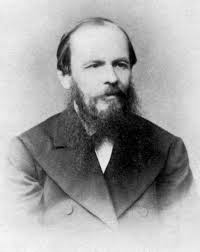 “… And He will judge and will forgive all, the good and the evil, the wise and the meek… And when He has done with all of them, then He will summon us, ‘You too come forth,’ He will say, ‘Come forth, ye drunkards, come forth, ye weak ones, come forth, ye children of shame!’ And we shall all come forth without shame and shall stand before Him. And He will say unto us, ‘Ye are swine, made in the image of the Beast and with his mark; but come ye also!’ And the wise ones and those of understanding will say, ‘O Lord, why dost Thou receive these men?’ And He will say, ’This is why I receive them, O ye wise, this is why I receive them, O ye of understanding, that not one of them believed himself to be worthy of this.’ And He will hold out His hands to us and we shall fall down before Him… and we shall weep… and we shall understand all things! Then we shall understand all!… and all will understand, Katerina Ivanovna even… she will understand… Lord, Thy kingdom come!” And he sank down on the bench exhausted and helpless, looking at no one, apparently oblivious of his surroundings and plunged in deep thought. His words had created a certain impression; there was a moment of silence; but soon laughter and oaths were heard again.” ~ Marmeladov’s Vision from “Crime and Punishment”
“There is an end to the deadly tedium of the impersonal”
Posted by Dallas Wolf in New Nuggets on March 22, 2015

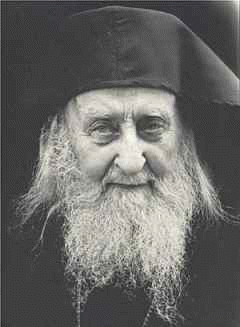 I AM THAT I AM. Yes, indeed, it is He Who is Being. He alone truly lives. Everything summoned from the abyss of non-being exists solely by His will. My individual life, down to the smallest detail, comes uniquely from Him. He fills the soul, binding her ever more intimately to Himself. Conscious contact with Him stamps a man for ever. Such a man will not now depart from the God of love Whom he has come to know. His mind is reborn. Hitherto he was inclined to see everywhere determined natural processes; now he begins to apprehend all things in the light of Person. Knowledge of the Personal God bears an intrinsically personal character. Like recognizes like. There is an end to the deadly tedium of the impersonal. The earth, the whole universe, proclaims Him: “heaven and earth praise him, the sea, and everything that moveth therein” (Ps. 69.34)…
View original post 32 more words
St. Gregory of Nyssa: Moses and “Luminous Darkness”… “seeing that consists in not seeing”.
Posted by Dallas Wolf in Hesychasm - Jesus Prayer, Monasticism, Patristic Pearls, Theology on March 15, 2015
St. Gregory of Nyssa (c. 335 – c. 395), is one of the three Great Cappadocian Fathers along with his older brother, St. Basil the Great, and friend, St. Gregory of Nazianzus. I especially love Gregory Nyssen for his deep spirituality and mysticism. He was a highly original and sophisticated thinker who remains controversial among both liberal and conservative theologians to this day. In his treatise The Life of Moses, St. Gregory tells us that a person’s encounter of the mystery of God corresponds to the three theophanies of Moses, involving successive entry into light, cloud, and darkness.
According to St. Gregory Nyssen, the first stage in our quest to encounter God is Moses’ vision of God as the light of the burning bush; illuminating the darkness of our sin and ignorance. The second stage involves a journey from light into partial darkness where Moses encounters God as the ‘cloud’; the intermingling of light and darkness, revealing the distance between the Creator and the created realm. The third and final stage entails Moses entering the darkness of Sinai where God is; and our realization upon encountering and even being united with God that He is utterly incomprehensible in his essence.
In this treatment, I think, St. Gregory of Nyssa clearly identifies both cataphatic and apophatic theology, bridges the two and holds the tension between them, drawing the best from both.

“What does it mean that Moses entered the darkness and then saw God in it? What is now recounted seems somehow to be contradictory to the first theophany, for then the divine was beheld in light but now He is seen in darkness. Let us not think that this is at variance with the sequence of things we have contemplated spiritually. Scripture teaches by this that religious knowledge comes at first to those who receive it as light. Therefore what is perceived to be contrary to religion is darkness; an escape from darkness comes about when one participates in the light. But as the mind progresses and, through an ever greater and more perfect diligence, comes to apprehend reality, as it approaches more nearly to contemplation, it sees more clearly that God cannot be contemplated. For leaving behind everything that is observed, not only what sense comprehends but also what the intelligence thinks it sees, it keeps on penetrating deeper until by the intelligence’s yearning for understanding it gains access to the invisible and the incomprehensible and there it sees God. This is the true knowledge of what is sought; this is the seeing that consists in not seeing, because that which is sought transcends all knowledge, being separated on all sides by incomprehensibility as by a kind of darkness. Therefore, John the sublime who penetrated into the luminous darkness [λαµπρός γνόφος – lamprós gnóphos], says “no one has ever seen God,” thus asserting that knowledge of the divine essence is unattainable not only by humans but also by every intelligent creature. When, therefore, Moses grew in knowledge, he declared that he had seen God in the darkness, that is, that he had then come to know that what is divine is beyond all knowledge and comprehension, for the text says,’Moses approached the dark cloud where God was‘.”
~ from: The Life of Moses
John of Kronstadt: ” the deceptive sweetness of sin separates us from the truly sweet life”
Posted by Dallas Wolf in New Nuggets on March 8, 2015
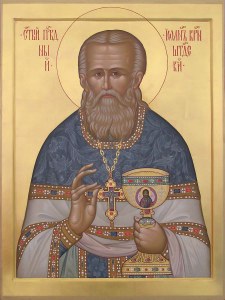
“All our attention must be centered on the parable of the Prodigal Son. We all see ourselves in it as in a mirror. In a few words the Lord, the knower of hearts, has shown in the person of one man how the deceptive sweetness of sin separates us from the truly sweet life according to God. He knows how the burden of sin on the soul and body, experienced by us, impels us by the action of divine grace to return, and how it actually does turn many again to God, to a virtuous life.”
– St. John of Kronstadt
Maximos the Confessor: “How is unceasing prayer possible?”
Posted by Dallas Wolf in Hesychasm - Jesus Prayer, Patristic Pearls, Theology on February 28, 2015
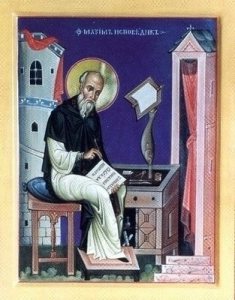
“How is unceasing prayer possible? When we are singing the Psalms, when we are reading the Scriptures, when we are serving our neighbor, even then it is easy enough for the mind to wander off after irrelevant thoughts and images.
Yet the Scriptures do not require impossibilities. St. Paul himself sang the Psalms, read the Scriptures, offered his own apostolic service, and nonetheless prayed uninterruptedly.
Unceasing prayer means to have the mind always turned to God with great love, holding alive our hope in Him, having confidence in Him whatever we are doing and whatever happens to us.
That is the attitude that the Apostle had when he wrote: ‘Who shall separate us from the love of Christ?”…
Thanks to this attitude of mind, Paul prayed without ceasing. In all that he did and in all that happened to him, he kept alive his hope in God.”
– St. Maximos…
View original post 5 more words
N.T. Wright: “The first expositor of Paul’s greatest letter was an ordained travelling businesswoman.”
Posted by Dallas Wolf in New Nuggets on February 3, 2015
Nicholas Thomas (“Tom”) N.T. Wright (1948 – ), is the research professor of New Testament and early Christianity at the University of St. Andrews, Scotland. He was previously the Anglican Bishop of Durham, and has taught New Testament Studies at Oxford, Cambridge and McGill Universities.
 “All Christian ministry begins with the announcement that Jesus has been raised from the dead. And Jesus entrusted that task, first of all, not to Peter, James, or John, but to Mary Magdalene. Part of the point of the new creation launched at Easter was the transformation of roles and vocations: from Jews-only to worldwide, from monoglot to multilingual (think of Pentecost), and from male-only leadership to male and female together.
Within a few decades, Paul was sending greetings to friends including an “apostle” called Junia (Romans xvi, 7). He entrusted that letter to a “deacon” called Phoebe whose work was taking her to Rome. The letter-bearer would normally be the one to read it out to the recipients and explain its contents. The first expositor of Paul’s greatest letter was an ordained travelling businesswoman.”
St. Diadochos of Photiki: “Early Mention of the ‘Jesus Prayer’, c. AD 450”
Posted by Dallas Wolf in Hesychasm - Jesus Prayer, Patristic Pearls on January 11, 2015
St. Diadochos of Photiki (c. AD 400 – c. 486). One of the earliest written references to the “Jesus Prayer”; “the remembrance of the glorious and holy name of the Lord Jesus…“
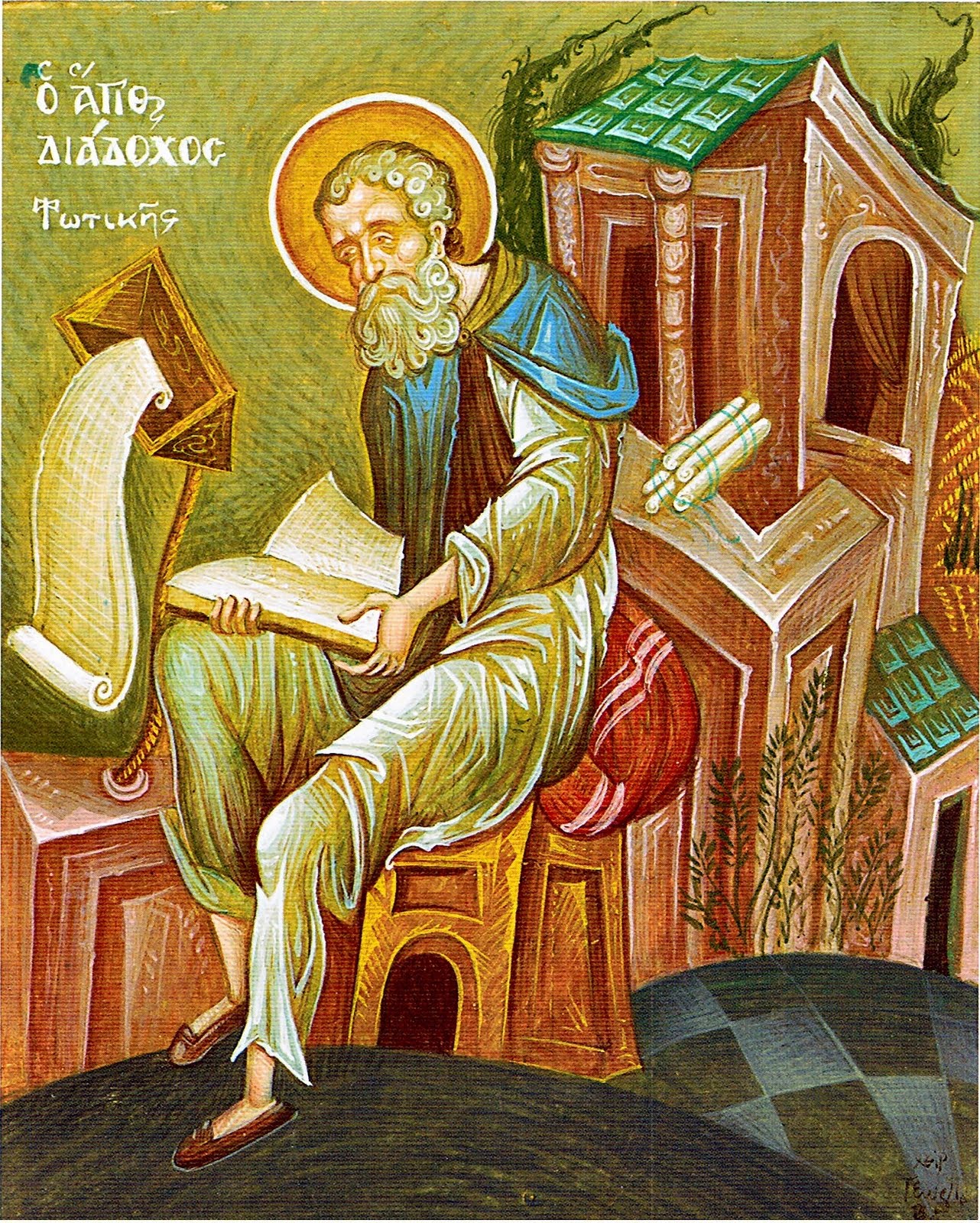
“When our intellect begins to perceive the grace of the Holy Spirit, then Satan, too, importunes the soul with a sense of deceptive sweetness in the quiet times of the night, when we fall into a light kind of sleep. If the intellect at that time cleaves fervently to the remembrance of the glorious and holy name of the Lord Jesus and uses it as a weapon against Satan’s deception, he gives up this trick and for the future will attack the soul directly and personally. As a result the intellect clearly discerns the deception of the evil one and advances even further in the art of discrimination.”
~ from: “On Spiritual Knowledge and Discrimination. One Hundred Texts“, No. 31. From Philokalia, Vol. 1.
Yannaras: “Towards a New Ecumenism”
Posted by Dallas Wolf in Ekklesia and church, New Nuggets on January 9, 2015
Christos Yannaras (1935 – ) was Professor of Philosophy at Pantion University of Social and Political Sciences, Athens. His books include Freedom of Morality and Person and Eros. His essay first appeared in French in Contacts, No. 179 (1997), pp. 202-206.
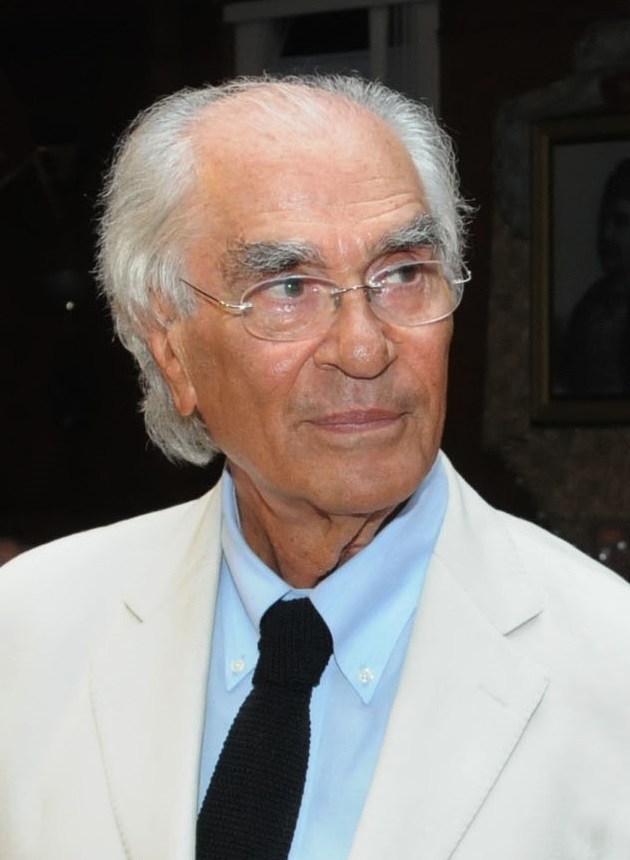
“I dream of an ecumenism which will begin with a confession of sins on the part of each Church. If we begin with this confession of our historic sins, perhaps we can manage to give ourselves to each other in the end. We are full of faults, full of weaknesses which distort our human nature. But Saint Paul says that from our weakness can be born a life which will triumph over death. I dream of an ecumenism that begins with the voluntary acceptance of that weakness.” ~ Christos Yannaras
Metropolitan Kallistos (Ware): “Inner Meaning of The Jesus Prayer”
Posted by Dallas Wolf in Hesychasm - Jesus Prayer, New Nuggets on January 2, 2015
 “There is a story told from 18th century France of an old man who used to go for a long time each day into Church. His friends asked him: “What are you doing all the time in Church?” “I’m praying”, he said. And they answered: “You must have a great many things to ask God, if you take such a long time praying?” With indignation he responded: “I’m not asking God for anything!” “Well”, they said, “what are you doing all that time in Church?”
And he replied: “I just sit and look at God and God sits and looks at me”.
That is one of the best definitions that I know of prayer. And it sums up the Jesus Prayer in particular; it is a way of sitting and looking at God!
Let us now consider a little the inner meaning of the Jesus Prayer. In the Sermon of the Mount Christ says: “When you pray do not use vain repetitions”. Don’t heap up empty phrases as the heathen do thinking that they will be heard because of their many words. Does then the Jesus Prayer come under Christ’s rebuke? Certainly it is a repetition, but it is not a vain repetition if it is said with faith and with love. Within the Jesus Prayer every word has weight, every word has meaning. It is not verbosity, but the Jesus Prayer is on the contrary, a precise and eloquent confession of faith.
Let us explore then a little of the meaning of the Jesus Prayer. In that very attractive 19th century Russian text; attractive, but also in some ways misleading: The Tales of a Pilgrim. It is said, that the Jesus Prayer contains the whole of the Gospel; all embracing. In what way? First, the Jesus Prayer contains the two poles, the two moments of Christian experience. And these two moments are: adoration and penitence, or glory and forgiveness. There is in the Jesus Prayer a circular movement, a double movement of assent and return. First we ascend to God in adoration “Lord Jesus Christ, Son of God” and then we return to ourselves in penitence “have Mercy on me the sinner”.
Now, the gulf, the abyss between the divine glory and our human brokenness is bridged in the Jesus Prayer by two words “Jesus” and “Mercy”. In this connection we need to recall the literal meaning of the name Jesus. It means: Salvation! As the angel says before the birth of Christ (Matt 1:21): “You shall call his name Jesus, for he shall save his people from their sin”.
First of all then, the gulf between glory and sin is bridged by Jesus, who is salvation. Then the other bridge building word in the Jesus Prayer is the word “Mercy”, Eleos in Greek. What does the word “Mercy” mean to you? For me it means love in action, love poured out to heal, to reconcile, to renew. Sometime people say to me that the Jesus Prayer is a rather gloomy prayer. I don’t experience it in that way. I see it as a prayer full of light and hope, because it speaks of Salvation and of Mercy.” ~ From a lecture delivered in 1997
 First Thoughts