Archive for category New Nuggets
Met. Hierotheos (Vlachos): “Man has two cognitive centers.”
Posted by Dallas Wolf in Hesychasm - Jesus Prayer, New Nuggets, Theology on August 22, 2016
Metropolitan Hierotheos (Vlachos) – (1945- ) is a Greek Orthodox metropolitan and theologian. He graduated from the Theological School of the University of Thessaloniki and is one of the finest Patristic scholars living.
 “Man has two cognitive centers. One is the nous, the organ suited for receiving God’s revelation which is then formulated by our reason, while the other is reason, which knows the tangible world around us. With our nous we acquire knowledge of God, while with our reason we acquire knowledge of the world and the learning offered by the science of sensory things.”
From The Person in the Orthodox Tradition, p. 28
Romanides: “What is the Human Nous?”
Posted by Dallas Wolf in New Nuggets, Theology on August 22, 2016
John Romanides (1927 – 2001) was a prominent 20th century Orthodox Christian theologian, priest, and writer. He was Professor of Dogmatic Theology at the Holy Cross Theological School in Brookline, MA and later Professor of Dogmatic Theology at the University of Thessaloniki, Greece.

“The chief concern of the Orthodox Church is the healing of the human soul. The Church has always considered the soul as the part of the human being that needs healing because She has seen from Hebrew tradition, from Christ Himself, and from the Apostles that in the region of the physical heart there functions something that the Fathers called the nous. In other words, the Fathers took the traditional term nous, which means both intellect (dianoia) and speech or reason (logos), and gave it a different meaning. They used nous to refer to this noetic energy that functions in the heart of every spiritually healthy person. We do not know when this change in meaning took place, because we know that some Fathers used the same word nous to refer to reason as well as to this noetic energy that descends and functions in the region of the heart.
So from this perspective, noetic activity is an activity essential to the soul. It functions in the brain as the reason; it simultaneously functions in the heart as the nous. In other words, the same organ, the nous, prays ceaselessly in the heart and simultaneously thinks about mathematical problems, for example, or anything else in the brain.
We should point out that there is a difference in terminology between St. Paul and the Fathers. What St. Paul calls the nous is the same as what the Fathers call dianoia. When the Apostle Paul says, “I will pray with the spirit,”[1] he means what the Fathers mean when they say, “I will pray with the nous.” And when he says, “I will pray with the nous,” he means “I will pray with the intellect (dianoia).” When the Fathers use the word nous, the Apostle Paul uses the word “spirit.” When he says “I will pray with the nous, I will pray with the spirit” or when he says “I will chant with the nous, I will chant with the spirit,” and when he says “the Spirit of God bears witness to our spirit,”[2] he uses the word “spirit” to mean what the Fathers refer to as the nous. And by the word nous, he means the intellect or reason.
In his phrase, “the Spirit of God bears witness to our spirit,” St. Paul speaks about two spirits: the Spirit of God and the human spirit. By some strange turn of events, what St. Paul meant by the human spirit later reappeared during the time of St. Makarios the Egyptian with the name nous, and only the words logos and dianoia continued to refer to man”s rational ability. This is how the nous came to be identified with spirit, that is, with the heart, since according to St. Paul, the heart is the place of man’s spirit.[3]
Thus, for the Apostle Paul reasonable or logical worship takes place by means of the nous (i.e., the reason or the intellect) while noetic prayer occurs through the spirit and is spiritual prayer or prayer of the heart.[4] So when the Apostle Paul says, “I prefer to say five words with my nous in order to instruct others rather than a thousand with my tongue,”[5] he means that he prefers to say five words, in other words to speak a bit, for the instruction of others rather than pray noetically. Some monks interpret what St. Paul says here as a reference to the Prayer of Jesus, which consists of five words,[6] but at this point the Apostle is speaking here about the words he used in instructing others.[7] For how can catechism take place with noetic prayer, since noetic prayer is a person”s inward prayer, and others around him do not hear anything? Catechism, however, takes place with teaching and worship that are cogent and reasonable. We teach and speak by using the reason, which is the usual way that people communicate with each other.[8]
Those who have noetic prayer in their hearts do, however, communicate with one another. In other words, they have the ability to sit together, and communicate with each other noetically, without speaking. That is, they are able to communicate spiritually. Of course, this also occurs even when such people are far apart. They also have the gifts of clairvoyance and foreknowledge. Through clairvoyance, they can sense both other people’s sins and thoughts (logismoi), while foreknowledge enables them to see and talk about subjects, deeds, and events in the future. Such charismatic people really do exist. If you go to them for confession, they know everything that you have done in your life before you open your mouth to tell them.”
Endnotes
- 1 Corinthians 14:5.
- Romans 8:16.
- This means that the Spirit of God speaks to our spirit. In other words, God speaks within our heart by the grace of the Holy Spirit. St. Gregory Palamas in his second discourse from “In Behalf of the Sacred Hesychasts” notes that “the heart rules over the whole human organism”. For the nous and all the thoughts (logismoi) of the soul are located there.” From the context of grace-filled prayer, it is clear that the term “heart” does not refer to the physical heart, but to the deep heart, while the term nous does not refer to the intellect (dianoia), but to the energy/activity of the heart, the noetic activity which wells forth from the essence of the nous (i.e., the heart). For this reason, St. Gregory adds that it is necessary for the hesychasts “to bring their nous back and enclose it within their body and particularly within that innermost body, within the body that we call the heart.” The term “spirit” is also identical with the terms nous and “heart.” Philokalia, vol. IV (London: Faber and Faber, 1995), p, 334.
- Cf. Metropolitan Hierotheos Vlachos, who notes: “Man has two centers of knowing: the nous which is the appropriate organ for receiving the revelation of God that is later put into words through the reason and the reason which knows the sensible world around us.” The Person in Orthodox Tradition, trans. Effie Mavromichali (Levadia: Monastery of the Birth of the Theotokos, 1994), p. 24.
- 1 Corinthians 14:19.
- In Greek, the Prayer of Jesus consists of exactly five words in its simplest form, which in English is translated as “Lord Jesus Christ, have mercy on me” “TRANS.
- “Thus as Saint John of Damascus puts it, we are led as though up a ladder to the thinking of good thoughts”. Saint Paul also indicates this when he says: “I had rather speak five words with my nous”.” St. Peter of Damascus, “The Third Stage of Contemplation,” in Philokalia, 3, page 42 [my translation: cf. also English Philokalia, vol. XXX, p. 120] and St. Nikitas Stithatos, as cited below.
- With respect to this, Venerable Nikitas Stithatos writes, “If when you pray and psalmodize you speak in a tongue to God in private you edify yourself, as Saint Paul says. ” If it is not in order to edify his flock that the shepherd seeks to be richly endowed with the grace of teaching and the knowledge of the Spirit, he lacks fervor in his quest for God”s gifts. By merely praying and psalmodizing inwardly with your tongue, that is, by praying in the soul ” you edify yourself, but your nous is unproductive [cf. I Corinthians 14:14], for you do not prophesy with the language of sacred teaching or edify God’s Church. If Paul, who of all men was the most closely united with God through prayer, would have rather spoken from his fertile nous five words in the church for the instruction of others than ten thousand words of psalmody in private with a tongue [cf., I Corinthians 14:19], surely those who have responsibility for others have strayed from the path of love if they limit the shepherd’s ministry solely to psalmody and reading.” St. Nikitas Stithatos, “On Spiritual Knowledge,” in The Philokalia, vol. 4, pp. 169-170.
From “Patristic Theology – The University Lectures of Father John Romanides”, (Thessaloniki, Greece: Uncut Mountain Press, 2008), pp. 19-23.
Met. Kallistos: “The ‘Heart’ in Christian Contemplative Prayer”
Posted by Dallas Wolf in Hesychasm - Jesus Prayer, New Nuggets, Theology on August 5, 2016
The following is an excerpt from Metropolitan Kallistos Ware (b. 1934) in his Introduction to On the Prayer of Jesus , by Ignatius Brianchaninov, Kallistos Ware, Father Lazarus.
 “Ignatius [Brianchaninov] distinguishes three main stages or levels on this journey inwards, which he describes as “oral”, “mental”, and “cordial”; that is to say, prayer of the lips, prayer of the mind, and prayer of the heart”.
“The third degree of prayer is attained when not only does the mind or intellect [nous] recite the Jesus Prayer with full attentiveness, but it also descends into the heart and is united with it. In this way our invocation [of Lord, Jesus, Christ, Son of God] becomes prayer of the heart, or more exactly prayer of the mind in the heart. When the hesychast tradition speaks of the “heart” in this context, the word is to be understood in its full Hebraic sense, as found in Scripture: it signifies, not merely the emotions and affections, but the moral and spiritual center of the total person, the ground and focal point of our created being, the deep self. Prayer of the heart, then, is no longer prayer of the faculty alone, but prayer of the entire person, spirit, soul, and body together. It is precisely at this stage that prayer becomes not just something that we do but something that we are – something, moreover, that we are not just from time to time but continually. In this way St. Paul’s injunction becomes a realized fact: “Pray without ceasing” (1 Thess. 5:17). Nor is this all. Since the heart is not only the center of our created personhood but also the place where Christ and the Holy Spirit dwell within us, prayer of the heart is not so much something that we do as something that God does; not so much my prayer as the prayer of Christ in me (Gal. 2:20).”
Rohr: “… Jesus is never actually upset at sinners…”
Posted by Dallas Wolf in New Nuggets on July 11, 2016

– Fr. Richard Rohr from his “Eight Core Principles”
Rohr: There is no sacred and profane…
Posted by Dallas Wolf in First Thoughts, New Nuggets on March 10, 2016
“There are not sacred and profane things, places, and moments. There are only sacred and desecrated things, places, and moments— and it is we alone who desecrate them by our blindness and lack of reverence.”
Fr. Richard Rohr, OFM
Arch. Ireini : “…encountering Christ but in a way we can’t understand…”
Posted by Dallas Wolf in New Nuggets on March 6, 2016
Archimandrite Ireini (Steenberg) – was born in the United States in 1978 . He was head of Theology & Tutor for Graduates, University of Oxford. In 2011 he became Founder and Dean of the Sts Cyril & Athanasius Institute for Orthodox Studies, San Francisco.

“… being general in a Christian way—[mysticism is] encountering Christ but in a way that we can’t understand or can’t articulate.” ~ Hieromonk Ireini (Steenberg) from a lecture on “Orthodoxy and Mysticism”, 2010.
Rohr: “First-hand Experience”
Posted by Dallas Wolf in Hesychasm - Jesus Prayer, New Nuggets, Theology on March 1, 2016
“. . . All knowledge of God is first-hand experience.”
~ Fr. Richard Rohr, OFM, from his homily 28 Feb 2016
St. Nikolai Velimirovich: “Our religion is founded on spiritual experience…”
Posted by Dallas Wolf in Hesychasm - Jesus Prayer, New Nuggets, Theology on March 1, 2016
Saint Nikolai Velimirovich (1881-1956) – was a bishop in the Serbian Orthodox Church, an influential theological writer and a highly gifted orator.
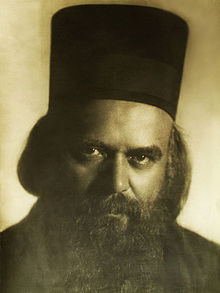
“Our religion is founded on spiritual experience, seen and heard as surely as any physical fact in this world. Not theory, not philosophy, not human emotions, but experience.”
~ St. Nikolai Velimirovic
St. Porphyrios: “A person can become a saint anywhere”
Posted by Dallas Wolf in Ekklesia and church, New Nuggets on February 20, 2016
St. Porphyrios (Bairaktaris) (1906-1991) – was an Athonite hieromonk known for his gifts of spiritual discernment. He was officially recognized as a saint by the Ecumenical Patriarchate of Constantinople in 2013.
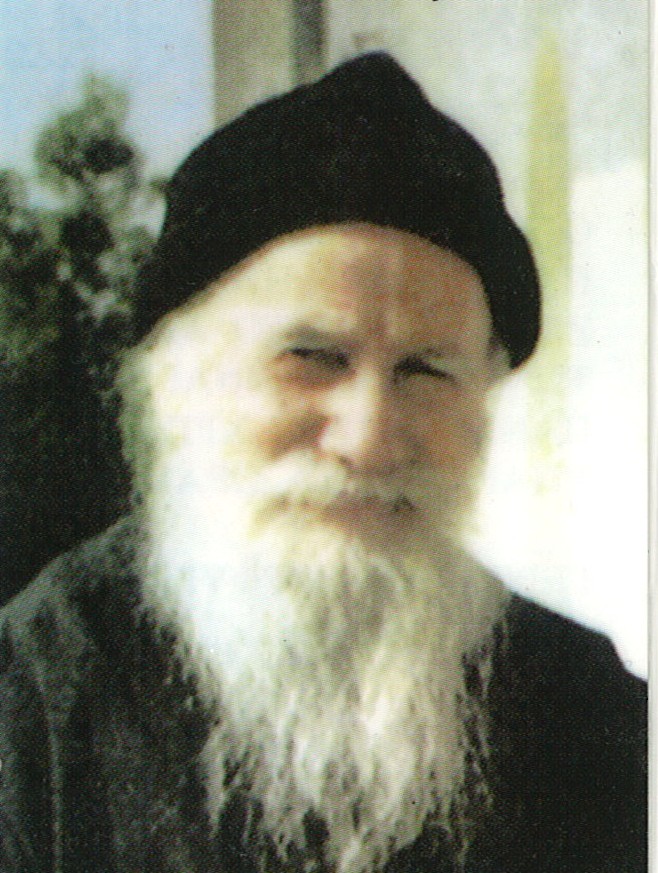 “It is a great art to succeed in having your soul sanctified. A person can become a saint anywhere. He can become a saint in Omonia Square, if he wants. At your work, whatever it may be, you can become a saint through meekness, patience, and love. Make a new start every day, with new resolution, with enthusiasm and love, prayer and silence — not with anxiety so that you get a pain in the chest.” ~ St. Porphyrios
Andreas Andreopoulos: “On Apokatastasis”
Posted by Dallas Wolf in New Nuggets, Universal Restoration (Apokatastasis) on February 13, 2016
 “Alexandrian theology in the second/third century starts a particularly Eastern theological strand of eschatology that leads all the way to Mark of Ephesus in the fifteenth, one which differs from most Western views if not necessarily and officially on the eternity of evil, at least on the question as to where this evil is to be found and therefore comes from – in doctrinal contrast to the views of Western theologians such as Abelard, who saw the torments of hell as a punishment very often more cruel than the sins that warranted it, in a place that had specifically been created by God for this purpose, as it was believed after Augustine. The ancient as well as the late Byzantine position, certainly before the Western influences on Greek and Russian theology after the Renaissance, was that nothing evil can come from God, not even punishment. The punishment and torments of hell are only inflicted from ourselves, both in this world and in the next one. Hell and its fire is not different, essentially, from the benevolent energy of God, when experienced by the sinners. The restoration of all, at best an interesting and possible speculation though not a doctrine, is an idea not too far from all this.”
 First Thoughts