Archive for category New Nuggets
N.T. Wright: “The first expositor of Paul’s greatest letter was an ordained travelling businesswoman.”
Posted by Dallas Wolf in New Nuggets on February 3, 2015
Nicholas Thomas (“Tom”) N.T. Wright (1948 – ), is the research professor of New Testament and early Christianity at the University of St. Andrews, Scotland. He was previously the Anglican Bishop of Durham, and has taught New Testament Studies at Oxford, Cambridge and McGill Universities.
 “All Christian ministry begins with the announcement that Jesus has been raised from the dead. And Jesus entrusted that task, first of all, not to Peter, James, or John, but to Mary Magdalene. Part of the point of the new creation launched at Easter was the transformation of roles and vocations: from Jews-only to worldwide, from monoglot to multilingual (think of Pentecost), and from male-only leadership to male and female together.
Within a few decades, Paul was sending greetings to friends including an “apostle” called Junia (Romans xvi, 7). He entrusted that letter to a “deacon” called Phoebe whose work was taking her to Rome. The letter-bearer would normally be the one to read it out to the recipients and explain its contents. The first expositor of Paul’s greatest letter was an ordained travelling businesswoman.”
Yannaras: “Towards a New Ecumenism”
Posted by Dallas Wolf in Ekklesia and church, New Nuggets on January 9, 2015
Christos Yannaras (1935 – ) was Professor of Philosophy at Pantion University of Social and Political Sciences, Athens. His books include Freedom of Morality and Person and Eros. His essay first appeared in French in Contacts, No. 179 (1997), pp. 202-206.
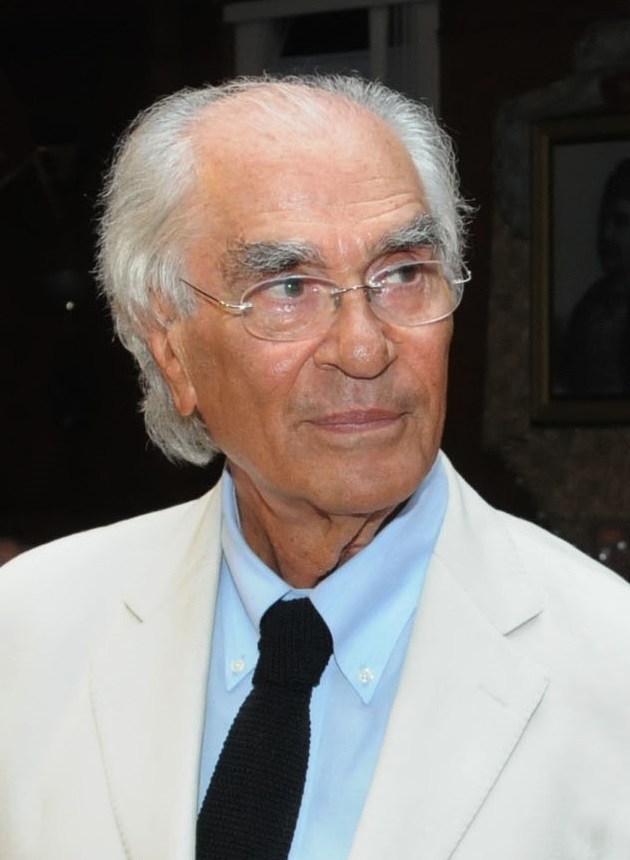
“I dream of an ecumenism which will begin with a confession of sins on the part of each Church. If we begin with this confession of our historic sins, perhaps we can manage to give ourselves to each other in the end. We are full of faults, full of weaknesses which distort our human nature. But Saint Paul says that from our weakness can be born a life which will triumph over death. I dream of an ecumenism that begins with the voluntary acceptance of that weakness.” ~ Christos Yannaras
Metropolitan Kallistos (Ware): “Inner Meaning of The Jesus Prayer”
Posted by Dallas Wolf in Hesychasm - Jesus Prayer, New Nuggets on January 2, 2015
 “There is a story told from 18th century France of an old man who used to go for a long time each day into Church. His friends asked him: “What are you doing all the time in Church?” “I’m praying”, he said. And they answered: “You must have a great many things to ask God, if you take such a long time praying?” With indignation he responded: “I’m not asking God for anything!” “Well”, they said, “what are you doing all that time in Church?”
And he replied: “I just sit and look at God and God sits and looks at me”.
That is one of the best definitions that I know of prayer. And it sums up the Jesus Prayer in particular; it is a way of sitting and looking at God!
Let us now consider a little the inner meaning of the Jesus Prayer. In the Sermon of the Mount Christ says: “When you pray do not use vain repetitions”. Don’t heap up empty phrases as the heathen do thinking that they will be heard because of their many words. Does then the Jesus Prayer come under Christ’s rebuke? Certainly it is a repetition, but it is not a vain repetition if it is said with faith and with love. Within the Jesus Prayer every word has weight, every word has meaning. It is not verbosity, but the Jesus Prayer is on the contrary, a precise and eloquent confession of faith.
Let us explore then a little of the meaning of the Jesus Prayer. In that very attractive 19th century Russian text; attractive, but also in some ways misleading: The Tales of a Pilgrim. It is said, that the Jesus Prayer contains the whole of the Gospel; all embracing. In what way? First, the Jesus Prayer contains the two poles, the two moments of Christian experience. And these two moments are: adoration and penitence, or glory and forgiveness. There is in the Jesus Prayer a circular movement, a double movement of assent and return. First we ascend to God in adoration “Lord Jesus Christ, Son of God” and then we return to ourselves in penitence “have Mercy on me the sinner”.
Now, the gulf, the abyss between the divine glory and our human brokenness is bridged in the Jesus Prayer by two words “Jesus” and “Mercy”. In this connection we need to recall the literal meaning of the name Jesus. It means: Salvation! As the angel says before the birth of Christ (Matt 1:21): “You shall call his name Jesus, for he shall save his people from their sin”.
First of all then, the gulf between glory and sin is bridged by Jesus, who is salvation. Then the other bridge building word in the Jesus Prayer is the word “Mercy”, Eleos in Greek. What does the word “Mercy” mean to you? For me it means love in action, love poured out to heal, to reconcile, to renew. Sometime people say to me that the Jesus Prayer is a rather gloomy prayer. I don’t experience it in that way. I see it as a prayer full of light and hope, because it speaks of Salvation and of Mercy.” ~ From a lecture delivered in 1997
Stăniloae: “The latter [apophatic knowledge] is superior to the former [cataphatic knowledge] because it completes it.”
Posted by Dallas Wolf in Hesychasm - Jesus Prayer, New Nuggets, Theology on December 7, 2014
Dumitru Stăniloae (1903 – 1993) was an Orthodox priest and renowned as an Orthodox theologian, academic, and professor. In addition to commentary on the works of the Church Fathers Maximus the Confessor, Gregory Palamas, and Athanasias, his 1978 masterpiece “The Dogmatic Orthodox Theology” established him as one of the foremost Christian theologians of the later half of the twentieth century.
 “According to patristic tradition, there is a rational or cataphatic knowledge of God, and an apophatic or ineffable knowledge. The latter is superior to the former because it completes it. God is not known in his essence, however, through either of these. We know God through cataphatic knowledge only as creating and sustaining cause of the world, while through apophatic knowledge we gain a kind of direct experience of his mystical presence which surpasses the simple knowledge of him as cause who is invested with certain attributes similar to those of the world. This latter knowledge is termed apophatic because the mystical presence of God experienced through it transcends the possibility of being defined in words. This knowledge is more adequate to God than is cataphatic knowledge.” Dogmatic Orthodox Theology, I-95
Rahner – “The Christian of the future will be a mystic…”
Posted by Dallas Wolf in New Nuggets on August 29, 2014
Karl Rahner, (March 5, 1904 – March 30, 1984), was a German Jesuit priest and theologian who is considered one of the most influential Catholic theologians of the 20th century.

“The Christian of the future will be a mystic, or he will not exist at all.”
Karl Rahner, Theological Investigations XX, 149.
Rohr: “Thou Art That”
Posted by Dallas Wolf in Ekklesia and church, New Nuggets on August 2, 2014

Fr. Richard Rohr, Franciscan Christian mystic and contemplative.
“Theologically it is not correct for Christians to simply call Jesus “God” or to simply call him ” a man”. He is manifesting a third something, not God, not human, but the combination of the two! And his existence says to all of us: THOU ART THAT! YOU also manifest the same eternal mystery, each in your own way! “Follow me!” We did ourselves and Jesus no favor by simply calling him “God”. We missed the very point that could have and could still transform the world. We made the Christ Mystery into a competitive religion instead of an icon of transformation for everybody. We made Jesus into an “exclusive” incarnation instead of an inclusive Savior. He came to take us along with him, not to just say “look at me”. The paradox was so big, so central, and so stunning that our ordinary dualistic minds could not comprehend it. Only the “non dual” saints and mystics could process it and experience it. But now YOU can too: Thou Art That!” ~ Fr. Richard Rohr, OFM
T.S.Eliot: “The World is trying the experiment of attempting to form a civilized but non-Christian mentality”
Posted by Dallas Wolf in New Nuggets on July 26, 2014


“The World is trying the experiment of attempting to form a civilized but non-Christian mentality. The experiment will fail; but we must be very patient in awaiting its collapse; meanwhile redeeming the time: so that the Faith may be preserved alive through the dark ages before us; to renew and rebuild civilization, and save the World from suicide.”
– T.S.Eliot
Rohr: “But Christians made Christianity into a competition…”
Posted by Dallas Wolf in New Nuggets on July 6, 2014
Fr. Richard Rohr, OFM (1943- ) is a Franciscan writer, teacher, mystic, and priest. He is at the forefront of Western Latin Christian efforts to restore their lost contemplative prayer tradition. He is the founder of the Center for Action and Contemplation in Albuquerque, NM. and the Rohr Institute’s Living School for Action and Contemplation. The Living School provides a course of study grounded in the Western Christian mystical tradition of the “Alternative Orthodoxy” of St. Francis of Assisi, St. Bonaventure, and Duns Scotus.
Fr. Richard Rohr (1943- )
Simone Weil, French philosopher, sought a bridge between Judaism and Christianity. “Her great message was that the trouble with Christianity is that it had made itself into a separate religion instead of recognizing that the prophetic message of Jesus might just be necessary for the reform and authenticity of all religions. But Christians made Christianity into a competition, and once we were in …competition, we had to be largely verbal [as opposed to contemplative]; soon we were aggressive and, saddest of all, we became quite violent – all in the name of God,…” ~ Yes, And Daily Devotional
Meyendorff: “The fact that the Logos assumed human nature as such implied the universal validity of redemption…”
Posted by Dallas Wolf in New Nuggets, Universal Restoration (Apokatastasis) on July 5, 2014
Fr. John Meyendorff (1926 – 1992) – was a leading theologian of the Orthodox Church as well as a writer and teacher. He was a great student of 14th century Saint, Gregory Palamas. Meyendorff served as the Dean of St. Vladimir’s Orthodox Theological Seminary in New York until 1992. Here, Meyendorff explains that the Orthodox church does not reject the idea of universal salvation, or apokatastasis, because it conflicts with the notion of eternal damnation, but “because it presupposes an ultimate limitation of human freedom”.

Fr. John Meyendorff (1926-1992)
“The fact that the Logos assumed human nature as such implied the universal validity of redemption, but not the ‘apokatastasis’, or universal salvation, a doctrine which in 553 was formally condemned as Origenistic. Freedom must remain an inalienable element of every man, and no one is to be forced into the Kingdom of God against his own free choice; the ‘apokatastasis’ had to be rejected precisely because it presupposes an ultimate limitation of human freedom – the freedom to remain outside of God.” ~ Byzantine Theology, 163
Zizioulas: “a person cannot be imagined in himself but only within his relationships.”
Posted by Dallas Wolf in New Nuggets on July 3, 2014
Metropolitan John (Zizioulas) of Pergamon (1931- ). He is the Chairman of the Academy of Athens. He has degrees from the University of Thessaloniki, studied at Harvard Divinity School, and received his PhD from the University of Athens. He has taught at the Universities of Athens, Edinburgh, Glasgow, and King’s College in London.
Met. John (Zizioulas)
“The significance of the person rests in the fact that he represents two things simultaneously which are at first sight in contradiction: particularity and communion. Being a person is fundamentally different from being an individual or a “personality,” for a person cannot be imagined in himself but only within his relationships.” ~ Being as Communion
 First Thoughts