Posts Tagged christian mysticism
Justin Popovich: “In truth there is only one freedom”
Posted by Dallas Wolf in New Nuggets on July 17, 2015

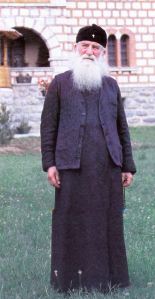
“In truth there is only one freedom – the holy freedom of Christ, whereby He freed us from sin, from evil, from the devil. It binds us to God. All other freedoms are illusory, false, that is to say, they are all, in fact, slavery.”
– Saint Justin Popovich
D.B. Hart: “Wisdom is the recovery of innocence at the far end of experience”
Posted by Dallas Wolf in New Nuggets on May 13, 2015
David Bentley Hart (1965- ), is a contemporary American Eastern Othodox theologian and philosopher.
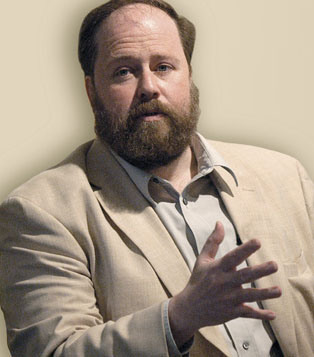 “I start from the conviction that many of the most important things we know are things we know before we can speak them; indeed, we know them—though with very little in the way of concepts to make them intelligible to us—even as children, and see them with the greatest immediacy when we look at them with the eyes of innocence. But, as they are hard to say, and as they are often so immediate to us that we cannot stand back from them objectively, we tend to put them out of mind as we grow older, and make ourselves oblivious to them, and try to silence the voice of knowledge that speaks within our own experiences of the world. Wisdom is the recovery of innocence at the far end of experience; it is the ability to translate some of that vision into words, however inadequate. There is a point, that is to say, where reason and revelation are one and the same.” ~ David Bentley Hart. from “The Experience of God”.
“There is an end to the deadly tedium of the impersonal”
Posted by Dallas Wolf in New Nuggets on March 22, 2015

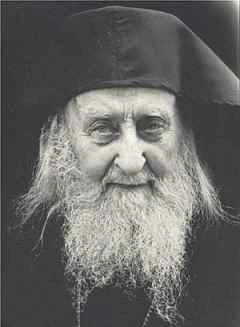 I AM THAT I AM. Yes, indeed, it is He Who is Being. He alone truly lives. Everything summoned from the abyss of non-being exists solely by His will. My individual life, down to the smallest detail, comes uniquely from Him. He fills the soul, binding her ever more intimately to Himself. Conscious contact with Him stamps a man for ever. Such a man will not now depart from the God of love Whom he has come to know. His mind is reborn. Hitherto he was inclined to see everywhere determined natural processes; now he begins to apprehend all things in the light of Person. Knowledge of the Personal God bears an intrinsically personal character. Like recognizes like. There is an end to the deadly tedium of the impersonal. The earth, the whole universe, proclaims Him: “heaven and earth praise him, the sea, and everything that moveth therein” (Ps. 69.34)…
View original post 32 more words
St. Diadochos of Photiki: “Early Mention of the ‘Jesus Prayer’, c. AD 450”
Posted by Dallas Wolf in Hesychasm - Jesus Prayer, Patristic Pearls on January 11, 2015
St. Diadochos of Photiki (c. AD 400 – c. 486). One of the earliest written references to the “Jesus Prayer”; “the remembrance of the glorious and holy name of the Lord Jesus…“
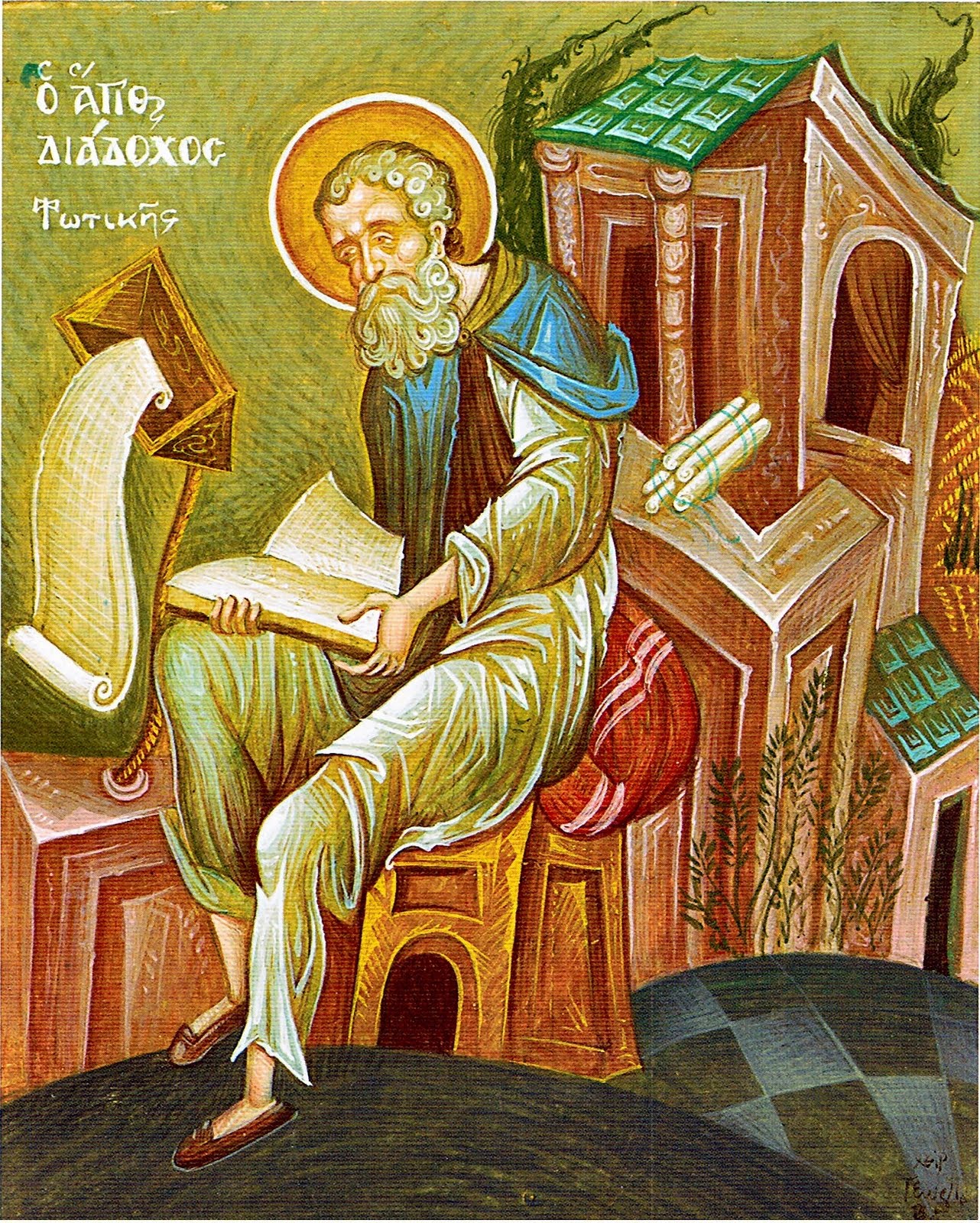
“When our intellect begins to perceive the grace of the Holy Spirit, then Satan, too, importunes the soul with a sense of deceptive sweetness in the quiet times of the night, when we fall into a light kind of sleep. If the intellect at that time cleaves fervently to the remembrance of the glorious and holy name of the Lord Jesus and uses it as a weapon against Satan’s deception, he gives up this trick and for the future will attack the soul directly and personally. As a result the intellect clearly discerns the deception of the evil one and advances even further in the art of discrimination.”
~ from: “On Spiritual Knowledge and Discrimination. One Hundred Texts“, No. 31. From Philokalia, Vol. 1.
Yannaras: “Towards a New Ecumenism”
Posted by Dallas Wolf in Ekklesia and church, New Nuggets on January 9, 2015
Christos Yannaras (1935 – ) was Professor of Philosophy at Pantion University of Social and Political Sciences, Athens. His books include Freedom of Morality and Person and Eros. His essay first appeared in French in Contacts, No. 179 (1997), pp. 202-206.
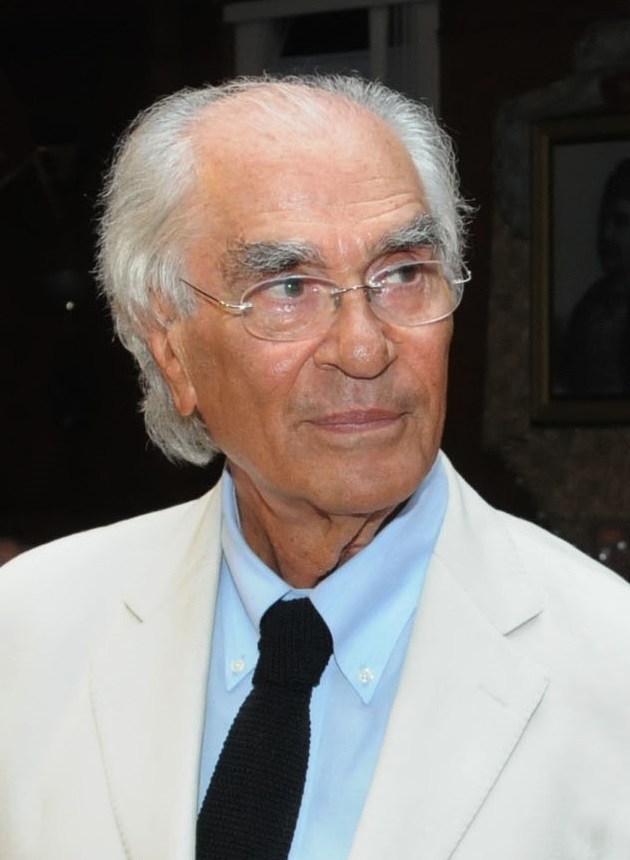
“I dream of an ecumenism which will begin with a confession of sins on the part of each Church. If we begin with this confession of our historic sins, perhaps we can manage to give ourselves to each other in the end. We are full of faults, full of weaknesses which distort our human nature. But Saint Paul says that from our weakness can be born a life which will triumph over death. I dream of an ecumenism that begins with the voluntary acceptance of that weakness.” ~ Christos Yannaras
Metropolitan Kallistos (Ware): “Inner Meaning of The Jesus Prayer”
Posted by Dallas Wolf in Hesychasm - Jesus Prayer, New Nuggets on January 2, 2015
 “There is a story told from 18th century France of an old man who used to go for a long time each day into Church. His friends asked him: “What are you doing all the time in Church?” “I’m praying”, he said. And they answered: “You must have a great many things to ask God, if you take such a long time praying?” With indignation he responded: “I’m not asking God for anything!” “Well”, they said, “what are you doing all that time in Church?”
And he replied: “I just sit and look at God and God sits and looks at me”.
That is one of the best definitions that I know of prayer. And it sums up the Jesus Prayer in particular; it is a way of sitting and looking at God!
Let us now consider a little the inner meaning of the Jesus Prayer. In the Sermon of the Mount Christ says: “When you pray do not use vain repetitions”. Don’t heap up empty phrases as the heathen do thinking that they will be heard because of their many words. Does then the Jesus Prayer come under Christ’s rebuke? Certainly it is a repetition, but it is not a vain repetition if it is said with faith and with love. Within the Jesus Prayer every word has weight, every word has meaning. It is not verbosity, but the Jesus Prayer is on the contrary, a precise and eloquent confession of faith.
Let us explore then a little of the meaning of the Jesus Prayer. In that very attractive 19th century Russian text; attractive, but also in some ways misleading: The Tales of a Pilgrim. It is said, that the Jesus Prayer contains the whole of the Gospel; all embracing. In what way? First, the Jesus Prayer contains the two poles, the two moments of Christian experience. And these two moments are: adoration and penitence, or glory and forgiveness. There is in the Jesus Prayer a circular movement, a double movement of assent and return. First we ascend to God in adoration “Lord Jesus Christ, Son of God” and then we return to ourselves in penitence “have Mercy on me the sinner”.
Now, the gulf, the abyss between the divine glory and our human brokenness is bridged in the Jesus Prayer by two words “Jesus” and “Mercy”. In this connection we need to recall the literal meaning of the name Jesus. It means: Salvation! As the angel says before the birth of Christ (Matt 1:21): “You shall call his name Jesus, for he shall save his people from their sin”.
First of all then, the gulf between glory and sin is bridged by Jesus, who is salvation. Then the other bridge building word in the Jesus Prayer is the word “Mercy”, Eleos in Greek. What does the word “Mercy” mean to you? For me it means love in action, love poured out to heal, to reconcile, to renew. Sometime people say to me that the Jesus Prayer is a rather gloomy prayer. I don’t experience it in that way. I see it as a prayer full of light and hope, because it speaks of Salvation and of Mercy.” ~ From a lecture delivered in 1997
Stăniloae: “The latter [apophatic knowledge] is superior to the former [cataphatic knowledge] because it completes it.”
Posted by Dallas Wolf in Hesychasm - Jesus Prayer, New Nuggets, Theology on December 7, 2014
Dumitru Stăniloae (1903 – 1993) was an Orthodox priest and renowned as an Orthodox theologian, academic, and professor. In addition to commentary on the works of the Church Fathers Maximus the Confessor, Gregory Palamas, and Athanasias, his 1978 masterpiece “The Dogmatic Orthodox Theology” established him as one of the foremost Christian theologians of the later half of the twentieth century.
 “According to patristic tradition, there is a rational or cataphatic knowledge of God, and an apophatic or ineffable knowledge. The latter is superior to the former because it completes it. God is not known in his essence, however, through either of these. We know God through cataphatic knowledge only as creating and sustaining cause of the world, while through apophatic knowledge we gain a kind of direct experience of his mystical presence which surpasses the simple knowledge of him as cause who is invested with certain attributes similar to those of the world. This latter knowledge is termed apophatic because the mystical presence of God experienced through it transcends the possibility of being defined in words. This knowledge is more adequate to God than is cataphatic knowledge.” Dogmatic Orthodox Theology, I-95
The Enlightenment Myth of “The Pursuit of Happiness”
Posted by Dallas Wolf in First Thoughts on November 8, 2014
“Is the “pursuit of happiness” not, according to the myth created by the founding fathers of the American Republic, an “inalienable right?” That concept has, in fact, entered so deeply into the thought and conscience of generations of North Americans that it is difficult to question it without being suspected of being, if not actually some kind of foreign agent, at least “un-American.” The concept of “the pursuit of happiness” itself is, however, diametrically opposed to Orthodox Christianity’s view of the Christian’s fundamentally sacrificial and intercessory role in the cosmos, to say nothing of Christianity’s most basic tenant: the sacrifice of Christ is absolutely essential within the divine economy of His Incarnation.
“The pursuit of happiness” actually opposes, moreover, man’s intimate relationship with God and that total submission to God the holy fathers of Orthodoxy teach us is basic to the spiritual life. The true lover of Christ, in fact, can never take the concept of the “pursuit of happiness” seriously as something that might ever be incorporated into his own life in Christ.
The “pursuit of happiness” inevitably fosters a totally self-centered view of life, ignoring completely all cosmic sense of man’s place in the universe. It further ignores the inevitable, perennial and very basic dimension of sacrifice demanded of man at every level of his human existence. Whether in pursuing the bonds of love with a future spouse, or in bringing forth and rearing children, or in caring for those one loves, or in maintaining the well-being of one’s own family, sacrifice and suffering are far more basic necessities to human well-being than is the “pursuit of happiness.””
Excerpt from The Heart of Orthodox Mystery, by William Bush
I have been thinking a lot recently about happiness. It does not seem to me a foundational tenet of Christianity but, as discussed above, a construct of Enlightenment thinking. In its place, I think it might be better to use the concept of St. Paul’s “contentment” (αὐτάρκεια; autárkeia), best expressed in Philippians 4:11-13:
“Not that I am referring to being in need; for I have learned to be content [αὐτάρκης; autárkes] with whatever I have. I know what it is to have little, and I know what it is to have plenty. In any and all circumstances I have learned the secret of being well-fed and of going hungry, of having plenty and of being in need. I can do all things through him who strengthens me.”
Perhaps we should be pursuing “contentment”, which is a state achievable regardless of circumstance, instead of “happiness” which is inherently emotional, self-centered, illusory, and transitory.
Rahner – “The Christian of the future will be a mystic…”
Posted by Dallas Wolf in New Nuggets on August 29, 2014
Karl Rahner, (March 5, 1904 – March 30, 1984), was a German Jesuit priest and theologian who is considered one of the most influential Catholic theologians of the 20th century.

“The Christian of the future will be a mystic, or he will not exist at all.”
Karl Rahner, Theological Investigations XX, 149.
St. Gregory of Nyssa – “… only wonder grasps anything”
Posted by Dallas Wolf in Hesychasm - Jesus Prayer, Monasticism, Patristic Pearls on August 5, 2014
St. Gregory of Nyssa (c. AD 335 – 395) – Along with his older brother, Basil of Caesarea, and their friend, Gregory of Nazianzus, Nyssen was one the three great Cappadocian Fathers of the 4th century. He was also younger brother of St. Macrina the Younger; virgin, mystic, monasatic, wonder worker, and philosopher of God.

“Concepts create idols; only wonder grasps anything; People kill one another over idols. Wonder makes us fall to our knees.”
~ from: The Life of Moses
 First Thoughts