Posts Tagged contemplative prayer
Essence and Energies of God – 3
Posted by Dallas Wolf in Essence and Energies (series) on August 28, 2015

Thaboric Light
Energies (ἐνέργεια; enérgeia)
In our discussion on God’s energies, I will rely heavily on the writings of the greatest expositor on the Essence and Energies of God, St. Gregory Pálamas (1296–1359). Palamas was a monk of Mount Athos in Greece and later the Archbishop of Thessaloniki. He is known as the preeminent theologian of Hesychasm (Greek: silence, stillness, or quietude), the ancient Christian tradition of contemplative prayer and theosis, or union with God, dating back to the 2nd century.
In the 1330s and 1340s Palamas defended the theology and doctrine of Hesychasm against Barlaam the Calabrian, a theologian trained in Western Scholastic tradition of reason and logic, who attacked the doctrines and practices of the Hesychasts, accusing them of heresy and blasphemy.
In response to Barlaam’s attacks, Palamas wrote nine treatises entitled “Triads For The Defense of Those Who Practice Sacred Quietude [Hesychasts]”. The treatises are called “triads” because they were organized as three sets of three treatises. Ultimately, Palamas prevailed and his theology was endorsed in a series of six patriarchal councils held in Constantinople between 1341 and 1351. Barlaam was anathematized, returned to Italy, and joined the Roman Catholic Church where is views received a more sympathetic reception.
Most of what follows comes from Fr. John Meyendorff’s 1983 publication of St. Gregory Palamas’ “Triads”.
Myendorff observed that, “The distinction in God between “essence” and “energy” – that focal point of Palamite theology – is nothing but a way of saying that the transcendent God remains transcendent, as He communicates Himself to humanity.” Unpacking this idea a bit further, he explains, “…for Palamas, this transcendent essence of God would be a philosophical abstraction if it did not possess “power”, that is, “the faculties of knowing, of prescience, of creating”. In other words, the God of Palamas is a living God…”
“The real communion, the fellowship and – one can almost say – the familiarity with the “One Who Is” [God] is, for Palamas the very content of the Christian experience, made possible because the “One Who Is” [God] became man.”
“After the coming of Christ … God enters into immediate communion with humanity.” So, for Palamas the Incarnation of Christ, the Logos, the second Person of the Holy Trinity, is absolutely central. Indeed, true “deification” (theosis) became possible when, according to the expressions of St. Athanasius, “God became man in order that man might become God in him”.
To be continued…
Essence and Energies of God – 5
Posted by Dallas Wolf in Essence and Energies (series) on August 26, 2015
Thaboric Light
In the context of this affirmation of God’s real manifestation of his energies to creatures, Palamas, following Maximus the Confessor and John of Damascus, refers to the New Testament accounts and references to the Transfiguration of Christ on the mount (Mt. 17:1-9; Mk. 9:2-9;Lk. 9:28-36; 2 Pet. 1:17-21). This idea of “God as Light” recurs throughout Patristic literature including the aforementioned Maximus and John, plus the likes of Origen, Gregory of Nyssa, Dionysius the Areopagite, St. Symeon the New Theologian, and Gregory Palamas himself.
Palamas was quick to point out the difference between any other light-experience and that of the vision of God as Light that appeared to the disciples during the Transfiguration on Mount Thabor and that, in Christ, has become accessible to the members of His Body, the Church. The following quote from Palamas (Triad I, 3, 38) uses the image of the illumination of the disciples by Christ on Mount Thabor to explain how we, in Christ, can be illuminated from within.
“Since the Son of God, in his incomparable love for man, did not only unite His divine Hypostasis with our nature, by clothing Himself in a living body and a soul gifted with intelligence… but also united himself,,, with the human hypostases themselves, in mingling himself with each of the faithful by communion with his Holy Body, and since he becomes one single body with us (cf. Eph. 3:6), and makes us a temple of the undivided Divinity, for in the very body of Christ dwelleth the fullness of the Godhead bodily (Col. 2:9), how should he not illuminate those who commune worthily with the divine ray of His Body which is within us, lightening their souls, as He illumined the very bodies of the disciples on Mount Thabor? For, on the day of the Transfiguration that Body, source of the light of grace, was not yet united with our bodies; it illuminated from outside those who worthily approached it, and sent the illumination into the soul by an intermediary of the physical eyes; but now, since it is mingled with us and exists in us, it illuminates the soul from within.” ~ Palamas Triad I, 3, 38
“It is precisely because Palamas understands illumination in the framework of Orthodox Christology that he insists on the uncreated character of divine light: This uncreated light is the very divinity of Christ, shining through his humanity. If Christ is truly God, this light is authentically divine.” (Meyendorff)
To be continued
Essence and Energies of God – 6
Posted by Dallas Wolf in Essence and Energies (series) on August 25, 2015
Thaboric Light
The same Christological framework makes it inevitable to distinguish between the transcendent essence, or nature of God, and His energies. Indeed, in Christ His two natures – so precisely defined at Chalcedon as both “inseparable” and “unconfused” – remain distinct. Therefore deification of communion between divinity and humanity does not imply a confusion of essences or natures. It remains nevertheless real communion between the Uncreated and His creature, and real deification – not by essence, but by energy. The humanity of Christ, “enhypostasized” by the Logos, is penetrated with divine energy, and Christ’s body becomes the source of divine light and deification. It is “theurgic”, that is, it communicates divine life to those who are “in Christ” and participate in the uncreated energies active in it.” (Meyendorff)
Theologian Christos Yannaras uses an analogy from Maximus the Confessor to further explain the distinction between essence and energies:
St. Maximus the Confessor uses as an image and an example of such communion the human voice, which being one is participated in by many, and is not swallowed up by the multitude. If by taking this example we can arbitrarily consider human reason as essence, then we can say that the voice represents the energy of the essence of reason, the possibility for us to participate in the essence of reason as the voice reveals and communicates it, to participate, all of us who hear the same voice, in the same essence of the one reason — without this communion becoming our identification with the essence of reason, and without the fragmentation of the essence in as many parts as there are participants in the reason through the voice. Reason, expressed personally, remains unified and indivisible, while at the same time, it is singularly participated by all.” ~ From “The Distinction Between Essence and Energies and its Importance for Theology”
To be continued…
Essence and Energies of God – 7
Posted by Dallas Wolf in Essence and Energies (series) on August 24, 2015
Thaboric Light
An understanding of God’s energies allows humankind to experience God directly through a personal relationship with the Persons of the triadic Godhead; the divine persons in communion and relationship with humanity as persons. That aligns with and supports every human being achieving their purpose in life; having been created in the image of God, to attain to His likeness, partaking of the divine nature, in this life.
Without an understanding the distinction between God’s Essence and Energies we cannot reconcile the reality of a totally transcendent, ineffable, and unknowable God with the reality of the intensely personal relationship with Christ inherent in the indwelling presence of the Holy Spirit within us. Christos Yannaras described the problem:
“The West rejected the distinction, desiring to protect the idea of simplicity in the divine essence, since rational thought cannot accept the antinomy [paradox] of a simultaneous existential identity and otherness, a distinction that does not mean division and fragmentation. For the western mind…God is defined only in terms of His essence; whatever is not essence does not belong to God; it is a creature of God, the result of divine essence.”
Without this theology of the Essence and Energies of God, the praxis of the Renewal Movement, the indwelling presence and power of God in intimate personal relationship within us, is left with no complementary supporting theology or doctrine. It is left without its complementary, supporting doxis. We are left with a religion with a split personality, with no continuity between its belief and action; its doxis and praxis.
You will note that the Western Latin (Roman Catholic and Protestant) Church, embodied in the person of Barlaam of Calabria, does not recognize the Essence-Energies doctrine. Hence, Western theology and doctrine have no means of explaining and dealing with the transcendence of God and with the simultaneous indwelling presence and power of the Holy Spirit which animates Renewal Movement Christians. The West has no orthodoxis which complements and supports a spirit-filled orthopraxis.
This orthodoxis is only found in the Eastern Orthodox tradition.
End
D.B. Hart: “Wisdom is the recovery of innocence at the far end of experience”
Posted by Dallas Wolf in New Nuggets on May 13, 2015
David Bentley Hart (1965- ), is a contemporary American Eastern Othodox theologian and philosopher.
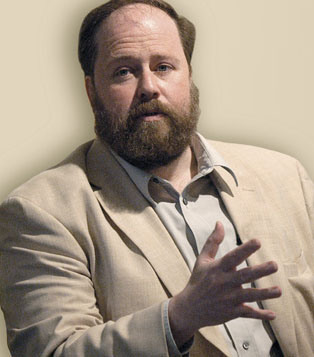 “I start from the conviction that many of the most important things we know are things we know before we can speak them; indeed, we know them—though with very little in the way of concepts to make them intelligible to us—even as children, and see them with the greatest immediacy when we look at them with the eyes of innocence. But, as they are hard to say, and as they are often so immediate to us that we cannot stand back from them objectively, we tend to put them out of mind as we grow older, and make ourselves oblivious to them, and try to silence the voice of knowledge that speaks within our own experiences of the world. Wisdom is the recovery of innocence at the far end of experience; it is the ability to translate some of that vision into words, however inadequate. There is a point, that is to say, where reason and revelation are one and the same.” ~ David Bentley Hart. from “The Experience of God”.
Maximos the Confessor: “How is unceasing prayer possible?”
Posted by Dallas Wolf in Hesychasm - Jesus Prayer, Patristic Pearls, Theology on February 28, 2015

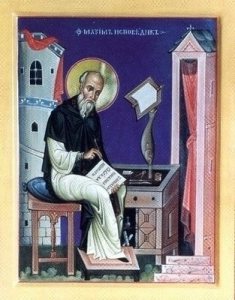
“How is unceasing prayer possible? When we are singing the Psalms, when we are reading the Scriptures, when we are serving our neighbor, even then it is easy enough for the mind to wander off after irrelevant thoughts and images.
Yet the Scriptures do not require impossibilities. St. Paul himself sang the Psalms, read the Scriptures, offered his own apostolic service, and nonetheless prayed uninterruptedly.
Unceasing prayer means to have the mind always turned to God with great love, holding alive our hope in Him, having confidence in Him whatever we are doing and whatever happens to us.
That is the attitude that the Apostle had when he wrote: ‘Who shall separate us from the love of Christ?”…
Thanks to this attitude of mind, Paul prayed without ceasing. In all that he did and in all that happened to him, he kept alive his hope in God.”
– St. Maximos…
View original post 5 more words
St. Diadochos of Photiki: “Early Mention of the ‘Jesus Prayer’, c. AD 450”
Posted by Dallas Wolf in Hesychasm - Jesus Prayer, Patristic Pearls on January 11, 2015
St. Diadochos of Photiki (c. AD 400 – c. 486). One of the earliest written references to the “Jesus Prayer”; “the remembrance of the glorious and holy name of the Lord Jesus…“
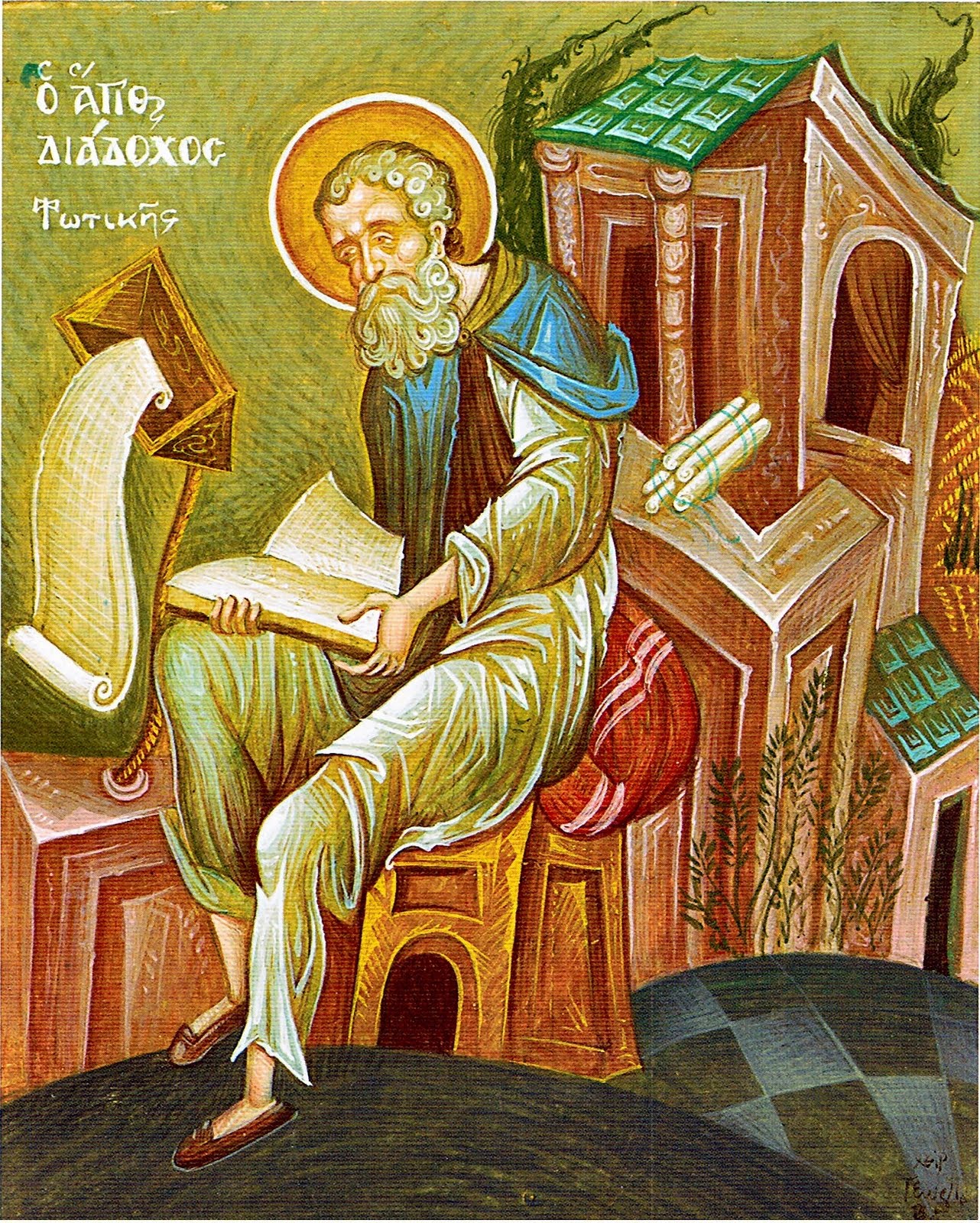
“When our intellect begins to perceive the grace of the Holy Spirit, then Satan, too, importunes the soul with a sense of deceptive sweetness in the quiet times of the night, when we fall into a light kind of sleep. If the intellect at that time cleaves fervently to the remembrance of the glorious and holy name of the Lord Jesus and uses it as a weapon against Satan’s deception, he gives up this trick and for the future will attack the soul directly and personally. As a result the intellect clearly discerns the deception of the evil one and advances even further in the art of discrimination.”
~ from: “On Spiritual Knowledge and Discrimination. One Hundred Texts“, No. 31. From Philokalia, Vol. 1.
Saint Maximus the Confessor: “Flee from self-love”, philautía (φιλαυτία)
Posted by Dallas Wolf in Hesychasm - Jesus Prayer, Patristic Pearls on November 28, 2014
“Flee from self-love, the mother of malice, which is an irrational love for the body. For from it are born the three chief sinful passions: gluttony, avarice, and vainglory, which take their causes from bodily needs, and from them all the tribe of the passions is born. This why we must always oppose self-love and fight against it. Whoever rejects self-love will easily conquer all the other passions with the help of God: anger, despondency, rancor, and the others. But whoever is retained by self-love will even unwillingly be conquered by the above-named passions.”
– Saint Maximus the Confessor
Rohr: “Thou Art That”
Posted by Dallas Wolf in Ekklesia and church, New Nuggets on August 2, 2014

Fr. Richard Rohr, Franciscan Christian mystic and contemplative.
“Theologically it is not correct for Christians to simply call Jesus “God” or to simply call him ” a man”. He is manifesting a third something, not God, not human, but the combination of the two! And his existence says to all of us: THOU ART THAT! YOU also manifest the same eternal mystery, each in your own way! “Follow me!” We did ourselves and Jesus no favor by simply calling him “God”. We missed the very point that could have and could still transform the world. We made the Christ Mystery into a competitive religion instead of an icon of transformation for everybody. We made Jesus into an “exclusive” incarnation instead of an inclusive Savior. He came to take us along with him, not to just say “look at me”. The paradox was so big, so central, and so stunning that our ordinary dualistic minds could not comprehend it. Only the “non dual” saints and mystics could process it and experience it. But now YOU can too: Thou Art That!” ~ Fr. Richard Rohr, OFM
Rohr: “But Christians made Christianity into a competition…”
Posted by Dallas Wolf in New Nuggets on July 6, 2014
Fr. Richard Rohr, OFM (1943- ) is a Franciscan writer, teacher, mystic, and priest. He is at the forefront of Western Latin Christian efforts to restore their lost contemplative prayer tradition. He is the founder of the Center for Action and Contemplation in Albuquerque, NM. and the Rohr Institute’s Living School for Action and Contemplation. The Living School provides a course of study grounded in the Western Christian mystical tradition of the “Alternative Orthodoxy” of St. Francis of Assisi, St. Bonaventure, and Duns Scotus.
Fr. Richard Rohr (1943- )
Simone Weil, French philosopher, sought a bridge between Judaism and Christianity. “Her great message was that the trouble with Christianity is that it had made itself into a separate religion instead of recognizing that the prophetic message of Jesus might just be necessary for the reform and authenticity of all religions. But Christians made Christianity into a competition, and once we were in …competition, we had to be largely verbal [as opposed to contemplative]; soon we were aggressive and, saddest of all, we became quite violent – all in the name of God,…” ~ Yes, And Daily Devotional
 First Thoughts