Posts Tagged richard rohr
Fr. Richard Rohr, OFM: “Jesus the Prophet”
Posted by Dallas Wolf in Ekklesia and church, New Nuggets, Theology on October 15, 2025
In a homily Father Richard Rohr, OFM, describes the tension between priestly and prophetic tasks—both necessary for healthy religion:

There are two great strains of spiritual teachers in Judaism, and I think, if the truth is told, in all religions. There’s the priestly strain that holds the system together by repeating the tradition. The one we’re less familiar with is the prophetic strain, because that one hasn’t been quite as accepted. Prophets are critical of the very system that the priests maintain.
If we have both, we have a certain kind of wholeness or integrity. If we just have priests, we keep repeating the party line and everything is about loyalty, conformity, and following the rules—and that looks like religion. But if we have the priest and the prophet, we have a system constantly refining itself and correcting itself from within. Those two strains very seldom come together. We see it in Moses, who both gathers Israel, and yet is the most critical of his own people. We see it again in Jesus, who loves his people and his Jewish religion, but is lethally critical of hypocrisy and illusion and deceit (see Matthew 23; Luke 11:37–12:3).
Choctaw elder and Episcopal bishop Steven Charleston considers how Jesus invited others to share in his prophetic vision:
Jesus … saw a vision that became an invitation for people to claim a new identity, to enter into a new sense of community.… Jesus offered the promise of justice, healing, and redemption.… Jesus became the prophetic teacher of a spiritual renewal for the poor and the oppressed…. Jesus was more than just the recipient of a vision or the messenger of a vision. What sets Jesus apart is that he brought the elements of his vision quest together in a way that no one else had ever done….
“This is my body,” he told them. “This is my blood.” For him, the culmination of his vision was not just the messiahship of believing in him as a prophet. Through the Eucharist, Jesus was not just offering people a chance to see his vision, but to become a part of it by becoming a part of him.
Richard honors the role of prophets in religious systems:
The only way evil can succeed is to disguise itself as good. And one of the best disguises for evil is religion. Someone can be racist, be against the poor, hate immigrants, and be totally concerned about making money and being a materialist but still go to church each Sunday and be “justified” in the eyes of religion.
Those are the things that prophets point out, so prophets aren’t nearly as popular as priests. Priests keep repeating the party line, but prophets do both: they put together the best of the conservative with the best of the liberal, to use contemporary language. They honor the tradition, and they also say what’s phony about the tradition. That’s what fully spiritually mature people can do.
Richard Rohr’s Daily Meditation – Monday, October 13, 2025
Rohr: “Where the material and spirit coincide, there is the Christ”
Posted by Dallas Wolf in New Nuggets, Theology on October 30, 2022
Fr. Richard Rohr – is a Franciscan priest, Christian mystic, and teacher of Ancient Christian Contemplative Prayer. He is the founding Director of the Center for Action and Contemplation in Albuquerque, NM.
“If you had been present at the moment of the Resurrection, what would you have seen? If there had been a video camera outside the tomb, what would it have recorded? Perhaps there would have been a huge flash of light or a subtle glimmer of a dimension beyond our usual perception. At the Resurrection, we believe the historical body of Jesus moved beyond any confinement of space and time. The presence which was captured in finite form was revealed to be an infinite omnipresence. He moved from Jesus to Christ, which now includes in its sweep all of creation and even you and me. The texts all agree that this movement had a physical dimension to it, but it is a new kind of embodiment that is both of this world and yet not limited by it. Thanks to Einstein, we now know that matter and energy are convertible forces.
Whenever the material and the spiritual coincide, there is the Christ. Jesus accepted that full identity and walked it into history. He was fully human and fully divine at the same time. So now we can begin to imagine how they could coexist. The material and the spiritual are one, the human and the divine are forever, the physical plumbed to its depth finds transcendence! The hiding place of God is also the place of revelation—here and now and everywhere. This is an utterly new notion of religiosity, so much so that most of Christian history (Orthodox, Catholic, Protestant, or Pentecostal) missed this major point and lived in a split universe.
The mystery of Christ is revealed, and the Christ “comes again,” whenever you are able to see the spiritual and the material coexisting, in any moment, in any event, and in any person. God’s hope for history seems to be that humanity will one day be able to recognize its dignity as the divine dwelling place, which it shares with the rest of creation. I don’t know when it will happen or what it will look like to reach the tipping point, for the Christ Mystery to come to fullness. All I know is that this meaning, planted in the middle of things, was meant to give humanity both direction and immense confidence. I suspect “the Second Coming of Christ” happens whenever and wherever we allow this to be utterly true for us. We’re still living in the in-between right now, slowly edging forward, with much resistance. As it says in Romans 8:22-23, creation is “groaning in anticipation,” or as one translation states, “We are standing on tiptoe waiting for the revelation of the sons and daughters of God.” I hope such implanted hope gets your whole life up on its toes!”
Meditation – Monday, March 23, 2015
Rohr: “The Cosmic Christ”
Posted by Dallas Wolf in New Nuggets on October 30, 2022
Fr. Richard Rohr – is a Franciscan priest, Christian mystic, and teacher of Ancient Christian Contemplative Prayer. He is the founding Director of the Center for Action and Contemplation in Albuquerque, NM.
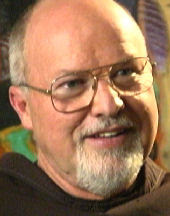
“There were clear statements in the New Testament giving a cosmic meaning to Christ (Colossians 1, Ephesians 1, John 1, 1 John 1, and Hebrews 1:1-4), and the schools of Paul and John were initially overwhelmed by the hope contained in this message. In the early Christian era, a few Eastern Fathers (such as Origen of Alexandria, Gregory of Nyssa, and Maximus the Confessor) noticed that the Christ was clearly something older, larger, and different than Jesus himself. They mystically saw that Jesus is the union of human and divine in one person, and the Christ is the eternal union of matter and Spirit from the beginning of time. But the later centuries tended to lose this mystical element in favor of a more dualistic Christianity. We were all the losers. What we could not unite in Jesus, we could not unite in ourselves!
Christianity became another moralistic religion (which loved to be on top). It was overwhelmingly aligned with a very limited period of history (empire building through war) and a small piece of the planet (Europe), not the whole earth or any glorious destiny (Romans 8:18ff) for us all. Not surprisingly, many Christians ended up tragically fighting evolution—along with most early human rights struggles (such as women’s suffrage, rights for those on the margins, racism, classism, homophobia, earth care, and slavery)—because we had no evolutionary notion of Christ who was forever “groaning in one great act of giving birth” (Romans 8:22). Until the reforms of the 1960’s and the Second Vatican Council, Roman Catholic Christianity was overwhelmingly a tribal religion and hardly “catholic” at all.
We should have been at the forefront of all of these love and justice issues. The Christian religion was made-to-order—to grease the wheels of human consciousness toward love, nonviolence, justice, inclusivity, love of creation, and the universality of such a message. Mature religion serves as a conveyor belt for the evolution of human consciousness. Immature religion actually stalls people at very early stages of magical, mythic, and tribal consciousness, while they are convinced they are enlightened or “saved.” This is more a part of the problem than any kind of solution. Only the non-dual and mystical mind gets you all the way through.
Authentic mystical experience connects us and keeps connecting us at ever-newer levels, breadths, and depths, “until God is all in all” (1 Corinthians 15:28). Or as Paul also writes earlier in the same letter, “the world, life and death, the present and the future are all your servants, for you belong to Christ, and Christ belongs to God” (1 Corinthians 3:22-23). Full salvation is finally universal belonging and universal connecting. Our word for that is ‘heaven’.“
Universal Connection, Meditation, Friday, March 27, 2015
Rohr: “Third Eye Seeing”
Posted by Dallas Wolf in Hesychasm - Jesus Prayer, New Nuggets on February 4, 2019
Fr. Richard Rohr – is a Franciscan priest, Christian mystic, and teacher of Ancient Christian Contemplative Prayer. He is the founding Director of the Center for Action and Contemplation in Albuquerque, NM.
“In the early medieval period, two Christian philosophers offered names for three different ways of seeing, and these names had a great influence on scholars and seekers in the Western tradition. Hugh of St. Victor (1078-1141) and Richard of St. Victor (1123-1173) wrote that humanity was given three different sets of eyes, each building on the previous one. The first eye was the eye of the flesh (thought or sight), the second was the eye of reason (meditation or reflection), and the third was the intuitive eye of true understanding (contemplation).
I describe this third eye as knowing something simply by being calmly present to it (no processing needed!). This image of “third eye” thinking, beyond our dualistic vision, is also found in most Eastern religions. We are onto something archetypal here, I think!
The loss of the “third eye” is at the basis of much of the shortsightedness and religious crises of the Western world, about which even secular scholars like Albert Einstein and Iain McGilchrist have written. Lacking such wisdom, it is hard for churches, governments, and leaders to move beyond ego, the desire for control, and public posturing. Everything divides into dualistic oppositions like liberal vs. conservative, with vested interests pulling against one another. Truth is no longer possible at this level of conversation. Even theology becomes more a quest for power than a search for God and Mystery.
One wonders how far spiritual and political leaders can genuinely lead us without some degree of contemplative seeing and action. It is hardly an exaggeration to say that “us-and-them” seeing, and the dualistic thinking that results, is the foundation of almost all discontent and violence in the world. It allows heads of religion and state to avoid their own founders, their own national ideals, and their own better instincts. Lacking the contemplative gaze, such leaders will remain mere functionaries and technicians, or even dangers to society.
We need all three sets of eyes in both a healthy culture and a healthy religion. Without them, we only deepen and perpetuate our problems.”
Rohr: “Every time Paul uses the word flesh, just replace it with the word ego…”
Posted by Dallas Wolf in First Thoughts, New Nuggets on November 17, 2017
Fr. Richard Rohr – is a Franciscan priest, Christian mystic, and teacher of Ancient Christian Contemplative Prayer. He is the founding Director of the Center for Action and Contemplation in Albuquerque, NM.
“The dialectic that we probably struggle with the most is the one Paul creates between flesh and spirit. I don’t think Paul ever intended for people to feel that their bodies are bad; he was not a Platonist. After all, God took on a human body in Jesus! Paul does not use the word “soma”, which literally means “body.” I think what Paul means by “sarx” is the trapped self, the small self, the partial self, or what Thomas Merton called the false self. Basically, spirit is the whole self, the Christ self that we were born into and yet must re-discover. The problem is not between body and spirit; it’s between part and whole. Every time Paul uses the word “flesh” [sarx], just replace it with the word “ego’, and you will be much closer to his point. Your spiritual self is your whole and True Self, which includes your body; it is not your self apart from your body. We are not angels, we are embodied human beings.” ~ From a meditation: “Paul as a Nondual Teacher“, Wednesday, May 17, 2017.
Rohr: “The Jesus Hermeneutic”
Posted by Dallas Wolf in Hermeneutics, New Nuggets on October 18, 2017
Fr. Richard Rohr, OFM, is a Franciscan Priest and contemporary Christian mystic. He is a noted teacher, author, and lecturer and founding Director of the Center for Action and Contemplation in Albuquerque, NM.
“You deserve to know my science for interpreting sacred texts. It is called a “hermeneutic.” Without an honest and declared hermeneutic, we have no consistency or authority in our interpretation of the Bible. My methodology is very simple; I will try to interpret Scripture the way that Jesus did.
Even more than telling us exactly what to see in the Scriptures, Jesus taught us how to see, what to emphasize, and also what could be de-emphasized, or even ignored. Jesus is himself our hermeneutic, and he was in no way a fundamentalist or literalist. He was a man of the Spirit. Just watch him and watch how he does it (which means you must have some knowledge of his Scriptures!).
Jesus consistently ignored or even denied exclusionary, punitive, and triumphalistic texts in his own Jewish Bible in favor of texts that emphasized inclusion, mercy, and justice for the oppressed. He had a deeper and wider eye that knew what passages were creating a highway for God and which passages were merely cultural, self-serving, and legalistic additions. When Christians state that every line in the Bible is of equal importance and inspiration, they are being very unlike Jesus . . . .
Jesus read the inspired text in an inspired way, which is precisely why he was accused of “teaching with authority and not like our scribes” (Matthew 7:29).” ~ From “Yes, And…: Daily Meditations“
Rohr: There is no sacred and profane…
Posted by Dallas Wolf in First Thoughts, New Nuggets on March 10, 2016
“There are not sacred and profane things, places, and moments. There are only sacred and desecrated things, places, and moments— and it is we alone who desecrate them by our blindness and lack of reverence.”
Fr. Richard Rohr, OFM
Rohr: “First-hand Experience”
Posted by Dallas Wolf in Hesychasm - Jesus Prayer, New Nuggets, Theology on March 1, 2016
“. . . All knowledge of God is first-hand experience.”
~ Fr. Richard Rohr, OFM, from his homily 28 Feb 2016
Rohr: “Thou Art That”
Posted by Dallas Wolf in Ekklesia and church, New Nuggets on August 2, 2014
Fr. Richard Rohr, Franciscan Christian mystic and contemplative.
“Theologically it is not correct for Christians to simply call Jesus “God” or to simply call him ” a man”. He is manifesting a third something, not God, not human, but the combination of the two! And his existence says to all of us: THOU ART THAT! YOU also manifest the same eternal mystery, each in your own way! “Follow me!” We did ourselves and Jesus no favor by simply calling him “God”. We missed the very point that could have and could still transform the world. We made the Christ Mystery into a competitive religion instead of an icon of transformation for everybody. We made Jesus into an “exclusive” incarnation instead of an inclusive Savior. He came to take us along with him, not to just say “look at me”. The paradox was so big, so central, and so stunning that our ordinary dualistic minds could not comprehend it. Only the “non dual” saints and mystics could process it and experience it. But now YOU can too: Thou Art That!” ~ Fr. Richard Rohr, OFM
Rohr: “But Christians made Christianity into a competition…”
Posted by Dallas Wolf in New Nuggets on July 6, 2014
Fr. Richard Rohr, OFM (1943- ) is a Franciscan writer, teacher, mystic, and priest. He is at the forefront of Western Latin Christian efforts to restore their lost contemplative prayer tradition. He is the founder of the Center for Action and Contemplation in Albuquerque, NM. and the Rohr Institute’s Living School for Action and Contemplation. The Living School provides a course of study grounded in the Western Christian mystical tradition of the “Alternative Orthodoxy” of St. Francis of Assisi, St. Bonaventure, and Duns Scotus.
Fr. Richard Rohr (1943- )
Simone Weil, French philosopher, sought a bridge between Judaism and Christianity. “Her great message was that the trouble with Christianity is that it had made itself into a separate religion instead of recognizing that the prophetic message of Jesus might just be necessary for the reform and authenticity of all religions. But Christians made Christianity into a competition, and once we were in …competition, we had to be largely verbal [as opposed to contemplative]; soon we were aggressive and, saddest of all, we became quite violent – all in the name of God,…” ~ Yes, And Daily Devotional
 First Thoughts