Archive for March, 2026
Bart Ehrman: Short Intro to the NT Canon
Posted by Dallas Wolf in Ancient Christian Manuscripts, Ekklesia and church, First Thoughts, New Nuggets, Theology on March 23, 2026

Bart D. Ehrman (born October 5, 1955) is an American New Testament scholar whose research focuses on the textual criticism of the New Testament, the historical Jesus, and the origins and development of early Christianity. He is the James A. Gray Distinguished Professor of Religious Studies at the University of North Carolina at Chapel Hill. He is the author or editor of more than 30 books, including six New York Times bestsellers, and has created nine lecture series with The Great Courses. Misquoting Jesus: The Story Behind Who Changed the Bible and Why, HarperCollins, 2005, is his most popular New York Times bestseller mass-market book on Christian textual criticism.
The following is excerpted from: A Brief Introduction to the New Testament, © Bart Ehrman, Oxford University Press, 2004.
Note: With reference to the Bible, the term canon denotes the collection of books that are accepted as authoritative by a religious body. [p. 3]
Jesus and his followers were themselves Jews who were conversant with the ancient writings that were eventually canonized into the Hebrew Scriptures.
Thus Christianity had its beginning in the proclamation of a Jewish teacher, who ascribed to the authority of documents. Moreover, we know that Jesus’ followers considered his own teachings to be authoritative. Near the end of the first century, Christians were citing Jesus’ words and were calling them “Scripture” (e.g., 1 Tim 5:18). It is striking that in some early Christian circles the correct interpretation of Jesus’ teachings was thought to be the key to eternal life (e.g., see John 6:68 and Gosp. Thom. 1). Furthermore, some of Jesus’ followers, such as the apostle Paul, understood themselves to be authoritative spokespersons for the truth. Other Christians granted them this claim. The book of 2 Peter, for example, includes Paul’s letters among the “Scriptures” (2 Peter 3:16).
Thus by the beginning of the second century some Christians were ascribing authority to the words of Jesus and the writings of the apostles. There were nonetheless heated debates which apostles were true to Jesus’ own teachings, and a number of writings that claimed to be written by apostles were thought by some Christians to be forgeries.
It appears then that our New Testament emerged out of the conflicts among Christian groups, and that the dominance of the position that eventually “won out” was what led to the development of the Christian canon as we have it. It is no accident that Gospels that were deemed “heretical” (i.e., false) – for instance, the Gospel of Peter or the Gospel of Philip – did not make it into the New Testament. This is not to say, however, that the canon of Scripture was firmly set by the end of the second century. Indeed, it is a striking fact of history that even though the four Gospels were widely considered authoritative by proto-orthodox Christians then – along with Acts, most of the Pauline epistles, and several of the longer general epistles – the collection of our twenty-seven books was not finalized until much later. For throughout the second, third, and fourth centuries proto-orthodox Christians continued to debate the acceptability of some of the other books. The arguments centered around (a) whether the books in question were ancient (some Christians wanted to include The Shepherd of Hermas, for example; others insisted that it was penned after the age of the apostles); (b) whether they were written by the apostles (some wanted to include Hebrews on the grounds that Paul wrote it; others insisted that he did not); and (c) whether they were widely accepted among the proto-orthodox congregations as containing correct Christian teaching (many Christians, for example, disputed the doctrine of the end times found in the book of Revelation).
Contrary to what one might expect, it was not until the year 367 c.e., almost two and a half centuries after the last New Testament book was written, that any Christian of record named our current twenty-seven books as the authoritative canon of Scripture. The author of this list was Athanasius, the powerful bishop of Alexandria, Egypt. Some scholars believe that this pronouncement on his part, and his accompanying proscription of heretical books, led monks of a nearby monastery to hide the Gnostic writings discovered 1,600 years later by a bedouin near Nag Hammadi, Egypt. [p.7]
We have seen that the New Testament did not emerge as a single collection of twenty-seven books immediately, but that different groups of early Christians had different collections of sacred books. In some ways, however, the problem of the New Testament canon is even more complicated than that. For not only did different Christian communities have different books – they had different versions of the same books.
This is because of the way books were transmitted in an age before internet access, desktop publishing, word processors, photocopiers, and printing presses. Books in the ancient world could not be mass produced. They were copied by hand, one page, one sentence, one word, one letter at a time. There was no other way to do it. Since the books were copied by hand, there was always the possibility that scribes would make mistakes and intentional changes in a book – any and every time it was copied. Moreover, when a new copy was itself copied, the mistakes and changes that the earlier scribe (copyist) made would have been reproduced, while the new scribe would introduce some mistakes and changes of his own. When that copy was then copied, more changes would be introduced. And so it went. [p.8]
Most of these differences are altogether minor and unimportant (misspelled words, changes of word order, the accidental omission of a line, etc.). But some of them are of immense importance. Were the last twelve verses of Mark’s Gospel original, or were they added later (they are not found in any of our oldest and best copies)? Was the story of the woman taken in adultery originally part of John’s Gospel (it does not start to appear regularly in copies until the Middle Ages)? Was the famous account of Jesus “sweating blood” originally found in Luke (some of our oldest and best copies omit it)? [p.9]
Unfortunately, we do not have the originals of any of the books of the New Testament, or the first copies, or the copies of the first copies. What we have are copies made much later – in most cases hundreds of years later. [p. 8]
J.B. Heard: The Afterthoughts of St. Augustine
Posted by Dallas Wolf in Ekklesia and church, First Thoughts, Heaven and Hell, Theology on March 19, 2026
Rev. John Bickford Heard (28 Oct 1828 – 29 Feb 1908) was born in Dublin, Ireland. He was a British clergyman and graduate/lecturer at Cambridge University (M.A. 1864). His series of lectures at the Cambridge Hulsean Lectures of 1892-93 served as the basis of his book, Alexandrian and Carthaginian Theology Contrasted, published by T&T Clark, Edinburgh, in 1893. Excerpt below is from this work:
“To discuss all these afterthoughts of theology, sin and salvation, heaven, hell, and purgatory, grace and its two channels, faith and the sacraments, would be to write the history of Augustinianism in its many phases.”
David Bentley Hart: Romans 5:12 “… one of the most consequential mistranslations in Christian history.”
Posted by Dallas Wolf in Ancient Christian Manuscripts, Christian Anthropology -East & West (Series), Ekklesia and church, First Thoughts, New Nuggets on March 18, 2026

David Bentley Hart (born 1965) is an American Orthodox Christian philosophical theologian, cultural commentator and polemicist. An acknowledged expert in koine Greek and New Testament exegesis, Hart published his own translation of the New Testament from Greek. Hart’s Greek basis for translation is grounded in “the so-called Critical Text, which is based on earlier and different manuscript sources (such as those of the Alexandrian Text-type)… but also included a great many verses and phrases found only in the Majority Text [Byzantine Text-type] (placing them in brackets to set them off from the Critical Text).”
See The New Testament – A Translation, by David Bentley Hart, Second Edition, Yale University Press, (C) 2017, 2023.
Romans 5:12
English: “Therefore, just as sin entered into the cosmos through one man, and death through sin, so also death pervaded all humanity, whereupon all sinned;”[1]
Greek: Διὰ τοῦτο ὥσπερ δι᾽ ἑνος ἀνθρώπου ἡ ἁμαρτὶα εἰς τὸν κόσμον εἰσῆλθεν καὶ διὰ τῆς ἁμαρτίας ὁ θὰνατος, καὶ οὕτως εἰς πάντας ἀνθρώπους ὁ θὰνατος διῆλθεν, ἐφ᾽ ᾧ πὰντες ἥμαρτον.
Transcription: Dia touto hōsper di’ henos anthrōpou hē hamartias eis to kosmon eisēlthen kai dia tēs hamartias ho thanatos, kai houtōs eis pantas anthrōpous ho thanatos diēlthen, eph’ hōi pantes hēmarton.
A fairly easy verse to follow until one reaches the final four words, whose precise meaning is already obscure, and whose notoriously defective rendering in the Latin Vulgate (in quo omnes peccaverunt) constitutes one of the most consequential mistranslations in Christian history. The phrase ἐφ᾽ ᾧ (eph’ hōi) is not some kind of simple adverbial formula like the διὰ τοῦτο (dia touto) (“therefore”) with which the verse begins; literally, ἐφ᾽ ᾧ means “upon which,” “whereupon,” but how to understand this is a matter of some debate. Typically, as the pronoun ᾧ is dative masculine, it would be referred back to the most immediate prior masculine noun, which in this case is θάνατος (thanatos), “death,” and would be taken to mean (correctly, I believe) that the consequence of death spreading to all human beings is that all became sinners. The standard Latin version of the verse makes this reading impossible, for two reasons: first, it retains the masculine gender of the pronoun (quo) but renders θάνατος by the feminine noun mors, thus severing any connection that Paul might have intended between them; second, it uses the preposition in, which when paired with the ablative means “within.” Hence what became the standard reading of the verse in much of Western theology after the late fourth century: “in whom [i.e., Adam] all sinned.” This is the locus classicus of the Western Christian notion of original guilt—the idea that in some sense all human beings had sinned in Adam, and that therefore everyone is born already damnably guilty in the eyes of God—a logical and moral paradox that Eastern tradition was spared by its knowledge of Greek. Paul speaks of death and sin as a kind of contagion here, a disease with which all are born; and elsewhere he describes it as a condition like civil enslavement to an unjust master, from which we must be “redeemed” with a manumission fee; but never as an inherited condition of criminal culpability. It has become more or less standard to render ἐφ᾽ ᾧ as “inasmuch as” or “since,” thus suggesting that death spread to all because all sinned. But this reading seems to make little sense: not only does it evacuate the rest of the verse of its meaning, but it is contradicted just below by v. 14, where Paul makes it clear that the universal reign of death takes in both those who have sinned and those who have not. Other interpretations take the ἐφ᾽ ᾧ as referring back to Adam, not as in the Latin mistranslation but in the sense that all have sinned “because of” the first man; this, though, fails to honor the point Paul seems obviously to be making about the intimate connection between the disease of death and the contagion of sin (and vice versa). The most obvious and, I think, likely reading is that, in this verse, a parallelism (something for which Paul has such a marked predilection) is given in a chiastic form: just as sin entered into the cosmos and introduced death into all its members, so the contagion of death spread into the whole of humanity and introduced sin into all its members. This, as we see in Romans and elsewhere, is for Paul the very dynamism of death and sin that is reversed in Christ: by his triumphant righteousness he introduced eternal life into the cosmos, and so as that life spreads into the whole of humanity it makes all righteous (as in vv. 15–19 below, or as in 1 Corinthians 15:20–28).[2]
[1] Hart, David Bentley. The New Testament: A Translation (p.296). Yale University Press. 2017
[2] Op. Cit., p.319
The Four Text-Types of NT Textual Criticism
Posted by Dallas Wolf in Ancient Christian Manuscripts, First Thoughts, New Nuggets, Theology on March 12, 2026
The four main text-types in New Testament textual criticism are the Alexandrian, Western, Byzantine, and Caesarean. These categories help scholars analyze and compare the thousands of existing manuscripts to reconstruct the original text.
Textual criticism of the New Testament categorizes manuscripts into several text types. The four main text types are:
1. Alexandrian Text-Type
- Date: 2nd–4th centuries CE
- Characteristics: Generally shorter readings, fewer expansions or paraphrases, and more abrupt readings. It is often considered more reliable than other text types. RSV, NRSV, ESV, NASB, NIV, and LEB Bibles are based on Alexandrian-type manuscripts.
2. Western Text-Type
- Date: 2nd–9th centuries CE
- Characteristics: Known for paraphrasing and free alterations. Scribes often changed words and clauses to enhance clarity and meaning. Witnessed in Latin and Syriac translations of the Greek, mainly in the Western Roman Empire.
3. Byzantine Text-Type
- Date: 4th century onward
- Characteristics: Characterized by a larger number of surviving manuscripts. It tends to have more expansions and harmonizations, reflecting a later formalization of the text. The King James and virtually all Reformation-era Bibles are based on Byzantine-Type manuscripts.
4. Caesarean Text-Type
- Date: 3rd–4th centuries CE
- Characteristics: A less common type that exhibits features of both the Alexandrian and Western text types. It is primarily associated with the region of Caesarea Maritima in Judea.
These text types help scholars classify and understand the variations in the New Testament manuscripts and work towards reconstructing the original text.
Major New Testament Text‑Types
| Text‑Type | Key Features | Comments |
| Alexandrian | Earliest, concise, less harmonized; includes Codices Vaticanus & Sinaiticus | Most reliable overall. Basis for RSV, NRSV, ESV, NASB, NIV, and LEB Bibles |
| Western | Paraphrastic, expansions, unique readings (e.g., Codex Bezae) | Valuable but secondary |
| Byzantine | Majority of later manuscripts; smoother, harmonized | Least reliable for earliest text. Basis for King James and Reformation era Bibles |
| Caesarean (disputed) | Regional; mixed features; mostly in Gospels | Interesting but not primary |
Bart Ehrman: “Textual Criticism 101”
Posted by Dallas Wolf in Ancient Christian Manuscripts, New Nuggets on March 12, 2026
Bart D. Ehrman (born October 5, 1955) is an American New Testament scholar whose research focuses on the textual criticism of the New Testament, the historical Jesus, and the origins and development of early Christianity. He is the James A. Gray Distinguished Professor of Religious Studies at the University of North Carolina at Chapel Hill. He is the author or editor of more than 30 books, including six New York Times bestsellers, and has created nine lecture series with The Great Courses. Misquoting Jesus: The Story Behind Who Changed the Bible and Why, HarperCollins, 2005, is his most popular New York Times bestseller mass-market book on Christian textual criticism.
The following excerpt is from his The New Testament – A Historical Introduction to the Early Christian Writings, 3rd Edition, Oxford University Press, 2004. Pp. 485-488.
Criteria for Establishing the Original Text of the New Testament
There is a subdiscipline within New Testament scholarship called “textual criticism,” which seeks to establish the original text of the New Testament based on the surviving manuscript evidence. It is a complex task but one that can be extremely intriguing – something like reading a detective story in which a few clues have to be pieced together in order to decide “whodunit.” When there are different forms of the text, that is, when a verse is worded in different ways in the surviving manuscripts, the question has to be asked, which manuscripts represent the text of the autograph and which ones represent changes of the text? Inevitably, a choice has to be made between one form of wording and another, and the choice can sometimes make a significant difference in how a document is interpreted. Since it is better to make an intelligent choice based on evidence than simply to guess, critics have developed certain principles for deciding which form of a text is more likely to be original.
- The Number of Witnesses That Support a Reading. In addition to the approximately 5,400 Greek manuscripts of the New Testament, we have tens of thousands of New Testament manuscripts in other languages into which it was eventually translated (especially Latin but also Syriac, Coptic, Armenian, and others). Moreover, there are dozens of ancient Christian authors from different times and places who quoted the New Testament. By collecting their quotations, we can reconstruct what their own manuscripts probably looked like.
Given the abundance of evidence, one might suppose that a fairly obvious criterion for deciding which reading is original is to count the witnesses in support of each (different) reading and to accept the one that is most abundantly attested. Suppose, for example, that for a given verse there were 500 witnesses that have one form of wording and only six that have a variant form. All other things being equal, one might suspect that the six represent a mistake.
The problem, however, is that all other things are rarely equal. If the six witnesses, for example, all derive from the third and fourth centuries, whereas the 500 are all later, from the fifth to the fifteenth centuries, then the six may preserve an earlier form of the text that came to be changed to the satisfaction of later scribes. Thus, simply counting the witnesses that support a certain form of the text is generally recognized as a rather unreliable method for reconstructing the original text. - The Age of the Witnesses. The form of the text that is supported by the oldest witness is more likely to be original than a different form found only in later manuscripts, even if these are more numerous. Most scholars recognize that this principle is better than simply counting the manuscripts, but it too can be problematic. For example, it is possible for a sixth-century manuscript to preserve an older form of the text than, say, a fourth-century one. This would happen if the sixth-century manuscript had been produced from a copy that was made in the second century, whereas the fourth-century manuscript derived from one made in the third.
- The Quality of the Witnesses. In a court of law, the testimony of some witnesses carries more weight than that of others. If there are two witnesses with contradictory testimony, and one is known to be a habitual liar, drunkard, and thief, whereas the other is an upstanding member of the community, most juries will have little difficulty deciding whom to believe. A similar situation occurs with manuscripts. Some are obviously full of errors, for instance, when their scribe was routinely inattentive or inept, and others appear to be on the whole trustworthy. The best manuscripts are those that do not regularly preserve forms of the text that are obviously in error.
- The Geographical Spread of the Witnesses. An even more useful criterion involves the geographical distribution of the different forms of the text, especially among the earliest manuscripts. Suppose our manuscripts support two different forms of a passage, one found only among manuscripts produced in a specific geographical area (say, southern Italy), the other found in witnesses spread throughout the Mediterranean (say, Northern Africa, Alexandria, Syria, Asia Minor, Gaul, and Spain). In this case, the former is more likely to be a local variation reproduced by scribes of the region, whereas the other is more likely to be older since it was more widely known.
The foregoing criteria often have a cumulative effect in helping scholars decide what the original text was. If one form of reading, for example, is found in geographically diverse witnesses that are early and of generally high quality, then there is a good chance that it is original. This judgment has to be borne out, however, by two other factors. - The Difficulty of the Reading. Scholars have found this criterion to be extraordinarily useful. We have seen that scribes sometimes eliminated possible contradictions and discrepancies, harmonized stories, and changed doctrinally questionable statements. Therefore, when we have two forms of a text, one that would have been troubling to scribes – for example, one that is possibly contradictory to another passage or grammatically inelegant or theologically problematic – and one that would not have been as troubling, it is the former form of the text, the one that is more “difficult,” that is more likely to be original. That is, since scribes were far more likely to have corrected problems than to have created them, the comparatively smooth, consistent, harmonious, and orthodox readings are more likely, on balance, to have been created by scribes. Our earliest manuscripts, interestingly enough, are the ones that tend to preserve the more difficult readings.
- Conformity with the Author’s Own Language, Style, and Theology. With the preceding criterion we were interested in determining which form of a passage could be most easily attributed to scribes who copied the text. With our sixth and final criterion we are interested in seeing which form of a passage would be easiest to ascribe to the author who originally produced the text in light of its vocabulary, writing style, and theology. If two forms of a passage are preserved among the New Testament manuscripts and one of them contains words, grammatical constructions, and theological ideas that never occur in the author’s writings elsewhere (or that conflict with his other writings), then that form of the text is less likely to be original than the other.
All of these criteria need to be applied to any particular passage in order to decide which reading among the manuscripts is likely to be original. In many instances, the arguments coalesce, so that the earliest and best manuscripts also support the reading that is most difficult and that conforms most closely with the author’s own language and style. When this happens, we can be relatively certain that we have uncovered the earliest available form of the text.
Codex Sinaiticus: “God is love”
Posted by Dallas Wolf in Ancient Christian Manuscripts, First Thoughts, Theology on March 9, 2026

Modern Greek: Ὁ θεὸς ἀγάπη ἐστίν
English: God is love (from 1 John 4:8)
Codex Sinaiticus ca. AD 350
British Museum, London
The “God is love” graphic, above, is copied from the Codex Sinaiticus. Codex Sinaiticus is a manuscript of the Christian Bible written in the middle of the fourth century and contains the earliest complete copy of the Christian New Testament. The name ‘Codex Sinaiticus’ literally means ‘the Sinai Book’. The hand-written text is in Greek. The New Testament appears in the original vernacular language (koine) and the Old Testament in the version known as the Septuagint (LXX, ca. 130 B.C.), that was adopted by early Greek-speaking Christians. Codex Sinaiticus is one of only four great codices that have survived to the present day. They are written in a certain uncial (broad single-stroke letters using simple round forms) style of calligraphy using only majuscule (capital) letters, written in scriptio continua (meaning without regular gaps or spaces between words). Words do not necessarily end on the same line on which they start. All four of these manuscripts were made at great expense in material and labor, written on parchment or velum (animal skins) by professional scribes. All four of the Great Codices are Alexandrian text-type manuscripts.
‘Codex’ means ‘book’. By the time Codex Sinaiticus was written, works of literature were increasingly written on sheets that were folded and bound together in the form that we still use today. This book format was steadily replacing the roll format which was more widespread just a century before. These rolls were made of animal skin (like most of the Dead Sea Scrolls) or the papyrus plant (commonly used for Greek and Latin literature). Using the papyrus codex was a distinctive feature of early Christian culture. The pages of Codex Sinaiticus, however, are made of animal skin parchment. This marks it out as standing at an important transition in book history. Before it we see many examples of Greek and Latin texts on papyrus roll or papyrus codex, but almost no traces of parchment codices. After it, the parchment codex becomes the norm.
In Christian scribal practice, nomina sacra is the abbreviation of frequently used divine names or titles, especially in Greek manuscripts of the Bible. A nomen sacrum consists of two or more letters from the original word spanned by an overline; in the case of the Sinaiticus graphic, above, the theta and sigma are the first and last letters in the Greek word Theos, or God.
David Bentley Hart: “Traditio Deformis – The long history of defective Christian scriptural exegesis occasioned by problematic translations”
Posted by Dallas Wolf in Ancient Christian Manuscripts, New Nuggets, Theology on March 8, 2026
David Bentley Hart (born 1965) is an American Orthodox Christian philosophical theologian, cultural commentator and polemicist. Here, in one short essay published in “First Things” in May 2015, Prof. Hart addresses, “The long history of defective Christian scriptural exegesis occasioned by problematic translations”.
The long history of defective Christian scriptural exegesis occasioned by problematic translations is a luxuriant one, and its riches are too numerous and exquisitely various adequately to classify. But I think one can arrange most of them along a single continuum in four broad divisions: some misreadings are caused by a translator’s error, others by merely questionable renderings of certain words, others by the unfamiliarity of the original author’s (historically specific) idiom, and still others by the “untranslatable” remoteness of the author’s own (culturally specific) theological concerns. And each kind comes with its own special perils and consequences.
But let me illustrate. Take, for example, Augustine’s magisterial reading of the Letter to the Romans, as unfolded in reams of his writings, and ever thereafter by his theological heirs: perhaps the most sublime “strong misreading” in the history of Christian thought, and one that comprises specimens of all four classes of misprision. Of the first, for instance: the notoriously misleading Latin rendering of Romans 5:12 that deceived Augustine into imagining Paul believed all human beings to have, in some mysterious manner, sinned “in” Adam, which obliged Augustine to think of original sin—bondage to death, mental and moral debility, estrangement from God—ever more insistently in terms of an inherited guilt (a concept as logically coherent as that of a square circle), and which prompted him to assert with such sinewy vigor the justly eternal torment of babes who died unbaptized. And of the second: the way, for instance, Augustine’s misunderstanding of Paul’s theology of election was abetted by the simple contingency of a verb as weak as the Greek proorizein (“sketching out beforehand,” “planning,” etc.) being rendered as praedestinare—etymologically defensible, but connotatively impossible. And of the third: Augustine’s frequent failure to appreciate the degree to which, for Paul, the “works” (erga, opera) he contradistinguishes from faith are works of the Mosaic law, “observances” (circumcision, kosher regulations, and so on). And of the fourth—well, the evidences abound: Augustine’s attempt to reverse the first two terms in the order of election laid out in Romans 8:29–30 (“Whom he foreknew he also marked out beforehand”); or his eagerness, when citing Romans 5:18, to quote the protasis (“Just as one man’s offence led to condemnation for all men”), but his reluctance to quote the (strictly isomorphic) apodosis (“so also one man’s righteousness led to justification unto life for all men”); or, of course, his entire reading of Romans 9–11 . . .
Ah—thereby hangs a tale.
Not that Paul’s argument there is difficult to follow. What preoccupies him is the agonizing mystery that the Messiah has come, yet so few of the house of Israel have accepted him, while so many Gentiles—outside the covenant—have. What then of God’s faithfulness to his promises? It is not an abstract question regarding who is “saved” and who “damned”: By the end of chapter 11, the former category proves to be vastly larger than that of the “elect,” or the “called,” while the latter category makes no appearance at all. It is a concrete question concerning Israel and the Church. And ultimately Paul arrives at an answer drawn, ingeniously, from the logic of election in Hebrew Scripture.
Before reaching that point, however, in a completely and explicitly conditional voice, he limns the problem in the starkest chiaroscuro. We know, he says, that divine election is God’s work alone, not earned but given; it is not by their merit that Gentile believers have been chosen. “Jacob have I loved, but Esau have I hated” (9:13)—here quoting Malachi, for whom Jacob is the type of Israel and Esau the type of Edom. For his own ends, God hardened Pharaoh’s heart. He has mercy on whom he will, hardens whom he will (9:15–18). If you think this unjust, who are you, O man, to reproach God who made you? May not the potter cast his clay for purposes both high and low, as he chooses (9:19–21)? And, so, what if (ei de, quod si) God should show his power by preparing vessels of wrath, solely for destruction, to provide an instructive counterpoint to the riches of the glory he lavishes on vessels prepared for mercy, whom he has called from among the Jews and the Gentiles alike (9:22–24)? Perhaps that is simply how it is: The elect alone are to be saved, and the rest left reprobate, as a display of divine might; God’s faithfulness is his own affair.
Well, so far, so Augustinian. But so also, again, purely conditional: “What if . . . ?” Rather than offering a solution to the quandary that torments him, Paul is simply restating it in its bleakest possible form, at the very brink of despair. But then, instead of stopping here, he continues to question God’s justice after all, and spends the next two chapters unambiguously rejecting this provisional answer altogether, in order to reach a completely different—and far more glorious—conclusion.
Throughout the book of Genesis, the pattern of God’s election is persistently, even perversely antinomian: Ever and again the elder to whom the birthright properly belongs is supplanted by the younger, whom God has chosen in defiance of all natural “justice.” This is practically the running motif uniting the whole text, from Cain and Abel to Manasseh and Ephraim. But—this is crucial—it is a pattern not of exclusion and inclusion, but of a delay and divagation that immensely widens the scope of election, taking in the brother “justly” left out in such a way as to redound to the good of the brother “unjustly” pretermitted. This is clearest in the stories of Jacob and of Joseph, and it is why Esau and Jacob provide so apt a typology for Paul’s argument. For Esau is not finally rejected; the brothers are reconciled, to the increase of both precisely because of their temporary estrangement. And Jacob says to Esau (not the reverse), “Seeing your face is like seeing God’s.”
And so Paul proceeds. In the case of Israel and the Church, election has become even more literally “antinomian”: Christ is the end of the law so that all may attain righteousness, leaving no difference between Jew and Gentile; thus God blesses everyone (10:11–12). As for the believing “remnant” of Israel (11:5), they are elected not as the number of the “saved,” but as the earnest through which all of Israel will be saved (11:26), the part that makes the totality holy (11:16). And, again, the providential ellipticality of election’s course vastly widens its embrace: For now, part of Israel is hardened, but only until the “full entirety” (pleroma) of the Gentiles enter in; they have not been allowed to stumble only to fall, however, and if their failure now enriches the world, how much more so will their own “full entirety” (pleroma); temporarily rejected for “the world’s reconciliation,” they will undergo a restoration that will be a “resurrection from the dead” (11:11–12, 15).
This, then, is the radiant answer dispelling the shadows of Paul’s grim “what if,” the clarion negative: There is no final “illustrative” division between vessels of wrath and of mercy; God has bound everyone in disobedience so as to show mercy to everyone (11:32); all are vessels of wrath so that all may be made vessels of mercy.
Not that one can ever, apparently, be explicit enough. One classic Augustinian construal of Romans 11, particularly in the Reformed tradition, is to claim that Paul’s seemingly extravagant language—“all,” “full entirety,” “the world,” and so on—really still means just that all peoples are saved only in the “exemplary” or “representative” form of the elect. This is, of course, absurd. Paul is clear that it is those not called forth, those allowed to stumble, who will still never be allowed to fall. Such a reading would simply leave Paul in the darkness where he began, reduce his glorious discovery to a dreary tautology, convert his magnificent vision of the vast reach of divine love into a ludicrous cartoon of its squalid narrowness. Yet, on the whole, the Augustinian tradition on these texts has been so broad and mighty that it has, for millions of Christians, effectively evacuated Paul’s argument of all its real content. It ultimately made possible those spasms of theological and moral nihilism that prompted John Calvin to claim (in book 3 of The Institutes) that God predestined even the Fall, and (in his commentary on 1 John) that love belongs not to God’s essence, but only to how the elect experience him. Sic transit gloria Evangelii. I have to say that, as an Orthodox scholar, I have made many efforts over the years to defend Augustine against what I take to be defective and purely polemical Eastern interpretations of his thought, in the realms of metaphysics, Trinitarian theology, and the soul’s knowledge of God (often to the annoyance of some of my fellow Orthodox). But regarding that part of his intellectual patrimony that has had the widest effect—his understanding of sin, grace, and election—not only do I share the Eastern distaste for (or, frankly, horror at) his conclusions; I am even something of an extremist in that respect. In the whole long, rich history of Christian misreadings of Scripture, none I think has ever been more consequential, more invincibly perennial, or more disastrous.
Dostoyevsky: “… all-embracing love.”
Posted by Dallas Wolf in First Thoughts, Heaven and Hell, New Nuggets, Theology, Universal Restoration (Apokatastasis) on March 6, 2026
Fyodor Dostoyevsky (1821 – 1881) – Russian novelist, short story writer, essayist, journalist, and philosopher.
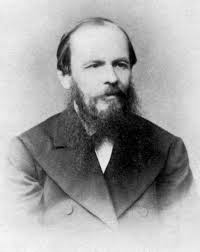
“Love [people] even in [their] sin, for that is the semblance of Divine Love and is the highest love on earth. Love all God’s creation, the whole and every grain of sand in it. Love every leaf, every ray of God’s light. Love the animals, love the plants, love everything. If you love everything, you will perceive the divine mystery in things. Once you have perceived it, you will begin to comprehend it better every day. And you will come at last to love the whole world with an all-embracing love.”
—Fyodor Dostoyevsky, from The Brothers Karamazov
 First Thoughts