Andreas Andreopoulos: “On Apokatastasis”
Posted by Dallas Wolf in New Nuggets, Universal Restoration (Apokatastasis) on February 13, 2016
Dr. Andreas Andreopoulos (1966- ) – Orthodox priest, studied in Greece, Canada and the UK, obtaining his Ph.D. in Theology and Art at Durham University.
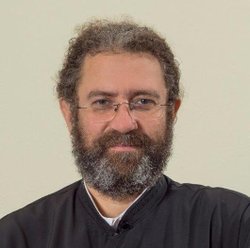 “Alexandrian theology in the second/third century starts a particularly Eastern theological strand of eschatology that leads all the way to Mark of Ephesus in the fifteenth, one which differs from most Western views if not necessarily and officially on the eternity of evil, at least on the question as to where this evil is to be found and therefore comes from – in doctrinal contrast to the views of Western theologians such as Abelard, who saw the torments of hell as a punishment very often more cruel than the sins that warranted it, in a place that had specifically been created by God for this purpose, as it was believed after Augustine. The ancient as well as the late Byzantine position, certainly before the Western influences on Greek and Russian theology after the Renaissance, was that nothing evil can come from God, not even punishment. The punishment and torments of hell are only inflicted from ourselves, both in this world and in the next one. Hell and its fire is not different, essentially, from the benevolent energy of God, when experienced by the sinners. The restoration of all, at best an interesting and possible speculation though not a doctrine, is an idea not too far from all this.”
~ Andreas Andreopoulos from “Eschatology and Final Restoration (Apokatastasis) in Origen, Gregory of Nyssa, and Maximos the Confessor”
Yanarras: “Repentance has nothing to do with self-regarding sorrow for legal transgressions.”
Posted by Dallas Wolf in Hesychasm - Jesus Prayer, New Nuggets, Theology on January 30, 2016
Christos Yannaras (1935 – ) was Professor of Philosophy at Pantion University of Social and Political Sciences, Athens. His books include Freedom of Morality and Person and Eros.

“To share out your soul freely, that is what metanoia (a change of mind, or repentance) really refers to: a mental product of love. A change of mind, or love for the undemonstrable. And you throw off every conceptual cloak of self-defense, you give up the fleshly resistance of your ego. Repentance has nothing to do with self-regarding sorrow for legal transgressions. It is an ecstatic erotic self-emptying. A change of mind about the mode of thinking and being.”
― Christos Yanarras, from “Variations on the Song of Songs”
Met. Hierotheos (Vlachos): The distinction between the “Person” and the “Individual”
Posted by Dallas Wolf in New Nuggets, Theology on December 30, 2015
Metropolitan Hierotheos (Vlachos) – (1945- ) is a Greek Orthodox metropolitan and theologian. He graduated from the Theological School of the University of Thessaloniki and is one of the finest Patristic scholars living.

“…today a distinction is made between the person and the individual. The term ‘person’ is used to mean the man who has freedom and love and is clearly distinguished from the mass, and the term ‘individual’ characterizes the man who remains a biological being and spends his whole life and activities on his material and biological needs, without having any other pursuit in his life.” ~ from “The person in the Orthodox Tradition”, p. 79
St. Macarius the Great: “On the Heart”
Posted by Dallas Wolf in Hesychasm - Jesus Prayer, Monasticism, Patristic Pearls on December 27, 2015
St. Macarius the Great (the Egyptian) (c. AD 300 -390) was one of the most famous of the Desert Fathers, and one of the pioneers of Scetis.
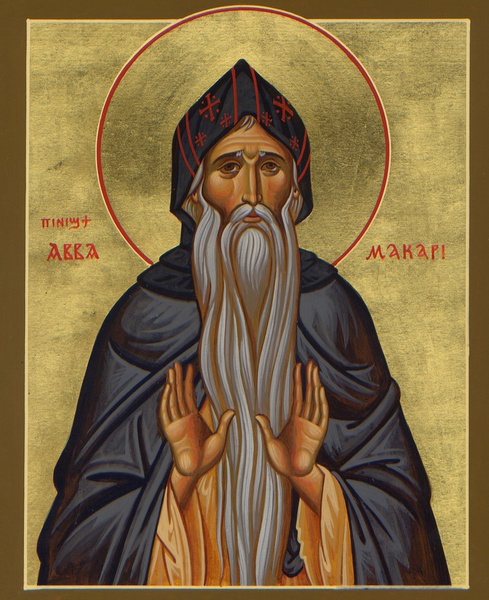
“The heart is but a small vessel; and yet dragons and lions are there, and there likewise are poisonous creatures and all the treasures of wickedness; rough, uneven paths are there, and gaping chasms. There also is God, there are the angels, there life and the Kingdom, there light and the apostles, the heavenly cities and the treasures of grace: all things are there.”
~ from: Homilies 43:7
St. Gregory of Nyssa: “Making an idol of God”
Posted by Dallas Wolf in Hesychasm - Jesus Prayer, Patristic Pearls, Theology on December 25, 2015
St. Gregory of Nyssa (c. AD 335 – 395) – Along with his older brother, Basil of Caesarea, and friend, Gregory of Nazianzus, Nyssen was one the three great Cappadocian Fathers of the 4th century.
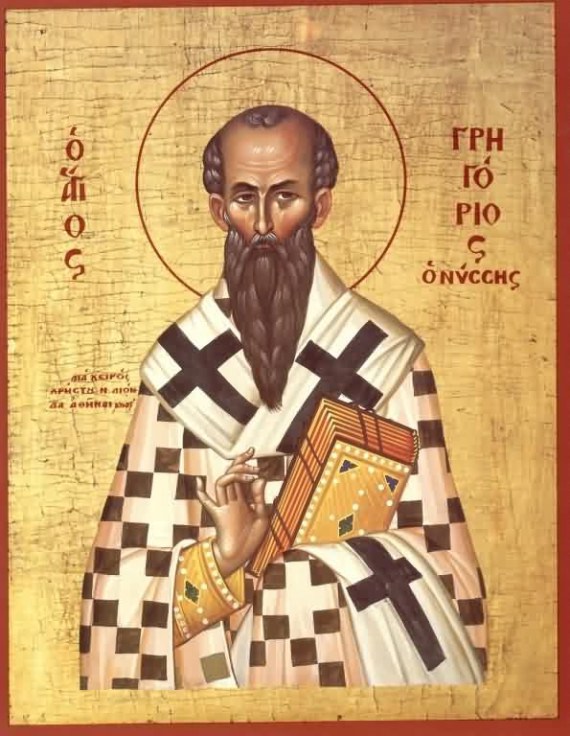
“…every concept formed by our understanding which attempts to attain and to hem in the divine nature serves only to make an idol of God, not to make God known”.
~ from: “The Life of Moses“.
David Bentley Hart: “On Contemplative Prayer”
Posted by Dallas Wolf in Hesychasm - Jesus Prayer, New Nuggets on September 5, 2015
 “If one is really to seek “proof” one way or the other regarding the reality of God, one must recall that what one is seeking is a particular experience, one wholly unlike an encounter with some mere finite object of cognition or some particular thing that might be found among other things. One is seeking an ever deeper communion with a reality that at once exceeds and underlies all other experiences. If one could sort through all the physical objects and events constituting the universe, one might come across any number of gods (you never know), but one will never find God. And yet one is placed in the presence of God in every moment and can find him even in the depth of the mind’s own act of seeking. As the source, ground, and end of being and consciousness, God can be known as God only insofar as the mind rises from beings to being, and withdraws from the objects of consciousness toward the wellsprings of consciousness itself, and learns to see nature not as a closed system of material forces but in light of those ultimate ends that open the mind and being each to the other. All the great faiths recognize numerous vehicles of grace, various proper dispositions of the soul before God, differing degrees of spiritual advancement, and so forth; but all clearly teach that there is no approach to the knowledge of God that does not involve turning the mind and the will toward the perception of God in all things and of all things in God. This is the path of prayer—contemplative prayer, that is, as distinct from simple prayers of supplication and thanksgiving—which is a specific discipline of thought, desire, and action, one that frees the mind from habitual prejudices and appetites, and allows it to dwell in the gratuity and glory of all things. As an old monk on Mount Athos once told me, contemplative prayer is the art of seeing reality as it truly is; and, if one has not yet acquired the ability to see God in all things, one should not imagine that one will be able to see God in himself.”
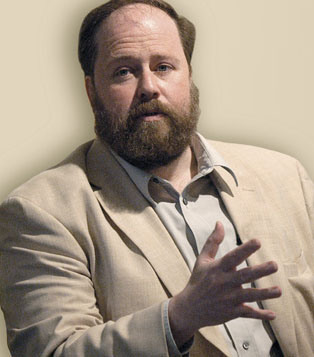
~ David Bentley Hart, from The Experience of God.
Essence and Energies of God – 1
Posted by Dallas Wolf in Essence and Energies (series) on August 30, 2015

Thaboric Light
One of my main goals in writing is to discover and bring the ancient theology and doctrines of the early charismatic Christian church to the contemporary Charismatic Renewal Movement.
There is a clear disconnect between the doxis of Western Latin Christianity and the praxis of the contemporary Charismatic Renewal Movement which operates in the gifts and fruit of the indwelling presence and power of the Holy Spirit. The Renewal Movement certainly has the basic praxis (how beliefs are practiced, embodied and realized in conduct) of the early charismatic Apostolic church, but does not have a corresponding supportive, complementary doxis (religious beliefs, worship, doctrines, and creeds) which explains and supports that praxis.
The world needs to see lives transformed, but it also needs to know why and how they have been transformed. To do this, the world must see a complementary balance of belief and action at work. But, just as vital, the world must see something else in mutual support and balance: orthodoxy and orthopraxis– that is, right belief and right action.
A key essential in an orthodoxy which supports a Renewal Movement (apostolic church) orthopraxis is an understanding of the Essence and Energies of God and the distinction between them. It is only in understanding Essence (transliterated ousía in Greek) and Energies (transliterated enérgeia in Greek) of God that we can reconcile the seeming paradox of the unknowable transcendence of God with the universal, yet very personal indwelling presence and power of God in all humankind.
Throughout this discussion, I will rely heavily on the writings of 20th century theologians including Vladimir Lossky, Christos Yannaras, and Fr. John Meyendorff. They, in turn, refer to the authority of many early Church Fathers including St. Gregory of Nyssa, St. Gregory of Nazianzus, and St. Macarius the Great (all 4th century); St. Dionysius the Aeropagite (5th century); St. Maximus the Confessor (7th century); St. Symeon the New Theologian (11th century); and last, but not least, St. Gregory Pálamas (14th century). I make all of these citations so that the reader may understand that the theology and doctrines on the Essence and Energies of God are both ancient and continuously attested to throughout the Patristic literature up to this day. These citations also make it clear that none of what you are about to read is my original work or thoughts.
To be continued…
Essence and Energies of God – 2
Posted by Dallas Wolf in Essence and Energies (series) on August 29, 2015
Thaboric Light
Essence (οὐσία; ousía)
In order to understand God’s essence, we have to spend a little time understanding how to approach an understanding of God!
Since the writings of St. Dionysius the Areopagite in the 5th century (e.g., “Concerning Mystical Theology”), apophatic theology, or the via negativa, has enjoyed undisputed authority in the theological tradition of both the Christian East and West (Lossky).
Vladimir Lossky tells us that, “Dionysius distinguishes two possible theological ways. One – that of cataphatic or positive theology – that proceeds by affirmations; the other – apophatic or negative theology – by negations. The first leads us to some knowledge of God, but in an imperfect way. The perfect way, the only way which is fitting in regard to God, who is of His very nature unknowable, is the second – which leads us finally to total ignorance.” Lossky does not leave us with that depressing thought, but goes on to explain that, “All knowledge has as its object that which is. Now God is beyond all that exists. In order to approach Him it is necessary to deny all that is inferior to Him, that is to say, all that which is. It is by unknowing (ἀγνωσία) that one may know Him who is above every possible object of knowledge. Proceeding by negations one ascends from the inferior degrees of being to the highest, by progressively setting aside all that can be known, in order to draw near to the Unknown in the darkness of absolute ignorance.”
Fr. John Meyendorff makes the same point as Lossky, “The writings of the Fathers – and particularly Dionysius – emphasized, as the starting point of any Christian discourse about God, the affirmation that God is not any of the creatures and that, therefore, the created mind, which “knows” only creatures, can conceive of God only by the method of exclusion. The most frequently repeated liturgical prayers, familiar to all, were using the same apophatic approach to God: “Thou art God ineffable, invisible, incomprehensible,…”. Later, Meyendorff remarks on “… the apophatic theology of the Greek Fathers, which affirmed absolute transcendence of the divine essence, inaccessible to the angels themselves.”
Eastern Christianity teaches that the essence, being, nature and substance (ousia) of God is uncreated and incomprehensible. Lossky finally summarizes all apophatic descriptions by defining God’s essence as “that which finds no existence or subsistence in another or any other thing”.
To be continued…
Essence and Energies of God – 3
Posted by Dallas Wolf in Essence and Energies (series) on August 28, 2015
Thaboric Light
Energies (ἐνέργεια; enérgeia)
In our discussion on God’s energies, I will rely heavily on the writings of the greatest expositor on the Essence and Energies of God, St. Gregory Pálamas (1296–1359). Palamas was a monk of Mount Athos in Greece and later the Archbishop of Thessaloniki. He is known as the preeminent theologian of Hesychasm (Greek: silence, stillness, or quietude), the ancient Christian tradition of contemplative prayer and theosis, or union with God, dating back to the 2nd century.
In the 1330s and 1340s Palamas defended the theology and doctrine of Hesychasm against Barlaam the Calabrian, a theologian trained in Western Scholastic tradition of reason and logic, who attacked the doctrines and practices of the Hesychasts, accusing them of heresy and blasphemy.
In response to Barlaam’s attacks, Palamas wrote nine treatises entitled “Triads For The Defense of Those Who Practice Sacred Quietude [Hesychasts]”. The treatises are called “triads” because they were organized as three sets of three treatises. Ultimately, Palamas prevailed and his theology was endorsed in a series of six patriarchal councils held in Constantinople between 1341 and 1351. Barlaam was anathematized, returned to Italy, and joined the Roman Catholic Church where is views received a more sympathetic reception.
Most of what follows comes from Fr. John Meyendorff’s 1983 publication of St. Gregory Palamas’ “Triads”.
Myendorff observed that, “The distinction in God between “essence” and “energy” – that focal point of Palamite theology – is nothing but a way of saying that the transcendent God remains transcendent, as He communicates Himself to humanity.” Unpacking this idea a bit further, he explains, “…for Palamas, this transcendent essence of God would be a philosophical abstraction if it did not possess “power”, that is, “the faculties of knowing, of prescience, of creating”. In other words, the God of Palamas is a living God…”
“The real communion, the fellowship and – one can almost say – the familiarity with the “One Who Is” [God] is, for Palamas the very content of the Christian experience, made possible because the “One Who Is” [God] became man.”
“After the coming of Christ … God enters into immediate communion with humanity.” So, for Palamas the Incarnation of Christ, the Logos, the second Person of the Holy Trinity, is absolutely central. Indeed, true “deification” (theosis) became possible when, according to the expressions of St. Athanasius, “God became man in order that man might become God in him”.
To be continued…
Essence and Energies of God – 4
Posted by Dallas Wolf in Essence and Energies (series) on August 27, 2015
Thaboric Light
Greek patristic anthropology is theocentric. That means that the study of man begins in God. “At his creation, man was endowed with some “divine characteristics” in that he is God’s “image and likeness”. According to St. Maximus the Confessor, these characteristics are “being” and “eternity” (which God possesses by nature, but gives also to man), and earlier, St. Irenaeus of Lyons identified the “spirit” naturally belonging to man with the Holy Spirit. Consequently, man is not fully man unless he is in communion with God: He is “open upwards” and destined to share God’s fellowship” (Meyendorff). Man’s participation in God does not occur in the future, not in the “sweet by and by”, but now, here, in this life.
Meyendorff continues: “So, communion with God in Christ is real and immediate. It is not pantheistic absorption into the Divine however: Man, being “in God”, or rather “in Christ”, preserves his full humanity, his freedom,…and he participates in a process that knows no end, because God, in his transcendent essence, is always “above” any given experience of Him.”
Now, Meyendorff describes the crucial aspect of Gods Energies: “But man’s communion is not with “created grace” only [as Barlaam contended], but with God Himself. This is the meaning of the doctrine of the “uncreated energies”, which … is rooted in the Christological doctrine of “hypostatic union” as it was formulated in the East after Chalcedon particularly by St. Maximus the Confessor.”
God’s energies are uncreated manifestations of God himself. We can participate in God’s homogenous energies directly as divine grace. God’s heterogenous energies are also revealed to us through the character of his creation. Theologian Christos Yannaras explains;
“Accordingly, God’s homogenous energy (to use St. Maximus’ distinction) is revealed in the Church’s experience of divine grace, which is uncreated (heterogenous to creatures and homogenous to God) and through which God is wholly participated in and participated singularly by all, remaining simple and indivisible, offering to the communicant that which He (God) possesses by nature except essential identity and elevating man to the rank of communicant of the divine nature according to the word of Scripture ( II Peter 1:4). On the other hand, the revelation of God’s energy in essences heterogenous to God is seen in the character of beings as creatures, created by divine energies.”
To be continued…
 First Thoughts