Essence and Energies of God – 5
Posted by Dallas Wolf in Essence and Energies (series) on August 26, 2015

Thaboric Light
In the context of this affirmation of God’s real manifestation of his energies to creatures, Palamas, following Maximus the Confessor and John of Damascus, refers to the New Testament accounts and references to the Transfiguration of Christ on the mount (Mt. 17:1-9; Mk. 9:2-9;Lk. 9:28-36; 2 Pet. 1:17-21). This idea of “God as Light” recurs throughout Patristic literature including the aforementioned Maximus and John, plus the likes of Origen, Gregory of Nyssa, Dionysius the Areopagite, St. Symeon the New Theologian, and Gregory Palamas himself.
Palamas was quick to point out the difference between any other light-experience and that of the vision of God as Light that appeared to the disciples during the Transfiguration on Mount Thabor and that, in Christ, has become accessible to the members of His Body, the Church. The following quote from Palamas (Triad I, 3, 38) uses the image of the illumination of the disciples by Christ on Mount Thabor to explain how we, in Christ, can be illuminated from within.
“Since the Son of God, in his incomparable love for man, did not only unite His divine Hypostasis with our nature, by clothing Himself in a living body and a soul gifted with intelligence… but also united himself,,, with the human hypostases themselves, in mingling himself with each of the faithful by communion with his Holy Body, and since he becomes one single body with us (cf. Eph. 3:6), and makes us a temple of the undivided Divinity, for in the very body of Christ dwelleth the fullness of the Godhead bodily (Col. 2:9), how should he not illuminate those who commune worthily with the divine ray of His Body which is within us, lightening their souls, as He illumined the very bodies of the disciples on Mount Thabor? For, on the day of the Transfiguration that Body, source of the light of grace, was not yet united with our bodies; it illuminated from outside those who worthily approached it, and sent the illumination into the soul by an intermediary of the physical eyes; but now, since it is mingled with us and exists in us, it illuminates the soul from within.” ~ Palamas Triad I, 3, 38
“It is precisely because Palamas understands illumination in the framework of Orthodox Christology that he insists on the uncreated character of divine light: This uncreated light is the very divinity of Christ, shining through his humanity. If Christ is truly God, this light is authentically divine.” (Meyendorff)
To be continued
Essence and Energies of God – 6
Posted by Dallas Wolf in Essence and Energies (series) on August 25, 2015
Thaboric Light
The same Christological framework makes it inevitable to distinguish between the transcendent essence, or nature of God, and His energies. Indeed, in Christ His two natures – so precisely defined at Chalcedon as both “inseparable” and “unconfused” – remain distinct. Therefore deification of communion between divinity and humanity does not imply a confusion of essences or natures. It remains nevertheless real communion between the Uncreated and His creature, and real deification – not by essence, but by energy. The humanity of Christ, “enhypostasized” by the Logos, is penetrated with divine energy, and Christ’s body becomes the source of divine light and deification. It is “theurgic”, that is, it communicates divine life to those who are “in Christ” and participate in the uncreated energies active in it.” (Meyendorff)
Theologian Christos Yannaras uses an analogy from Maximus the Confessor to further explain the distinction between essence and energies:
St. Maximus the Confessor uses as an image and an example of such communion the human voice, which being one is participated in by many, and is not swallowed up by the multitude. If by taking this example we can arbitrarily consider human reason as essence, then we can say that the voice represents the energy of the essence of reason, the possibility for us to participate in the essence of reason as the voice reveals and communicates it, to participate, all of us who hear the same voice, in the same essence of the one reason — without this communion becoming our identification with the essence of reason, and without the fragmentation of the essence in as many parts as there are participants in the reason through the voice. Reason, expressed personally, remains unified and indivisible, while at the same time, it is singularly participated by all.” ~ From “The Distinction Between Essence and Energies and its Importance for Theology”
To be continued…
Essence and Energies of God – 7
Posted by Dallas Wolf in Essence and Energies (series) on August 24, 2015
Thaboric Light
An understanding of God’s energies allows humankind to experience God directly through a personal relationship with the Persons of the triadic Godhead; the divine persons in communion and relationship with humanity as persons. That aligns with and supports every human being achieving their purpose in life; having been created in the image of God, to attain to His likeness, partaking of the divine nature, in this life.
Without an understanding the distinction between God’s Essence and Energies we cannot reconcile the reality of a totally transcendent, ineffable, and unknowable God with the reality of the intensely personal relationship with Christ inherent in the indwelling presence of the Holy Spirit within us. Christos Yannaras described the problem:
“The West rejected the distinction, desiring to protect the idea of simplicity in the divine essence, since rational thought cannot accept the antinomy [paradox] of a simultaneous existential identity and otherness, a distinction that does not mean division and fragmentation. For the western mind…God is defined only in terms of His essence; whatever is not essence does not belong to God; it is a creature of God, the result of divine essence.”
Without this theology of the Essence and Energies of God, the praxis of the Renewal Movement, the indwelling presence and power of God in intimate personal relationship within us, is left with no complementary supporting theology or doctrine. It is left without its complementary, supporting doxis. We are left with a religion with a split personality, with no continuity between its belief and action; its doxis and praxis.
You will note that the Western Latin (Roman Catholic and Protestant) Church, embodied in the person of Barlaam of Calabria, does not recognize the Essence-Energies doctrine. Hence, Western theology and doctrine have no means of explaining and dealing with the transcendence of God and with the simultaneous indwelling presence and power of the Holy Spirit which animates Renewal Movement Christians. The West has no orthodoxis which complements and supports a spirit-filled orthopraxis.
This orthodoxis is only found in the Eastern Orthodox tradition.
End
Archimandrite George: “… a mystical union of God and man in the Holy Spirit”
Posted by Dallas Wolf in Hesychasm - Jesus Prayer, New Nuggets, Theology on August 22, 2015

“A Christian is not a Christian simply because he is able to talk about God. He is a Christian because he is able to have experience of God. And just as, when you really love someone and converse with him, you feel his presence, and you enjoy his presence, so it happens in man’s communion with God: there exists not a simply external relationship, but a mystical union of God and man in the Holy Spirit.” ~ Archimandrite George (Kapsanis), Abbott of the Holy Monastery of St. Gregorios on Mount Athos
Hierotheos: Orthodox Psychotherapy
Posted by Dallas Wolf in New Nuggets, Theology on August 21, 2015
Metropolitan Hierotheos (Vlachos) – (1945- ) is a Greek Orthodox metropolitan and theologian. He graduated from the Theological School of the University of Thessaloniki and is one of the finest Patristic scholars living.

“The term “Orthodox Psychotherapy” does not refer to specific cases of people suffering from psychological problems of neurosis. Rather it refers to all people. According to Orthodox Tradition, after Adam’s fall man became ill; his “nous” was darkened and lost communion with God. Death entered into the person’s being and caused many anthropological, social, even ecological problems. In the tragedy of his fall man maintained the image of God within him but lost completely the likeness of Him, since his communion with God was disrupted. However the incarnation of Christ and the work of the Church aim at enabling the person to attain to the likeness of God, that is to reestablish communion with God. This passage way from a fallen state to divinization is called the healing of the person, because it is connected with his return from a state of being contrary to nature, to that of a state according to nature and above nature. By adhering to Orthodox therapeutic treatment as conceived by the Holy Fathers of the Church man can cope successfully with the thoughts (logismoi) and thus solve his problems completely and comprehensively.” ~ Met. Hierotheos Vlachos, from “Orthodox Psychotherapy – The Science of the Fathers”
C.S. Lewis: “Love is not affectionate feeling”
Posted by Dallas Wolf in New Nuggets on August 6, 2015


“Love is not affectionate feeling, but a steady wish for the loved person’s ultimate good as far as it can be obtained.”
– C.S. Lewis
Justin Popovich: “In truth there is only one freedom”
Posted by Dallas Wolf in New Nuggets on July 17, 2015
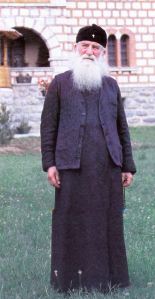
“In truth there is only one freedom – the holy freedom of Christ, whereby He freed us from sin, from evil, from the devil. It binds us to God. All other freedoms are illusory, false, that is to say, they are all, in fact, slavery.”
– Saint Justin Popovich
D.B. Hart: “For my money, if Origen was not a saint and church father, then no one has any claim to those titles.”
Posted by Dallas Wolf in Ekklesia and church, New Nuggets on May 13, 2015
David Bentley Hart (born 1965) an Eastern Orthodox scholar of religion, is a philosopher, writer, and cultural commentator. His books include The Experience of God: Being, Consciousness, Bliss and That All Shall Be Saved: Heaven, Hell, Universal Salvation, and The New Testament – A Translation. He lives in South Bend, IN.

“East or West, all Christians are burdened with the absurdities of Christian imperial history. But any conception of orthodoxy that obliges one to grant the title of “saint” to a murderous thug like Justinian while denying it to a man as holy as Origen is obviously—indeed ludicrously—self-refuting. And one does not defend tradition well by making it appear not only atrociously unjust, but utterly ridiculous.”
D.B. Hart, from Saint Origen, First Things, October 2015.
“For my money, if Origen was not a saint and church father, then no one has any claim to those titles. And the contrary claims made by a brutish imbecile Emperor are of no consequence.”
D.B. Hart, from Eclectic Orthodoxy blog post, 11 May 2015.
D.B. Hart: “Wisdom is the recovery of innocence at the far end of experience”
Posted by Dallas Wolf in New Nuggets on May 13, 2015
David Bentley Hart (1965- ), is a contemporary American Eastern Othodox theologian and philosopher.
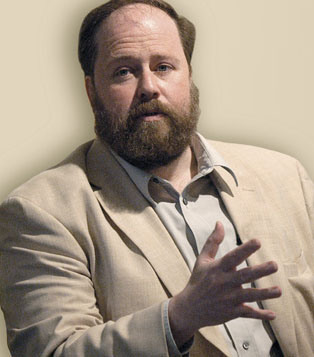 “I start from the conviction that many of the most important things we know are things we know before we can speak them; indeed, we know them—though with very little in the way of concepts to make them intelligible to us—even as children, and see them with the greatest immediacy when we look at them with the eyes of innocence. But, as they are hard to say, and as they are often so immediate to us that we cannot stand back from them objectively, we tend to put them out of mind as we grow older, and make ourselves oblivious to them, and try to silence the voice of knowledge that speaks within our own experiences of the world. Wisdom is the recovery of innocence at the far end of experience; it is the ability to translate some of that vision into words, however inadequate. There is a point, that is to say, where reason and revelation are one and the same.” ~ David Bentley Hart. from “The Experience of God”.
St. Gregory Palamas: “Deification is an enhypostatic and direct illumination…”
Posted by Dallas Wolf in Hesychasm - Jesus Prayer, Monasticism, Patristic Pearls on May 11, 2015
St. Gregory Palamas (Greek: Γρηγόριος Παλαμάς; 1296–1359) – was a monk of Mount Athos in Greece and later the archbishop of Thessaloniki, known as a preeminent theologian of Hesychasm. The teachings embodied in his writings defending Hesychasm against the attack of Barlaam are sometimes referred to as Palamism, and his followers as Palamites.
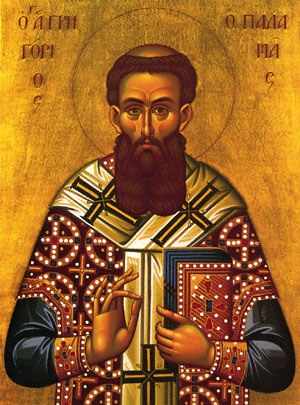
“But when you hear of the vision of God face-to-face, recall the testimony of Maximus: ‘Deification is an enhypostatic and direct illumination which has no beginning, but appears in those worthy as something exceeding their comprehension. It is indeed a mystical union with God, beyond intellect and reason, in the age when creatures will no longer know corruption. Thanks to this union, the saints, observing the light of the hidden and more-than-ineffable glory, become themselves able to receive the blessed purity, in company with the celestial powers”
~ St. Gregory Palamas, The Triads, III.i.28
 First Thoughts