Stăniloae: “The latter [apophatic knowledge] is superior to the former [cataphatic knowledge] because it completes it.”
Posted by Dallas Wolf in Hesychasm - Jesus Prayer, New Nuggets, Theology on December 7, 2014
Dumitru Stăniloae (1903 – 1993) was an Orthodox priest and renowned as an Orthodox theologian, academic, and professor. In addition to commentary on the works of the Church Fathers Maximus the Confessor, Gregory Palamas, and Athanasias, his 1978 masterpiece “The Dogmatic Orthodox Theology” established him as one of the foremost Christian theologians of the later half of the twentieth century.
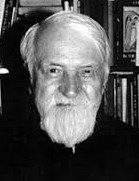 “According to patristic tradition, there is a rational or cataphatic knowledge of God, and an apophatic or ineffable knowledge. The latter is superior to the former because it completes it. God is not known in his essence, however, through either of these. We know God through cataphatic knowledge only as creating and sustaining cause of the world, while through apophatic knowledge we gain a kind of direct experience of his mystical presence which surpasses the simple knowledge of him as cause who is invested with certain attributes similar to those of the world. This latter knowledge is termed apophatic because the mystical presence of God experienced through it transcends the possibility of being defined in words. This knowledge is more adequate to God than is cataphatic knowledge.” Dogmatic Orthodox Theology, I-95
Saint Maximus the Confessor: “Flee from self-love”, philautía (φιλαυτία)
Posted by Dallas Wolf in Hesychasm - Jesus Prayer, Patristic Pearls on November 28, 2014

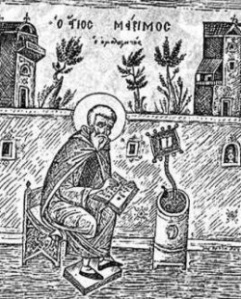
“Flee from self-love, the mother of malice, which is an irrational love for the body. For from it are born the three chief sinful passions: gluttony, avarice, and vainglory, which take their causes from bodily needs, and from them all the tribe of the passions is born. This why we must always oppose self-love and fight against it. Whoever rejects self-love will easily conquer all the other passions with the help of God: anger, despondency, rancor, and the others. But whoever is retained by self-love will even unwillingly be conquered by the above-named passions.”
– Saint Maximus the Confessor
The Enlightenment Myth of “The Pursuit of Happiness”
Posted by Dallas Wolf in First Thoughts on November 8, 2014
“Is the “pursuit of happiness” not, according to the myth created by the founding fathers of the American Republic, an “inalienable right?” That concept has, in fact, entered so deeply into the thought and conscience of generations of North Americans that it is difficult to question it without being suspected of being, if not actually some kind of foreign agent, at least “un-American.” The concept of “the pursuit of happiness” itself is, however, diametrically opposed to Orthodox Christianity’s view of the Christian’s fundamentally sacrificial and intercessory role in the cosmos, to say nothing of Christianity’s most basic tenant: the sacrifice of Christ is absolutely essential within the divine economy of His Incarnation.
“The pursuit of happiness” actually opposes, moreover, man’s intimate relationship with God and that total submission to God the holy fathers of Orthodoxy teach us is basic to the spiritual life. The true lover of Christ, in fact, can never take the concept of the “pursuit of happiness” seriously as something that might ever be incorporated into his own life in Christ.
The “pursuit of happiness” inevitably fosters a totally self-centered view of life, ignoring completely all cosmic sense of man’s place in the universe. It further ignores the inevitable, perennial and very basic dimension of sacrifice demanded of man at every level of his human existence. Whether in pursuing the bonds of love with a future spouse, or in bringing forth and rearing children, or in caring for those one loves, or in maintaining the well-being of one’s own family, sacrifice and suffering are far more basic necessities to human well-being than is the “pursuit of happiness.””
Excerpt from The Heart of Orthodox Mystery, by William Bush
I have been thinking a lot recently about happiness. It does not seem to me a foundational tenet of Christianity but, as discussed above, a construct of Enlightenment thinking. In its place, I think it might be better to use the concept of St. Paul’s “contentment” (αὐτάρκεια; autárkeia), best expressed in Philippians 4:11-13:
“Not that I am referring to being in need; for I have learned to be content [αὐτάρκης; autárkes] with whatever I have. I know what it is to have little, and I know what it is to have plenty. In any and all circumstances I have learned the secret of being well-fed and of going hungry, of having plenty and of being in need. I can do all things through him who strengthens me.”
Perhaps we should be pursuing “contentment”, which is a state achievable regardless of circumstance, instead of “happiness” which is inherently emotional, self-centered, illusory, and transitory.
St. John Chrysostom: “Christians damage Christ’s cause more than His enemies and foes”
Posted by Dallas Wolf in Patristic Pearls on October 10, 2014

“I once used to deride secular rulers because they distributed honors, not on grounds of inherent merit, but of wealth or seniority or worldly rank. But when I heard that this stupidity had swaggered into our own affairs [within the Church] too, I no longer reckoned their actions so strange. For why should we be surprised that worldly people, who love the praise of the mob and do everything for money, should make this mistake, when those who claim to have renounced all these desires are no better? For although they are contending for heavenly rewards, they act as though they had to decide merely about acres of land or something else of the kind. They simply take common place men and put them in charge of those things for which the only begotten Son of God did not disdain to empty Himself of His own glory and to be…
View original post 60 more words
Rahner – “The Christian of the future will be a mystic…”
Posted by Dallas Wolf in New Nuggets on August 29, 2014
Karl Rahner, (March 5, 1904 – March 30, 1984), was a German Jesuit priest and theologian who is considered one of the most influential Catholic theologians of the 20th century.

“The Christian of the future will be a mystic, or he will not exist at all.”
Karl Rahner, Theological Investigations XX, 149.
St. Gregory of Nyssa – “… only wonder grasps anything”
Posted by Dallas Wolf in Hesychasm - Jesus Prayer, Monasticism, Patristic Pearls on August 5, 2014
St. Gregory of Nyssa (c. AD 335 – 395) – Along with his older brother, Basil of Caesarea, and their friend, Gregory of Nazianzus, Nyssen was one the three great Cappadocian Fathers of the 4th century. He was also younger brother of St. Macrina the Younger; virgin, mystic, monasatic, wonder worker, and philosopher of God.

“Concepts create idols; only wonder grasps anything; People kill one another over idols. Wonder makes us fall to our knees.”
~ from: The Life of Moses
Rohr: “Thou Art That”
Posted by Dallas Wolf in Ekklesia and church, New Nuggets on August 2, 2014

Fr. Richard Rohr, Franciscan Christian mystic and contemplative.
“Theologically it is not correct for Christians to simply call Jesus “God” or to simply call him ” a man”. He is manifesting a third something, not God, not human, but the combination of the two! And his existence says to all of us: THOU ART THAT! YOU also manifest the same eternal mystery, each in your own way! “Follow me!” We did ourselves and Jesus no favor by simply calling him “God”. We missed the very point that could have and could still transform the world. We made the Christ Mystery into a competitive religion instead of an icon of transformation for everybody. We made Jesus into an “exclusive” incarnation instead of an inclusive Savior. He came to take us along with him, not to just say “look at me”. The paradox was so big, so central, and so stunning that our ordinary dualistic minds could not comprehend it. Only the “non dual” saints and mystics could process it and experience it. But now YOU can too: Thou Art That!” ~ Fr. Richard Rohr, OFM
T.S.Eliot: “The World is trying the experiment of attempting to form a civilized but non-Christian mentality”
Posted by Dallas Wolf in New Nuggets on July 26, 2014

“The World is trying the experiment of attempting to form a civilized but non-Christian mentality. The experiment will fail; but we must be very patient in awaiting its collapse; meanwhile redeeming the time: so that the Faith may be preserved alive through the dark ages before us; to renew and rebuild civilization, and save the World from suicide.”
– T.S.Eliot
Atonement Theory 1
Posted by Dallas Wolf in Atonement Theory (series) on July 13, 2014
“We know that the Atonement works; but how it works is not as clear.”
Jesus Christ died on the cross for our sins (cf., 1 Cor. 15:3). In this way he fulfilled the old covenant sacrificial system, reconciled us to God, and changed our lives forever.
That is the doctrine of the Atonement. Its reality is not in dispute. However, many Christians struggle to understand this doctrine. We know that the Atonement works; but how it works is not as clear. Over the centuries many different theories have been suggested to explain how the Atonement works.
Many contemporary Western Latin Christians (Roman Catholics and Protestants) are unaware that there are other theories of the nature of Jesus Christ’s atonement. Most are only familiar with their own Roman Catholic Satisfaction Theory of atonement or the related Protestant Penal Substitution Theory. My guess is that few Catholics or Protestants are aware that both of their respective atonement theories are relatively new innovations theologically and neither reflects the theology of the ancient Christian church. Consequently, even fewer Western Christians are likely familiar with the predominant atonement view held by those in the Eastern Orthodox Church, which is commonly called The Recapitulation Theory, which does reflect ancient Christian tradition dating back to the late 2nd century.
First, a very general chronological overview of the four major Christian atonement theories
- Moral Influence Theory (2nd century)
- “Christus Victor”/Ransom/Recapitulation Theory (late 2nd century)
- These are different, but generally considered together as the “Patristic” or “Classical” understandings of the early Church Fathers
- Satisfaction Theory (11th century)
- Developed by Anselm of Canterbury (1033-1109).
- Penal Substitution Theory (16th century)
- A variation of Anselm’s satisfaction theory developed by the Protestant Reformers, especially John Calvin (1509-1564), and is often treated together with the satisfaction theory
Atonement Theory 2
Posted by Dallas Wolf in Atonement Theory (series) on July 12, 2014
“…the classical or patristic view, … can be variously interpreted as the Ransom or Recapitulation view, under the general heading of ‘Christus Victor’.”
Throughout the centuries, Christians have used different metaphors and given differing explanations of Christ’s atonement to express how the atonement might work. The four most well-known theories are briefly described below:
The earliest explanation for how the atonement works is often called by contemporary scholarship the Moral Influence Theory. According to this view the core of Christianity is positive moral change, and the purpose of everything Jesus did was to lead humans toward that moral change. He is understood to have accomplished this through a combination of his teachings, personal example, his founding of the ekklesia (Church), and the inspiring power of his crucifixion and resurrection. This view was taught by the Church Fathers in the 2nd and 3rd centuries AD along with what is called the classical or patristic view, which can be variously interpreted as the Ransom or Recapitulation view, under the general heading of “Christus Victor”. Peter Abelard (1079-1142) re-popularized The Moral Influence Theory in the Medieval period partially in reaction against Anselm’s Satisfaction theory (below). It remains the most popular view of atonement among theologically liberal Protestant Christians.
Chronologically, the second theory, the “Christus Victor”/Ransom/RecapitulationTheory, was first clearly articulated by Irenaeus (early 2nd century – c. AD 202), Bishop of modern-day Lyon, France. Gustav Aulén, in his 1931 book Christus Victor: An Historical Study of the Three Main Types of the Idea of Atonement, gives us a description of “Christus Victor” as, “the work of Christ is first and foremost a victory over the powers which hold mankind in bondage: sin, death, and the devil.”
“Christus Victor” and “Ransom” differ slightly from each other: in the Ransom metaphor Jesus liberates mankind from slavery to sin and Satan and thus death by giving his own life as a ransom sacrifice (cf., Matthew 20:28). Victory over Satan consists of exchanging the life of the perfect man (Jesus), for the lives of the imperfect (mankind). The “Christus Victor” theory, on the other hand, does not see Jesus as a ransom, but rather as defeating Satan in a spiritual battle and thus freeing enslaved mankind by defeating the captor (Satan).
 First Thoughts