Archive for category Essence and Energies (series)
Apophatic and Cataphatic Theology: An Issue of Emphasis and Balance
Posted by Dallas Wolf in Contemplative Prayer (series), Ekklesia and church, Essence and Energies (series), First Thoughts, Hesychasm - Jesus Prayer, The Cappadocians, Theology on April 6, 2025
Overview
Apophatic and Cataphatic are two terms used in theology to describe different approaches to understanding God. The Eastern Orthodox and Latin West each use both types. The issue comes down to one of emphasis and balance: The Orthodox East is overwhelmingly Apophatic in approach, while the Latin West is predominantly Cataphatic.
Definitions
Apophatic theology (from Greek: ἀπόφημι apophēmi, meaning “to deny”) uses “negative” terminology to indicate what it is believed the divine is not. It means emptying the mind of words and ideas and simply resting in the presence of God. Apophatic prayer is prayer that occurs without words, images, or concepts. This approach to prayer regards silence, stillness, unknowing and even darkness as doorways, rather than obstacles, to communication with God. Apophatic theology relies primarily on experience and revelation.
Cataphatic theology (from the Greek word κατάφασις kataphasis meaning “affirmation”) uses “positive” terminology to describe or refer to the divine, i.e. terminology that describes or refers to what the divine is believed to be. Cataphatic prayer is prayer that speaks thoroughly, intensively, or positively of God: prayer that uses words, images, ideas, concepts, and the imagination to relate to God. Cataphatic theology relies heavily on logic and reason.
Background
Apophatic theology—also known as negative theology or via negativa—is a theology that attempts to describe God by negation. In Orthodox Christianity, Apophatic theology is based on the assumption that God’s essence is unknowable or ineffable and on the recognition of the inadequacy of human language to describe God. The Apophatic tradition in Orthodoxy is balanced with Cataphatic theology (positive theology) via belief in the Incarnation and the self-revealed energies of God, through which God has revealed himself in the person of Jesus Christ. However, Apophatic theology is the dominant traditional Eastern paradigm of an experiential, revealed theology, intimately linking doctrine with contemplation through purgation (catharsis), illumination (theoria), and union (theosis).
Clement of Alexandria (c. 150 – 215) was an early proponent of Apophatic theology with elements of Cataphatic. Clement holds that God is unknowable, although God’s unknowability, concerns only his essence, not his energies, or powers. According to Clement’s writings, the term theoria develops further from a mere intellectual “seeing” toward a spiritual form of contemplation. Clement’s Apophatic theology or philosophy is closely related to this kind of theoria and the “mystic vision of the soul.” For Clement, God is both transcendent in essence and immanent in self-revelation.
The Cappadocian Fathers (Basil the Great, Gregory of Nyssa, and Gregory of Nazianzus (4th century)) were early exemplars of this Apophatic theology. They stated that mankind can acquire an incomplete knowledge of God in his attributes, positive and negative, by reflecting upon and participating in his self-revelatory operations (energeia). But, the essence of God is completely unknowable.
A century later Pseudo-Dionysius the Areopagite (late 5th century) in his short work Mystical Theology, first introduced and explained what came to be known as Apophatic or negative theology.
Maximus the Confessor (7th century) maintained that the combination of Apophatic theology and hesychasm—the practice of silence and stillness—made theosis or union with God possible.
John of Damascus (8th century) employed Apophatic theology when he wrote that positive (cataphatic) statements about God reveal “not the nature, but the things around the nature.”
All in all, Apophatic theology remains crucial to much of the theology in Eastern Orthodox Christianity. The opposite tends to be true in Western Latin Christianity, with a few notable exceptions to this rule.
Cataphatic theology
In the Latin West a heavily Cataphatic theology, or via positiva, developed, which remains today in most forms of Western Christianity. This type of Cataphatic theology is based on using human reason to make positive statements about the nature of God. It slowly developed from the 5th to the 11th century, emerging as Scholasticism in the Medieval Period (11th-17th centuries). (see entries for Anselm and Thomas Aquinas, below)
Augustine of Hippo (354–430) significantly influenced scholasticism, emphasizing the integration of faith and reason. His ideas laid the groundwork for later Scholastic thinkers who sought to reconcile Christian theology with classical philosophy, particularly through dialectic reasoning. Augustine’s doctrines of the filioque, original sin, the doctrine of grace, and predestination found little support outside of the Western Roman Church. Within the Western Latin church, ‘Augustinianism’ dominated early theology.
Anselm of Canterbury (c. 1033 – 1109) is widely considered the father of Scholasticism, endeavoring to render Christian tenets of faith, traditionally taken as a revealed truth, as a rational system. Scholasticism prescribed that Aristotelian dialectic reason be used in the elucidation of spiritual truth and in defense of the dogmas of Faith.
Thomas Aquinas (c. 1225 – 7 March 1274) reflects the mature emergence of this new medieval Scholastic paradigm, which promoted the use of formal intellectual reason, putting it at odds with the predominantly Eastern revealed tradition of hesychastic contemplation. Aquinas’ Summa Theologica (1265–1274), is considered to be the pinnacle of Medieval Scholastic Christian philosophy and theology. The resulting ‘Thomism’ remains the foundation of contemporary Western Latin theology.
von Balthasar on Gregory of Nyssa
Posted by Dallas Wolf in Concept of "Person" (series), Ekklesia and church, Essence and Energies (series), Patristic Pearls, The "Nous" (series), The Cappadocians, The Holy Trinity on December 26, 2024
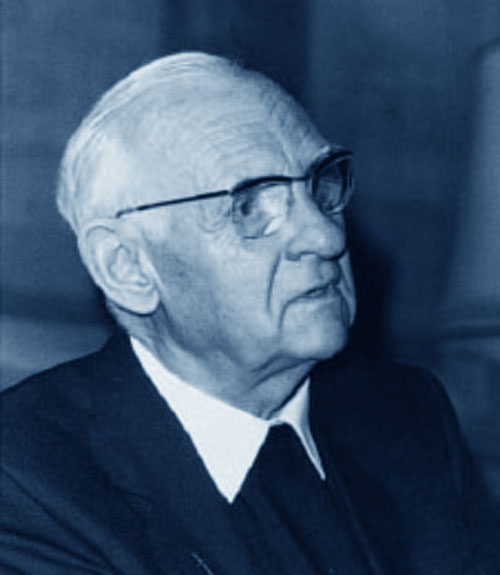
Hans Urs von Balthasar (1905–1988) – Hans Urs von Balthasar was a Swiss theologian and Catholic priest who is considered one of the most important Catholic theologians of the 20th century. Over the course of his life, he authored 85 books, over 500 articles and essays, and almost 100 translations.
Excerpt from Hans Urs von Balthasar: Presence and Thought: Essay on the Religious Philosophy of Gregory of Nyssa (1988)

“Less brilliant and prolific than his great master Origen, less cultivated than his friend Gregory Nazianzen, less practical than his brother Basil, he [Gregory of Nyssa] nonetheless outstrips them all in the profundity of his thought, for he knew better than anyone how to transpose ideas inwardly from the spiritual heritage of ancient Greece into a Christian mode.”
Essence and Energies of God – 1
Posted by Dallas Wolf in Essence and Energies (series) on August 30, 2015

Thaboric Light
One of my main goals in writing is to discover and bring the ancient theology and doctrines of the early charismatic Christian church to the contemporary Charismatic Renewal Movement.
There is a clear disconnect between the doxis of Western Latin Christianity and the praxis of the contemporary Charismatic Renewal Movement which operates in the gifts and fruit of the indwelling presence and power of the Holy Spirit. The Renewal Movement certainly has the basic praxis (how beliefs are practiced, embodied and realized in conduct) of the early charismatic Apostolic church, but does not have a corresponding supportive, complementary doxis (religious beliefs, worship, doctrines, and creeds) which explains and supports that praxis.
The world needs to see lives transformed, but it also needs to know why and how they have been transformed. To do this, the world must see a complementary balance of belief and action at work. But, just as vital, the world must see something else in mutual support and balance: orthodoxy and orthopraxis– that is, right belief and right action.
A key essential in an orthodoxy which supports a Renewal Movement (apostolic church) orthopraxis is an understanding of the Essence and Energies of God and the distinction between them. It is only in understanding Essence (transliterated ousía in Greek) and Energies (transliterated enérgeia in Greek) of God that we can reconcile the seeming paradox of the unknowable transcendence of God with the universal, yet very personal indwelling presence and power of God in all humankind.
Throughout this discussion, I will rely heavily on the writings of 20th century theologians including Vladimir Lossky, Christos Yannaras, and Fr. John Meyendorff. They, in turn, refer to the authority of many early Church Fathers including St. Gregory of Nyssa, St. Gregory of Nazianzus, and St. Macarius the Great (all 4th century); St. Dionysius the Aeropagite (5th century); St. Maximus the Confessor (7th century); St. Symeon the New Theologian (11th century); and last, but not least, St. Gregory Pálamas (14th century). I make all of these citations so that the reader may understand that the theology and doctrines on the Essence and Energies of God are both ancient and continuously attested to throughout the Patristic literature up to this day. These citations also make it clear that none of what you are about to read is my original work or thoughts.
To be continued…
Essence and Energies of God – 2
Posted by Dallas Wolf in Essence and Energies (series) on August 29, 2015
Thaboric Light
Essence (οὐσία; ousía)
In order to understand God’s essence, we have to spend a little time understanding how to approach an understanding of God!
Since the writings of St. Dionysius the Areopagite in the 5th century (e.g., “Concerning Mystical Theology”), apophatic theology, or the via negativa, has enjoyed undisputed authority in the theological tradition of both the Christian East and West (Lossky).
Vladimir Lossky tells us that, “Dionysius distinguishes two possible theological ways. One – that of cataphatic or positive theology – that proceeds by affirmations; the other – apophatic or negative theology – by negations. The first leads us to some knowledge of God, but in an imperfect way. The perfect way, the only way which is fitting in regard to God, who is of His very nature unknowable, is the second – which leads us finally to total ignorance.” Lossky does not leave us with that depressing thought, but goes on to explain that, “All knowledge has as its object that which is. Now God is beyond all that exists. In order to approach Him it is necessary to deny all that is inferior to Him, that is to say, all that which is. It is by unknowing (ἀγνωσία) that one may know Him who is above every possible object of knowledge. Proceeding by negations one ascends from the inferior degrees of being to the highest, by progressively setting aside all that can be known, in order to draw near to the Unknown in the darkness of absolute ignorance.”
Fr. John Meyendorff makes the same point as Lossky, “The writings of the Fathers – and particularly Dionysius – emphasized, as the starting point of any Christian discourse about God, the affirmation that God is not any of the creatures and that, therefore, the created mind, which “knows” only creatures, can conceive of God only by the method of exclusion. The most frequently repeated liturgical prayers, familiar to all, were using the same apophatic approach to God: “Thou art God ineffable, invisible, incomprehensible,…”. Later, Meyendorff remarks on “… the apophatic theology of the Greek Fathers, which affirmed absolute transcendence of the divine essence, inaccessible to the angels themselves.”
Eastern Christianity teaches that the essence, being, nature and substance (ousia) of God is uncreated and incomprehensible. Lossky finally summarizes all apophatic descriptions by defining God’s essence as “that which finds no existence or subsistence in another or any other thing”.
To be continued…
Essence and Energies of God – 3
Posted by Dallas Wolf in Essence and Energies (series) on August 28, 2015
Thaboric Light
Energies (ἐνέργεια; enérgeia)
In our discussion on God’s energies, I will rely heavily on the writings of the greatest expositor on the Essence and Energies of God, St. Gregory Pálamas (1296–1359). Palamas was a monk of Mount Athos in Greece and later the Archbishop of Thessaloniki. He is known as the preeminent theologian of Hesychasm (Greek: silence, stillness, or quietude), the ancient Christian tradition of contemplative prayer and theosis, or union with God, dating back to the 2nd century.
In the 1330s and 1340s Palamas defended the theology and doctrine of Hesychasm against Barlaam the Calabrian, a theologian trained in Western Scholastic tradition of reason and logic, who attacked the doctrines and practices of the Hesychasts, accusing them of heresy and blasphemy.
In response to Barlaam’s attacks, Palamas wrote nine treatises entitled “Triads For The Defense of Those Who Practice Sacred Quietude [Hesychasts]”. The treatises are called “triads” because they were organized as three sets of three treatises. Ultimately, Palamas prevailed and his theology was endorsed in a series of six patriarchal councils held in Constantinople between 1341 and 1351. Barlaam was anathematized, returned to Italy, and joined the Roman Catholic Church where is views received a more sympathetic reception.
Most of what follows comes from Fr. John Meyendorff’s 1983 publication of St. Gregory Palamas’ “Triads”.
Myendorff observed that, “The distinction in God between “essence” and “energy” – that focal point of Palamite theology – is nothing but a way of saying that the transcendent God remains transcendent, as He communicates Himself to humanity.” Unpacking this idea a bit further, he explains, “…for Palamas, this transcendent essence of God would be a philosophical abstraction if it did not possess “power”, that is, “the faculties of knowing, of prescience, of creating”. In other words, the God of Palamas is a living God…”
“The real communion, the fellowship and – one can almost say – the familiarity with the “One Who Is” [God] is, for Palamas the very content of the Christian experience, made possible because the “One Who Is” [God] became man.”
“After the coming of Christ … God enters into immediate communion with humanity.” So, for Palamas the Incarnation of Christ, the Logos, the second Person of the Holy Trinity, is absolutely central. Indeed, true “deification” (theosis) became possible when, according to the expressions of St. Athanasius, “God became man in order that man might become God in him”.
To be continued…
Essence and Energies of God – 4
Posted by Dallas Wolf in Essence and Energies (series) on August 27, 2015
Thaboric Light
Greek patristic anthropology is theocentric. That means that the study of man begins in God. “At his creation, man was endowed with some “divine characteristics” in that he is God’s “image and likeness”. According to St. Maximus the Confessor, these characteristics are “being” and “eternity” (which God possesses by nature, but gives also to man), and earlier, St. Irenaeus of Lyons identified the “spirit” naturally belonging to man with the Holy Spirit. Consequently, man is not fully man unless he is in communion with God: He is “open upwards” and destined to share God’s fellowship” (Meyendorff). Man’s participation in God does not occur in the future, not in the “sweet by and by”, but now, here, in this life.
Meyendorff continues: “So, communion with God in Christ is real and immediate. It is not pantheistic absorption into the Divine however: Man, being “in God”, or rather “in Christ”, preserves his full humanity, his freedom,…and he participates in a process that knows no end, because God, in his transcendent essence, is always “above” any given experience of Him.”
Now, Meyendorff describes the crucial aspect of Gods Energies: “But man’s communion is not with “created grace” only [as Barlaam contended], but with God Himself. This is the meaning of the doctrine of the “uncreated energies”, which … is rooted in the Christological doctrine of “hypostatic union” as it was formulated in the East after Chalcedon particularly by St. Maximus the Confessor.”
God’s energies are uncreated manifestations of God himself. We can participate in God’s homogenous energies directly as divine grace. God’s heterogenous energies are also revealed to us through the character of his creation. Theologian Christos Yannaras explains;
“Accordingly, God’s homogenous energy (to use St. Maximus’ distinction) is revealed in the Church’s experience of divine grace, which is uncreated (heterogenous to creatures and homogenous to God) and through which God is wholly participated in and participated singularly by all, remaining simple and indivisible, offering to the communicant that which He (God) possesses by nature except essential identity and elevating man to the rank of communicant of the divine nature according to the word of Scripture ( II Peter 1:4). On the other hand, the revelation of God’s energy in essences heterogenous to God is seen in the character of beings as creatures, created by divine energies.”
To be continued…
Essence and Energies of God – 5
Posted by Dallas Wolf in Essence and Energies (series) on August 26, 2015
Thaboric Light
In the context of this affirmation of God’s real manifestation of his energies to creatures, Palamas, following Maximus the Confessor and John of Damascus, refers to the New Testament accounts and references to the Transfiguration of Christ on the mount (Mt. 17:1-9; Mk. 9:2-9;Lk. 9:28-36; 2 Pet. 1:17-21). This idea of “God as Light” recurs throughout Patristic literature including the aforementioned Maximus and John, plus the likes of Origen, Gregory of Nyssa, Dionysius the Areopagite, St. Symeon the New Theologian, and Gregory Palamas himself.
Palamas was quick to point out the difference between any other light-experience and that of the vision of God as Light that appeared to the disciples during the Transfiguration on Mount Thabor and that, in Christ, has become accessible to the members of His Body, the Church. The following quote from Palamas (Triad I, 3, 38) uses the image of the illumination of the disciples by Christ on Mount Thabor to explain how we, in Christ, can be illuminated from within.
“Since the Son of God, in his incomparable love for man, did not only unite His divine Hypostasis with our nature, by clothing Himself in a living body and a soul gifted with intelligence… but also united himself,,, with the human hypostases themselves, in mingling himself with each of the faithful by communion with his Holy Body, and since he becomes one single body with us (cf. Eph. 3:6), and makes us a temple of the undivided Divinity, for in the very body of Christ dwelleth the fullness of the Godhead bodily (Col. 2:9), how should he not illuminate those who commune worthily with the divine ray of His Body which is within us, lightening their souls, as He illumined the very bodies of the disciples on Mount Thabor? For, on the day of the Transfiguration that Body, source of the light of grace, was not yet united with our bodies; it illuminated from outside those who worthily approached it, and sent the illumination into the soul by an intermediary of the physical eyes; but now, since it is mingled with us and exists in us, it illuminates the soul from within.” ~ Palamas Triad I, 3, 38
“It is precisely because Palamas understands illumination in the framework of Orthodox Christology that he insists on the uncreated character of divine light: This uncreated light is the very divinity of Christ, shining through his humanity. If Christ is truly God, this light is authentically divine.” (Meyendorff)
To be continued
Essence and Energies of God – 6
Posted by Dallas Wolf in Essence and Energies (series) on August 25, 2015
Thaboric Light
The same Christological framework makes it inevitable to distinguish between the transcendent essence, or nature of God, and His energies. Indeed, in Christ His two natures – so precisely defined at Chalcedon as both “inseparable” and “unconfused” – remain distinct. Therefore deification of communion between divinity and humanity does not imply a confusion of essences or natures. It remains nevertheless real communion between the Uncreated and His creature, and real deification – not by essence, but by energy. The humanity of Christ, “enhypostasized” by the Logos, is penetrated with divine energy, and Christ’s body becomes the source of divine light and deification. It is “theurgic”, that is, it communicates divine life to those who are “in Christ” and participate in the uncreated energies active in it.” (Meyendorff)
Theologian Christos Yannaras uses an analogy from Maximus the Confessor to further explain the distinction between essence and energies:
St. Maximus the Confessor uses as an image and an example of such communion the human voice, which being one is participated in by many, and is not swallowed up by the multitude. If by taking this example we can arbitrarily consider human reason as essence, then we can say that the voice represents the energy of the essence of reason, the possibility for us to participate in the essence of reason as the voice reveals and communicates it, to participate, all of us who hear the same voice, in the same essence of the one reason — without this communion becoming our identification with the essence of reason, and without the fragmentation of the essence in as many parts as there are participants in the reason through the voice. Reason, expressed personally, remains unified and indivisible, while at the same time, it is singularly participated by all.” ~ From “The Distinction Between Essence and Energies and its Importance for Theology”
To be continued…
Essence and Energies of God – 7
Posted by Dallas Wolf in Essence and Energies (series) on August 24, 2015
Thaboric Light
An understanding of God’s energies allows humankind to experience God directly through a personal relationship with the Persons of the triadic Godhead; the divine persons in communion and relationship with humanity as persons. That aligns with and supports every human being achieving their purpose in life; having been created in the image of God, to attain to His likeness, partaking of the divine nature, in this life.
Without an understanding the distinction between God’s Essence and Energies we cannot reconcile the reality of a totally transcendent, ineffable, and unknowable God with the reality of the intensely personal relationship with Christ inherent in the indwelling presence of the Holy Spirit within us. Christos Yannaras described the problem:
“The West rejected the distinction, desiring to protect the idea of simplicity in the divine essence, since rational thought cannot accept the antinomy [paradox] of a simultaneous existential identity and otherness, a distinction that does not mean division and fragmentation. For the western mind…God is defined only in terms of His essence; whatever is not essence does not belong to God; it is a creature of God, the result of divine essence.”
Without this theology of the Essence and Energies of God, the praxis of the Renewal Movement, the indwelling presence and power of God in intimate personal relationship within us, is left with no complementary supporting theology or doctrine. It is left without its complementary, supporting doxis. We are left with a religion with a split personality, with no continuity between its belief and action; its doxis and praxis.
You will note that the Western Latin (Roman Catholic and Protestant) Church, embodied in the person of Barlaam of Calabria, does not recognize the Essence-Energies doctrine. Hence, Western theology and doctrine have no means of explaining and dealing with the transcendence of God and with the simultaneous indwelling presence and power of the Holy Spirit which animates Renewal Movement Christians. The West has no orthodoxis which complements and supports a spirit-filled orthopraxis.
This orthodoxis is only found in the Eastern Orthodox tradition.
End
 First Thoughts