Archive for category First Thoughts
“And we believe in one, holy, catholic, and apostolic Church.”
Posted by Dallas Wolf in Ekklesia and church, First Thoughts, Hesychasm - Jesus Prayer, Monasticism on December 28, 2024
In the original koine Greek of the Nicene-Constantinopolitan Creed of AD 381, the subject line reads: Εἰς μίαν, Ἁγίαν, Καθολικὴν καὶ Ἀποστολικὴν Ἐκκλησίαν.
I find it sadly ironic that The Nicene-Constantinopolitan Creed, as it is recited in most worship services today, uses the first person singular (“I believe…”/”Πιστεύω”) rather than the first person plural (“We believe…”/”Πιστεύομεν”) as it was enacted at the first and second ecumenical councils (Nicaea AD 325 and Constantinople AD 381) of the undivided Church. In this self-centered, affluent, secularized, and fragmented Western world, I guess the shift from a collective “we” to an individual “I” should come as no surprise.
Christianity became the State Religion of the Roman Empire in AD 380. Since becoming that key religious institution in the social and political infrastructure of worldly power, very little has changed to this day, regardless of the form or character of the Church’s earthbound imperial partners. Fr. Richard Rohr, OFM, calls it the Church’s 1,700 year addiction to Power, Prestige, and Possessions.
Let’s analyze our subject line from the Creed: “And we believe in one, holy, catholic, and apostolic Church.”
The institutional Christian Church was no longer “One” after 451 AD; increasingly less “Holy” after 313 AD; no longer “Catholic” after 1054 (worse after 1517); and “Apostolic” only in origin (and Rome’s claim to Peter and Constantinople’s claim to Andrew are tenuous, at best.). So, nothing in this line from the Creed has been objectively true in more than 1,000 years. Reciting this line from the Nicene-Constantinopolitan Creed now is not so much a proclamation of faith, as a largely an unsupportable exercise in wishful thinking. Don’t believe it? “Google” the dated Church events and read for yourself.
Until the issues raised in the preceding paragraphs are meaningfully addressed (read: confession and repentance) by the legacy institutional Church, I think it will continue to shrink in numbers, authority, influence, and credibility. I believe the Ecclesia (Ἐκκλησία) of scripture will endure and eventually prevail; the institutional imperial Church, not so much. And Ecclesia and Church are not the same thing, in spite of institutional protests to the contrary.
In the meantime, solitary Christian hermits patiently remain in silent prayer within their virtual deserts.
Thomas Aquinas: “… all that I have written seems to me as so much straw”
Posted by Dallas Wolf in First Thoughts, Theology on December 10, 2024
Thomas Aquinas OP (c. 1225 – 7 March 1274) was an Italian Dominican friar and priest, the foremost Scholastic thinker, as well one of the most influential philosophers and theologians in the Western tradition. Thomas’s best-known work is the unfinished Summa Theologica, or Summa Theologiae (1265–1274). As a Doctor of the Church, Thomas Aquinas is considered one of the Roman Catholic Church’s greatest theologians and philosophers.
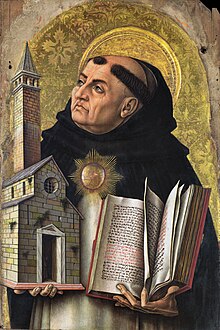
On December 6th, 1273, while Thomas Aquinas was celebrating Holy Communion during the Feast of Saint Nicholas, he received a revelation that so affected him he called his principal work, the Summa Theologica, nothing more than “straw” and left it unfinished.
Aquinas described his Divine Experience: “The most perfect union with God is the most perfect human happiness and the goal of the whole of the human life, a gift that must be given to us by God.”
When his friend and secretary tried to encourage Aquinas to write more, he replied:
“I can do no more. The end of my labors has come. Such things have been revealed to me that all that I have written seems to me as so much straw. Now I await the end of my life after that of my works.”
Aquinas would die just three short months later. The Great Doctor finally got it right, I think. Experience (theoria) trumps reason.
Origen: On Prayer; ca. AD 240
Posted by Dallas Wolf in First Thoughts on November 26, 2024
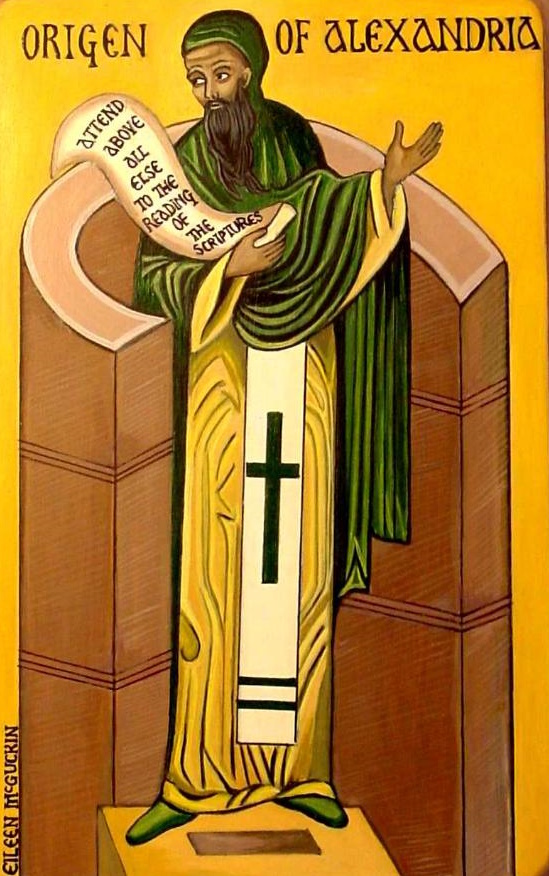
Origen of Alexandria, (c. 184 – c. 254) was Head of the famed Catechetical School in Alexandria at age 18 and arguably the most brilliant theologian of the early Christian church. His book, First Principles (Περὶ Ἀρχῶν; Peri Archon), was the first systematic exposition of Christian theology. He was probably the most able and successful defender of the faith against the heresy of Gnosticism in the third century. A Saint and Church Father without question. The following excerpts come from Origen’s book, On Prayer (Περί Ευχής; Peri Euches), written in about AD 240. Note that these excerpts primarily address active prayer.
When to Pray
Without ceasing:
“… keep that saying of Paul’s in accordance with the exhortations of Jesus, “Pray without ceasing.”
Now, since the performance of actions enjoined by virtue or by the commandments is also a constituent part of prayer, he prays without ceasing who combines prayer with right actions, and becoming actions with prayer. For the saying “pray without ceasing” can only be accepted by us as a possibility if we may speak of the whole life of a saint as one great continuous prayer.”
Specific Times for Prayer
Four set times a day – 3rd Hour, 6th Hour, 9th Hour plus Prayer at Night (about midnight):
“Of such prayer what is usually termed prayer is indeed a part, and ought to be performed at least three times each day, as is plain from the account of Daniel who, in spite of the grave danger that impended, prayed three times daily.”
Indeed we shall not rightly speak even the season of night without such prayer as David refers to when he says ‘at midnight I arose to make acknowledgment to you for your righteous judgments’ and as Paul exemplifies when, as it is said in the Acts of the Apostles, along with Silas he offers prayer and praise to God ‘about midnight’ in Phillipi so that the prisoners also heard them.”
Moods of Prayer
Its Four Moods:
“In the first Epistle to Timothy the Apostle has employed four terms corresponding to four things in close relation to the subject of devotion and prayer… He says, ‘I exhort therefore first of all that requests, prayers, intercessions, thanksgivings be made on behalf of all men,’ and so on.”
Personal Prayer
Place, Preparation, and Posture
“But to secure the performance of one’s prayers in peace without distraction, the rule is for every man to make choice, if possible, of what I may term the most solemn spot in his house before he prays, considering in addition to his general examination of it, whether any violation of law or right has not been done in the place in which he is praying, so as to have made not only himself but also the place of his personal prayer of such a nature that the regard of God has fled from it.
A few words may now be added in reference to the direction in which one ought to look in prayer. Of the four directions, the North, South, East, and West, who would not at once admit that the East clearly indicates the duty of praying with the face turned towards it with the symbolic suggestion that the soul is looking upon the dawn of the true light?
Accordingly it seems to me that one who is about to enter upon prayer ought first to have paused awhile and prepared himself to engage in prayer throughout more earnestly and intently, to have cast aside every distraction and confusion of thought, to have bethought him to the best of his ability of the greatness of Him whom he is approaching and of the impiety of approaching Him frivolously and carelessly and, as it were, in contempt, and to have put away everything alien. He ought thus to enter upon prayer with his soul, as it were, extended before his hands, and his mind intent on God before his eyes, and his intellect raised from earth and set toward the Lord of All before his body stands. Let him put away all resentment against any real or imagined injurer in proportion to his desire for God not to bear resentment against himself in turn for his injuries and sins against many of his neighbors or any wrong deeds whatsoever upon his conscience. Of all the innumerable dispositions of the body that, accompanied by outstretching of the hands and upraising of the eyes, standing is preferred—inasmuch as one thereby wears in the body also the image of the devotional characteristics that become the soul.”
Topics of Prayer
Glory to God, Thanksgiving, Confession, Supplication, Glory to God
“I have still to treat the topics of prayer, and therewith I purpose to bring this treatise to an end. Four topics which I have found scattered throughout the Scriptures appear to me to deserve mention, and according to these everyone should organize their prayer. The topics are as follows: In the beginning and opening of prayer, glory is to be ascribed according to one’s ability to God, through Christ who is to be glorified with Him, and in the Holy Spirit who is to be proclaimed with Him. Thereafter, one should put thanksgivings: common thanksgivings—into which he introduces benefits conferred upon men in general—and thanksgivings for things which he has personally received from God. After thanksgiving it appears to me that one ought to become a powerful accuser of one’s own sins before God and ask first for healing with a view to being released from the habit which brings on sin, and secondly for forgiveness for past actions. After confession it appears to me that one ought to append as a fourth element the asking for the great and heavenly things, both personal and general, on behalf of one’s nearest and dearest. And last of all, one should bring prayer to an end ascribing glory to God through Jesus Christ in the Holy Spirit.“
The “Icon Corner”
Posted by Dallas Wolf in Contemplative Prayer (series), Ekklesia and church, First Thoughts, Hesychasm - Jesus Prayer, Monasticism on November 21, 2024

The Book of Acts and the Epistles of the Apostle Paul record that in the early Church, Christians used to meet in the homes of the faithful. This tradition of the House church assembly continues to this day in Eastern Christianity. An Orthodox Christian is expected to pray constantly. Thus the house, just like the Temple (church building), is considered to be a consecrated place. The center of worship in the house is the icon corner (Greek: εικονοστάσι, iconostási).
An icon corner is normally oriented to face east. It is often located in a corner to eliminate worldly distractions and allow prayer to be more concentrated. Here is where the family’s icons were located and displayed. From the earliest days, Light has been an important part of Christian worship. It not only provides a beautiful and calming ambience; it takes on a theological significance with Christ as the Light of the World. Thus, oil lamps and candles frequently illuminate the icons in the icon corner.
In the theology of Orthodox iconography, the prayers and veneration directed to the icons are passed on to the prototype—the person depicted in the image. For, as St. John of Damascus wrote, “we do not worship paint or wood, we do not worship matter; we worship the God who created matter, who became matter (flesh) for our sake“.
The icons in the icon corner also remind us of the declaration in Hebrews 12:1, that “we are surrounded by so great a cloud of witnesses“; so we need never pray alone. We venerate these witnesses through their icons, petition them and join them in prayer and worship of our Triune God.
Met. Kallistos Ware: On Hell
Posted by Dallas Wolf in First Thoughts, Heaven and Hell, Universal Restoration (Apokatastasis) on November 2, 2024
Metropolitan Kallistos (Ware) of Diokleia – (1934 – 2022) was a titular metropolitan of the Orthodox Ecumenical Patriarchate in Great Britain. From 1966-2001, he was Spalding Lecturer of Eastern Orthodox Studies at Oxford University, and has authored numerous books and articles pertaining to the Orthodox faith. The following excerpts are taken from Met. Kallistos’ book, The Orthodox Way (1986).

Hell is a point not in space but in the soul. It is the place where God is not. (And yet God is everywhere!) (p. 106)
The Last Judgement is best understood as the moment of truth when everything is brought to light, when all our acts of choice stand revealed to us in their full implications, when we realize with absolute clarity who we are and what has been the deep meaning and aim of our life. And so, following this final clarification, we shall enter – with soul and body reunited – into heaven or hell, into eternal life or eternal death.
Christ is the judge; and yet, from another point of view, it is we who pronounce judgement upon ourselves. If anyone is in hell, it is not because God has imprisoned him there, but because that is where he himself has chosen to be. The lost in hell are self-condemned, self-enslaved; it has been rightly said that the doors of hell are locked on the inside. (p. 181)
How can a God of love accept that even a single one of the creatures whom he has made should remain for ever in hell? There is a mystery here which, from our standpoint in this present life, we cannot hope to fathom. The best we can do is to hold in balance two truths, contrasting but not contradictory. First, God has given free will to man, and so to all eternity it lies within man’s power to reject God. Secondly, love signifies compassion, involvement; and so, if there are any who remain eternally in hell, in some sense God is also there with them. It is written in the Psalms, ‘If I go down to hell, thou art there also’ (139:7); and St. Isaac the Syrian says, ‘It is wrong to imagine that sinners in hell are cut off from the love of God.’ Divine love is everywhere, and rejects no one. But we on our side are free to reject divine love: we cannot, however, do so without inflicting pain upon ourselves, and the more final our rejection the more bitter our suffering. (p.182)
Paradise and Hell
Posted by Dallas Wolf in First Thoughts, Heaven and Hell, Theology on October 8, 2024
The Six Psalms – A fine way to start the day
Posted by Dallas Wolf in First Thoughts on May 12, 2024
Orthodox Matins (Orthros – Greek- “morning”, “dawn” or “day break”) usually begins with the reading of the “Six Psalms” (Greek- Hexapsalmos): Psalms 3, 37, 62, 87, 102, and 142. They are read in that order and combined into a single whole. (note: numbering is Septuagint LXX)
The reading of the Six Psalms is one of the most important points in Orthodox Matins (Orthros) or the All-night Vigil; a time when all should put aside other thoughts, stand quietly, and concentrate on these penitential prayers.
The Six Psalms comprise an entire scale of experiences which illumine the Christian life of the New Testament – not merely its overall joyous mood, but also the sorrowful path to that joy.
Psalms are numbered: LXX (Masoretic)
Psalm 3
O Lord, why are they multiplied that afflict me? Many rise up against me. Many say unto my soul: There is no salvation for him in his God. But Thou, O Lord, art my helper, my glory, and the lifter up of my head. I cried unto the Lord with my voice, and He heard me out of His holy mountain. I laid me down and slept; I awoke, for the Lord will help me. I will not be afraid of ten thousands of people that set themselves against me round about. Arise, O Lord, save me, O my God, for Thou hast smitten all who without cause are mine enemies; the teeth of sinners hast Thou broken. Salvation is of the Lord, and Thy blessing is upon Thy people.
Psalm 37 (38)
O Lord, rebuke me not in Thine anger, nor chasten me in Thy wrath. For Thine arrows are fastened in me, and Thou hast laid Thy hand heavily upon me. There is no healing in my flesh in the face of Thy wrath; and there is no peace in my bones in the face of my sins. For mine iniquities are risen higher than my head; as a heavy burden have they pressed heavily upon me. My bruises are become noisome and corrupt in the face of my folly. I have been wretched and utterly bowed down until the end; all the day long I went with downcast face. For my loins are filled with mockings, and there is no healing in my flesh. I am afflicted and humbled exceedingly, I have roared from the groaning of my heart. 0 Lord, before Thee is all my desire, and my groaning is not hid from Thee. My heart is troubled, my strength hath failed me; and the light of mine eyes, even this is not with me. My friends and my neighbours drew nigh over against me and stood, and my nearest of kin stood afar off. And they that sought after my soul used violence; and they that sought evils for me spake vain things, and craftinesses all the day long did they meditate. But as for me, like a deaf man I heard them not, and was as a speechless man that openeth not his mouth. And I became as a man that heareth not, and that hath in his mouth no reproofs. For in Thee have I hoped, O Lord; Thou wilt hearken unto me, O Lord my God. For I said: Let never mine enemies rejoice over me; yea, when my feet were shaken, those men spake boastful words against me. For I am ready for scourges, and my sorrow is continually before me. For I will declare mine iniquity, and I will take heed concerning my sin. But mine enemies live and are made stronger than I, and they that hated me unjustly are multiplied. They that render me evil for good slandered me, because I pursued goodness. Forsake me not, O Lord my God, depart not from me. Be attentive unto my help, O Lord of my salvation.
Psalm 62 (63)
O God, my God, unto Thee I rise early at dawn. My soul hath thirsted for Thee; how often hath my flesh longed after Thee in a land barren and untrodden and unwatered. So in the sanctuary have I appeared before Thee to see Thy power and Thy glory. For Thy mercy is better than lives; my lips shall praise Thee. So shall I bless Thee in my life, and in Thy name will I lift up my hands. As with marrow and fatness let my soul be filled, and with lips of rejoicing shall my mouth praise Thee. If I remembered Thee on my bed, at the dawn I meditated on Thee. For Thou art become my helper; in the shelter of Thy wings will I rejoice. My soul hath cleaved after Thee, Thy right hand hath been quick to help me. But as for these, in vain have they sought after my soul; they shall go into the nethermost parts of the earth, they shall be surrendered unto the edge of the sword; portions for foxes shall they be. But the king shall be glad in God, everyone shall be praised that sweareth by Him; for the mouth of them is stopped that speak unjust things.
Psalm 87 (88)
O Lord God of my salvation, by day have I cried and by night before Thee. Let my prayer come before Thee, bow down Thine ear unto my supplication. For filled with evils is my soul, and my life unto hades hath drawn nigh. I am counted with them that go down into the pit; I am become as a man without help, free among the dead. Like the bodies of the slain that sleep in the grave, whom Thou rememberest no more, and they are cut off from Thy hand. They laid me in the lowest pit, in darkness and in the shadow of death. Against me is Thine anger made strong, and all Thy billows hast Thou brought upon me. Thou hast removed my friends afar from me; they have made me an abomination unto themselves. I have been delivered up, and have not come forth; mine eyes are grown weak from poverty. I have cried unto Thee, O Lord, the whole day long; I have stretched out my hands unto Thee. Nay, for the dead wilt Thou work wonders? Or shall physicians raise them up that they may give thanks unto Thee? Nay, shall any in the grave tell of Thy mercy, and of Thy truth in Thy destruction? Nay, shall Thy wonders be known in that darkness, and Thy righteousness in that land that is forgotten? But as for me, unto Thee, O Lord, have I cried; and in the morning shall my prayer come before Thee. Wherefore, O Lord, dost Thou cast off my soul and turnest Thy face away from me? A poor man am I, and in troubles from my youth; yea, having been exalted, I was humbled and brought to distress. Thy furies have passed upon me, and Thy terrors have sorely troubled me. They came round about me like water, all the day long they compassed me about together. Thou hast removed afar from me friend and neighbour, and mine acquaintances because of my misery.
Psalm 102 (103)
Bless the Lord, O my soul, and all that is within me bless His holy name. Bless the Lord, O my soul, and forget not all that He hath done for thee, Who is gracious unto all thine iniquities, Who healeth all thine infirmities, Who redeemeth thy life from corruption, Who crowneth thee with mercy and compassion, Who fulfilleth thy desire with good things; thy youth shall be renewed as the eagle’s. The Lord performeth deeds of mercy, and executeth judgment for all them that are wronged. He hath made His ways known unto Moses, unto the sons of Israel the things that He hath willed. Compassionate and merciful is the Lord, longsuffering and plenteous in mercy; not unto the end will He be angered, neither unto eternity will He be wroth. Not according to our iniquities hath He dealt with us, neither according to our sins hath He rewarded us. For according to the height of heaven from the earth, the Lord hath made His mercy to prevail over them that fear Him. As far as the east is from the west, so far hath He removed our iniquities from us. Like as a father hath compassion upon his sons, so hath the Lord had compassion upon them that fear Him; for He knoweth whereof we are made, He hath remembered that we are dust. As for man, his days are as the grass; as a flower of the field, so shall he blossom forth. For when the wind is passed over it, then it shall be gone, and no longer will it know the place thereof. But the mercy of the Lord is from eternity, even unto eternity, upon them that fear Him. And His righteousness is upon sons of sons, upon them that keep His testament and remember His commandments to do them. The Lord in heaven hath prepared His throne, and His kingdom ruleth over all. Bless the Lord, all ye His angels, mighty in strength, that perform His word, to hear the voice of His words. Bless the Lord, all ye His hosts, His ministers that do His will. Bless the Lord, all ye His works, in every place of His dominion. Bless the Lord, O my soul.
Psalm 142 (143)
O Lord, hear my prayer, give ear unto my supplication in Thy truth; hearken unto me in Thy righteousness. And enter not into judgment with Thy servant, for in Thy sight shall no man living be justified. For the enemy hath persecuted my soul; he hath humbled my life down to the earth. He hath sat me in darkness as those that have been long dead, and my spirit within me is become despondent; within me my heart is troubled. I remembered days of old, I meditated on all Thy works, I pondered on the creations of Thy hands. I stretched forth my hands unto Thee; my soul thirsteth after thee like a waterless land. Quickly hear me, O Lord; my spirit hath fainted away. Turn not Thy face away from me, lest I be like unto them that go down into the pit. Cause me to hear Thy mercy in the morning; for in Thee have I put my hope. cause me to know, O Lord, the way wherein I should walk; for unto Thee have I lifted up my soul. Rescue me from mine enemies, O Lord; unto Thee have I fled for refuge. Teach me to do Thy will, for Thou art my God. Thy good Spirit shall lead me in the land of uprightness; for Thy name’s sake, O Lord, shalt Thou quicken me. In Thy righteousness shalt Thou bring my soul out of affliction, and in Thy mercy shalt Thou utterly destroy mine enemies. And Thou shalt cut off all them that afflict my soul, for I am Thy servant.
The Beatitudes- Fresh Eyes on Ancient Language
Posted by Dallas Wolf in First Thoughts, New Nuggets, Theology on May 2, 2024
A new translation by David Bentley Hart
The Eight Beatitudes in the Gospel of Matthew (Chap. 5, verses 3-10)1
3 Μακάριοι οἱ πτωχοὶ τῷ πνεύματι, ὅτι αὐτῶν ἐστιν ἡ βασιλεία τῶν οὐρανῶν.
How blissful2 the destitute, abject3 in spirit, for theirs is the Kingdom of the heavens.
4 μακάριοι οἱ πενθοῦντες, ὅτι αὐτοὶ παρακληθήσονται.
How blissful those who mourn, for they shall be aided.
5 μακάριοι οἱ πραεῖς, ὅτι αὐτοὶ κληρονομήσουσι τὴν γῆν.
How blissful the gentle, for they shall inherit the earth.
6 μακάριοι οἱ πεινῶντες καὶ διψῶντες τὴν δικαιοσύνην, ὅτι αὐτοὶ χορτασθήσονται.
How blissful those who hunger and thirst for what is right, for they shall feast.
7 μακάριοι οἱ ἐλεήμονες, ὅτι αὐτοὶ ἐλεηθήσονται.
How blissful the merciful, for they shall receive mercy.
8 μακάριοι οἱ καθαροὶ τῇ καρδίᾳ, ὅτι αὐτοὶ τὸν θεὸν ὄψονται.
How blissful the pure in heart, for they shall see God.
9 μακάριοι οἱ εἰρηνοποιοί, ὅτι αὐτοὶ υἱοὶ θεοῦ κληθήσονται.
How blissful the peacemakers, for they shall be called sons of God.
10 μακάριοι οἱ δεδιωγμένοι ἕνεκεν δικαιοσύνης, ὅτι αὐτῶν ἐστιν ἡ βασιλεία τῶν οὐρανῶν.
How blissful those who have been persecuted for the sake of what is right, for theirs is the Kingdom of the heavens.
1 Translation by David Bentley Hart. The New Testament, 2nd Edition, Yale University Press, 2023.
2 μακάριος (makarios): “blessed”, “happy”, “fortunate”, “prosperous”, but originally with a connotation of divine or heavenly bliss.
3 A πτῶχος (ptōchos) is a poor man or beggar, but with the connotation of one who is abject: cowering or cringing.
St. Gregory of Nyssa: “Epektasis (ἐπέκτασις)- The soul’s eternal ‘straining toward’ God”.
Posted by Dallas Wolf in Ekklesia and church, First Thoughts, Monasticism, Patristic Pearls, The Cappadocians, Theology on April 20, 2023
“Brothers, I do not yet reckon myself to have seized hold, save of one thing: Both forgetting the things lying behind and also stretching out [ἐπεκτεινόμενος] to the things lying ahead,”
Philippians 3:13 from The New Testament- a translation by David Bentley Hart
_________________________________________________________________________
Background – A Brief Summary of Gregory of Nyssa’s Theology
In Gregory’s account of creation, the nature-energies distinction, developed to counter Eunomius, a defender of the 4th century Arian heresy, becomes extended into a general cosmological principle.
To Gregory, the essence of God is incomprehensible, transcendent, and cannot be defined by any set of human concepts. When speaking of God’s essence, or ousia, all that can be said is what that essence is not (Against Eunomius II, IV). In saying this, Gregory anticipates the via negativa (apophatic) theology of Pseudo-Dionysius (5th century) and much of subsequent Orthodox theological thought.

If God is simply some transcendent, unknowable entity, what possible relation to the world could God ever have? Gregory answers these questions by distinguishing between God’s “nature” (phusis) and God’s “energies” (energeiai). God’s energies are the projection of the divine nature into the world; initially creating it and ultimately guiding it to its appointed destination (Beatitudes VI). The idea of God’s energies in Gregory’s theology emphasizes God’s actual presence in those parts of creation which are perfected just because of that presence. Whereas God’s nature is totally transcendent and unknowable, God’s energies are immanent and knowable to mankind. With this revelation, Gregory anticipates the more famous substance-energies distinction of the 14th century Byzantine theologian Gregory Palamas.
Gregory’s view of human nature is dominated by his belief that humans were created in the image of God. This means that because God’s transcendent nature projects energies out into the world, we would expect the same structural relationship to exist in human beings between their minds and their bodies. In fact, that is precisely what Gregory argues concerning the human nous (a word that was traditionally translated as “mind”, but by the 4th century included the Christian idea of its nature also extending beyond and separate from the physical world).
The most important characteristic of the nature of the nous is that it provides for a unity of consciousness; where the myriad perceptions from various sense organs are all coordinated with each other. Using the metaphor of a city in which family members come in by various gates but all meet somewhere inside, Gregory’s assertion is that this can occur only if we presuppose a transcendent self to which all of one’s experiences are referred (Making of Man 10). But Gregory maintains that this unity of consciousness is entirely mysterious, much like the mysterious nature of the Godhead (Making of Man 11).
Yet the nous is also extended by its energies throughout the body, which includes our ordinary sensory and psychological experiences as well as our discursive, rational mind (dianoia) (Making of Man 15; Soul and Resurrection).
There are two further important characteristics of the human nous according to Gregory. First, because the human nous is created in the image of God, it possesses a certain “dignity of royalty” (to tes basileias axioma) that is lacking in the rest of creation. Second, the nous is free. Gregory derives the freedom of the nous from the freedom of God. For God, being dependent on nothing, governs the universe through the free exercise of will; and the nous is created in God’s image (Making of Man 4).
Epektasis – the eternal ‘stretching and straining’ of the soul toward God
This concept of epektasis features heavily throughout the writings of Gregory of Nyssa (most especially in his Life of Moses and Homilies on the Song of Songs). His work leans toward an ascetic, mystical approach to the faith. Gregory believed that man’s ultimate purpose was to grow in participation in the divine. Since God is transcendent and infinite and man is created and finite, he reasoned that man could never reach a point where he fully participated in God; hence the need for the concept of epektasis. Gregory rejected the more typical view that happiness and perfection are found in attaining a concrete spiritual goal. Rather, he suggested, since humanity is incapable of reaching the actual transcendent perfection of God, purpose and meaning are found in progress toward that relationship standard. Gregory’s views on spiritualty had an early and lasting impact on the Eastern Orthodox interpretation of theosis.
Epektasis is derived from a Greek word found in verses such as Philippians 3:13, where it is translated as “stretching out.” Epectasis, like askesis, is a term from athletics. It implies something that is becoming, developing, being strived for. It has alternately been understood as “evolving” or “growing.” As it pertains to Christian theology, epektasis implies that true joy in Christian living is found in the process of spiritual growth and development. That is, it is the internal change we experience that produces a sense of happiness, not the achievement of any particular goal. Specifically, epektasis emphasizes the need for continual “spiritual transformation” and suggests this process will continue forever in eternity. For Gregory, it is the journey that is important.
As Gregory puts it, “Deity is in everything, penetrating it, embracing it, and seated in it” (Great Catechism 25). So, we directly experience the divine energies in the only thing in the universe that we can view from within – ourselves. God’s energies are always a force for good. Thus, we encounter them in the experience of virtues such as purity, passionlessness (apatheia), sanctity, and simplicity in our own moral character. “if . . . these things be in you,” Gregory concludes, “God is indeed in you” (Beatitudes VI).
Gregory tells us epektasis also imposes certain obligations on us in relation to both others and ourselves. To others we owe mercy (Beatitudes V) and the Christian virtue of agape (Beatitudes VII). To ourselves we owe the effort to overcome (through askesis; athletic training) the deficiencies and shortcomings in our likeness to God; for we are unable to contemplate God directly, and morally our free will has been compromised by the passions (pathe). Thus, with respect to ourselves we must continuously stretch out our souls (epektasis; like a straining athlete), toward intellectual and moral perfection (Beatitudes III).
_________________________________________________________________________________
“Whereby he has given us his precious and majestic promises, so that through these you may become communicants in the divine nature, having escaped from the decay that is in the cosmos on account of desire.”
2 Peter 1:4 from The New Testament- a translation by David Bentley Hart
___________________________________________
Text references (by Gregory of Nyssa):
Against Eunomius
Homilies on the Beatitudes
On the Making of Man
On the Soul and the Resurrection
The Life of Moses
Homilies on the Song of Songs
The Great Catechism
Evagrius Ponticus – Nous: “… like a sapphire or the color of heaven.”
Posted by Dallas Wolf in Contemplative Prayer (series), First Thoughts, Monasticism, Patristic Pearls, The Cappadocians, The Holy Trinity on April 10, 2023
Evagrius Ponticus (c. 346-399) – was originally from Pontus, on the southern coast of the Black Sea in what is modern-day Turkey. He served as a Lector under St. Basil the Great and was made Deacon and Archdeacon under St. Gregory of Nazianzus. He was also greatly influenced by Origen of Alexandria and St. Gregory of Nyssa. In about 383, Evagrius left Constantinople, eventually retreating to the Egyptian desert and joining a cenobitic community of Desert Fathers. As a classically trained scholar, Evagrius recorded the sayings of the desert monks and developed his own theological writings. The excerpt below is from Evagrius’ Skemmata (Reflections).

- If any would see the state of their nous, let them deprive themselves of all concepts (noemata): and then they will see themselves like a sapphire or the color of heaven (Exod. 24.10); but this cannot be accomplished without apatheia [dispassion] since it requires the cooperation of God who breathes into them the kindred light.
- Apatheia is the quiet state of the reasoning soul composed of gentle temperance.
- The state of the nous is the noetic [spiritual] height like the color of heaven, upon which the light of the holy Trinity comes at the time of prayer.
Skemmata, Gnostic Chapters 1-3
 First Thoughts