Archive for category New Nuggets
Yanarras: “Repentance has nothing to do with self-regarding sorrow for legal transgressions.”
Posted by Dallas Wolf in Hesychasm - Jesus Prayer, New Nuggets, Theology on January 30, 2016
Christos Yannaras (1935 – ) was Professor of Philosophy at Pantion University of Social and Political Sciences, Athens. His books include Freedom of Morality and Person and Eros.

“To share out your soul freely, that is what metanoia (a change of mind, or repentance) really refers to: a mental product of love. A change of mind, or love for the undemonstrable. And you throw off every conceptual cloak of self-defense, you give up the fleshly resistance of your ego. Repentance has nothing to do with self-regarding sorrow for legal transgressions. It is an ecstatic erotic self-emptying. A change of mind about the mode of thinking and being.”
― Christos Yanarras, from “Variations on the Song of Songs”
Met. Hierotheos (Vlachos): The distinction between the “Person” and the “Individual”
Posted by Dallas Wolf in New Nuggets, Theology on December 30, 2015
Metropolitan Hierotheos (Vlachos) – (1945- ) is a Greek Orthodox metropolitan and theologian. He graduated from the Theological School of the University of Thessaloniki and is one of the finest Patristic scholars living.

“…today a distinction is made between the person and the individual. The term ‘person’ is used to mean the man who has freedom and love and is clearly distinguished from the mass, and the term ‘individual’ characterizes the man who remains a biological being and spends his whole life and activities on his material and biological needs, without having any other pursuit in his life.” ~ from “The person in the Orthodox Tradition”, p. 79
David Bentley Hart: “On Contemplative Prayer”
Posted by Dallas Wolf in Hesychasm - Jesus Prayer, New Nuggets on September 5, 2015
 “If one is really to seek “proof” one way or the other regarding the reality of God, one must recall that what one is seeking is a particular experience, one wholly unlike an encounter with some mere finite object of cognition or some particular thing that might be found among other things. One is seeking an ever deeper communion with a reality that at once exceeds and underlies all other experiences. If one could sort through all the physical objects and events constituting the universe, one might come across any number of gods (you never know), but one will never find God. And yet one is placed in the presence of God in every moment and can find him even in the depth of the mind’s own act of seeking. As the source, ground, and end of being and consciousness, God can be known as God only insofar as the mind rises from beings to being, and withdraws from the objects of consciousness toward the wellsprings of consciousness itself, and learns to see nature not as a closed system of material forces but in light of those ultimate ends that open the mind and being each to the other. All the great faiths recognize numerous vehicles of grace, various proper dispositions of the soul before God, differing degrees of spiritual advancement, and so forth; but all clearly teach that there is no approach to the knowledge of God that does not involve turning the mind and the will toward the perception of God in all things and of all things in God. This is the path of prayer—contemplative prayer, that is, as distinct from simple prayers of supplication and thanksgiving—which is a specific discipline of thought, desire, and action, one that frees the mind from habitual prejudices and appetites, and allows it to dwell in the gratuity and glory of all things. As an old monk on Mount Athos once told me, contemplative prayer is the art of seeing reality as it truly is; and, if one has not yet acquired the ability to see God in all things, one should not imagine that one will be able to see God in himself.”
~ David Bentley Hart, from The Experience of God.
Archimandrite George: “… a mystical union of God and man in the Holy Spirit”
Posted by Dallas Wolf in Hesychasm - Jesus Prayer, New Nuggets, Theology on August 22, 2015

“A Christian is not a Christian simply because he is able to talk about God. He is a Christian because he is able to have experience of God. And just as, when you really love someone and converse with him, you feel his presence, and you enjoy his presence, so it happens in man’s communion with God: there exists not a simply external relationship, but a mystical union of God and man in the Holy Spirit.” ~ Archimandrite George (Kapsanis), Abbott of the Holy Monastery of St. Gregorios on Mount Athos
Hierotheos: Orthodox Psychotherapy
Posted by Dallas Wolf in New Nuggets, Theology on August 21, 2015
Metropolitan Hierotheos (Vlachos) – (1945- ) is a Greek Orthodox metropolitan and theologian. He graduated from the Theological School of the University of Thessaloniki and is one of the finest Patristic scholars living.

“The term “Orthodox Psychotherapy” does not refer to specific cases of people suffering from psychological problems of neurosis. Rather it refers to all people. According to Orthodox Tradition, after Adam’s fall man became ill; his “nous” was darkened and lost communion with God. Death entered into the person’s being and caused many anthropological, social, even ecological problems. In the tragedy of his fall man maintained the image of God within him but lost completely the likeness of Him, since his communion with God was disrupted. However the incarnation of Christ and the work of the Church aim at enabling the person to attain to the likeness of God, that is to reestablish communion with God. This passage way from a fallen state to divinization is called the healing of the person, because it is connected with his return from a state of being contrary to nature, to that of a state according to nature and above nature. By adhering to Orthodox therapeutic treatment as conceived by the Holy Fathers of the Church man can cope successfully with the thoughts (logismoi) and thus solve his problems completely and comprehensively.” ~ Met. Hierotheos Vlachos, from “Orthodox Psychotherapy – The Science of the Fathers”
C.S. Lewis: “Love is not affectionate feeling”
Posted by Dallas Wolf in New Nuggets on August 6, 2015


“Love is not affectionate feeling, but a steady wish for the loved person’s ultimate good as far as it can be obtained.”
– C.S. Lewis
Justin Popovich: “In truth there is only one freedom”
Posted by Dallas Wolf in New Nuggets on July 17, 2015
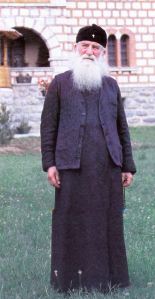
“In truth there is only one freedom – the holy freedom of Christ, whereby He freed us from sin, from evil, from the devil. It binds us to God. All other freedoms are illusory, false, that is to say, they are all, in fact, slavery.”
– Saint Justin Popovich
D.B. Hart: “For my money, if Origen was not a saint and church father, then no one has any claim to those titles.”
Posted by Dallas Wolf in Ekklesia and church, New Nuggets on May 13, 2015
David Bentley Hart (born 1965) an Eastern Orthodox scholar of religion, is a philosopher, writer, and cultural commentator. His books include The Experience of God: Being, Consciousness, Bliss and That All Shall Be Saved: Heaven, Hell, Universal Salvation, and The New Testament – A Translation. He lives in South Bend, IN.

“East or West, all Christians are burdened with the absurdities of Christian imperial history. But any conception of orthodoxy that obliges one to grant the title of “saint” to a murderous thug like Justinian while denying it to a man as holy as Origen is obviously—indeed ludicrously—self-refuting. And one does not defend tradition well by making it appear not only atrociously unjust, but utterly ridiculous.”
D.B. Hart, from Saint Origen, First Things, October 2015.
“For my money, if Origen was not a saint and church father, then no one has any claim to those titles. And the contrary claims made by a brutish imbecile Emperor are of no consequence.”
D.B. Hart, from Eclectic Orthodoxy blog post, 11 May 2015.
D.B. Hart: “Wisdom is the recovery of innocence at the far end of experience”
Posted by Dallas Wolf in New Nuggets on May 13, 2015
David Bentley Hart (1965- ), is a contemporary American Eastern Othodox theologian and philosopher.
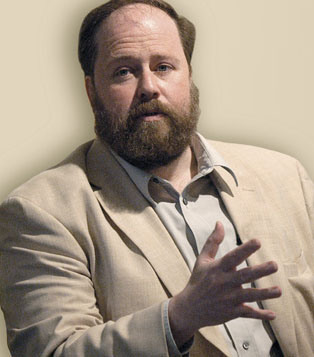 “I start from the conviction that many of the most important things we know are things we know before we can speak them; indeed, we know them—though with very little in the way of concepts to make them intelligible to us—even as children, and see them with the greatest immediacy when we look at them with the eyes of innocence. But, as they are hard to say, and as they are often so immediate to us that we cannot stand back from them objectively, we tend to put them out of mind as we grow older, and make ourselves oblivious to them, and try to silence the voice of knowledge that speaks within our own experiences of the world. Wisdom is the recovery of innocence at the far end of experience; it is the ability to translate some of that vision into words, however inadequate. There is a point, that is to say, where reason and revelation are one and the same.” ~ David Bentley Hart. from “The Experience of God”.
Anthony Bloom: “the Church must never speak from a position of strength”
Posted by Dallas Wolf in Ekklesia and church, New Nuggets on April 22, 2015

“It seems to me, and I am personally convinced, that the Church must never speak from a position of strength…It ought not to be one of the forces influencing this or that state. The Church ought to be, if you will, just as powerless as God himself, which does not coerce but which calls and unveils the beauty and the truth of things without imposing them. As soon as the Church begins to exercise power, it loses its most profound characteristic which is divine love [i.e.] the understanding of those it is called to save and not to smash…”
– Metropolitan Anthony Bloom
 First Thoughts