Archive for category Patristic Pearls
St. Maximus the Confessor: “Silence and Unknowing in Prayer”
Posted by Dallas Wolf in Hesychasm - Jesus Prayer, Patristic Pearls, Theology on August 20, 2016
St. Maximus the Confessor (c. 580 – 662) was a 7th century Christian monk, theologian, and scholar who many contemporary scholars consider to be the greatest theologian of the Patristic era. Two of his most famous works are “Ambigua” – An exploration of difficult passages in the work of Pseudo-Dionysius and Gregory of Nazianzus, focusing on Christological issues, and “Questions to Thalassius” or “Ad Thalassium” – a lengthy exposition on various Scriptural texts.

“Perfect silence alone proclaims Him, and total and transcendent unknowing brings us into His presence.”
~ from: “The Writings of Maximus the Confessor”
St. Macarius the Great: “On the Heart”
Posted by Dallas Wolf in Hesychasm - Jesus Prayer, Monasticism, Patristic Pearls on December 27, 2015
St. Macarius the Great (the Egyptian) (c. AD 300 -390) was one of the most famous of the Desert Fathers, and one of the pioneers of Scetis.
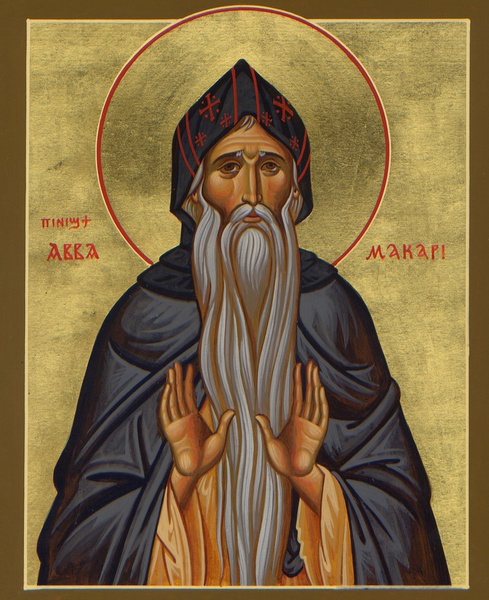
“The heart is but a small vessel; and yet dragons and lions are there, and there likewise are poisonous creatures and all the treasures of wickedness; rough, uneven paths are there, and gaping chasms. There also is God, there are the angels, there life and the Kingdom, there light and the apostles, the heavenly cities and the treasures of grace: all things are there.”
~ from: Homilies 43:7
St. Gregory of Nyssa: “Making an idol of God”
Posted by Dallas Wolf in Hesychasm - Jesus Prayer, Patristic Pearls, Theology on December 25, 2015
St. Gregory of Nyssa (c. AD 335 – 395) – Along with his older brother, Basil of Caesarea, and friend, Gregory of Nazianzus, Nyssen was one the three great Cappadocian Fathers of the 4th century.
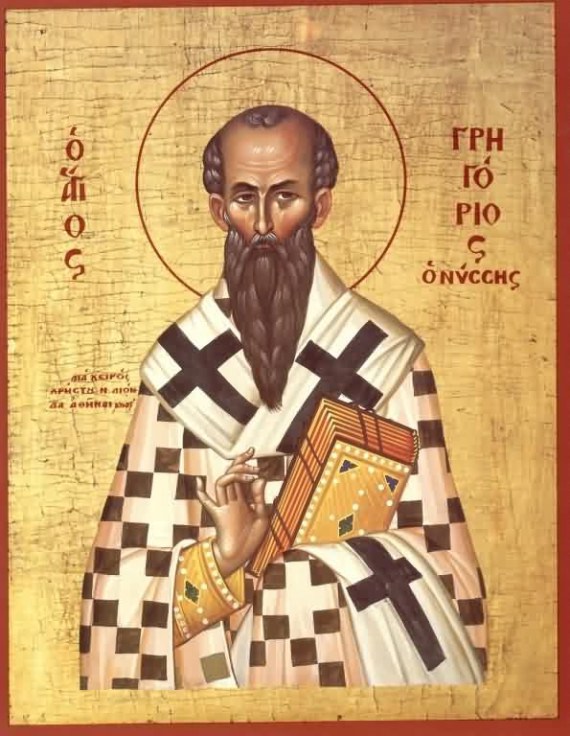
“…every concept formed by our understanding which attempts to attain and to hem in the divine nature serves only to make an idol of God, not to make God known”.
~ from: “The Life of Moses“.
St. Gregory Palamas: “Deification is an enhypostatic and direct illumination…”
Posted by Dallas Wolf in Hesychasm - Jesus Prayer, Monasticism, Patristic Pearls on May 11, 2015
St. Gregory Palamas (Greek: Γρηγόριος Παλαμάς; 1296–1359) – was a monk of Mount Athos in Greece and later the archbishop of Thessaloniki, known as a preeminent theologian of Hesychasm. The teachings embodied in his writings defending Hesychasm against the attack of Barlaam are sometimes referred to as Palamism, and his followers as Palamites.
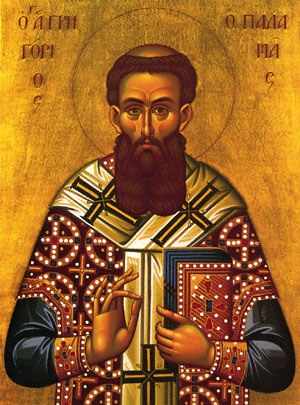
“But when you hear of the vision of God face-to-face, recall the testimony of Maximus: ‘Deification is an enhypostatic and direct illumination which has no beginning, but appears in those worthy as something exceeding their comprehension. It is indeed a mystical union with God, beyond intellect and reason, in the age when creatures will no longer know corruption. Thanks to this union, the saints, observing the light of the hidden and more-than-ineffable glory, become themselves able to receive the blessed purity, in company with the celestial powers”
~ St. Gregory Palamas, The Triads, III.i.28
St. Gregory of Nyssa: Moses and “Luminous Darkness”… “seeing that consists in not seeing”.
Posted by Dallas Wolf in Hesychasm - Jesus Prayer, Monasticism, Patristic Pearls, Theology on March 15, 2015
St. Gregory of Nyssa (c. 335 – c. 395), is one of the three Great Cappadocian Fathers along with his older brother, St. Basil the Great, and friend, St. Gregory of Nazianzus. I especially love Gregory Nyssen for his deep spirituality and mysticism. He was a highly original and sophisticated thinker who remains controversial among both liberal and conservative theologians to this day. In his treatise The Life of Moses, St. Gregory tells us that a person’s encounter of the mystery of God corresponds to the three theophanies of Moses, involving successive entry into light, cloud, and darkness.
According to St. Gregory Nyssen, the first stage in our quest to encounter God is Moses’ vision of God as the light of the burning bush; illuminating the darkness of our sin and ignorance. The second stage involves a journey from light into partial darkness where Moses encounters God as the ‘cloud’; the intermingling of light and darkness, revealing the distance between the Creator and the created realm. The third and final stage entails Moses entering the darkness of Sinai where God is; and our realization upon encountering and even being united with God that He is utterly incomprehensible in his essence.
In this treatment, I think, St. Gregory of Nyssa clearly identifies both cataphatic and apophatic theology, bridges the two and holds the tension between them, drawing the best from both.

“What does it mean that Moses entered the darkness and then saw God in it? What is now recounted seems somehow to be contradictory to the first theophany, for then the divine was beheld in light but now He is seen in darkness. Let us not think that this is at variance with the sequence of things we have contemplated spiritually. Scripture teaches by this that religious knowledge comes at first to those who receive it as light. Therefore what is perceived to be contrary to religion is darkness; an escape from darkness comes about when one participates in the light. But as the mind progresses and, through an ever greater and more perfect diligence, comes to apprehend reality, as it approaches more nearly to contemplation, it sees more clearly that God cannot be contemplated. For leaving behind everything that is observed, not only what sense comprehends but also what the intelligence thinks it sees, it keeps on penetrating deeper until by the intelligence’s yearning for understanding it gains access to the invisible and the incomprehensible and there it sees God. This is the true knowledge of what is sought; this is the seeing that consists in not seeing, because that which is sought transcends all knowledge, being separated on all sides by incomprehensibility as by a kind of darkness. Therefore, John the sublime who penetrated into the luminous darkness [λαµπρός γνόφος – lamprós gnóphos], says “no one has ever seen God,” thus asserting that knowledge of the divine essence is unattainable not only by humans but also by every intelligent creature. When, therefore, Moses grew in knowledge, he declared that he had seen God in the darkness, that is, that he had then come to know that what is divine is beyond all knowledge and comprehension, for the text says,’Moses approached the dark cloud where God was‘.”
~ from: The Life of Moses
Maximos the Confessor: “How is unceasing prayer possible?”
Posted by Dallas Wolf in Hesychasm - Jesus Prayer, Patristic Pearls, Theology on February 28, 2015

“How is unceasing prayer possible? When we are singing the Psalms, when we are reading the Scriptures, when we are serving our neighbor, even then it is easy enough for the mind to wander off after irrelevant thoughts and images.
Yet the Scriptures do not require impossibilities. St. Paul himself sang the Psalms, read the Scriptures, offered his own apostolic service, and nonetheless prayed uninterruptedly.
Unceasing prayer means to have the mind always turned to God with great love, holding alive our hope in Him, having confidence in Him whatever we are doing and whatever happens to us.
That is the attitude that the Apostle had when he wrote: ‘Who shall separate us from the love of Christ?”…
Thanks to this attitude of mind, Paul prayed without ceasing. In all that he did and in all that happened to him, he kept alive his hope in God.”
– St. Maximos…
View original post 5 more words
St. Diadochos of Photiki: “Early Mention of the ‘Jesus Prayer’, c. AD 450”
Posted by Dallas Wolf in Hesychasm - Jesus Prayer, Patristic Pearls on January 11, 2015
St. Diadochos of Photiki (c. AD 400 – c. 486). One of the earliest written references to the “Jesus Prayer”; “the remembrance of the glorious and holy name of the Lord Jesus…“
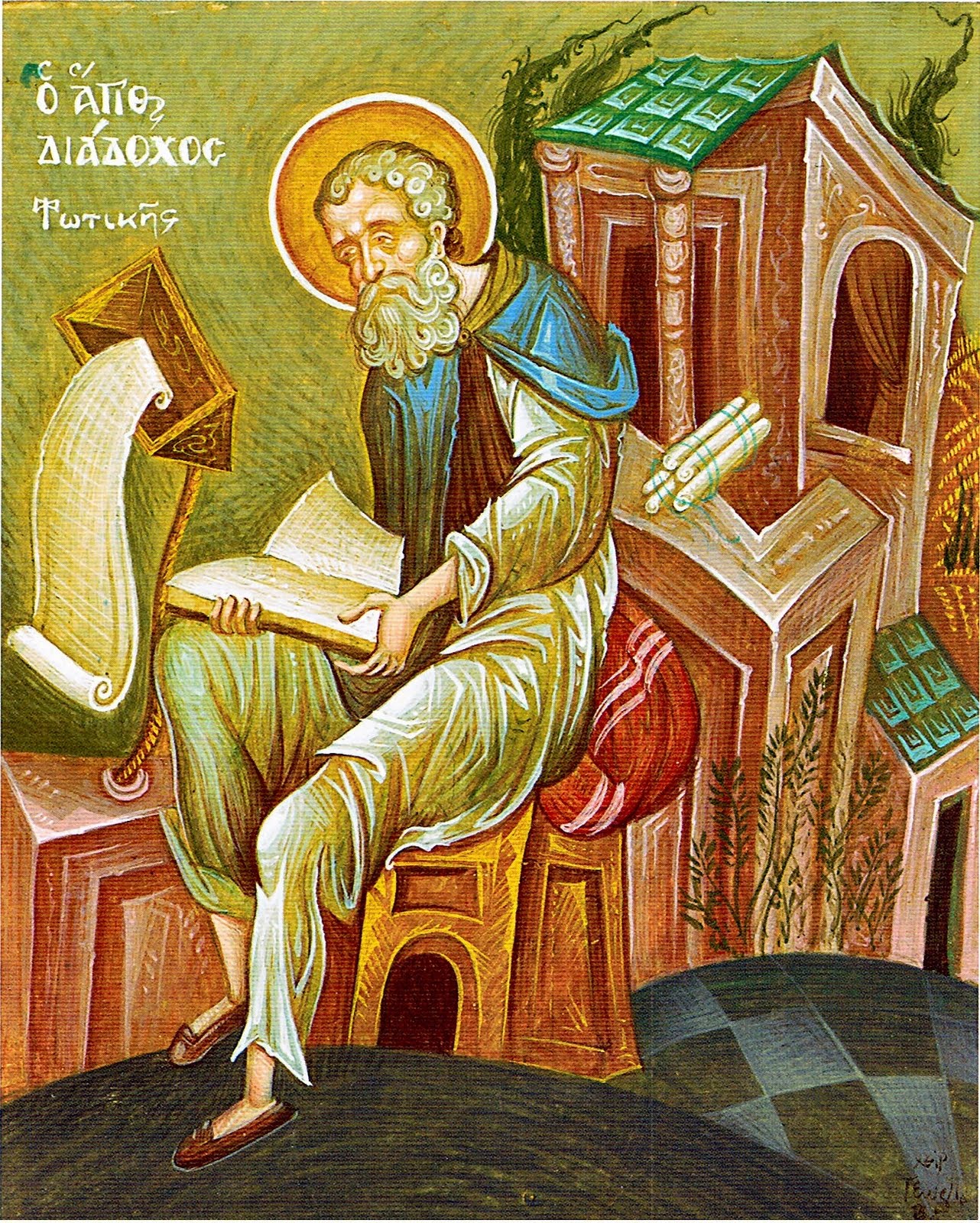
“When our intellect begins to perceive the grace of the Holy Spirit, then Satan, too, importunes the soul with a sense of deceptive sweetness in the quiet times of the night, when we fall into a light kind of sleep. If the intellect at that time cleaves fervently to the remembrance of the glorious and holy name of the Lord Jesus and uses it as a weapon against Satan’s deception, he gives up this trick and for the future will attack the soul directly and personally. As a result the intellect clearly discerns the deception of the evil one and advances even further in the art of discrimination.”
~ from: “On Spiritual Knowledge and Discrimination. One Hundred Texts“, No. 31. From Philokalia, Vol. 1.
Saint Maximus the Confessor: “Flee from self-love”, philautía (φιλαυτία)
Posted by Dallas Wolf in Hesychasm - Jesus Prayer, Patristic Pearls on November 28, 2014
“Flee from self-love, the mother of malice, which is an irrational love for the body. For from it are born the three chief sinful passions: gluttony, avarice, and vainglory, which take their causes from bodily needs, and from them all the tribe of the passions is born. This why we must always oppose self-love and fight against it. Whoever rejects self-love will easily conquer all the other passions with the help of God: anger, despondency, rancor, and the others. But whoever is retained by self-love will even unwillingly be conquered by the above-named passions.”
– Saint Maximus the Confessor
St. John Chrysostom: “Christians damage Christ’s cause more than His enemies and foes”
Posted by Dallas Wolf in Patristic Pearls on October 10, 2014

“I once used to deride secular rulers because they distributed honors, not on grounds of inherent merit, but of wealth or seniority or worldly rank. But when I heard that this stupidity had swaggered into our own affairs [within the Church] too, I no longer reckoned their actions so strange. For why should we be surprised that worldly people, who love the praise of the mob and do everything for money, should make this mistake, when those who claim to have renounced all these desires are no better? For although they are contending for heavenly rewards, they act as though they had to decide merely about acres of land or something else of the kind. They simply take common place men and put them in charge of those things for which the only begotten Son of God did not disdain to empty Himself of His own glory and to be…
View original post 60 more words
St. Gregory of Nyssa – “… only wonder grasps anything”
Posted by Dallas Wolf in Hesychasm - Jesus Prayer, Monasticism, Patristic Pearls on August 5, 2014
St. Gregory of Nyssa (c. AD 335 – 395) – Along with his older brother, Basil of Caesarea, and their friend, Gregory of Nazianzus, Nyssen was one the three great Cappadocian Fathers of the 4th century. He was also younger brother of St. Macrina the Younger; virgin, mystic, monasatic, wonder worker, and philosopher of God.
“Concepts create idols; only wonder grasps anything; People kill one another over idols. Wonder makes us fall to our knees.”
~ from: The Life of Moses
 First Thoughts