Archive for category Universal Restoration (Apokatastasis)
Andreas Andreopoulos: “On Apokatastasis”
Posted by Dallas Wolf in New Nuggets, Universal Restoration (Apokatastasis) on February 13, 2016
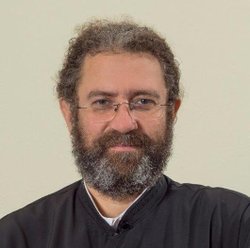
Dr. Andreas Andreopoulos (1966- ) – Orthodox priest, studied in Greece, Canada and the UK, obtaining his Ph.D. in Theology and Art at Durham University.
 “Alexandrian theology in the second/third century starts a particularly Eastern theological strand of eschatology that leads all the way to Mark of Ephesus in the fifteenth, one which differs from most Western views if not necessarily and officially on the eternity of evil, at least on the question as to where this evil is to be found and therefore comes from – in doctrinal contrast to the views of Western theologians such as Abelard, who saw the torments of hell as a punishment very often more cruel than the sins that warranted it, in a place that had specifically been created by God for this purpose, as it was believed after Augustine. The ancient as well as the late Byzantine position, certainly before the Western influences on Greek and Russian theology after the Renaissance, was that nothing evil can come from God, not even punishment. The punishment and torments of hell are only inflicted from ourselves, both in this world and in the next one. Hell and its fire is not different, essentially, from the benevolent energy of God, when experienced by the sinners. The restoration of all, at best an interesting and possible speculation though not a doctrine, is an idea not too far from all this.”
~ Andreas Andreopoulos from “Eschatology and Final Restoration (Apokatastasis) in Origen, Gregory of Nyssa, and Maximos the Confessor”
Dostoyevsky: “… And He will judge and will forgive all, …”
Posted by Dallas Wolf in New Nuggets, Universal Restoration (Apokatastasis) on March 29, 2015
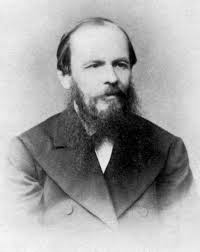
Fyodor Dostoyevsky (1821 – 1881) – Russian novelist, short story writer, essayist, journalist, and philosopher.
 “… And He will judge and will forgive all, the good and the evil, the wise and the meek… And when He has done with all of them, then He will summon us, ‘You too come forth,’ He will say, ‘Come forth, ye drunkards, come forth, ye weak ones, come forth, ye children of shame!’ And we shall all come forth without shame and shall stand before Him. And He will say unto us, ‘Ye are swine, made in the image of the Beast and with his mark; but come ye also!’ And the wise ones and those of understanding will say, ‘O Lord, why dost Thou receive these men?’ And He will say, ’This is why I receive them, O ye wise, this is why I receive them, O ye of understanding, that not one of them believed himself to be worthy of this.’ And He will hold out His hands to us and we shall fall down before Him… and we shall weep… and we shall understand all things! Then we shall understand all!… and all will understand, Katerina Ivanovna even… she will understand… Lord, Thy kingdom come!” And he sank down on the bench exhausted and helpless, looking at no one, apparently oblivious of his surroundings and plunged in deep thought. His words had created a certain impression; there was a moment of silence; but soon laughter and oaths were heard again.” ~ Marmeladov’s Vision from “Crime and Punishment”
Meyendorff: “The fact that the Logos assumed human nature as such implied the universal validity of redemption…”
Posted by Dallas Wolf in New Nuggets, Universal Restoration (Apokatastasis) on July 5, 2014
Fr. John Meyendorff (1926 – 1992) – was a leading theologian of the Orthodox Church as well as a writer and teacher. He was a great student of 14th century Saint, Gregory Palamas. Meyendorff served as the Dean of St. Vladimir’s Orthodox Theological Seminary in New York until 1992. Here, Meyendorff explains that the Orthodox church does not reject the idea of universal salvation, or apokatastasis, because it conflicts with the notion of eternal damnation, but “because it presupposes an ultimate limitation of human freedom”.

Fr. John Meyendorff (1926-1992)
“The fact that the Logos assumed human nature as such implied the universal validity of redemption, but not the ‘apokatastasis’, or universal salvation, a doctrine which in 553 was formally condemned as Origenistic. Freedom must remain an inalienable element of every man, and no one is to be forced into the Kingdom of God against his own free choice; the ‘apokatastasis’ had to be rejected precisely because it presupposes an ultimate limitation of human freedom – the freedom to remain outside of God.” ~ Byzantine Theology, 163
Apokatastasis – The Ancient Christian Idea That Won’t Die
Posted by Dallas Wolf in First Thoughts, Universal Restoration (Apokatastasis) on April 18, 2014
I was reading a meditation by Fr. Richard Rohr, OFM, a noted contemporary Christian mystic. One line caught my particular attention. He said, “God is calling everyone and everything to God’s self (Gen. 8:16-17, Eph. 1:9-10, Col. 1:15-20, Acts 3:21, 1 Tim. 2:4, John 3:17).”
Rohr’s quote above holds within it the possibility of a form of universal restoration or return of the entire created universe to God. This is an ancient idea in Christianity, albeit a controversial one. We can summarize the whole controversy in one Greek word: ἀποκατάστᾰσις , [transliterated as apocatastasis] meaning restoration, re-establishment.
The concept of “restore” or “re-establish” is found in the Old Testament in the Hebrew verb שׁוּב (shuwb/shuv) and is used when referring to “restoring” of the fortunes of Job. It is also used in the sense of “rescue” or “return” of captives, and in the “restoration” of Jerusalem. In terms of shuwb as apocatastasis, Malachi 4:6 is the only use of the verb form of apocatastasis in the Septuagint (the Greek translation of the Old Testament, ca. 250 – 100 BC; also abbreviated “LXX”). It reads:
“He will turn (restore –apokatastesei) the hearts of parents to their children and the hearts of the children to their parents, so that I will not come and strike the land with a curse.” (NRSV and LXX)
The word apocatastasis only appears once in the New Testament, in Acts 3:21. After healing a beggar, Peter speaks to the astonished onlookers. In his sermon, Peter places Jesus in a very Jewish context as the fulfilment of the Old Covenant, saying:
“[Jesus] whom heaven must receive until the time for restoring (apokatastaseos) all the things about which God spoke by the mouth of his holy prophets long ago.”
The idea of apocatastasis is supported further in the New Testament by the writer of 1 Timothy who declares that it is God’s will that all men should be saved (cf., 1 Timothy 2:4).
The concept of apocatastasis is also found in many writings of the early Church Fathers. In early Christian theological usage, apocatastasis meant the ultimate restoration of all things to their original state, which early exponents believed would still entail a purgatorial or cathartic, cleansing state. The meaning of the word was still very flexible during that time. For example, Clement of Alexandria (c. 150 – c. 215) generally uses the term apocatastasis to refer to the “restoration” of the mature, or “gnostic”, Christians, rather than that of the universe or of all Christians, but with universal implications. The position of Origen (186–284) is disputed, with works as recent as the New Westminster Dictionary of Church History presenting him as speculating that the apocatastasis would involve universal salvation. Most historians today would recognize a distinction between Origen’s own teachings (or at least those that have survived) and the theological positions of later “Origenists” (a later school of theological thought based on his teachings). A form of apocatastasis is also attributed to two sainted Cappadocian Fathers of the fourth century; both Gregory of Nyssa and Gregory of Nazianzus discussed it without reaching a decision.
Theological discourse continued until by the mid-6th century apocatastasis had virtually become a technical term referring, as it usually does today, to a specifically Origenistic doctrine of universal salvation. An Anathema (a formal curse by an ecumenical council of the Church, excommunicating a person or denouncing a doctrine) against apocatastasis, or more accurately, against the belief that hell is not eternal, was formally submitted to the Fifth Ecumenical Council of Constantinople (AD 553). Despite support from the Roman Emperor Justinian, the famous Anathema against apocatastasis is not one of the Anathemas spoken against Origen by the fifth council.
As late as the 7th century, Maximus the Confessor (580-662) outlined God’s plan for “universal” salvation alongside warnings of everlasting punishment for the wicked. Maximus was very clear that the “telos”, the ultimate end, was a mystery.
So, why does the concept of Apocatastasis persist down to this day, in men like Roman Catholic Fr. Richard Rohr and Orthodox Metropolitan Kallistos Ware, in spite of the Western institutional church’s absolute obsession with the concept and threat of eternal hell, damnation, and torment? To me, it’s quite simple. The idea of apocatastasis persists because it appeals to a heart enlightened by the love of God.
The universe was created “good”. It is God’s will that all men should be saved. God is love. Love is patient, kind, is not irritable or resentful, bears all things, believes all things, hopes all things, endures all things; Love never ends. Greater is He (the Son, the Logos, the Word) that is immanent in the spirit of all created beings, than he (Satan, evil) who is in the world. Deep in my heart, I believe that ultimately, in some future age, in the end (telos), God (Love) wins. (Gen. 1:31, 1 Tim. 2:4, 1 John 4:8, 1 Cor. 13, 1 John 4:4).
 First Thoughts