Posts Tagged contemplative prayer
Romanides: “What is the Human Nous?”
Posted by Dallas Wolf in New Nuggets, Theology on August 22, 2016
John Romanides (1927 – 2001) was a prominent 20th century Orthodox Christian theologian, priest, and writer. He was Professor of Dogmatic Theology at the Holy Cross Theological School in Brookline, MA and later Professor of Dogmatic Theology at the University of Thessaloniki, Greece.

“The chief concern of the Orthodox Church is the healing of the human soul. The Church has always considered the soul as the part of the human being that needs healing because She has seen from Hebrew tradition, from Christ Himself, and from the Apostles that in the region of the physical heart there functions something that the Fathers called the nous. In other words, the Fathers took the traditional term nous, which means both intellect (dianoia) and speech or reason (logos), and gave it a different meaning. They used nous to refer to this noetic energy that functions in the heart of every spiritually healthy person. We do not know when this change in meaning took place, because we know that some Fathers used the same word nous to refer to reason as well as to this noetic energy that descends and functions in the region of the heart.
So from this perspective, noetic activity is an activity essential to the soul. It functions in the brain as the reason; it simultaneously functions in the heart as the nous. In other words, the same organ, the nous, prays ceaselessly in the heart and simultaneously thinks about mathematical problems, for example, or anything else in the brain.
We should point out that there is a difference in terminology between St. Paul and the Fathers. What St. Paul calls the nous is the same as what the Fathers call dianoia. When the Apostle Paul says, “I will pray with the spirit,”[1] he means what the Fathers mean when they say, “I will pray with the nous.” And when he says, “I will pray with the nous,” he means “I will pray with the intellect (dianoia).” When the Fathers use the word nous, the Apostle Paul uses the word “spirit.” When he says “I will pray with the nous, I will pray with the spirit” or when he says “I will chant with the nous, I will chant with the spirit,” and when he says “the Spirit of God bears witness to our spirit,”[2] he uses the word “spirit” to mean what the Fathers refer to as the nous. And by the word nous, he means the intellect or reason.
In his phrase, “the Spirit of God bears witness to our spirit,” St. Paul speaks about two spirits: the Spirit of God and the human spirit. By some strange turn of events, what St. Paul meant by the human spirit later reappeared during the time of St. Makarios the Egyptian with the name nous, and only the words logos and dianoia continued to refer to man”s rational ability. This is how the nous came to be identified with spirit, that is, with the heart, since according to St. Paul, the heart is the place of man’s spirit.[3]
Thus, for the Apostle Paul reasonable or logical worship takes place by means of the nous (i.e., the reason or the intellect) while noetic prayer occurs through the spirit and is spiritual prayer or prayer of the heart.[4] So when the Apostle Paul says, “I prefer to say five words with my nous in order to instruct others rather than a thousand with my tongue,”[5] he means that he prefers to say five words, in other words to speak a bit, for the instruction of others rather than pray noetically. Some monks interpret what St. Paul says here as a reference to the Prayer of Jesus, which consists of five words,[6] but at this point the Apostle is speaking here about the words he used in instructing others.[7] For how can catechism take place with noetic prayer, since noetic prayer is a person”s inward prayer, and others around him do not hear anything? Catechism, however, takes place with teaching and worship that are cogent and reasonable. We teach and speak by using the reason, which is the usual way that people communicate with each other.[8]
Those who have noetic prayer in their hearts do, however, communicate with one another. In other words, they have the ability to sit together, and communicate with each other noetically, without speaking. That is, they are able to communicate spiritually. Of course, this also occurs even when such people are far apart. They also have the gifts of clairvoyance and foreknowledge. Through clairvoyance, they can sense both other people’s sins and thoughts (logismoi), while foreknowledge enables them to see and talk about subjects, deeds, and events in the future. Such charismatic people really do exist. If you go to them for confession, they know everything that you have done in your life before you open your mouth to tell them.”
Endnotes
- 1 Corinthians 14:5.
- Romans 8:16.
- This means that the Spirit of God speaks to our spirit. In other words, God speaks within our heart by the grace of the Holy Spirit. St. Gregory Palamas in his second discourse from “In Behalf of the Sacred Hesychasts” notes that “the heart rules over the whole human organism”. For the nous and all the thoughts (logismoi) of the soul are located there.” From the context of grace-filled prayer, it is clear that the term “heart” does not refer to the physical heart, but to the deep heart, while the term nous does not refer to the intellect (dianoia), but to the energy/activity of the heart, the noetic activity which wells forth from the essence of the nous (i.e., the heart). For this reason, St. Gregory adds that it is necessary for the hesychasts “to bring their nous back and enclose it within their body and particularly within that innermost body, within the body that we call the heart.” The term “spirit” is also identical with the terms nous and “heart.” Philokalia, vol. IV (London: Faber and Faber, 1995), p, 334.
- Cf. Metropolitan Hierotheos Vlachos, who notes: “Man has two centers of knowing: the nous which is the appropriate organ for receiving the revelation of God that is later put into words through the reason and the reason which knows the sensible world around us.” The Person in Orthodox Tradition, trans. Effie Mavromichali (Levadia: Monastery of the Birth of the Theotokos, 1994), p. 24.
- 1 Corinthians 14:19.
- In Greek, the Prayer of Jesus consists of exactly five words in its simplest form, which in English is translated as “Lord Jesus Christ, have mercy on me” “TRANS.
- “Thus as Saint John of Damascus puts it, we are led as though up a ladder to the thinking of good thoughts”. Saint Paul also indicates this when he says: “I had rather speak five words with my nous”.” St. Peter of Damascus, “The Third Stage of Contemplation,” in Philokalia, 3, page 42 [my translation: cf. also English Philokalia, vol. XXX, p. 120] and St. Nikitas Stithatos, as cited below.
- With respect to this, Venerable Nikitas Stithatos writes, “If when you pray and psalmodize you speak in a tongue to God in private you edify yourself, as Saint Paul says. ” If it is not in order to edify his flock that the shepherd seeks to be richly endowed with the grace of teaching and the knowledge of the Spirit, he lacks fervor in his quest for God”s gifts. By merely praying and psalmodizing inwardly with your tongue, that is, by praying in the soul ” you edify yourself, but your nous is unproductive [cf. I Corinthians 14:14], for you do not prophesy with the language of sacred teaching or edify God’s Church. If Paul, who of all men was the most closely united with God through prayer, would have rather spoken from his fertile nous five words in the church for the instruction of others than ten thousand words of psalmody in private with a tongue [cf., I Corinthians 14:19], surely those who have responsibility for others have strayed from the path of love if they limit the shepherd’s ministry solely to psalmody and reading.” St. Nikitas Stithatos, “On Spiritual Knowledge,” in The Philokalia, vol. 4, pp. 169-170.
From “Patristic Theology – The University Lectures of Father John Romanides”, (Thessaloniki, Greece: Uncut Mountain Press, 2008), pp. 19-23.
St. Maximus the Confessor: “Silence and Unknowing in Prayer”
Posted by Dallas Wolf in Hesychasm - Jesus Prayer, Patristic Pearls, Theology on August 20, 2016
St. Maximus the Confessor (c. 580 – 662) was a 7th century Christian monk, theologian, and scholar who many contemporary scholars consider to be the greatest theologian of the Patristic era. Two of his most famous works are “Ambigua” – An exploration of difficult passages in the work of Pseudo-Dionysius and Gregory of Nazianzus, focusing on Christological issues, and “Questions to Thalassius” or “Ad Thalassium” – a lengthy exposition on various Scriptural texts.

“Perfect silence alone proclaims Him, and total and transcendent unknowing brings us into His presence.”
~ from: “The Writings of Maximus the Confessor”
Met. Kallistos: “The ‘Heart’ in Christian Contemplative Prayer”
Posted by Dallas Wolf in Hesychasm - Jesus Prayer, New Nuggets, Theology on August 5, 2016
The following is an excerpt from Metropolitan Kallistos Ware (b. 1934) in his Introduction to On the Prayer of Jesus , by Ignatius Brianchaninov, Kallistos Ware, Father Lazarus.
 “Ignatius [Brianchaninov] distinguishes three main stages or levels on this journey inwards, which he describes as “oral”, “mental”, and “cordial”; that is to say, prayer of the lips, prayer of the mind, and prayer of the heart”.
“The third degree of prayer is attained when not only does the mind or intellect [nous] recite the Jesus Prayer with full attentiveness, but it also descends into the heart and is united with it. In this way our invocation [of Lord, Jesus, Christ, Son of God] becomes prayer of the heart, or more exactly prayer of the mind in the heart. When the hesychast tradition speaks of the “heart” in this context, the word is to be understood in its full Hebraic sense, as found in Scripture: it signifies, not merely the emotions and affections, but the moral and spiritual center of the total person, the ground and focal point of our created being, the deep self. Prayer of the heart, then, is no longer prayer of the faculty alone, but prayer of the entire person, spirit, soul, and body together. It is precisely at this stage that prayer becomes not just something that we do but something that we are – something, moreover, that we are not just from time to time but continually. In this way St. Paul’s injunction becomes a realized fact: “Pray without ceasing” (1 Thess. 5:17). Nor is this all. Since the heart is not only the center of our created personhood but also the place where Christ and the Holy Spirit dwell within us, prayer of the heart is not so much something that we do as something that God does; not so much my prayer as the prayer of Christ in me (Gal. 2:20).”
Rohr: “… Jesus is never actually upset at sinners…”
Posted by Dallas Wolf in New Nuggets on July 11, 2016

– Fr. Richard Rohr from his “Eight Core Principles”
Rohr: There is no sacred and profane…
Posted by Dallas Wolf in First Thoughts, New Nuggets on March 10, 2016
“There are not sacred and profane things, places, and moments. There are only sacred and desecrated things, places, and moments— and it is we alone who desecrate them by our blindness and lack of reverence.”
Fr. Richard Rohr, OFM
Rohr: “First-hand Experience”
Posted by Dallas Wolf in Hesychasm - Jesus Prayer, New Nuggets, Theology on March 1, 2016
“. . . All knowledge of God is first-hand experience.”
~ Fr. Richard Rohr, OFM, from his homily 28 Feb 2016
St. Nikolai Velimirovich: “Our religion is founded on spiritual experience…”
Posted by Dallas Wolf in Hesychasm - Jesus Prayer, New Nuggets, Theology on March 1, 2016
Saint Nikolai Velimirovich (1881-1956) – was a bishop in the Serbian Orthodox Church, an influential theological writer and a highly gifted orator.
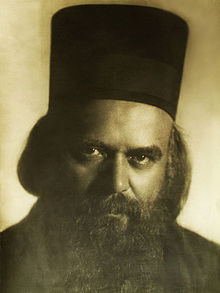
“Our religion is founded on spiritual experience, seen and heard as surely as any physical fact in this world. Not theory, not philosophy, not human emotions, but experience.”
~ St. Nikolai Velimirovic
David Bentley Hart: “On Contemplative Prayer”
Posted by Dallas Wolf in Hesychasm - Jesus Prayer, New Nuggets on September 5, 2015
 “If one is really to seek “proof” one way or the other regarding the reality of God, one must recall that what one is seeking is a particular experience, one wholly unlike an encounter with some mere finite object of cognition or some particular thing that might be found among other things. One is seeking an ever deeper communion with a reality that at once exceeds and underlies all other experiences. If one could sort through all the physical objects and events constituting the universe, one might come across any number of gods (you never know), but one will never find God. And yet one is placed in the presence of God in every moment and can find him even in the depth of the mind’s own act of seeking. As the source, ground, and end of being and consciousness, God can be known as God only insofar as the mind rises from beings to being, and withdraws from the objects of consciousness toward the wellsprings of consciousness itself, and learns to see nature not as a closed system of material forces but in light of those ultimate ends that open the mind and being each to the other. All the great faiths recognize numerous vehicles of grace, various proper dispositions of the soul before God, differing degrees of spiritual advancement, and so forth; but all clearly teach that there is no approach to the knowledge of God that does not involve turning the mind and the will toward the perception of God in all things and of all things in God. This is the path of prayer—contemplative prayer, that is, as distinct from simple prayers of supplication and thanksgiving—which is a specific discipline of thought, desire, and action, one that frees the mind from habitual prejudices and appetites, and allows it to dwell in the gratuity and glory of all things. As an old monk on Mount Athos once told me, contemplative prayer is the art of seeing reality as it truly is; and, if one has not yet acquired the ability to see God in all things, one should not imagine that one will be able to see God in himself.”
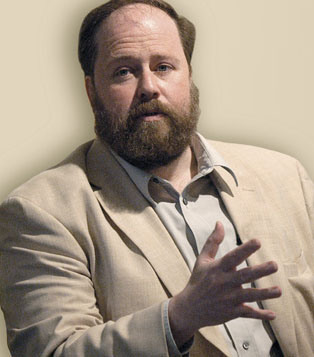
~ David Bentley Hart, from The Experience of God.
Essence and Energies of God – 1
Posted by Dallas Wolf in Essence and Energies (series) on August 30, 2015

Thaboric Light
One of my main goals in writing is to discover and bring the ancient theology and doctrines of the early charismatic Christian church to the contemporary Charismatic Renewal Movement.
There is a clear disconnect between the doxis of Western Latin Christianity and the praxis of the contemporary Charismatic Renewal Movement which operates in the gifts and fruit of the indwelling presence and power of the Holy Spirit. The Renewal Movement certainly has the basic praxis (how beliefs are practiced, embodied and realized in conduct) of the early charismatic Apostolic church, but does not have a corresponding supportive, complementary doxis (religious beliefs, worship, doctrines, and creeds) which explains and supports that praxis.
The world needs to see lives transformed, but it also needs to know why and how they have been transformed. To do this, the world must see a complementary balance of belief and action at work. But, just as vital, the world must see something else in mutual support and balance: orthodoxy and orthopraxis– that is, right belief and right action.
A key essential in an orthodoxy which supports a Renewal Movement (apostolic church) orthopraxis is an understanding of the Essence and Energies of God and the distinction between them. It is only in understanding Essence (transliterated ousía in Greek) and Energies (transliterated enérgeia in Greek) of God that we can reconcile the seeming paradox of the unknowable transcendence of God with the universal, yet very personal indwelling presence and power of God in all humankind.
Throughout this discussion, I will rely heavily on the writings of 20th century theologians including Vladimir Lossky, Christos Yannaras, and Fr. John Meyendorff. They, in turn, refer to the authority of many early Church Fathers including St. Gregory of Nyssa, St. Gregory of Nazianzus, and St. Macarius the Great (all 4th century); St. Dionysius the Aeropagite (5th century); St. Maximus the Confessor (7th century); St. Symeon the New Theologian (11th century); and last, but not least, St. Gregory Pálamas (14th century). I make all of these citations so that the reader may understand that the theology and doctrines on the Essence and Energies of God are both ancient and continuously attested to throughout the Patristic literature up to this day. These citations also make it clear that none of what you are about to read is my original work or thoughts.
To be continued…
Essence and Energies of God – 2
Posted by Dallas Wolf in Essence and Energies (series) on August 29, 2015
Thaboric Light
Essence (οὐσία; ousía)
In order to understand God’s essence, we have to spend a little time understanding how to approach an understanding of God!
Since the writings of St. Dionysius the Areopagite in the 5th century (e.g., “Concerning Mystical Theology”), apophatic theology, or the via negativa, has enjoyed undisputed authority in the theological tradition of both the Christian East and West (Lossky).
Vladimir Lossky tells us that, “Dionysius distinguishes two possible theological ways. One – that of cataphatic or positive theology – that proceeds by affirmations; the other – apophatic or negative theology – by negations. The first leads us to some knowledge of God, but in an imperfect way. The perfect way, the only way which is fitting in regard to God, who is of His very nature unknowable, is the second – which leads us finally to total ignorance.” Lossky does not leave us with that depressing thought, but goes on to explain that, “All knowledge has as its object that which is. Now God is beyond all that exists. In order to approach Him it is necessary to deny all that is inferior to Him, that is to say, all that which is. It is by unknowing (ἀγνωσία) that one may know Him who is above every possible object of knowledge. Proceeding by negations one ascends from the inferior degrees of being to the highest, by progressively setting aside all that can be known, in order to draw near to the Unknown in the darkness of absolute ignorance.”
Fr. John Meyendorff makes the same point as Lossky, “The writings of the Fathers – and particularly Dionysius – emphasized, as the starting point of any Christian discourse about God, the affirmation that God is not any of the creatures and that, therefore, the created mind, which “knows” only creatures, can conceive of God only by the method of exclusion. The most frequently repeated liturgical prayers, familiar to all, were using the same apophatic approach to God: “Thou art God ineffable, invisible, incomprehensible,…”. Later, Meyendorff remarks on “… the apophatic theology of the Greek Fathers, which affirmed absolute transcendence of the divine essence, inaccessible to the angels themselves.”
Eastern Christianity teaches that the essence, being, nature and substance (ousia) of God is uncreated and incomprehensible. Lossky finally summarizes all apophatic descriptions by defining God’s essence as “that which finds no existence or subsistence in another or any other thing”.
To be continued…
 First Thoughts