Posts Tagged eastern orthodox theology
How did the meaning of the Greek word δόξα (dóxa) shift from “private opinion” to “glory”?
Posted by Dallas Wolf in Ancient Christian Manuscripts, First Thoughts, Patristic Pearls on April 1, 2026
The Greek word dóxa shifted from “opinion” to “glory” through a historical semantic expansion driven largely by the Greek translation of the Hebrew Bible. In classical Greek it meant “what seems,” “appearance,” or “belief,” but in Jewish and early Christian Greek it came to express the radiant, weighty presence of God.
Here’s how that transformation happened:
1. The Original Meaning: “What Seems / Opinion”
In early and classical Greek, δόξα comes from the verb δοκεῖν (“to seem, to appear, to think”). It referred to: personal opinion, common belief, reputation (good or bad). Philosophers like Plato used dóxa to contrast mere belief with true knowledge (epistēmē).
2. The Septuagint Shift: Translating Hebrew kavod
The decisive change occurred between the 3rd and 1st centuries BCE, when Jewish scholars translated the Hebrew Bible into Greek (the Septuagint).
Hebrew כָּבוֹד (kavod) means: “weight,” “substance,” and metaphorically “glory,” “honor,” “radiance,” especially of God.”
The translators chose δόξα as the Greek equivalent.
This was a semantic leap: kavod had no connection to “opinion.” But dóxa was the closest Greek term that could express public esteem or reputation, which overlaps with “glory.” As a result, dóxa absorbed the theological weight of kavod.
3. Early Christian Usage: “Glory” Becomes Primary
Because the Septuagint was the Old Testament Bible of the early Church, the new meaning spread rapidly. In the New Testament and Christian liturgy: dóxa overwhelmingly means glory, especially divine glory. It becomes associated with: radiance, majesty, honor, praise.
This usage became so dominant that the older sense (“opinion”) nearly disappeared from religious Greek.
Philological sources note that dóxa came to mean “glory” especially in Hellenistic and Christian Greek, while still retaining its older philosophical sense in some contexts.
J.B. Heard: The Afterthoughts of St. Augustine
Posted by Dallas Wolf in Ekklesia and church, First Thoughts, Heaven and Hell, Theology on March 19, 2026
Rev. John Bickford Heard (28 Oct 1828 – 29 Feb 1908) was born in Dublin, Ireland. He was a British clergyman and graduate/lecturer at Cambridge University (M.A. 1864). His series of lectures at the Cambridge Hulsean Lectures of 1892-93 served as the basis of his book, Alexandrian and Carthaginian Theology Contrasted, published by T&T Clark, Edinburgh, in 1893. Excerpt below is from this work:
“To discuss all these afterthoughts of theology, sin and salvation, heaven, hell, and purgatory, grace and its two channels, faith and the sacraments, would be to write the history of Augustinianism in its many phases.”
David Bentley Hart: Romans 5:12 “… one of the most consequential mistranslations in Christian history.”
Posted by Dallas Wolf in Ancient Christian Manuscripts, Christian Anthropology -East & West (Series), Ekklesia and church, First Thoughts, New Nuggets on March 18, 2026

David Bentley Hart (born 1965) is an American Orthodox Christian philosophical theologian, cultural commentator and polemicist. An acknowledged expert in koine Greek and New Testament exegesis, Hart published his own translation of the New Testament from Greek. Hart’s Greek basis for translation is grounded in “the so-called Critical Text, which is based on earlier and different manuscript sources (such as those of the Alexandrian Text-type)… but also included a great many verses and phrases found only in the Majority Text [Byzantine Text-type] (placing them in brackets to set them off from the Critical Text).”
See The New Testament – A Translation, by David Bentley Hart, Second Edition, Yale University Press, (C) 2017, 2023.
Romans 5:12
English: “Therefore, just as sin entered into the cosmos through one man, and death through sin, so also death pervaded all humanity, whereupon all sinned;”[1]
Greek: Διὰ τοῦτο ὥσπερ δι᾽ ἑνος ἀνθρώπου ἡ ἁμαρτὶα εἰς τὸν κόσμον εἰσῆλθεν καὶ διὰ τῆς ἁμαρτίας ὁ θὰνατος, καὶ οὕτως εἰς πάντας ἀνθρώπους ὁ θὰνατος διῆλθεν, ἐφ᾽ ᾧ πὰντες ἥμαρτον.
Transcription: Dia touto hōsper di’ henos anthrōpou hē hamartias eis to kosmon eisēlthen kai dia tēs hamartias ho thanatos, kai houtōs eis pantas anthrōpous ho thanatos diēlthen, eph’ hōi pantes hēmarton.
A fairly easy verse to follow until one reaches the final four words, whose precise meaning is already obscure, and whose notoriously defective rendering in the Latin Vulgate (in quo omnes peccaverunt) constitutes one of the most consequential mistranslations in Christian history. The phrase ἐφ᾽ ᾧ (eph’ hōi) is not some kind of simple adverbial formula like the διὰ τοῦτο (dia touto) (“therefore”) with which the verse begins; literally, ἐφ᾽ ᾧ means “upon which,” “whereupon,” but how to understand this is a matter of some debate. Typically, as the pronoun ᾧ is dative masculine, it would be referred back to the most immediate prior masculine noun, which in this case is θάνατος (thanatos), “death,” and would be taken to mean (correctly, I believe) that the consequence of death spreading to all human beings is that all became sinners. The standard Latin version of the verse makes this reading impossible, for two reasons: first, it retains the masculine gender of the pronoun (quo) but renders θάνατος by the feminine noun mors, thus severing any connection that Paul might have intended between them; second, it uses the preposition in, which when paired with the ablative means “within.” Hence what became the standard reading of the verse in much of Western theology after the late fourth century: “in whom [i.e., Adam] all sinned.” This is the locus classicus of the Western Christian notion of original guilt—the idea that in some sense all human beings had sinned in Adam, and that therefore everyone is born already damnably guilty in the eyes of God—a logical and moral paradox that Eastern tradition was spared by its knowledge of Greek. Paul speaks of death and sin as a kind of contagion here, a disease with which all are born; and elsewhere he describes it as a condition like civil enslavement to an unjust master, from which we must be “redeemed” with a manumission fee; but never as an inherited condition of criminal culpability. It has become more or less standard to render ἐφ᾽ ᾧ as “inasmuch as” or “since,” thus suggesting that death spread to all because all sinned. But this reading seems to make little sense: not only does it evacuate the rest of the verse of its meaning, but it is contradicted just below by v. 14, where Paul makes it clear that the universal reign of death takes in both those who have sinned and those who have not. Other interpretations take the ἐφ᾽ ᾧ as referring back to Adam, not as in the Latin mistranslation but in the sense that all have sinned “because of” the first man; this, though, fails to honor the point Paul seems obviously to be making about the intimate connection between the disease of death and the contagion of sin (and vice versa). The most obvious and, I think, likely reading is that, in this verse, a parallelism (something for which Paul has such a marked predilection) is given in a chiastic form: just as sin entered into the cosmos and introduced death into all its members, so the contagion of death spread into the whole of humanity and introduced sin into all its members. This, as we see in Romans and elsewhere, is for Paul the very dynamism of death and sin that is reversed in Christ: by his triumphant righteousness he introduced eternal life into the cosmos, and so as that life spreads into the whole of humanity it makes all righteous (as in vv. 15–19 below, or as in 1 Corinthians 15:20–28).[2]
[1] Hart, David Bentley. The New Testament: A Translation (p.296). Yale University Press. 2017
[2] ibid., p.319
Codex Sinaiticus: “God is love”
Posted by Dallas Wolf in Ancient Christian Manuscripts, First Thoughts, Theology on March 9, 2026

Modern Greek: Ὁ θεὸς ἀγάπη ἐστίν
English: God is love (from 1 John 4:8)
Codex Sinaiticus ca. AD 350
British Museum, London
The “God is love” graphic, above, is copied from the Codex Sinaiticus. Codex Sinaiticus is a manuscript of the Christian Bible written in the middle of the fourth century and contains the earliest complete copy of the Christian New Testament. The name ‘Codex Sinaiticus’ literally means ‘the Sinai Book’. The hand-written text is in Greek. The New Testament appears in the original vernacular language (koine) and the Old Testament in the version known as the Septuagint (LXX, ca. 130 B.C.), that was adopted by early Greek-speaking Christians. Codex Sinaiticus is one of only four great codices that have survived to the present day. They are written in a certain uncial (broad single-stroke letters using simple round forms) style of calligraphy using only majuscule (capital) letters, written in scriptio continua (meaning without regular gaps or spaces between words). Words do not necessarily end on the same line on which they start. All four of these manuscripts were made at great expense in material and labor, written on parchment or velum (animal skins) by professional scribes. All four of the Great Codices are Alexandrian text-type manuscripts.
‘Codex’ means ‘book’. By the time Codex Sinaiticus was written, works of literature were increasingly written on sheets that were folded and bound together in the form that we still use today. This book format was steadily replacing the roll format which was more widespread just a century before. These rolls were made of animal skin (like most of the Dead Sea Scrolls) or the papyrus plant (commonly used for Greek and Latin literature). Using the papyrus codex was a distinctive feature of early Christian culture. The pages of Codex Sinaiticus, however, are made of animal skin parchment. This marks it out as standing at an important transition in book history. Before it we see many examples of Greek and Latin texts on papyrus roll or papyrus codex, but almost no traces of parchment codices. After it, the parchment codex becomes the norm.
In Christian scribal practice, nomina sacra is the abbreviation of frequently used divine names or titles, especially in Greek manuscripts of the Bible. A nomen sacrum consists of two or more letters from the original word spanned by an overline; in the case of the Sinaiticus graphic, above, the theta and sigma are the first and last letters in the Greek word Theos, or God.
Dostoyevsky: “… all-embracing love.”
Posted by Dallas Wolf in First Thoughts, Heaven and Hell, New Nuggets, Theology, Universal Restoration (Apokatastasis) on March 6, 2026
Fyodor Dostoyevsky (1821 – 1881) – Russian novelist, short story writer, essayist, journalist, and philosopher.
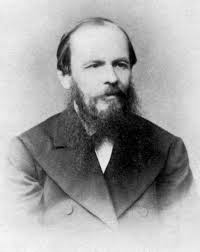
“Love [people] even in [their] sin, for that is the semblance of Divine Love and is the highest love on earth. Love all God’s creation, the whole and every grain of sand in it. Love every leaf, every ray of God’s light. Love the animals, love the plants, love everything. If you love everything, you will perceive the divine mystery in things. Once you have perceived it, you will begin to comprehend it better every day. And you will come at last to love the whole world with an all-embracing love.”
—Fyodor Dostoyevsky, from The Brothers Karamazov
St. Gregory Of Nyssa: “Daily” Bread in the Lord’s Prayer? Not so fast!
Posted by Dallas Wolf in First Thoughts, Patristic Pearls, The Cappadocians, Theology on September 12, 2025
In the Lord’s Prayer, the petition for our “daily bread” is normally understood to signify all of our bodily needs and whatever we require to sustain our lives in this world. The Greek Patristic Fathers knew that the koine Greek word translated as “daily” is a unique term “ἐπιούσιον” (epiousion), which is only used in the New Testament Lord’s Prayer. This indicates that the word had special significance, as there were any number of other common Greek words to express the idea of “daily”. Epiousion literally means “needful”, “essential”, “super-substantial”, or “super-essential”. Understood in that sense, it takes on the more spiritual meaning of the nourishment of our souls by the Word of God, Jesus Christ who is the “Bread of Life;” the “Bread of God which has come down from heaven and given life to the world” (Jn 6.33–36); the bread which “a man may eat of it and not die,” but “live forever” (Jn 6.50–51). Thus the prayer for “daily bread” becomes the petition for daily spiritual nourishment through abiding communion with Christ so that one might live perpetually with God.
Origen of Alexandria and Gregory of Nyssa are two examples of early (3rd and 4th century) Church Fathers who contributed significantly to the understanding of the unique word epiousion; both interpreting it as referring to the spiritual sustenance provided by God, emphasizing the need for divine support in daily life.
With that introduction, here is what St. Gregory of Nyssa (335 – 395) had to say about it:
From: Ancient Christian Writers, No.18. Edited by Johannes Quasten and Joseph C. Plumpe. St. Gregory of Nyssa, The Lord’s Prayer – The Beatitudes, Trans. and annotated by Hilda C. Graef, 1954 Newman Press. Pp. 68-70
Excerpt from:
SERMON 4 Thy Will be done, on earth as it is in Heaven. Give us this day our daily [ἐπιούσιον (epiousion)] bread.
Full of meaning is also the addition of this day [σήμερον (sémeron)], when He says: Give us this day our daily [ἐπιούσιον (epiousion)] bread. These words contain yet another teaching. For you should learn through what you say that the human life is but the life of a day. Only the present each one of us can call his own; the hope of the future is uncertain, for we know not what the day to come may bring forth. Why then do we make ourselves miserable worrying about the future? He says, Sufficient for the day is the evil thereof, evil here meaning the enduring of evil. Why are we disturbed about the morrow? By the very fact that He gives you the commandment for today, He forbids you to be solicitous for the morrow. He says to you as it were: He who gives you the day will give you also the things necessary for the day. Who causes the sun to rise? Who makes the darkness of the night disappear? Who shows you the rays of light? Who revolves the sky so that the source of light is above the earth? Does He who gives you so great things need your help to supply for the needs of your flesh? Do animals take care for their livelihood? Do ravens have tilled land or eagles barns? Is not the one means of providing a livelihood for all the Will of God, by which all things are governed? Therefore even an ox or an ass, or any other animal is taught its way of life by instinct, and it manages the present well but does not concern itself in the least with what comes afterwards. And should we need special advisers in order to understand that the life of the flesh is perishable and transitory? Are we not taught by the misfortunes of others, not chastened by those of our own life?
What profits this rich man his wealth? Like a fool he chases vain hopes, pulling down, building up, hoarding and dissipating, shutting up long periods of years as it were in barns, without letting them bear fruit. Will not one night prove false all these imagined hopes, like some vain dream about a nonentity? The life of the body belongs only to the present, but that which lies beyond us and is apprehended by hope belongs to the soul. Yet men in their folly are quite wrong about the use of either; they would extend their physical lives by hope, and draw the life of the soul towards enjoyment of the present. Therefore the soul is occupied by the world of sense and necessarily estranged from the subsisting reality of hope. What hope it has leans upon unstable things over which it has no control or authority.
Let us therefore learn from the counsel under consideration what one must ask for today, and what for later. Bread is for our use today; the Kingdom belongs to the beatitude for which we hope. By bread He means all our bodily requirements. If we ask for this, the man who prays will clearly understand that he is occupied with something transitory; but if we ask for something of the good things of the soul it will be clear that the petition concerns the everlasting realities, for which He commands us to be most concerned in our prayers. Thus the first necessity is put in its right place by the greater one. Seek ye, He says, the kingdom and justice, and all these things shall be added unto you; in Christ Jesus Our Lord, to whom be glory and power for ever and ever. Amen.
Original Greek words used by Nyssen are in brackets []. From: Gregorii Nysseni, De Oratione Dominica, De Beatitudinibus, Edidit Johannes F. Callahan, 1992 E.J. Brill. P. 56
When Glory Explodes the Forms: Doxology, Faith, and the Exorcism of Epistemology
Posted by Dallas Wolf in First Thoughts, New Nuggets, Theology on July 14, 2025
 From Fr Aidan Kimel’s Eclectic Orthodoxy on 14 July 2025 From Fr Aidan Kimel’s Eclectic Orthodoxy on 14 July 2025  by John Stamps* Δόξα Πατρὶ καὶ Υἱῷ καὶ Ἁγίῳ Πνεύματι . . . I was paying attention in church last Sunday—really, I was. But when Fr. Nebojša intoned: “Glory to the Father and to the Son and to the Holy Spirit, both now and always and unto the ages of ages,” a strange Platonic thought hijacked my brain. Socrates wouldn’t understand a word of this. For him, doxa meant “opinion.” The Father has an opinion? The Son too? And the Holy Spirit? Three divine “opinions”? Socrates would be horrified. In Book VI of The Republic, he blurts out: “Have you not observed that opinions (doxai) divorced from knowledge (episteme) are ugly things? The best of them are blind.” (506c) Already, he’d be reaching for the hemlock. But it gets worse. At St. Nicholas Greek Orthodox Church, when we recite the Nicene Creed—first in Greek, then in English—we fervently confess: Πιστεύω εἰς ἕνα Θεὸν Πατέρα παντοκράτορα . . . “I believe in one God, the Father Almighty.” Or, more provocatively—and more Christianly—“I put my trust in one God, the Father Almighty.” Once again, Socrates would be scandalized. Pistis? Mere belief? Conviction at best? And you’re going to stake that on ultimate reality? Pistis may rise above illusion (eikasia), but it’s still fog—not the clear light of truth. Surely the divine deserves better. Surely epistēmē—solid, demonstrable knowledge—is the true coin of the metaphysical realm. To entrust pistis with the highest things would be like trying to buy eternity with Monopoly money. For Plato, pistis belongs low on the Divided Line—just above eikasia (imagination and shadows), and well below epistēmē. It’s trust in what we can see and touch, but without glimpsing the hidden reality behind it—the invisible Forms that give things their true meaning. Pistis is for the unphilosophical. The half-blind. The cave-dwellers huddled in the cave who mistake sensible things for what is really real. But Christian theology flips the entire Platonic ladder upside down. From Doxa to Glory For Socrates, doxa means “opinion”—an unreliable, subjective mental state. But in Christian liturgy, doxa is glory: not mental conjecture but the radiant, overwhelming presence of the living God. Doxa is Moses taking off his shoes before the burning bush. Doxa is Moses descending Sinai with a face that glows because he got too close to raw holiness. Doxa is the Word made flesh, full of grace and truth, dwelling among us. Doxa is not conjecture. It’s encounter. Somewhere between the Hebrew Bible and the Septuagint, doxa got an upgrade. And this raises a linguistic and theological mystery: How did the Hebrew word כָּבוֹד (kavod—weight, substance, heaviness, splendor) become doxa (opinion) in Greek? The Septuagint translators had choices. And their choice changed Christian theology forever. From Pistis to Trust In the New Testament, pistis is not an epistemic crutch. It is relational trust, covenant loyalty, and a faithful response to a God who reveals Himself not in abstractions but in history, flesh, and self-giving love. Far from being a lower form of knowledge, pistis becomes the primary way humans recognize and respond to divine glory—a deeper, riskier kind of knowing, grounded in love, testimony, and encounter. For Socrates, by contrast, pistis was barely a step above guesswork—an uncritical belief in the physical world, just above imagination (eikasia) and far below true knowledge (epistēmē). It belonged to the realm of opinion (doxa) and was reserved for the half-blind dwellers in the cave. But in the New Testament, pistis becomes something far more daring. It echoes the Hebrew word emunah (אֱמוּנָה): steadfast trust, covenant faithfulness, unwavering reliability. Christian faith isn’t vague optimism. It’s not mere intellectual assent or rearranging our mental furniture. Pistis is not a foggy feeling or private conviction. It is existential trust. It is covenantal loyalty. It is Semper Fi!— our fidelity to the God who speaks, acts, and keeps His promises and our willingness to stake everything on His trustworthiness. Faith is stepping out onto the water like Peter because Jesus said, “Come.” Faith is betting everything on the God who delivered Israel from Pharaoh’s tyranny and raised Jesus from the dead. Or, as Robert Jenson once put it: “God is whoever raised Jesus from the dead, having before raised Israel from Egypt.” This is how Christians reliably identify and name God: by His acts of faithfulness. And pistis is our answering act of trust and faithfulness in return. From Eikasia to Icon Images are tricky. Plato had his reasons to be suspicious. He especially distrusted imitative images—whether in poetry, painting, or shadowplay—because they were seductive lies, copies of copies, that lured the soul away from truth and down into the flickering cave of illusion. Teenagers glued to their 300-DPI iPhone screens aren’t so different from the cave-dwellers in The Republic, staring at shadows on the wall, mistaking illusion for reality. That’s why Plato wanted the image-makers banished from the ideal city. For him, images were not innocent—they were propaganda, simulacra, distortions. In his metaphysics, images were the lowest of the low. But Christian theology tells a different story. Scripture gives us strong reasons to trust—not all images, but certain ones—as truth-bearing windows into reality. First, just look at yourself in the mirror—warts and all. You are the imago Dei. Look at your spouse, your children, your friends. Knock on your neighbor’s door with cookies or a bottle of wine. Hand $20 to a homeless person. Pray for—and forgive—your bitterest enemy. Why this exercise? Because every one of them is the imago Dei. They are the spitting image of God. This is where Christian theology begins: with the startling claim that human beings are made in the image and likeness of God. We bear the weight of glory. This image (εἰκών) is not falsehood. It is truth-bearing. It carries the imprint of the Creator. The image is not a pale copy—it participates in the reality it reflects. This image is a site where divine glory dwells. Second, when the Word became flesh, God’s image wasn’t entering alien territory. The Incarnation is not some bizarre intrusion into a world God otherwise keeps at arm’s length. It is the culmination of God’s long purpose for creation: that divine glory would dwell bodily within it. The Incarnation is no invasion. The kosmos belongs to the Lord, and the fullness thereof. Third, Jesus of Nazareth is the Image-Bearer par excellence. He looks just like us. That God was one of us is the scandal at the heart of the Christian confession. And yet . . . the One in whom all the fullness of God dwells (Colossians 2:9) looks so much like us that we don’t recognize Him. Familiarity breeds contempt and generates its own kind of blindness. Glory walks right past us wearing dusty sandals. But if we have eyes to behold the mystery, Jesus—crucified, risen, and ascended—is the true Image (εἰκών) of the invisible God (Colossians 1:15). Not a photocopy. Not a metaphor. Not a shadow. He is one of us—bone of our bone, flesh of our flesh. And yet He reveals God to us fully and truly. We Orthodox insist on this incarnational truth: images matter because the Image matters. To celebrate this, we wallpaper our churches with icons—not as decoration, but as theological proclamation. Icons are not aesthetic accessories. They are visual participation in divine reality. Icons reveal. They manifest. They make present. They proclaim what words alone cannot say. Why do we venerate icons? Because images, rightly ordered, are truth-bearing. Because the Image became flesh and dwelt among us. And because, through Christ, we too are being transfigured—from glory to glory—into the image of God. For us, seeing is not believing lies. Seeing is encountering glory. Epistemology Needs an Exorcism My old philosophy professor, Nicholas Wolterstorff, used to warn us: “Ever since Plato, the Western world has been haunted by the lure of certitude.” And he’s right. That ghost still lingers. We need an exorcism. We need to turn epistemology into doxology. Or more precisely: episteme-logos into doxo-logos. Once you’re bewitched by epistemology and the certainty it promises, it’s hard to break the spell. You start—and you end—by measuring all truth, including theological truth, by mental clarity, logical deduction, and timeless abstraction. But Trinitarian doxology and the Nicene Creed don’t just challenge Greek epistemology—they scandalize it. We can’t start with clear and distinct ideas. We must begin with faithful witness. We begin where we actually encounter the glory of God. The Father who speaks. The Son who acts. The Spirit who breathes. Three Persons. One God. Doxology—not detached speculation—is the engine that drives Christian theology. To the Greek philosophical mind—fixated on unchanging forms, impersonal absolutes, and epistemic certainty—this kind of God-talk sounds like theological madness. A God who speaks? Acts? Loves? Suffers? Raises the dead? So yes—we fumble and stumble for the right words. Apophatic theology rightly reminds us that God always exceeds our categories and language. But that doesn’t mean we stay silent. Christian speech begins in worship—yes, in doxology—and in the risky act of saying something true about the God who cannot be contained. Let the Platonists chase certainty . . . we behold glory. For the life of me, I still don’t fully understand how kavod—a word of weight and substance—became doxa, a word that once meant “opinion.” But the Septuagint translators had choices. And their choice opened the door for Christian theology to do something the ancient philosophers never saw coming. Faithful God-talk begins not with control, but with wonder. Not with clarity, but with trust. Not with epistemic mastery, but with doxology. We speak because God has spoken. We bear witness because doxa showed up in history, and refused to stay abstract. We dare to name the Unnameable because the Word became flesh and dwelt among us, full of grace and truth . . . and we beheld His glory. Let the Platonists chase their Forms, the Cartesians polish their clear and distinct ideas, and the positivists flatten everything into data. And yes, let the American Fundamentalists obsess over the inerrancy of the original autographs—those long-lost parchments that somehow guarantee perfect doctrine, if only we squint hard enough. Scripture, for them, isn’t the living voice that calls us into communion, but a cosmic answer key dropped from heaven. The lure of certitude is still a mirage. We will not lose our nerve. We will render doxa to the God who acts— Who speaks, Who raises the dead, Who walks through our kosmos with dusty feet and scandalous grace. . . . καὶ νῦν καὶ ἀεὶ καὶ εἰς τοὺς αἰῶνας τῶν αἰώνων. Ἀμήν.  * * *John Stamps is Senior Technical Writer at Guidewire Software in San Mateo, California. He holds a BA in Greek from Abilene Christian University, an MDiv from Princeton Theological Seminary, and pursued further study in the philosophy of religion at Yale Divinity School—just long enough to accrue debt and existential questions. He attends St. Nicholas Greek Orthodox Church in San Jose, is married to the long-suffering Shelly Houston Stamps, plays mediocre tennis with misplaced confidence, and speaks Spanish that routinely scandalizes native speakers and small children. |
Isaac of Nineveh: “In love did He bring the world into existence…”
Posted by Dallas Wolf in First Thoughts, Heaven and Hell, Monasticism, Patristic Pearls, Universal Restoration (Apokatastasis) on June 11, 2025
St. Isaac of Nineveh – 7th century ascetic and mystic, born in modern-day Qatar, was made Bishop of Nineveh between 660-680. Especially influential in the Syriac tradition, Isaac has had a great influence in Russian culture, impacting the works of writers like Dostoyevsky.
Isaac composed dozens of homilies that he collected into seven volumes on topics of spiritual life, divine mysteries, judgements, providence, and more. Today, these seven volumes have survived in five Parts, titled from the First Part to the Fifth Part. Only the First Part was widely known outside of Aramaic speaking communities until 1983.
Some scholars argue that Isaac’s views from the Second Part appear to confirm earlier claims that Isaac advocated for universal reconciliation, or apokatastasis.
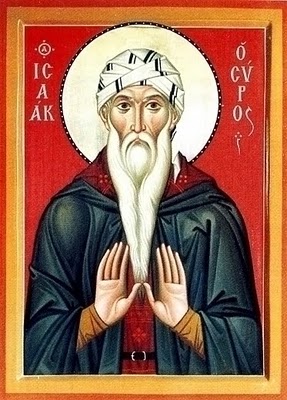
“What profundity of richness, what mind and exalted wisdom is God’s! What compassionate kindness and abundant goodness belongs to the Creator! …
In love did He bring the world into existence; in love does He guide it during this its temporal existence; in love is He going to bring it to that wondrous transformed state, and in love will the world be swallowed up in the great mystery of Him who has performed all these things; in love will the whole course of the governance of creation be finally comprised.” (II.38.1-2)
Isaac the Syrian, The Second Part, trans. Sebastian Brock (Peeters: Corpus Scriptorum Christianorum Orientalium, 1995).
The Greek East – …sunk…in a sleep of traditionalism… and ethno-phyletism
Posted by Dallas Wolf in Ekklesia and church on May 2, 2025
This is the bad news:
Hyper-Traditionalism
“It is probable enough that this widespread ascendancy of Augustinianism would not have maintained itself so long but for the utter decay of the Greek Church, under that debasing servility of the Church to palace intrigue, which is known as Byzantinism. It has been truly said that, just as the rise of scholasticism in the West was an attempt of the Latins to Hellenize, and so let a breath of philosophic thought pass over the stagnant morass of dead dogmatism; so, on the other hand, Greek theology in the age of its decline showed a tendency to Latinise, and to fall away from the high intuitional view of spiritual realities, by mixing its gold with the clay of legal conceptions. The result of this falling away of Greek theology into Byzantinism, by the adoption of a magical external type of ceremonial religion, has been that Reformers have ceased to look any longer for new light from the East, and have steadily set their faces to the far West. We have ceased to think of the church of the future as a revised orthodox Church… This is only what we may expect as long as the East continues sunk, as at present, in a sleep of traditionalism.”
J.B. Heard, 1893.
Ethno-phyletism
The above entry was written in 1893 and is as true today as it was then. Coincidentally, 21 years before Heard wrote this, the Council of Constantinople of 1872 dealt with the growing problem within Orthodoxy of phyletism, specifically ethno-phyletism, which comes from the Greek: “Ethno-Phyle-Tismos“, and can be accurately translated as “national tribalism”.
Phyletism relates to the problem of separating the unity of the one Orthodox Church into any number of competitive national, linguistic, racial or ethnic Churches. The problem arises both in the countries where Orthodoxy is the dominant religion (e.g. Romania, Russia, Bulgaria, Greece), but also in countries where Orthodoxy is represented by different countries that have immigrants (diaspora) there (e.g. UK, France, Canada, US). The term ethno-phyletism promotes the idea that a local autocephalous (self-governing) church should not be based on a local criterion, but on a national, ethnic, racial, or linguistic one. The 1872 Council condemned “phyletist nationalism” as a modern ecclesial heresy: the church was not to be confused with the destiny of a single nation or a single race.
In the United States, most Eastern Orthodox parishes as well as jurisdictions are ethnocentric, that is, focused on serving an ethnic community that has immigrated from overseas (e.g., the Greeks, Russians, Romanians, Finns, Serbs, Arabs, etc.).
In June 2008, Metropolitan Jonah of the Orthodox Church in America (OCA) delivered a talk on “Episcopacy, Primacy, and the Mother Churches: A Monastic Perspective” at the Conference of the Fellowship of St. Alban and St. Sergius at St. Vladimir’s Theological Seminary.
He said:
“The problem is not so much the multiple overlapping jurisdictions, each ministering to diverse elements of the population. This could be adapted as a means of dealing with the legitimate diversity of ministries within a local or national Church. The problem is that there is no common expression of unity that supersedes ethnic, linguistic and cultural divisions: there is no synod of bishops responsible for all the churches in America, and no primacy or point of accountability in the Orthodox world with the authority to correct such a situation.”
Metropolitan Jonah was forced to resign in 2012.
In 1872, the problem was Bulgaria. In 2019, the problem was Ukraine. In 2025, the problem is the US, UK, France, and others.
Same problems, 150+ years later; the Church’s behavior is virtually identical to most any established worldly institution.
The good news is: It’s temporary!
Yes, it’s temporary. All the problems discussed are typical of worldly cultural institutions. They will pass away in time.
I know the orthodox church has had challenges building a suitable institutional infrastructure since the mid-fourth century; it’s had challenges being partnered with powerful worldly empire; it had internal struggles with Western Patriarchal obsession with hierarchical administrative control; it dealt with numerous violent Muslim crises; and resisted Western cultural and political pressures… the list could go on and on.
And yes, myopic focus on tradition and insular, triumphalist ethno-phyletism needs to be dealt with.
But, the Orthodox church is still the church of Justin, Clement, Origen, Athanasius, and the Cappadocians; it is the source, repository and guardian of inspired universal Logos theology, applicable to all of mankind as The Way to union with God. And remember, church, “evangelism” is not a Protestant word or idea; they just borrowed it (from you!). εὐαγγέλιον (euaggelion), The Good News. You remember, right? Goes right along with κήρυγμα (kerygma), the apostolic proclamation; accompanied by signs and wonders (σημεῖα καὶ τέρατα). All of this is part of the Orthodox Tradition. It’s right there, hidden under your pillow!
Wake up, church!
J.B. Heard: Theology Proper
Posted by Dallas Wolf in Ekklesia and church, First Thoughts, The Logos Doctrine (series), Theology on April 27, 2025
Rev. John Bickford Heard (28 Oct 1828 – 29 Feb 1908) was born in Dublin, Ireland. He was a British clergyman and graduate/lecturer at Cambridge University (M.A. 1864). His series of lectures at the Cambridge Hulsean Lectures of 1892-93 served as the basis of his book, Alexandrian and Carthaginian Theology Contrasted, published by T&T Clark, Edinburgh, in 1893. Excerpts below are from this work:
“Nor need we be at a loss for a definition of theology, since the Master has himself deigned to define it. At the crowning stage of His ministry, in summing up all He had been given to teach, He sums it up: “And this is life eternal: that they might know Thee the only true God, and Jesus Christ whom Thou hast sent.” [John 17:3]
Theology, rightly considered, is the knowledge of God in His relation to us, the cardinal point of which lies in the truth which the old Greek poet [Acts 17:28] had glanced at. “For we are also His offspring” – this is the true keynote; and theology, setting out from this kinship between us and God, we at once soar, as on wings of a spiritual intuition, across the abyss between creature and Creator.”
Op. cit. pp. 31, 32. Brackets [ ] mine.
 First Thoughts