Posts Tagged Woman
Women Serving in the “5 Ministries” of the 1st Century Church
Posted by Dallas Wolf in Ekklesia and church, Women in Early Christianity on March 22, 2025
Ephesians 4:11-13 outlines the five ministries in the 1st Century Church:
“It was he [Christ] who gave some to be apostles, some to be prophets, some to be evangelists, and some to be shepherds (pastors) and teachers, to prepare God’s people for works of service, so that the body of Christ may be built up until we all reach unity in the faith and in the knowledge of the Son of God and become mature, attaining to the whole measure of the fullness of Christ.”
Apostle
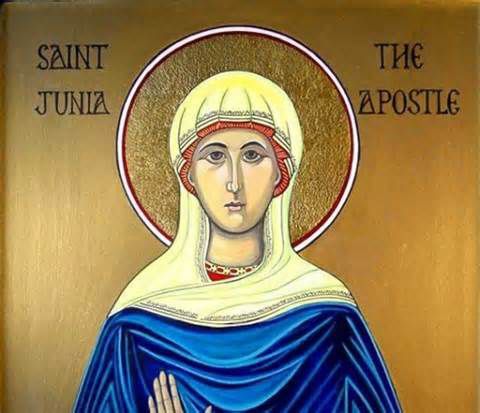
Junia was considered an Apostle by St. Paul, as was her husband Andronicus (cf. Romans 16:7). The King James Version sounds ambivalent in calling them “of note among the apostles”. The New Revised Standard Version (which I consider usually the most accurate of all translations) has: “They are prominent among the apostles.” The New Century Version probably translates it best: “They are very important apostles.” In the Middle Ages, some writers, because of male chauvinist prejudices, changed “Junia” to “Junias”, making her a man. But, “Junias” was never known as a man’s name in the Graeco-Roman world, while “Junia” was a common name for a woman!
Prophet
Philip’s four daughters were named as prophets (cf. Acts 21:9, also Acts 2:15-18).
Shepherd (Pastor is a later Latin word) and Teacher
Phoebe is recognized as diakonon (minister) of the church at Cenchrea (cf. Rom. 16:1-2). She is referred to as a deacon (Greek: diakonos), not a deaconess — but a deacon in the sense of a preacher, a minister; because Paul uses the same word to describe himself. He calls himself, in a number of instances, a deacon of the new covenant in 2 Corinthians.
Prisca/Priscilla was certainly both a shepherd (pastor) and a teacher in the church, with Aquila her partner, in their house (cf. Acts 18:26, Rom 16:3-5). The German scholar Adolph von Harnack proposed that she was the actual author of the Epistle to the Hebrews!
Evangelist
There is no woman named as an evangelist in the New Testament canon. Only one man is so named, Philip (Acts 21.9). But church history of the first century knows of women evangelists, the most prominent of whom was Thecla, from Iconium in what is now Turkey (St. Thecla’s tomb is at Silifke). She was a disciple of Paul. “The Acts of Paul and Thecla,” while not belonging in the canon of Scripture, is regarded as an accurate historical account of her ministry. The Greek Church gives her title of “Protomartyr among women and equal to the Apostles”.
So, the New Testament names women as occupying four of the five-fold ministries of Ephesians 4 and apostolic church history clearly documents a woman serving in the fifth ministry.
 First Thoughts