Archive for category First Thoughts
The Holy Spirit as the Feminine Emanation of God
Posted by Dallas Wolf in Ancient Christian Manuscripts, Ekklesia and church, First Thoughts, The Logos Doctrine (series), Theology, Women in Early Christianity on April 2, 2026
In Greco-Roman Christianity, probably because of 2nd century proto-orthodox battles against Gnosticism, the biblical images of God as female were soon suppressed within the doctrine of God. God as Wisdom, Chokmah in Hebrew, or Sophia in Greek, both feminine forms, was translated by Christianity into the Logos concept of Philo, which is masculine and was defined as the Son of God. The theology of God’s mediating presence as female, was de-emphasized. This suppression of the divine feminine went on to include Shekinah, a feminine noun in Hebrew, which uniquely conveys the immanent, relational aspect of the Divine. God’s Spirit Ruach, a feminine noun in Hebrew, took on a neuter form when translated into Greek as Pneuma. The Vulgate translated Ruach into Latin as masculine, Spiritus. God’s Spirit, Ruach, which at the beginning of creation brings forth abundant life in the waters, and makes the womb of Mary fruitful, is now made male.
In spite of the reality of the comforting, compassionate, caring, consoling, healing aspects of divine activity, the dominant patriarchal tradition has prevailed, resulting in seeing the female as the passive recipient of God’s creation; and the female is expressed in nature, church, soul, and finally as Mary, the prototype of redeemed humanity.
Because God as Father has become an over literalized metaphor, the symbol of God as female is eclipsed. The problem lies not in the fact that male metaphors are used for God, but that they are used exclusively and literally. Because images of God as female have been suppressed in official formulations and teaching, they came to be embodied in the substitute human figure of Mary, the only exemplar left to reveal the unfailing female love of God.
It is well attested that revelation is experiential. With that proviso, I can tell you that I experience the Holy Spirit (whether as Chokmah, Sophia, Shekinah, Ruach, or Pneuma) as a distinctly feminine presence.
To me, it is much like the meaning of the Greek word dóxa (δόξα); its definition as “personal opinion” in Greek philosophy morphing into “Glory” as it passes into the Septuagint. So too the Holy Spirit; She is my dóxa, in both respects.
How did the meaning of the Greek word δόξα (dóxa) shift from “private opinion” to “glory”?
Posted by Dallas Wolf in Ancient Christian Manuscripts, First Thoughts, Patristic Pearls on April 1, 2026
The Greek word dóxa shifted from “opinion” to “glory” through a historical semantic expansion driven largely by the Greek translation of the Hebrew Bible. In classical Greek it meant “what seems,” “appearance,” or “belief,” but in Jewish and early Christian Greek it came to express the radiant, weighty presence of God.
Here’s how that transformation happened:
1. The Original Meaning: “What Seems / Opinion”
In early and classical Greek, δόξα comes from the verb δοκεῖν (“to seem, to appear, to think”). It referred to: personal opinion, common belief, reputation (good or bad). Philosophers like Plato used dóxa to contrast mere belief with true knowledge (epistēmē).
2. The Septuagint Shift: Translating Hebrew kavod
The decisive change occurred between the 3rd and 1st centuries BCE, when Jewish scholars translated the Hebrew Bible into Greek (the Septuagint).
Hebrew כָּבוֹד (kavod) means: “weight,” “substance,” and metaphorically “glory,” “honor,” “radiance,” especially of God.”
The translators chose δόξα as the Greek equivalent.
This was a semantic leap: kavod had no connection to “opinion.” But dóxa was the closest Greek term that could express public esteem or reputation, which overlaps with “glory.” As a result, dóxa absorbed the theological weight of kavod.
3. Early Christian Usage: “Glory” Becomes Primary
Because the Septuagint was the Old Testament Bible of the early Church, the new meaning spread rapidly. In the New Testament and Christian liturgy: dóxa overwhelmingly means glory, especially divine glory. It becomes associated with: radiance, majesty, honor, praise.
This usage became so dominant that the older sense (“opinion”) nearly disappeared from religious Greek.
Philological sources note that dóxa came to mean “glory” especially in Hellenistic and Christian Greek, while still retaining its older philosophical sense in some contexts.
J.B. Heard: The Basis for the Ultimate Reunion of Christendom
Posted by Dallas Wolf in Ekklesia and church, First Thoughts, Theology on March 28, 2026
Rev. John Bickford Heard (28 Oct 1828 – 29 Feb 1908) was born in Dublin, Ireland. He was a British clergyman and graduate/lecturer at Cambridge University (M.A. 1864). His series of lectures at the Cambridge Hulsean Lectures of 1892-93 served as the basis of his book, Alexandrian and Carthaginian Theology Contrasted, published by T&T Clark, Edinburgh, in 1893. Excerpt below is from this work (p. 294):
“If the keynote of religion be God’s general fatherhood, and the keynote of morality be man’s general brotherhood, why may not an accommodation be made on these terms, and an accommodation which will prove the basis for the ultimate reunion of Christendom, on the simple basis of love and loyalty to one Master?”
Bart Ehrman: Short Intro to the NT Canon
Posted by Dallas Wolf in Ancient Christian Manuscripts, Ekklesia and church, First Thoughts, New Nuggets, Theology on March 23, 2026

Bart D. Ehrman (born October 5, 1955) is an American New Testament scholar whose research focuses on the textual criticism of the New Testament, the historical Jesus, and the origins and development of early Christianity. He is the James A. Gray Distinguished Professor of Religious Studies at the University of North Carolina at Chapel Hill. He is the author or editor of more than 30 books, including six New York Times bestsellers, and has created nine lecture series with The Great Courses. Misquoting Jesus: The Story Behind Who Changed the Bible and Why, HarperCollins, 2005, is his most popular New York Times bestseller mass-market book on Christian textual criticism.
The following is excerpted from: A Brief Introduction to the New Testament, © Bart Ehrman, Oxford University Press, 2004.
Note: With reference to the Bible, the term canon denotes the collection of books that are accepted as authoritative by a religious body. [p. 3]
Jesus and his followers were themselves Jews who were conversant with the ancient writings that were eventually canonized into the Hebrew Scriptures.
Thus Christianity had its beginning in the proclamation of a Jewish teacher, who ascribed to the authority of documents. Moreover, we know that Jesus’ followers considered his own teachings to be authoritative. Near the end of the first century, Christians were citing Jesus’ words and were calling them “Scripture” (e.g., 1 Tim 5:18). It is striking that in some early Christian circles the correct interpretation of Jesus’ teachings was thought to be the key to eternal life (e.g., see John 6:68 and Gosp. Thom. 1). Furthermore, some of Jesus’ followers, such as the apostle Paul, understood themselves to be authoritative spokespersons for the truth. Other Christians granted them this claim. The book of 2 Peter, for example, includes Paul’s letters among the “Scriptures” (2 Peter 3:16).
Thus by the beginning of the second century some Christians were ascribing authority to the words of Jesus and the writings of the apostles. There were nonetheless heated debates which apostles were true to Jesus’ own teachings, and a number of writings that claimed to be written by apostles were thought by some Christians to be forgeries.
It appears then that our New Testament emerged out of the conflicts among Christian groups, and that the dominance of the position that eventually “won out” was what led to the development of the Christian canon as we have it. It is no accident that Gospels that were deemed “heretical” (i.e., false) – for instance, the Gospel of Peter or the Gospel of Philip – did not make it into the New Testament. This is not to say, however, that the canon of Scripture was firmly set by the end of the second century. Indeed, it is a striking fact of history that even though the four Gospels were widely considered authoritative by proto-orthodox Christians then – along with Acts, most of the Pauline epistles, and several of the longer general epistles – the collection of our twenty-seven books was not finalized until much later. For throughout the second, third, and fourth centuries proto-orthodox Christians continued to debate the acceptability of some of the other books. The arguments centered around (a) whether the books in question were ancient (some Christians wanted to include The Shepherd of Hermas, for example; others insisted that it was penned after the age of the apostles); (b) whether they were written by the apostles (some wanted to include Hebrews on the grounds that Paul wrote it; others insisted that he did not); and (c) whether they were widely accepted among the proto-orthodox congregations as containing correct Christian teaching (many Christians, for example, disputed the doctrine of the end times found in the book of Revelation).
Contrary to what one might expect, it was not until the year 367 c.e., almost two and a half centuries after the last New Testament book was written, that any Christian of record named our current twenty-seven books as the authoritative canon of Scripture. The author of this list was Athanasius, the powerful bishop of Alexandria, Egypt. Some scholars believe that this pronouncement on his part, and his accompanying proscription of heretical books, led monks of a nearby monastery to hide the Gnostic writings discovered 1,600 years later by a bedouin near Nag Hammadi, Egypt. [p.7]
We have seen that the New Testament did not emerge as a single collection of twenty-seven books immediately, but that different groups of early Christians had different collections of sacred books. In some ways, however, the problem of the New Testament canon is even more complicated than that. For not only did different Christian communities have different books – they had different versions of the same books.
This is because of the way books were transmitted in an age before internet access, desktop publishing, word processors, photocopiers, and printing presses. Books in the ancient world could not be mass produced. They were copied by hand, one page, one sentence, one word, one letter at a time. There was no other way to do it. Since the books were copied by hand, there was always the possibility that scribes would make mistakes and intentional changes in a book – any and every time it was copied. Moreover, when a new copy was itself copied, the mistakes and changes that the earlier scribe (copyist) made would have been reproduced, while the new scribe would introduce some mistakes and changes of his own. When that copy was then copied, more changes would be introduced. And so it went. [p.8]
Most of these differences are altogether minor and unimportant (misspelled words, changes of word order, the accidental omission of a line, etc.). But some of them are of immense importance. Were the last twelve verses of Mark’s Gospel original, or were they added later (they are not found in any of our oldest and best copies)? Was the story of the woman taken in adultery originally part of John’s Gospel (it does not start to appear regularly in copies until the Middle Ages)? Was the famous account of Jesus “sweating blood” originally found in Luke (some of our oldest and best copies omit it)? [p.9]
Unfortunately, we do not have the originals of any of the books of the New Testament, or the first copies, or the copies of the first copies. What we have are copies made much later – in most cases hundreds of years later. [p. 8]
J.B. Heard: The Afterthoughts of St. Augustine
Posted by Dallas Wolf in Ekklesia and church, First Thoughts, Heaven and Hell, Theology on March 19, 2026
Rev. John Bickford Heard (28 Oct 1828 – 29 Feb 1908) was born in Dublin, Ireland. He was a British clergyman and graduate/lecturer at Cambridge University (M.A. 1864). His series of lectures at the Cambridge Hulsean Lectures of 1892-93 served as the basis of his book, Alexandrian and Carthaginian Theology Contrasted, published by T&T Clark, Edinburgh, in 1893. Excerpt below is from this work:
“To discuss all these afterthoughts of theology, sin and salvation, heaven, hell, and purgatory, grace and its two channels, faith and the sacraments, would be to write the history of Augustinianism in its many phases.”
David Bentley Hart: Romans 5:12 “… one of the most consequential mistranslations in Christian history.”
Posted by Dallas Wolf in Ancient Christian Manuscripts, Christian Anthropology -East & West (Series), Ekklesia and church, First Thoughts, New Nuggets on March 18, 2026

David Bentley Hart (born 1965) is an American Orthodox Christian philosophical theologian, cultural commentator and polemicist. An acknowledged expert in koine Greek and New Testament exegesis, Hart published his own translation of the New Testament from Greek. Hart’s Greek basis for translation is grounded in “the so-called Critical Text, which is based on earlier and different manuscript sources (such as those of the Alexandrian Text-type)… but also included a great many verses and phrases found only in the Majority Text [Byzantine Text-type] (placing them in brackets to set them off from the Critical Text).”
See The New Testament – A Translation, by David Bentley Hart, Second Edition, Yale University Press, (C) 2017, 2023.
Romans 5:12
English: “Therefore, just as sin entered into the cosmos through one man, and death through sin, so also death pervaded all humanity, whereupon all sinned;”[1]
Greek: Διὰ τοῦτο ὥσπερ δι᾽ ἑνος ἀνθρώπου ἡ ἁμαρτὶα εἰς τὸν κόσμον εἰσῆλθεν καὶ διὰ τῆς ἁμαρτίας ὁ θὰνατος, καὶ οὕτως εἰς πάντας ἀνθρώπους ὁ θὰνατος διῆλθεν, ἐφ᾽ ᾧ πὰντες ἥμαρτον.
Transcription: Dia touto hōsper di’ henos anthrōpou hē hamartias eis to kosmon eisēlthen kai dia tēs hamartias ho thanatos, kai houtōs eis pantas anthrōpous ho thanatos diēlthen, eph’ hōi pantes hēmarton.
A fairly easy verse to follow until one reaches the final four words, whose precise meaning is already obscure, and whose notoriously defective rendering in the Latin Vulgate (in quo omnes peccaverunt) constitutes one of the most consequential mistranslations in Christian history. The phrase ἐφ᾽ ᾧ (eph’ hōi) is not some kind of simple adverbial formula like the διὰ τοῦτο (dia touto) (“therefore”) with which the verse begins; literally, ἐφ᾽ ᾧ means “upon which,” “whereupon,” but how to understand this is a matter of some debate. Typically, as the pronoun ᾧ is dative masculine, it would be referred back to the most immediate prior masculine noun, which in this case is θάνατος (thanatos), “death,” and would be taken to mean (correctly, I believe) that the consequence of death spreading to all human beings is that all became sinners. The standard Latin version of the verse makes this reading impossible, for two reasons: first, it retains the masculine gender of the pronoun (quo) but renders θάνατος by the feminine noun mors, thus severing any connection that Paul might have intended between them; second, it uses the preposition in, which when paired with the ablative means “within.” Hence what became the standard reading of the verse in much of Western theology after the late fourth century: “in whom [i.e., Adam] all sinned.” This is the locus classicus of the Western Christian notion of original guilt—the idea that in some sense all human beings had sinned in Adam, and that therefore everyone is born already damnably guilty in the eyes of God—a logical and moral paradox that Eastern tradition was spared by its knowledge of Greek. Paul speaks of death and sin as a kind of contagion here, a disease with which all are born; and elsewhere he describes it as a condition like civil enslavement to an unjust master, from which we must be “redeemed” with a manumission fee; but never as an inherited condition of criminal culpability. It has become more or less standard to render ἐφ᾽ ᾧ as “inasmuch as” or “since,” thus suggesting that death spread to all because all sinned. But this reading seems to make little sense: not only does it evacuate the rest of the verse of its meaning, but it is contradicted just below by v. 14, where Paul makes it clear that the universal reign of death takes in both those who have sinned and those who have not. Other interpretations take the ἐφ᾽ ᾧ as referring back to Adam, not as in the Latin mistranslation but in the sense that all have sinned “because of” the first man; this, though, fails to honor the point Paul seems obviously to be making about the intimate connection between the disease of death and the contagion of sin (and vice versa). The most obvious and, I think, likely reading is that, in this verse, a parallelism (something for which Paul has such a marked predilection) is given in a chiastic form: just as sin entered into the cosmos and introduced death into all its members, so the contagion of death spread into the whole of humanity and introduced sin into all its members. This, as we see in Romans and elsewhere, is for Paul the very dynamism of death and sin that is reversed in Christ: by his triumphant righteousness he introduced eternal life into the cosmos, and so as that life spreads into the whole of humanity it makes all righteous (as in vv. 15–19 below, or as in 1 Corinthians 15:20–28).[2]
[1] Hart, David Bentley. The New Testament: A Translation (p.296). Yale University Press. 2017
[2] ibid., p.319
The Four Text-Types of NT Textual Criticism
Posted by Dallas Wolf in Ancient Christian Manuscripts, First Thoughts, New Nuggets, Theology on March 12, 2026
The four main text-types in New Testament textual criticism are the Alexandrian, Western, Byzantine, and Caesarean. These categories help scholars analyze and compare the thousands of existing manuscripts to reconstruct the original text.
Textual criticism of the New Testament categorizes manuscripts into several text types. The four main text types are:
1. Alexandrian Text-Type
- Date: 2nd–4th centuries CE
- Characteristics: Generally shorter readings, fewer expansions or paraphrases, and more abrupt readings. It is often considered more reliable than other text types. RSV, NRSV, ESV, NASB, NIV, and LEB Bibles are based on Alexandrian-type manuscripts.
2. Western Text-Type
- Date: 2nd–9th centuries CE
- Characteristics: Known for paraphrasing and free alterations. Scribes often changed words and clauses to enhance clarity and meaning. Witnessed in Latin and Syriac translations of the Greek, mainly in the Western Roman Empire.
3. Byzantine Text-Type
- Date: 4th century onward
- Characteristics: Characterized by a larger number of surviving manuscripts. It tends to have more expansions and harmonizations, reflecting a later formalization of the text. The King James and virtually all Reformation-era Bibles are based on Byzantine-Type manuscripts.
4. Caesarean Text-Type
- Date: 3rd–4th centuries CE
- Characteristics: A less common type that exhibits features of both the Alexandrian and Western text types. It is primarily associated with the region of Caesarea Maritima in Judea.
These text types help scholars classify and understand the variations in the New Testament manuscripts and work towards reconstructing the original text.
Major New Testament Text‑Types
| Text‑Type | Key Features | Comments |
| Alexandrian | Earliest, concise, less harmonized; includes Codices Vaticanus & Sinaiticus | Most reliable overall. Basis for RSV, NRSV, ESV, NASB, NIV, and LEB Bibles |
| Western | Paraphrastic, expansions, unique readings (e.g., Codex Bezae) | Valuable but secondary |
| Byzantine | Majority of later manuscripts; smoother, harmonized | Least reliable for earliest text. Basis for King James and Reformation era Bibles |
| Caesarean (disputed) | Regional; mixed features; mostly in Gospels | Interesting but not primary |
Codex Sinaiticus: “God is love”
Posted by Dallas Wolf in Ancient Christian Manuscripts, First Thoughts, Theology on March 9, 2026

Modern Greek: Ὁ θεὸς ἀγάπη ἐστίν
English: God is love (from 1 John 4:8)
Codex Sinaiticus ca. AD 350
British Museum, London
The “God is love” graphic, above, is copied from the Codex Sinaiticus. Codex Sinaiticus is a manuscript of the Christian Bible written in the middle of the fourth century and contains the earliest complete copy of the Christian New Testament. The name ‘Codex Sinaiticus’ literally means ‘the Sinai Book’. The hand-written text is in Greek. The New Testament appears in the original vernacular language (koine) and the Old Testament in the version known as the Septuagint (LXX, ca. 130 B.C.), that was adopted by early Greek-speaking Christians. Codex Sinaiticus is one of only four great codices that have survived to the present day. They are written in a certain uncial (broad single-stroke letters using simple round forms) style of calligraphy using only majuscule (capital) letters, written in scriptio continua (meaning without regular gaps or spaces between words). Words do not necessarily end on the same line on which they start. All four of these manuscripts were made at great expense in material and labor, written on parchment or velum (animal skins) by professional scribes. All four of the Great Codices are Alexandrian text-type manuscripts.
‘Codex’ means ‘book’. By the time Codex Sinaiticus was written, works of literature were increasingly written on sheets that were folded and bound together in the form that we still use today. This book format was steadily replacing the roll format which was more widespread just a century before. These rolls were made of animal skin (like most of the Dead Sea Scrolls) or the papyrus plant (commonly used for Greek and Latin literature). Using the papyrus codex was a distinctive feature of early Christian culture. The pages of Codex Sinaiticus, however, are made of animal skin parchment. This marks it out as standing at an important transition in book history. Before it we see many examples of Greek and Latin texts on papyrus roll or papyrus codex, but almost no traces of parchment codices. After it, the parchment codex becomes the norm.
In Christian scribal practice, nomina sacra is the abbreviation of frequently used divine names or titles, especially in Greek manuscripts of the Bible. A nomen sacrum consists of two or more letters from the original word spanned by an overline; in the case of the Sinaiticus graphic, above, the theta and sigma are the first and last letters in the Greek word Theos, or God.
Dostoyevsky: “… all-embracing love.”
Posted by Dallas Wolf in First Thoughts, Heaven and Hell, New Nuggets, Theology, Universal Restoration (Apokatastasis) on March 6, 2026
Fyodor Dostoyevsky (1821 – 1881) – Russian novelist, short story writer, essayist, journalist, and philosopher.
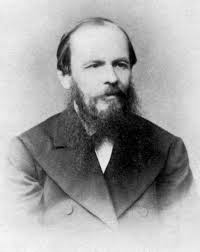
“Love [people] even in [their] sin, for that is the semblance of Divine Love and is the highest love on earth. Love all God’s creation, the whole and every grain of sand in it. Love every leaf, every ray of God’s light. Love the animals, love the plants, love everything. If you love everything, you will perceive the divine mystery in things. Once you have perceived it, you will begin to comprehend it better every day. And you will come at last to love the whole world with an all-embracing love.”
—Fyodor Dostoyevsky, from The Brothers Karamazov
Codex Sinaiticus
Posted by Dallas Wolf in Ancient Christian Manuscripts, First Thoughts, Patristic Pearls, Theology on September 16, 2025
One of the four Great Uncials. The great uncial codices or four great uncials are the only remaining parchment uncial codices that contain (or originally contained) the entire text of the Bible (Old and New Testament) in Greek. They are the Codex Vaticanus in the Vatican Library, the Codex Sinaiticus and the Codex Alexandrinus in the British Library, and the Codex Ephraemi Rescriptus in the Bibliothèque Nationale de France in Paris. Uncial is a broad rounded majuscule script (written entirely in capital letters without regular gaps between words) commonly used from the 4th to 8th centuries AD by Latin and Greek scribes. Codex Sinaiticus is considered a Alexandrian text-type manuscript.

Let the same mind be in you that was in Christ Jesus, who, though he was in the form of God, did not regard equality with God as something to be exploited, but emptied himself, taking the form of a slave, being born in human likeness. And being found in human form, he humbled himself and became obedient to the point of death— even death on a cross. Therefore God also highly exalted him and gave him the name that is above every name, so that at the name of Jesus every knee should bend, in heaven and on earth and under the earth, and every tongue should confess that Jesus Christ is Lord, to the glory of God the Father. Philippians 2:5-11 (NRSV)
Codex Sinaiticus ca. AD 350
British Library, London
 First Thoughts