Archive for category First Thoughts
J.B. Heard: The Afterthoughts of St. Augustine
Posted by Dallas Wolf in Ekklesia and church, First Thoughts, Heaven and Hell, Theology on March 19, 2026
Rev. John Bickford Heard (28 Oct 1828 – 29 Feb 1908) was born in Dublin, Ireland. He was a British clergyman and graduate/lecturer at Caius College, Cambridge (M.A. 1864). His series of lectures at the Cambridge Hulsean Lectures of 1892-93 served as the basis of his book, Alexandrian and Carthaginian Theology Contrasted, published by T. & T. Clark, Edinburgh, in 1893. Excerpt below is from this work:
“To discuss all these afterthoughts of theology, sin and salvation, heaven, hell, and purgatory, grace and its two channels, faith and the sacraments, would be to write the history of Augustinianism in its many phases.”
David Bentley Hart: Romans 5:12 “… one of the most consequential mistranslations in Christian history.”
Posted by Dallas Wolf in Ancient Christian Manuscripts, Christian Anthropology -East & West (Series), Ekklesia and church, First Thoughts, New Nuggets on March 18, 2026

David Bentley Hart (born 1965) is an American Orthodox Christian philosophical theologian, cultural commentator and polemicist. An acknowledged expert in koine Greek and New Testament exegesis, Hart published his own translation of the New Testament from Greek. Hart’s Greek basis for translation is grounded in “the so-called Critical Text, which is based on earlier and different manuscript sources (such as those of the Alexandrian Text-type)… but also included a great many verses and phrases found only in the Majority Text [Byzantine Text-type] (placing them in brackets to set them off from the Critical Text).”
See The New Testament – A Translation, by David Bentley Hart, Second Edition, Yale University Press, (C) 2017, 2023.
Romans 5:12
English: “Therefore, just as sin entered into the cosmos through one man, and death through sin, so also death pervaded all humanity, whereupon all sinned;”[1]
Greek: Διὰ τοῦτο ὥσπερ δι᾽ ἑνος ἀνθρώπου ἡ ἁμαρτὶα εἰς τὸν κόσμον εἰσῆλθεν καὶ διὰ τῆς ἁμαρτίας ὁ θὰνατος, καὶ οὕτως εἰς πάντας ἀνθρώπους ὁ θὰνατος διῆλθεν, ἐφ᾽ ᾧ πὰντες ἥμαρτον.
Transcription: Dia touto hōsper di’ henos anthrōpou hē hamartias eis to kosmon eisēlthen kai dia tēs hamartias ho thanatos, kai houtōs eis pantas anthrōpous ho thanatos diēlthen, eph’ hōi pantes hēmarton.
A fairly easy verse to follow until one reaches the final four words, whose precise meaning is already obscure, and whose notoriously defective rendering in the Latin Vulgate (in quo omnes peccaverunt) constitutes one of the most consequential mistranslations in Christian history. The phrase ἐφ᾽ ᾧ (eph’ hōi) is not some kind of simple adverbial formula like the διὰ τοῦτο (dia touto) (“therefore”) with which the verse begins; literally, ἐφ᾽ ᾧ means “upon which,” “whereupon,” but how to understand this is a matter of some debate. Typically, as the pronoun ᾧ is dative masculine, it would be referred back to the most immediate prior masculine noun, which in this case is θάνατος (thanatos), “death,” and would be taken to mean (correctly, I believe) that the consequence of death spreading to all human beings is that all became sinners. The standard Latin version of the verse makes this reading impossible, for two reasons: first, it retains the masculine gender of the pronoun (quo) but renders θάνατος by the feminine noun mors, thus severing any connection that Paul might have intended between them; second, it uses the preposition in, which when paired with the ablative means “within.” Hence what became the standard reading of the verse in much of Western theology after the late fourth century: “in whom [i.e., Adam] all sinned.” This is the locus classicus of the Western Christian notion of original guilt—the idea that in some sense all human beings had sinned in Adam, and that therefore everyone is born already damnably guilty in the eyes of God—a logical and moral paradox that Eastern tradition was spared by its knowledge of Greek. Paul speaks of death and sin as a kind of contagion here, a disease with which all are born; and elsewhere he describes it as a condition like civil enslavement to an unjust master, from which we must be “redeemed” with a manumission fee; but never as an inherited condition of criminal culpability. It has become more or less standard to render ἐφ᾽ ᾧ as “inasmuch as” or “since,” thus suggesting that death spread to all because all sinned. But this reading seems to make little sense: not only does it evacuate the rest of the verse of its meaning, but it is contradicted just below by v. 14, where Paul makes it clear that the universal reign of death takes in both those who have sinned and those who have not. Other interpretations take the ἐφ᾽ ᾧ as referring back to Adam, not as in the Latin mistranslation but in the sense that all have sinned “because of” the first man; this, though, fails to honor the point Paul seems obviously to be making about the intimate connection between the disease of death and the contagion of sin (and vice versa). The most obvious and, I think, likely reading is that, in this verse, a parallelism (something for which Paul has such a marked predilection) is given in a chiastic form: just as sin entered into the cosmos and introduced death into all its members, so the contagion of death spread into the whole of humanity and introduced sin into all its members. This, as we see in Romans and elsewhere, is for Paul the very dynamism of death and sin that is reversed in Christ: by his triumphant righteousness he introduced eternal life into the cosmos, and so as that life spreads into the whole of humanity it makes all righteous (as in vv. 15–19 below, or as in 1 Corinthians 15:20–28).[2]
[1] Hart, David Bentley. The New Testament: A Translation (p.296). Yale University Press. 2017
[2] ibid., p.319
The Four Text-Types of NT Textual Criticism
Posted by Dallas Wolf in Ancient Christian Manuscripts, First Thoughts, New Nuggets, Theology on March 12, 2026
The four main text-types in New Testament textual criticism are the Alexandrian, Western, Byzantine, and Caesarean. These categories help scholars analyze and compare the thousands of existing manuscripts to reconstruct the original text.
Textual criticism of the New Testament categorizes manuscripts into several text types. The four main text types are:
1. Alexandrian Text-Type
- Date: 2nd–4th centuries CE
- Characteristics: Generally shorter readings, fewer expansions or paraphrases, and more abrupt readings. It is often considered more reliable than other text types. RSV, NRSV, ESV, NASB, NIV, and LEB Bibles are based on Alexandrian-type manuscripts.
2. Western Text-Type
- Date: 2nd–9th centuries CE
- Characteristics: Known for paraphrasing and free alterations. Scribes often changed words and clauses to enhance clarity and meaning. Witnessed in Latin and Syriac translations of the Greek, mainly in the Western Roman Empire.
3. Byzantine Text-Type
- Date: 4th century onward
- Characteristics: Characterized by a larger number of surviving manuscripts. It tends to have more expansions and harmonizations, reflecting a later formalization of the text. The King James and virtually all Reformation-era Bibles are based on Byzantine-Type manuscripts.
4. Caesarean Text-Type
- Date: 3rd–4th centuries CE
- Characteristics: A less common type that exhibits features of both the Alexandrian and Western text types. It is primarily associated with the region of Caesarea Maritima in Judea.
These text types help scholars classify and understand the variations in the New Testament manuscripts and work towards reconstructing the original text.
Major New Testament Text‑Types
| Text‑Type | Key Features | Comments |
| Alexandrian | Earliest, concise, less harmonized; includes Codices Vaticanus & Sinaiticus | Most reliable overall. Basis for RSV, NRSV, ESV, NASB, NIV, and LEB Bibles |
| Western | Paraphrastic, expansions, unique readings (e.g., Codex Bezae) | Valuable but secondary |
| Byzantine | Majority of later manuscripts; smoother, harmonized | Least reliable for earliest text. Basis for King James and Reformation era Bibles |
| Caesarean (disputed) | Regional; mixed features; mostly in Gospels | Interesting but not primary |
Codex Sinaiticus: “God is love”
Posted by Dallas Wolf in Ancient Christian Manuscripts, First Thoughts, Theology on March 9, 2026

Modern Greek: Ὁ θεὸς ἀγάπη ἐστίν
English: God is love (from 1 John 4:8)
Codex Sinaiticus ca. AD 350
British Museum, London
The “God is love” graphic, above, is copied from the Codex Sinaiticus. Codex Sinaiticus is a manuscript of the Christian Bible written in the middle of the fourth century and contains the earliest complete copy of the Christian New Testament. The name ‘Codex Sinaiticus’ literally means ‘the Sinai Book’. The hand-written text is in Greek. The New Testament appears in the original vernacular language (koine) and the Old Testament in the version known as the Septuagint (LXX, ca. 130 B.C.), that was adopted by early Greek-speaking Christians. Codex Sinaiticus is one of only four great codices that have survived to the present day. They are written in a certain uncial (broad single-stroke letters using simple round forms) style of calligraphy using only majuscule (capital) letters, written in scriptio continua (meaning without regular gaps or spaces between words). Words do not necessarily end on the same line on which they start. All four of these manuscripts were made at great expense in material and labor, written on parchment or velum (animal skins) by professional scribes. All four of the Great Codices are Alexandrian text-type manuscripts.
‘Codex’ means ‘book’. By the time Codex Sinaiticus was written, works of literature were increasingly written on sheets that were folded and bound together in the form that we still use today. This book format was steadily replacing the roll format which was more widespread just a century before. These rolls were made of animal skin (like most of the Dead Sea Scrolls) or the papyrus plant (commonly used for Greek and Latin literature). Using the papyrus codex was a distinctive feature of early Christian culture. The pages of Codex Sinaiticus, however, are made of animal skin parchment. This marks it out as standing at an important transition in book history. Before it we see many examples of Greek and Latin texts on papyrus roll or papyrus codex, but almost no traces of parchment codices. After it, the parchment codex becomes the norm.
In Christian scribal practice, nomina sacra is the abbreviation of frequently used divine names or titles, especially in Greek manuscripts of the Bible. A nomen sacrum consists of two or more letters from the original word spanned by an overline; in the case of the Sinaiticus graphic, above, the theta and sigma are the first and last letters in the Greek word Theos, or God.
Dostoyevsky: “… all-embracing love.”
Posted by Dallas Wolf in First Thoughts, Heaven and Hell, New Nuggets, Theology, Universal Restoration (Apokatastasis) on March 6, 2026
Fyodor Dostoyevsky (1821 – 1881) – Russian novelist, short story writer, essayist, journalist, and philosopher.
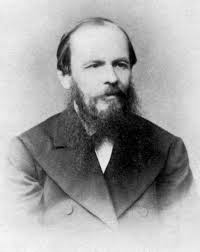
“Love [people] even in [their] sin, for that is the semblance of Divine Love and is the highest love on earth. Love all God’s creation, the whole and every grain of sand in it. Love every leaf, every ray of God’s light. Love the animals, love the plants, love everything. If you love everything, you will perceive the divine mystery in things. Once you have perceived it, you will begin to comprehend it better every day. And you will come at last to love the whole world with an all-embracing love.”
—Fyodor Dostoyevsky, from The Brothers Karamazov
Codex Sinaiticus
Posted by Dallas Wolf in Ancient Christian Manuscripts, First Thoughts, Patristic Pearls, Theology on September 16, 2025
One of the four Great Uncials. The great uncial codices or four great uncials are the only remaining parchment uncial codices that contain (or originally contained) the entire text of the Bible (Old and New Testament) in Greek. They are the Codex Vaticanus in the Vatican Library, the Codex Sinaiticus and the Codex Alexandrinus in the British Library, and the Codex Ephraemi Rescriptus in the Bibliothèque Nationale de France in Paris. Uncial is a broad rounded majuscule script (written entirely in capital letters without regular gaps between words) commonly used from the 4th to 8th centuries AD by Latin and Greek scribes. Codex Sinaiticus is considered a Alexandrian text-type manuscript.

Let the same mind be in you that was in Christ Jesus, who, though he was in the form of God, did not regard equality with God as something to be exploited, but emptied himself, taking the form of a slave, being born in human likeness. And being found in human form, he humbled himself and became obedient to the point of death— even death on a cross. Therefore God also highly exalted him and gave him the name that is above every name, so that at the name of Jesus every knee should bend, in heaven and on earth and under the earth, and every tongue should confess that Jesus Christ is Lord, to the glory of God the Father. Philippians 2:5-11 (NRSV)
Codex Sinaiticus ca. AD 350
British Library, London
Codex Vaticanus
Posted by Dallas Wolf in Ancient Christian Manuscripts, First Thoughts, Patristic Pearls, Theology on September 16, 2025
One of the four Great Uncials. The great uncial codices or four great uncials are the only remaining uncial parchment codices that contain (or originally contained) the entire text of the Bible (Old and New Testament) in Greek. They are the Codex Vaticanus in the Vatican Library, the Codex Sinaiticus and the Codex Alexandrinus in the British Library, and the Codex Ephraemi Rescriptus in the Bibliothèque Nationale de France in Paris. Uncial is a broad rounded majuscule script (written entirely in capital letters without regular gaps between words) commonly used from the 4th to 8th centuries AD by Latin and Greek scribes. Codex Vaticanus is a Alexandrian text-type manuscript.

According to John
In the beginning was the Word, and the Word was with God, and the Word was God. The same was in the beginning with God. All things were made by him; and without him was not any thing made that was made. In him was life; and the life was the light of men.And the light shineth in darkness; and the darkness comprehended it not. There was a man sent from God, whose name was John. The same came for a witness, to bear witness of the Light, that all men through him might believe. He was not that Light, but was sent to bear witness of that Light. That was the true Light, which lighteth every man that cometh into the world. He was in the world, and the world was made by him, and the world knew him not. He came unto his own, and his own received him not. But as many as received him, to them gave he power to become the sons of God, even to them that believe on his name: which were born, not of blood, nor of the will of the flesh, nor of the will of man, but of God. And the Word was made flesh, and dwelt among us, (and we beheld his glory, the glory as of the only begotten of the Father,) full of grace and truth. John 1:1-14 (KJV)
Codex Vaticanus ca. AD 350
Vatican Library, the Vatican
𝔓⁴⁶ – The Earliest Existing Manuscript of Paul’s Letters
Posted by Dallas Wolf in Ancient Christian Manuscripts, First Thoughts, Patristic Pearls, Theology on September 16, 2025
Known as Beatty Papyrus 46, designated by the siglum 𝔓⁴⁶, is an early uncial Greek New Testament codex written on papyrus. P 46 is dated to around AD 175–225. It contains portions of most of the Pauline epistles, including Romans (last eight chapters), Hebrews, 1&2 Corinthians, Ephesians, Galatians, Philippians, Colossians, and 1 Thessalonians. P 46 is considered a Alexandrian text-type manuscript by textual criticism scholars.
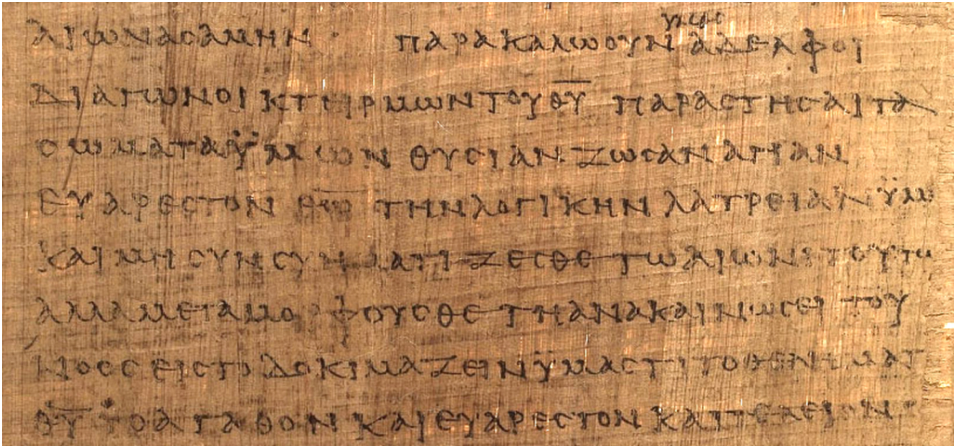
I appeal to you therefore, brothers, by the mercies of God, to present your bodies as a living sacrifice, holy and acceptable to God, which is your spiritual worship. Do not be conformed to this world, but be transformed by the renewal of your mind, that by testing you may discern what is the will of God, what is good and acceptable and perfect. Romans 12:1-2 (ESV)
Beatty Papyrus P46 ca. AD 200
University of Michigan, Ann Arbor
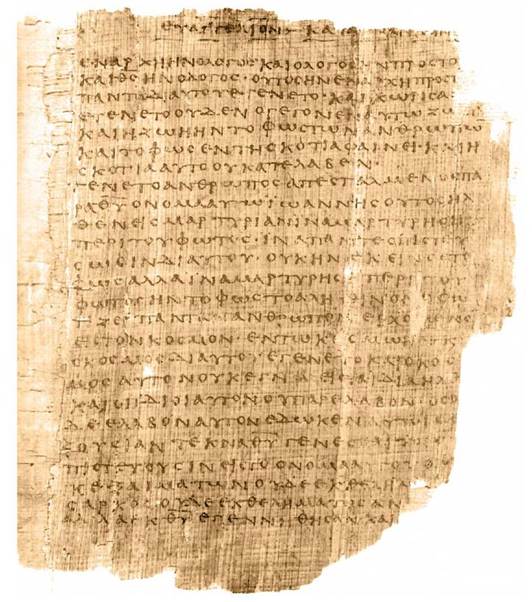
𝔓66 – The Earliest Known NT Manuscript Containing John 1. “In the beginning was the Word…”
Posted by Dallas Wolf in Ancient Christian Manuscripts, First Thoughts, Patristic Pearls, The Logos Doctrine (series) on September 15, 2025
Dated c. AD 150-250 (most likely around AD 200), Papyrus 66, designated by the siglum 𝔓66, is an early uncial Greek New Testament codex written on papyrus. It contains text from the Gospel of Luke 3:18-24:53, and John 1:1-15:8. P66 is considered a Alexandrian text-type manuscript by textual criticism scholars. Part of the Bodmer Papyri, Bodmer Library, Cologny, Switzerland.
St. Gregory Of Nyssa: “Daily” Bread in the Lord’s Prayer? Not so fast!
Posted by Dallas Wolf in First Thoughts, Patristic Pearls, The Cappadocians, Theology on September 12, 2025
In the Lord’s Prayer, the petition for our “daily bread” is normally understood to signify all of our bodily needs and whatever we require to sustain our lives in this world. The Greek Patristic Fathers knew that the koine Greek word translated as “daily” is a unique term “ἐπιούσιον” (epiousion), which is only used in the New Testament Lord’s Prayer. This indicates that the word had special significance, as there were any number of other common Greek words to express the idea of “daily”. Epiousion literally means “needful”, “essential”, “super-substantial”, or “super-essential”. Understood in that sense, it takes on the more spiritual meaning of the nourishment of our souls by the Word of God, Jesus Christ who is the “Bread of Life;” the “Bread of God which has come down from heaven and given life to the world” (Jn 6.33–36); the bread which “a man may eat of it and not die,” but “live forever” (Jn 6.50–51). Thus the prayer for “daily bread” becomes the petition for daily spiritual nourishment through abiding communion with Christ so that one might live perpetually with God.
Origen of Alexandria and Gregory of Nyssa are two examples of early (3rd and 4th century) Church Fathers who contributed significantly to the understanding of the unique word epiousion; both interpreting it as referring to the spiritual sustenance provided by God, emphasizing the need for divine support in daily life.
With that introduction, here is what St. Gregory of Nyssa (335 – 395) had to say about it:
From: Ancient Christian Writers, No.18. Edited by Johannes Quasten and Joseph C. Plumpe. St. Gregory of Nyssa, The Lord’s Prayer – The Beatitudes, Trans. and annotated by Hilda C. Graef, 1954 Newman Press. Pp. 68-70
Excerpt from:
SERMON 4 Thy Will be done, on earth as it is in Heaven. Give us this day our daily [ἐπιούσιον (epiousion)] bread.
Full of meaning is also the addition of this day [σήμερον (sémeron)], when He says: Give us this day our daily [ἐπιούσιον (epiousion)] bread. These words contain yet another teaching. For you should learn through what you say that the human life is but the life of a day. Only the present each one of us can call his own; the hope of the future is uncertain, for we know not what the day to come may bring forth. Why then do we make ourselves miserable worrying about the future? He says, Sufficient for the day is the evil thereof, evil here meaning the enduring of evil. Why are we disturbed about the morrow? By the very fact that He gives you the commandment for today, He forbids you to be solicitous for the morrow. He says to you as it were: He who gives you the day will give you also the things necessary for the day. Who causes the sun to rise? Who makes the darkness of the night disappear? Who shows you the rays of light? Who revolves the sky so that the source of light is above the earth? Does He who gives you so great things need your help to supply for the needs of your flesh? Do animals take care for their livelihood? Do ravens have tilled land or eagles barns? Is not the one means of providing a livelihood for all the Will of God, by which all things are governed? Therefore even an ox or an ass, or any other animal is taught its way of life by instinct, and it manages the present well but does not concern itself in the least with what comes afterwards. And should we need special advisers in order to understand that the life of the flesh is perishable and transitory? Are we not taught by the misfortunes of others, not chastened by those of our own life?
What profits this rich man his wealth? Like a fool he chases vain hopes, pulling down, building up, hoarding and dissipating, shutting up long periods of years as it were in barns, without letting them bear fruit. Will not one night prove false all these imagined hopes, like some vain dream about a nonentity? The life of the body belongs only to the present, but that which lies beyond us and is apprehended by hope belongs to the soul. Yet men in their folly are quite wrong about the use of either; they would extend their physical lives by hope, and draw the life of the soul towards enjoyment of the present. Therefore the soul is occupied by the world of sense and necessarily estranged from the subsisting reality of hope. What hope it has leans upon unstable things over which it has no control or authority.
Let us therefore learn from the counsel under consideration what one must ask for today, and what for later. Bread is for our use today; the Kingdom belongs to the beatitude for which we hope. By bread He means all our bodily requirements. If we ask for this, the man who prays will clearly understand that he is occupied with something transitory; but if we ask for something of the good things of the soul it will be clear that the petition concerns the everlasting realities, for which He commands us to be most concerned in our prayers. Thus the first necessity is put in its right place by the greater one. Seek ye, He says, the kingdom and justice, and all these things shall be added unto you; in Christ Jesus Our Lord, to whom be glory and power for ever and ever. Amen.
Original Greek words used by Nyssen are in brackets []. From: Gregorii Nysseni, De Oratione Dominica, De Beatitudinibus, Edidit Johannes F. Callahan, 1992 E.J. Brill. P. 56

