Archive for category Hesychasm – Jesus Prayer
Met. Hierotheos (Vlachos): “Man has two cognitive centers.”
Posted by Dallas Wolf in Hesychasm - Jesus Prayer, New Nuggets, Theology on August 22, 2016
Metropolitan Hierotheos (Vlachos) – (1945- ) is a Greek Orthodox metropolitan and theologian. He graduated from the Theological School of the University of Thessaloniki and is one of the finest Patristic scholars living.
 “Man has two cognitive centers. One is the nous, the organ suited for receiving God’s revelation which is then formulated by our reason, while the other is reason, which knows the tangible world around us. With our nous we acquire knowledge of God, while with our reason we acquire knowledge of the world and the learning offered by the science of sensory things.”
From The Person in the Orthodox Tradition, p. 28
St. Maximus the Confessor: “Silence and Unknowing in Prayer”
Posted by Dallas Wolf in Hesychasm - Jesus Prayer, Patristic Pearls, Theology on August 20, 2016
St. Maximus the Confessor (c. 580 – 662) was a 7th century Christian monk, theologian, and scholar who many contemporary scholars consider to be the greatest theologian of the Patristic era. Two of his most famous works are “Ambigua” – An exploration of difficult passages in the work of Pseudo-Dionysius and Gregory of Nazianzus, focusing on Christological issues, and “Questions to Thalassius” or “Ad Thalassium” – a lengthy exposition on various Scriptural texts.

“Perfect silence alone proclaims Him, and total and transcendent unknowing brings us into His presence.”
~ from: “The Writings of Maximus the Confessor”
Met. Kallistos: “The ‘Heart’ in Christian Contemplative Prayer”
Posted by Dallas Wolf in Hesychasm - Jesus Prayer, New Nuggets, Theology on August 5, 2016
The following is an excerpt from Metropolitan Kallistos Ware (b. 1934) in his Introduction to On the Prayer of Jesus , by Ignatius Brianchaninov, Kallistos Ware, Father Lazarus.
 “Ignatius [Brianchaninov] distinguishes three main stages or levels on this journey inwards, which he describes as “oral”, “mental”, and “cordial”; that is to say, prayer of the lips, prayer of the mind, and prayer of the heart”.
“The third degree of prayer is attained when not only does the mind or intellect [nous] recite the Jesus Prayer with full attentiveness, but it also descends into the heart and is united with it. In this way our invocation [of Lord, Jesus, Christ, Son of God] becomes prayer of the heart, or more exactly prayer of the mind in the heart. When the hesychast tradition speaks of the “heart” in this context, the word is to be understood in its full Hebraic sense, as found in Scripture: it signifies, not merely the emotions and affections, but the moral and spiritual center of the total person, the ground and focal point of our created being, the deep self. Prayer of the heart, then, is no longer prayer of the faculty alone, but prayer of the entire person, spirit, soul, and body together. It is precisely at this stage that prayer becomes not just something that we do but something that we are – something, moreover, that we are not just from time to time but continually. In this way St. Paul’s injunction becomes a realized fact: “Pray without ceasing” (1 Thess. 5:17). Nor is this all. Since the heart is not only the center of our created personhood but also the place where Christ and the Holy Spirit dwell within us, prayer of the heart is not so much something that we do as something that God does; not so much my prayer as the prayer of Christ in me (Gal. 2:20).”
Rohr: “First-hand Experience”
Posted by Dallas Wolf in Hesychasm - Jesus Prayer, New Nuggets, Theology on March 1, 2016

“. . . All knowledge of God is first-hand experience.”
~ Fr. Richard Rohr, OFM, from his homily 28 Feb 2016
St. Nikolai Velimirovich: “Our religion is founded on spiritual experience…”
Posted by Dallas Wolf in Hesychasm - Jesus Prayer, New Nuggets, Theology on March 1, 2016
Saint Nikolai Velimirovich (1881-1956) – was a bishop in the Serbian Orthodox Church, an influential theological writer and a highly gifted orator.
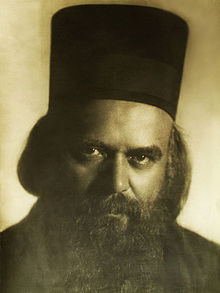
“Our religion is founded on spiritual experience, seen and heard as surely as any physical fact in this world. Not theory, not philosophy, not human emotions, but experience.”
~ St. Nikolai Velimirovic
Yanarras: “Repentance has nothing to do with self-regarding sorrow for legal transgressions.”
Posted by Dallas Wolf in Hesychasm - Jesus Prayer, New Nuggets, Theology on January 30, 2016
Christos Yannaras (1935 – ) was Professor of Philosophy at Pantion University of Social and Political Sciences, Athens. His books include Freedom of Morality and Person and Eros.
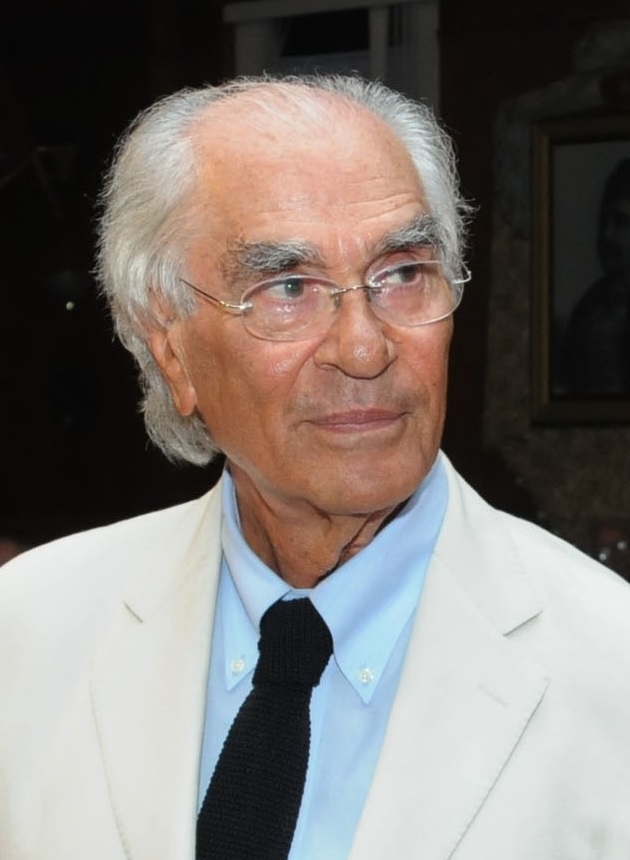
“To share out your soul freely, that is what metanoia (a change of mind, or repentance) really refers to: a mental product of love. A change of mind, or love for the undemonstrable. And you throw off every conceptual cloak of self-defense, you give up the fleshly resistance of your ego. Repentance has nothing to do with self-regarding sorrow for legal transgressions. It is an ecstatic erotic self-emptying. A change of mind about the mode of thinking and being.”
― Christos Yanarras, from “Variations on the Song of Songs”
St. Macarius the Great: “On the Heart”
Posted by Dallas Wolf in Hesychasm - Jesus Prayer, Monasticism, Patristic Pearls on December 27, 2015
St. Macarius the Great (the Egyptian) (c. AD 300 -390) was one of the most famous of the Desert Fathers, and one of the pioneers of Scetis.
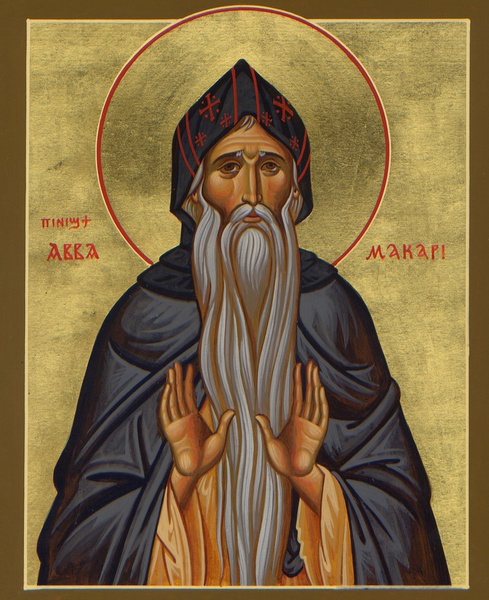
“The heart is but a small vessel; and yet dragons and lions are there, and there likewise are poisonous creatures and all the treasures of wickedness; rough, uneven paths are there, and gaping chasms. There also is God, there are the angels, there life and the Kingdom, there light and the apostles, the heavenly cities and the treasures of grace: all things are there.”
~ from: Homilies 43:7
St. Gregory of Nyssa: “Making an idol of God”
Posted by Dallas Wolf in Hesychasm - Jesus Prayer, Patristic Pearls, Theology on December 25, 2015
St. Gregory of Nyssa (c. AD 335 – 395) – Along with his older brother, Basil of Caesarea, and friend, Gregory of Nazianzus, Nyssen was one the three great Cappadocian Fathers of the 4th century.
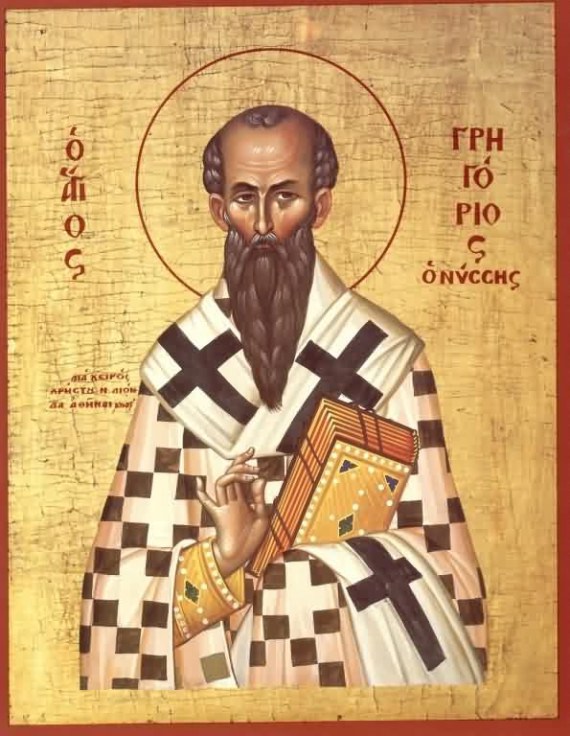
“…every concept formed by our understanding which attempts to attain and to hem in the divine nature serves only to make an idol of God, not to make God known”.
~ from: “The Life of Moses“.
David Bentley Hart: “On Contemplative Prayer”
Posted by Dallas Wolf in Hesychasm - Jesus Prayer, New Nuggets on September 5, 2015
 “If one is really to seek “proof” one way or the other regarding the reality of God, one must recall that what one is seeking is a particular experience, one wholly unlike an encounter with some mere finite object of cognition or some particular thing that might be found among other things. One is seeking an ever deeper communion with a reality that at once exceeds and underlies all other experiences. If one could sort through all the physical objects and events constituting the universe, one might come across any number of gods (you never know), but one will never find God. And yet one is placed in the presence of God in every moment and can find him even in the depth of the mind’s own act of seeking. As the source, ground, and end of being and consciousness, God can be known as God only insofar as the mind rises from beings to being, and withdraws from the objects of consciousness toward the wellsprings of consciousness itself, and learns to see nature not as a closed system of material forces but in light of those ultimate ends that open the mind and being each to the other. All the great faiths recognize numerous vehicles of grace, various proper dispositions of the soul before God, differing degrees of spiritual advancement, and so forth; but all clearly teach that there is no approach to the knowledge of God that does not involve turning the mind and the will toward the perception of God in all things and of all things in God. This is the path of prayer—contemplative prayer, that is, as distinct from simple prayers of supplication and thanksgiving—which is a specific discipline of thought, desire, and action, one that frees the mind from habitual prejudices and appetites, and allows it to dwell in the gratuity and glory of all things. As an old monk on Mount Athos once told me, contemplative prayer is the art of seeing reality as it truly is; and, if one has not yet acquired the ability to see God in all things, one should not imagine that one will be able to see God in himself.”
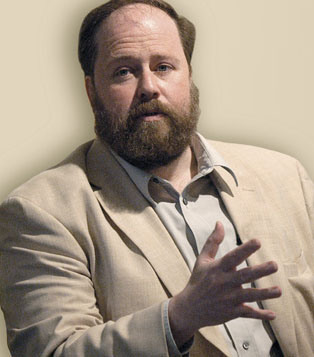
~ David Bentley Hart, from The Experience of God.
Archimandrite George: “… a mystical union of God and man in the Holy Spirit”
Posted by Dallas Wolf in Hesychasm - Jesus Prayer, New Nuggets, Theology on August 22, 2015

“A Christian is not a Christian simply because he is able to talk about God. He is a Christian because he is able to have experience of God. And just as, when you really love someone and converse with him, you feel his presence, and you enjoy his presence, so it happens in man’s communion with God: there exists not a simply external relationship, but a mystical union of God and man in the Holy Spirit.” ~ Archimandrite George (Kapsanis), Abbott of the Holy Monastery of St. Gregorios on Mount Athos
 First Thoughts