Archive for category New Nuggets
Larchet: “God, in effect, does not grant healing unless it is asked of him…”
Posted by Dallas Wolf in New Nuggets on July 2, 2014
Dr. Jean-Claude Larchet (1949- ) is a French Orthodox theologian and is one of the foremost Patristics scholars writing today. Dr. Larchet converted to the Orthodox Church from the Roman Catholic Church at the age of 22. He holds doctorates in philosophy (1987) and theology (1994) from the University of Strasbourg.

Dr. Jean-Claude Larchet
“God, in effect, does not grant healing unless it is asked of him, for he has granted man free will and in all the cases respects his will and will not act against it. However, the will of the individual is not always fully at his disposal. . .Those who are disturbed in a significant way cannot even ask for their own healing or give evidence of their faith. . . And yet it is possible for such individuals to be delivered and healed thanks to the faith and the prayers of those around them or accompanying them, as well as to those of the saint to whom they are entrusted.” ~ Mental Disorders & Spiritual Healing: Teachings from the Early Christian East
Lossky: “The man who is governed by his nature… is the least personal.”
Posted by Dallas Wolf in New Nuggets on June 30, 2014
Vladimir Lossky – (1903 – 1958) was one of the most influential Orthodox Christian theologians of the 20th century. He emphasized theosis as the main principle of Orthodox Christianity.

Vladimir Lossky (1903-1958)
“The man who is governed by his nature and acts in the strength of his natural qualities, of his ‘character’, is the least personal. He sets himself up as an individual, proprietor of his own nature, which he pits against the natures of others and regards as his ‘me’, thereby confusing person and nature.” ~ The Mystical Theology of the Eastern Church
Hierotheos: “Christ as physician; Church as hospital”
Posted by Dallas Wolf in Ekklesia and church, New Nuggets on June 28, 2014
Metropolitan Hierotheos (Vlachos) of Nafpaktos, born in Greece in 1945, is one of the greatest living Christian theologians. The influence of fellow theologian, Fr. John Romanides, the study of the patristic texts (particularly those of the neptic hesychast Fathers of the Philokalia), many years of studying St. Gregory Pálamas, association with the monks of the Holy Mountain (Mount Athos in northern Greece), and many years of pastoral experience, all brought him to the realization that Christian theology is a science of the healing of humankind’s fallen nature and damaged nous and that the early Church Fathers can be of immense help to modern society, so disturbed and afflicted as it is by its many internal and existential problems.

Met. Hierotheos (Vlachos) 1945 –
“In the parable of the Good Samaritan the Lord showed us several truths. As soon as the Samaritan saw the man who had fallen among thieves who had wounded him and left him half-dead, he “had compassion on him and went to him and bandaged his wounds, pouring on oil and wine; and he set him on his own animal, brought him to an inn and took care of him” (Luk. 10:33f). Christ treated the wounded man and brought him to the inn, to the Hospital which is the Church. Here Christ is presented as a physician who heals man’s illnesses, and the Church as a Hospital.” ~ Orthodox Psychotherapy, p.27.
Tillich: “He who sacrifices the Logos principle sacrifices the idea of a living God…”
Posted by Dallas Wolf in New Nuggets, Theology on June 26, 2014
Paul Tillich (1886 – 1965) – German American Christian philosopher and theologian who is widely regarded as one of the most influential theologians of the twentieth century. He maintained that the Logos Doctrine was absolutely essential to Christian theology.
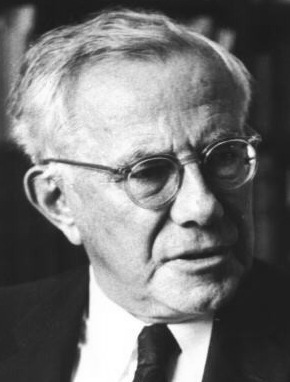
“He who sacrifices the Logos principle sacrifices the idea of a living God, and he who rejects the application of this principle to Jesus as the Christ rejects his character as Christ.”
~ Systematic Theology, Vol. 3.
Greek Experience vs. Latin Concept in Theology
Posted by Dallas Wolf in Ekklesia and church, First Thoughts, New Nuggets, Patristic Pearls, Theology on February 4, 2013
I support the notion that Christianity is about experiencing an intimate personal relationship with God. Proper theology is about how we experience that relationship from God to us. Classically, Greek Eastern (Orthodox) theology has been largely based on the experience of God’ relationship to man. The theology of the Latin West (Roman Catholic and Protestant), at least since the days of St. Augustine, has been largely based on philosophical speculation of man’s relationship to God.
For example, let’s contrast these two different approaches as they apply to Trinitarian doctrine. According to Orthodox theologian Fr. John Meyendorff, in the Eastern Greek tradition, “the incarnate Logos and the Holy Spirit are met and experienced first as divine agents of salvation, and only then are they discovered to be essentially one God.” In contrast, 19th century Jesuit theologian Fr. Theodore de Regnon stated, “Latin philosophy considers the nature in itself first and proceeds to the agent; Greek philosophy considers the agent first and passes through it to find the nature. The Latins think of personality as a mode of nature; the Greeks think of nature as the content of the person”.
The Latin approach is based on philosophical concept from man’s view of God. The Greek approach is based on how we experience God’s Biblical relationship to man.
 First Thoughts