Archive for category The Cappadocians
St. Gregory Of Nyssa: “Daily” Bread in the Lord’s Prayer? Not so fast!
Posted by Dallas Wolf in First Thoughts, Patristic Pearls, The Cappadocians, Theology on September 12, 2025
In the Lord’s Prayer, the petition for our “daily bread” is normally understood to signify all of our bodily needs and whatever we require to sustain our lives in this world. The Greek Patristic Fathers knew that the koine Greek word translated as “daily” is a unique term “ἐπιούσιον” (epiousion), which is only used in the New Testament Lord’s Prayer. This indicates that the word had special significance, as there were any number of other common Greek words to express the idea of “daily”. Epiousion literally means “needful”, “essential”, “super-substantial”, or “super-essential”. Understood in that sense, it takes on the more spiritual meaning of the nourishment of our souls by the Word of God, Jesus Christ who is the “Bread of Life;” the “Bread of God which has come down from heaven and given life to the world” (Jn 6.33–36); the bread which “a man may eat of it and not die,” but “live forever” (Jn 6.50–51). Thus the prayer for “daily bread” becomes the petition for daily spiritual nourishment through abiding communion with Christ so that one might live perpetually with God.
Origen of Alexandria and Gregory of Nyssa are two examples of early (3rd and 4th century) Church Fathers who contributed significantly to the understanding of the unique word epiousion; both interpreting it as referring to the spiritual sustenance provided by God, emphasizing the need for divine support in daily life.
With that introduction, here is what St. Gregory of Nyssa (335 – 395) had to say about it:
From: Ancient Christian Writers, No.18. Edited by Johannes Quasten and Joseph C. Plumpe. St. Gregory of Nyssa, The Lord’s Prayer – The Beatitudes, Trans. and annotated by Hilda C. Graef, 1954 Newman Press. Pp. 68-70
Excerpt from:
SERMON 4 Thy Will be done, on earth as it is in Heaven. Give us this day our daily [ἐπιούσιον (epiousion)] bread.
Full of meaning is also the addition of this day [σήμερον (sémeron)], when He says: Give us this day our daily [ἐπιούσιον (epiousion)] bread. These words contain yet another teaching. For you should learn through what you say that the human life is but the life of a day. Only the present each one of us can call his own; the hope of the future is uncertain, for we know not what the day to come may bring forth. Why then do we make ourselves miserable worrying about the future? He says, Sufficient for the day is the evil thereof, evil here meaning the enduring of evil. Why are we disturbed about the morrow? By the very fact that He gives you the commandment for today, He forbids you to be solicitous for the morrow. He says to you as it were: He who gives you the day will give you also the things necessary for the day. Who causes the sun to rise? Who makes the darkness of the night disappear? Who shows you the rays of light? Who revolves the sky so that the source of light is above the earth? Does He who gives you so great things need your help to supply for the needs of your flesh? Do animals take care for their livelihood? Do ravens have tilled land or eagles barns? Is not the one means of providing a livelihood for all the Will of God, by which all things are governed? Therefore even an ox or an ass, or any other animal is taught its way of life by instinct, and it manages the present well but does not concern itself in the least with what comes afterwards. And should we need special advisers in order to understand that the life of the flesh is perishable and transitory? Are we not taught by the misfortunes of others, not chastened by those of our own life?
What profits this rich man his wealth? Like a fool he chases vain hopes, pulling down, building up, hoarding and dissipating, shutting up long periods of years as it were in barns, without letting them bear fruit. Will not one night prove false all these imagined hopes, like some vain dream about a nonentity? The life of the body belongs only to the present, but that which lies beyond us and is apprehended by hope belongs to the soul. Yet men in their folly are quite wrong about the use of either; they would extend their physical lives by hope, and draw the life of the soul towards enjoyment of the present. Therefore the soul is occupied by the world of sense and necessarily estranged from the subsisting reality of hope. What hope it has leans upon unstable things over which it has no control or authority.
Let us therefore learn from the counsel under consideration what one must ask for today, and what for later. Bread is for our use today; the Kingdom belongs to the beatitude for which we hope. By bread He means all our bodily requirements. If we ask for this, the man who prays will clearly understand that he is occupied with something transitory; but if we ask for something of the good things of the soul it will be clear that the petition concerns the everlasting realities, for which He commands us to be most concerned in our prayers. Thus the first necessity is put in its right place by the greater one. Seek ye, He says, the kingdom and justice, and all these things shall be added unto you; in Christ Jesus Our Lord, to whom be glory and power for ever and ever. Amen.
Original Greek words used by Nyssen are in brackets []. From: Gregorii Nysseni, De Oratione Dominica, De Beatitudinibus, Edidit Johannes F. Callahan, 1992 E.J. Brill. P. 56
Apophatic and Cataphatic Theology: An Issue of Emphasis and Balance
Posted by Dallas Wolf in Contemplative Prayer (series), Ekklesia and church, Essence and Energies (series), First Thoughts, Hesychasm - Jesus Prayer, The Cappadocians, Theology on April 6, 2025
Overview
Apophatic and Cataphatic are two terms used in theology to describe different approaches to understanding God. The Eastern Orthodox and Latin West each use both types. The issue comes down to one of emphasis and balance: The Orthodox East is overwhelmingly Apophatic in approach, while the Latin West is predominantly Cataphatic.
Definitions
Apophatic theology (from Greek: ἀπόφημι apophēmi, meaning “to deny”) uses “negative” terminology to indicate what it is believed the divine is not. It means emptying the mind of words and ideas and simply resting in the presence of God. Apophatic prayer is prayer that occurs without words, images, or concepts. This approach to prayer regards silence, stillness, unknowing and even darkness as doorways, rather than obstacles, to communication with God. Apophatic theology relies primarily on experience and revelation.
Cataphatic theology (from the Greek word κατάφασις kataphasis meaning “affirmation”) uses “positive” terminology to describe or refer to the divine, i.e. terminology that describes or refers to what the divine is believed to be. Cataphatic prayer is prayer that speaks thoroughly, intensively, or positively of God: prayer that uses words, images, ideas, concepts, and the imagination to relate to God. Cataphatic theology relies heavily on logic and reason.
Background
Apophatic theology—also known as negative theology or via negativa—is a theology that attempts to describe God by negation. In Orthodox Christianity, Apophatic theology is based on the assumption that God’s essence is unknowable or ineffable and on the recognition of the inadequacy of human language to describe God. The Apophatic tradition in Orthodoxy is balanced with Cataphatic theology (positive theology) via belief in the Incarnation and the self-revealed energies of God, through which God has revealed himself in the person of Jesus Christ. However, Apophatic theology is the dominant traditional Eastern paradigm of an experiential, revealed theology, intimately linking doctrine with contemplation through purgation (catharsis), illumination (theoria), and union (theosis).
Clement of Alexandria (c. 150 – 215) was an early proponent of Apophatic theology with elements of Cataphatic. Clement holds that God is unknowable, although God’s unknowability, concerns only his essence, not his energies, or powers. According to Clement’s writings, the term theoria develops further from a mere intellectual “seeing” toward a spiritual form of contemplation. Clement’s Apophatic theology or philosophy is closely related to this kind of theoria and the “mystic vision of the soul.” For Clement, God is both transcendent in essence and immanent in self-revelation.
The Cappadocian Fathers (Basil the Great, Gregory of Nyssa, and Gregory of Nazianzus (4th century)) were early exemplars of this Apophatic theology. They stated that mankind can acquire an incomplete knowledge of God in his attributes, positive and negative, by reflecting upon and participating in his self-revelatory operations (energeia). But, the essence of God is completely unknowable.
A century later Pseudo-Dionysius the Areopagite (late 5th century) in his short work Mystical Theology, first introduced and explained what came to be known as Apophatic or negative theology.
Maximus the Confessor (7th century) maintained that the combination of Apophatic theology and hesychasm—the practice of silence and stillness—made theosis or union with God possible.
John of Damascus (8th century) employed Apophatic theology when he wrote that positive (cataphatic) statements about God reveal “not the nature, but the things around the nature.”
All in all, Apophatic theology remains crucial to much of the theology in Eastern Orthodox Christianity. The opposite tends to be true in Western Latin Christianity, with a few notable exceptions to this rule.
Cataphatic theology
In the Latin West a heavily Cataphatic theology, or via positiva, developed, which remains today in most forms of Western Christianity. This type of Cataphatic theology is based on using human reason to make positive statements about the nature of God. It slowly developed from the 5th to the 11th century, emerging as Scholasticism in the Medieval Period (11th-17th centuries). (see entries for Anselm and Thomas Aquinas, below)
Augustine of Hippo (354–430) significantly influenced scholasticism, emphasizing the integration of faith and reason. His ideas laid the groundwork for later Scholastic thinkers who sought to reconcile Christian theology with classical philosophy, particularly through dialectic reasoning. Augustine’s doctrines of the filioque, original sin, the doctrine of grace, and predestination found little support outside of the Western Roman Church. Within the Western Latin church, ‘Augustinianism’ dominated early theology.
Anselm of Canterbury (c. 1033 – 1109) is widely considered the father of Scholasticism, endeavoring to render Christian tenets of faith, traditionally taken as a revealed truth, as a rational system. Scholasticism prescribed that Aristotelian dialectic reason be used in the elucidation of spiritual truth and in defense of the dogmas of Faith.
Thomas Aquinas (c. 1225 – 7 March 1274) reflects the mature emergence of this new medieval Scholastic paradigm, which promoted the use of formal intellectual reason, putting it at odds with the predominantly Eastern revealed tradition of hesychastic contemplation. Aquinas’ Summa Theologica (1265–1274), is considered to be the pinnacle of Medieval Scholastic Christian philosophy and theology. The resulting ‘Thomism’ remains the foundation of contemporary Western Latin theology.
Gregory of Nyssa: Our Sister Macrina
Posted by Dallas Wolf in Monasticism, Patristic Pearls, The Cappadocians, Women in Early Christianity on March 7, 2025
Excerpt from Gregory of Nyssa: The Letters, by Ann M. Silvas, Brill, 2007
Gregory of Nyssa – Letter 19 To a certain John
The letter was written from Sebasteia in the first half of AD 380. The brief but intense cameo of Gregory’s sister, 19.6–10, is a foreshadowing and a promise of the Life of Macrina. It is the earliest documentation we have of Macrina’s existence, her way of life and her funeral led by Gregory, written less than a year after her death. The witness of her lifestyle, her conversations with him which were so formative and strengthening of his religious spirit, and above all his providential participation in her dying hours had a profound affect on him. It only needed time to absorb and reflect on these events. Then, when the occasion offered, he set out to make his remarkable sister better known to the world.
Our Sister Macrina

We had a sister who was for us a teacher of how to live, a mother in place of our mother. Such was her freedom towards God that she was for us a strong tower (Ps 60.4) and a shield of favour (Ps 5.13) as the Scripture says, and a fortified city (Ps 30.22, 59.11) and a name of utter assurance, through her freedom towards God that came of her way of life.
She dwelt in a remote part of Pontus, having exiled herself from the life of human beings. Gathered around her was a great choir of virgins whom she had brought forth by her spiritual labour pains (cf. 1 Cor 4.15, Gal 4.19) and guided towards perfection through her consummate care, while she herself imitated the life of angels in a human body.
With her there was no distinction between night and day. Rather, the night showed itself active with the deeds of light (cf. Rom 12.12–13, Eph 5.8) and day imitated the tranquility of night through serenity of life. The psalmodies resounded in her house at all times night and day.
You would have seen a reality incredible even to the eyes: the flesh not seeking its own, the stomach, just as we expect in the Resurrection, having finished with its own impulses, streams of tears poured out (cf. Jer. 9.1, Ps 79.6) to the measure of a cup, the mouth meditating the law at all times (Ps 1.2, 118.70), the ear attentive to divine things, the hand ever active with the commandments (cf. Ps 118.48). How indeed could one bring before the eyes a reality that transcends description in words?
Well then, after I left your region, I had halted among the Cappadocians, when unexpectedly I received some disturbing news of her. There was a ten days’ journey between us, so I covered the whole distance as quickly as possible and at last reached Pontus where I saw her and she saw me.
But it was the same as a traveler at noon whose body is exhausted from the sun. He runs up to a spring, but alas, before he has touched the water, before he has cooled his tongue, all at once the stream dries up before his eyes and he finds the water turned to dust.
So it was with me. At the tenth year I saw her whom I so longed to see, who was for me in place of a mother and a teacher and every good, but before I could satisfy my longing, on the third day I buried her and returned on my way.
von Balthasar on Gregory of Nyssa
Posted by Dallas Wolf in Concept of "Person" (series), Ekklesia and church, Essence and Energies (series), Patristic Pearls, The "Nous" (series), The Cappadocians, The Holy Trinity on December 26, 2024
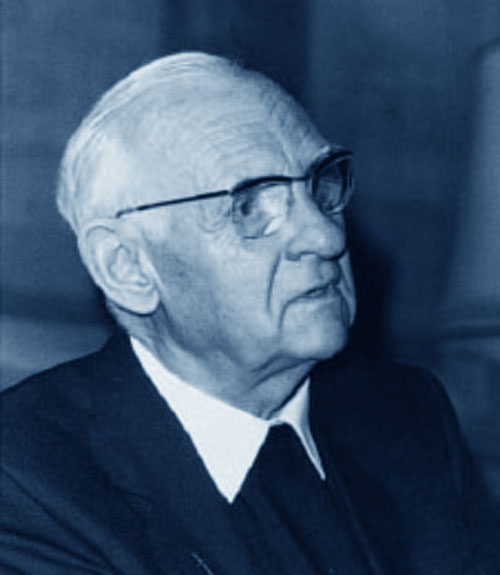
Hans Urs von Balthasar (1905–1988) – Hans Urs von Balthasar was a Swiss theologian and Catholic priest who is considered one of the most important Catholic theologians of the 20th century. Over the course of his life, he authored 85 books, over 500 articles and essays, and almost 100 translations.
Excerpt from Hans Urs von Balthasar: Presence and Thought: Essay on the Religious Philosophy of Gregory of Nyssa (1988)

“Less brilliant and prolific than his great master Origen, less cultivated than his friend Gregory Nazianzen, less practical than his brother Basil, he [Gregory of Nyssa] nonetheless outstrips them all in the profundity of his thought, for he knew better than anyone how to transpose ideas inwardly from the spiritual heritage of ancient Greece into a Christian mode.”
Meet St. Macrina the Younger; the “Fourth Cappadocian”
Posted by Dallas Wolf in Monasticism, Patristic Pearls, The Cappadocians, Women in Early Christianity on October 27, 2024
St. Macrina the Younger (AD 327-379) was a mystic consecrated virgin from a landed and committed Christian family. She was the elder sister of four Cappadocian Saints: St. Basil the Great, St. Gregory of Nyssa, St. Naucratius, and St. Peter of Sebasteia. She was also friends with fellow Cappadocian, St. Gregory of Nazianzus.
Brother Gregory of Nyssa records a powerful statement about Macrina, his older sister, in his 19th letter, “We had a sister who was for us a teacher of how to live, a mother in place of our mother.” It is well documented that big sister Macrina had significant influence in the spiritual development and careers of brothers Basil, Naucratius, Gregory, and Peter, all of whom became saints.
In addition to her role as teacher, guide, and exemplar to her younger siblings, Macrina transformed her family’s estate at Annisa, in Pontus [Uluköy, modern Turkey], into a cenobitic monastery, or domestic ascetic community, of virgin women. All of these women were treated as equals, regardless of their former social or economic status. Over time, Macrina added accommodations for ascetic celibate men and orphan children to her monastery.
But, there is more to Macrina’s story.
Brother Gregory records the story of the miraculous healing of Macrina of a disease which many hypothesize to have been breast cancer. Gregory writes, “she went into the sanctuary and remained there all night long prostrate before the God of healing, weeping a flood of tears to moisten the earth, and she used the mud from her tears as a salve to put on the effected place” (Gregory of Nyssa: “The Life of St. Macrina”, 48).
An example of Macrina as wonder worker is also recorded by Gregory, documenting the testimony of the garrison commander of the Pontus town of Sebastopolis. This distinguished military man reported that he, with his wife and daughter, had once visited Macrina’s monastery, “that powerhouse of virtue,” and when they left, their daughter’s severe eye disease was cured by Macrina’s prayers, “the true medicine with which she heals diseases.” (Life of Macrina, 52)
Macrina the Younger was a spiritual force of nature, according to the testimony of brother Gregory of Nyssa. Although her story may be embellished, her prophetic disposition and pastoral qualities, coupled with her direct divine experiences are both inspiring and edifying to modern ears.
Gregory finished his story of Macrina’s life by saying, “In order therefore that those who have too little faith, and who do not believe in the gifts of God, should come to no harm, for this reason I have declined to make a complete record here of the greater miracles, since I think that what I have already said is sufficient to complete Macrina’s story.” (The Life of Macrina, 54)
While Basil the Great, Gregory of Nyssa, and Gregory of Nazianzus have long been honored and revered as the three great “Cappadocian Fathers”, Macrina did not historically receive much serious attention from theologians or scholars. In more recent years Macrina has been hailed by the Orthodox theologian, Jaroslav Pelikan, and others as the “Fourth Cappadocian”.
Regardless of her title, Macrina has greatly influenced Christianity through her life as a consecrated virgin, prophet, monastic founder and leader, mother, father, sister, teacher, wonder worker, and philosopher of God.

St. Gregory of Nyssa: “Epektasis (ἐπέκτασις)- The soul’s eternal ‘straining toward’ God”.
Posted by Dallas Wolf in Ekklesia and church, First Thoughts, Monasticism, Patristic Pearls, The Cappadocians, Theology on April 20, 2023
“Brothers, I do not yet reckon myself to have seized hold, save of one thing: Both forgetting the things lying behind and also stretching out [ἐπεκτεινόμενος] to the things lying ahead,”
Philippians 3:13 from The New Testament- a translation by David Bentley Hart
_________________________________________________________________________
Background – A Brief Summary of Gregory of Nyssa’s Theology
In Gregory’s account of creation, the nature-energies distinction, developed to counter Eunomius, a defender of the 4th century Arian heresy, becomes extended into a general cosmological principle.
To Gregory, the essence of God is incomprehensible, transcendent, and cannot be defined by any set of human concepts. When speaking of God’s essence, or ousia, all that can be said is what that essence is not (Against Eunomius II, IV). In saying this, Gregory anticipates the via negativa (apophatic) theology of Pseudo-Dionysius (5th century) and much of subsequent Orthodox theological thought.
If God is simply some transcendent, unknowable entity, what possible relation to the world could God ever have? Gregory answers these questions by distinguishing between God’s “nature” (phusis) and God’s “energies” (energeiai). God’s energies are the projection of the divine nature into the world; initially creating it and ultimately guiding it to its appointed destination (Beatitudes VI). The idea of God’s energies in Gregory’s theology emphasizes God’s actual presence in those parts of creation which are perfected just because of that presence. Whereas God’s nature is totally transcendent and unknowable, God’s energies are immanent and knowable to mankind. With this revelation, Gregory anticipates the more famous substance-energies distinction of the 14th century Byzantine theologian Gregory Palamas.
Gregory’s view of human nature is dominated by his belief that humans were created in the image of God. This means that because God’s transcendent nature projects energies out into the world, we would expect the same structural relationship to exist in human beings between their minds and their bodies. In fact, that is precisely what Gregory argues concerning the human nous (a word that was traditionally translated as “mind”, but by the 4th century included the Christian idea of its nature also extending beyond and separate from the physical world).
The most important characteristic of the nature of the nous is that it provides for a unity of consciousness; where the myriad perceptions from various sense organs are all coordinated with each other. Using the metaphor of a city in which family members come in by various gates but all meet somewhere inside, Gregory’s assertion is that this can occur only if we presuppose a transcendent self to which all of one’s experiences are referred (Making of Man 10). But Gregory maintains that this unity of consciousness is entirely mysterious, much like the mysterious nature of the Godhead (Making of Man 11).
Yet the nous is also extended by its energies throughout the body, which includes our ordinary sensory and psychological experiences as well as our discursive, rational mind (dianoia) (Making of Man 15; Soul and Resurrection).
There are two further important characteristics of the human nous according to Gregory. First, because the human nous is created in the image of God, it possesses a certain “dignity of royalty” (to tes basileias axioma) that is lacking in the rest of creation. Second, the nous is free. Gregory derives the freedom of the nous from the freedom of God. For God, being dependent on nothing, governs the universe through the free exercise of will; and the nous is created in God’s image (Making of Man 4).
Epektasis – the eternal ‘stretching and straining’ of the soul toward God
This concept of epektasis features heavily throughout the writings of Gregory of Nyssa (most especially in his Life of Moses and Homilies on the Song of Songs). His work leans toward an ascetic, mystical approach to the faith. Gregory believed that man’s ultimate purpose was to grow in participation in the divine. Since God is transcendent and infinite and man is created and finite, he reasoned that man could never reach a point where he fully participated in God; hence the need for the concept of epektasis. Gregory rejected the more typical view that happiness and perfection are found in attaining a concrete spiritual goal. Rather, he suggested, since humanity is incapable of reaching the actual transcendent perfection of God, purpose and meaning are found in progress toward that relationship standard. Gregory’s views on spiritualty had an early and lasting impact on the Eastern Orthodox interpretation of theosis.
Epektasis is derived from a Greek word found in verses such as Philippians 3:13, where it is translated as “stretching out.” Epectasis, like askesis, is a term from athletics. It implies something that is becoming, developing, being strived for. It has alternately been understood as “evolving” or “growing.” As it pertains to Christian theology, epektasis implies that true joy in Christian living is found in the process of spiritual growth and development. That is, it is the internal change we experience that produces a sense of happiness, not the achievement of any particular goal. Specifically, epektasis emphasizes the need for continual “spiritual transformation” and suggests this process will continue forever in eternity. For Gregory, it is the journey that is important.
As Gregory puts it, “Deity is in everything, penetrating it, embracing it, and seated in it” (Great Catechism 25). So, we directly experience the divine energies in the only thing in the universe that we can view from within – ourselves. God’s energies are always a force for good. Thus, we encounter them in the experience of virtues such as purity, passionlessness (apatheia), sanctity, and simplicity in our own moral character. “if . . . these things be in you,” Gregory concludes, “God is indeed in you” (Beatitudes VI).
Gregory tells us epektasis also imposes certain obligations on us in relation to both others and ourselves. To others we owe mercy (Beatitudes V) and the Christian virtue of agape (Beatitudes VII). To ourselves we owe the effort to overcome (through askesis; athletic training) the deficiencies and shortcomings in our likeness to God; for we are unable to contemplate God directly, and morally our free will has been compromised by the passions (pathe). Thus, with respect to ourselves we must continuously stretch out our souls (epektasis; like a straining athlete), toward intellectual and moral perfection (Beatitudes III).
_________________________________________________________________________________
“Whereby he has given us his precious and majestic promises, so that through these you may become communicants in the divine nature, having escaped from the decay that is in the cosmos on account of desire.”
2 Peter 1:4 from The New Testament- a translation by David Bentley Hart
___________________________________________
Text references (by Gregory of Nyssa):
Against Eunomius
Homilies on the Beatitudes
On the Making of Man
On the Soul and the Resurrection
The Life of Moses
Homilies on the Song of Songs
The Great Catechism
The Rise of Monasticism in the 4th-Century Christian Church
Posted by Dallas Wolf in Monasticism, The Cappadocians, Women in Early Christianity on April 10, 2023
The following two momentous events impacting the 4th-century church serve as contextual bookends to this discussion:
- In AD 313 The Edict of Milan was issued by Constantine Augustus and Licinius Augustus. It legalized Christianity in the Roman Empire and ended Christian persecution.
- In AD 380 The Edict of Thessalonica was issued by Theodosius I, Gratian, and Valentinian. It made Nicene Christianity the State Religion of the Roman Empire.
After Constantine I legalized Christianity, under the Edict of Milan in 313 (first bullet, above), pagan elites in search of notoriety and political gain filled the institutional church. In this season of significant transition in the Roman Empire, opportunists took the title “Christian” and sought ecclesiastical positions to improve their socio-political status. People became Christian in name only, thus compromising the morality of the church. Already at the Council of Nicaea in 325, church officials recognized that too many ill-prepared pagan converts had been promoted to positions of leadership.

At the same time, there remained many faithful Christians who endured the final persecution under Emperor Diocletian (AD 305). These Christians abhorred the apathy of the recent status-seeking converts. They wanted a deeper, disciplined expression of worship. But as the church became more politicized and dominated by people with imperial connections, the faithful remnant increasingly lost their voice, and eventually their hope of change. So, in a public display of protest, many fervent Christians made an exodus into the Egyptian, Palestinian, and Syrian deserts as solitary (eremitic) monks. To these Desert Fathers and Mothers, this ascetic life replaced the institutional church as the means to salvation. On some occasions, their deep animosity towards the institutional church turned into physical aggression and violence. They had zeal and passion, but frequently lacked leadership or spiritual guidance.
By the mid-300’s Christianity was divided into two extremes—the institutional church, corrupted by Byzantine politics, and protesting monks who were living as independent Christians. Both sides needed reform and visionary leadership if the church was to survive long-term.

St. Basil the Great (329–379) was born into a wealthy Cappadocian family. As a young man Basil studied in Athens. In 357, Basil traveled to Egypt, Palestine, and Syria to study ascetics and monasticism. This included visiting not only the eremitic monks of the lower Nile region, but also the first cenobitic (communal) monasteries founded by St. Pachomius in the upper Nile region at Tabennis.
Basil sensed that retirement to a solitary eremitic monastic life was selfish. He felt called to use his education, zeal, and leadership abilities to restore Christians and the church to their true calling. Basil seized upon communal (cenobitic) monasticism to both renew the institutional church and reform the marginalized solitary monks. Vibrant monastic communities could address the dire problems on multiple fronts.

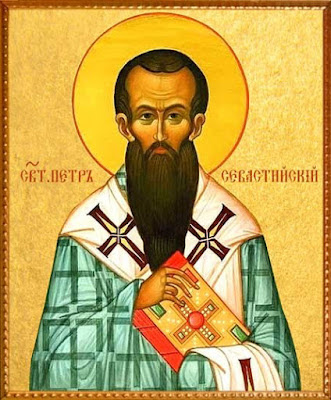

Basil was fortunate to have an existing cenobitic ‘domestic ascetic’ monastery on his family’s Pontus estate near Annisa (modern Uluköy, Turkey). This monastery was founded by his widowed mother, Emmelia, and his older sister, St. Macrina the Younger (c. 327 – 379), in the late 340’s and early 350’s. Together, mother and daughter had converted the Annisa estate into a domestic monastic settlement with several other ascetic virgin women and devoted themselves to pious lives of prayer and charitable works. Its asceticism was dedicated to the service of God, which was to be pursued through community life and obedience.
Returning to Annisa after touring the desert monasteries, by 358 Basil had gathered around him a group of like-minded male celibate ascetic disciples, including his youngest brother, St. Peter of Sebasteia (c. 340 – 391), who had been raised and trained by Macrina. This expanded the existing women’s monastery to include males, and later on orphans. Also in 358, Basil invited his school friend, St. Gregory of Nazianzus (c. 329 – 390) to join him in Annisa. When Gregory eventually arrived, they collaborated on Origen’s Philocalia, a collection of Origen’s works. This was the fulfillment of Basil’s monastic dream. Basil also wrote about monastic communal life. His writings became pivotal in developing monastic traditions of the Eastern Church. Basil’s experience during his monastic period at Annisa would later result in the monastic Rule of St. Basil (aka, Asketikon) which called for obligatory liturgical prayer and manual and mental work. It also enjoined or implied chastity and poverty. Basil’s rule was strict but not severe.
During this period of monastic retreat, Basil became increasingly concerned about the mounting problems in the church and society. He lamented the injustice of poverty, the oppressive “Christian” aristocracy, the church’s marriage to politics, and the spread of the Arian heresy. The institutional church had lapsed and disgruntled believers were continuing to withdraw to the desert. Both forms of Christianity needed restoration.
By the 360’s and 370’s, Basil considered the institutional Church as heading to “utter shipwreck… in addition to the open attack of the heretics, the Churches are reduced to utter helplessness by the war raging among those who are supposed to be orthodox.” (to the Italians and Gauls, Letter 92.3)
In 362, Bishop Meletius of Antioch ordained Basil as a Deacon. Bishop Eusebius then summoned Basil to Caesarea (Mazaca) and ordained him as presbyter (priest) of the Church there in 365. Basil described the situation of the collective institutional Christian church leadership in dire terms:
“The doctrines of true religion are overthrown. The laws of the Church are in confusion. The ambition of men, who have no fear of God, rushes into high posts, and exalted office is now publicly known as the prize of impiety. The result is, that the worse a man blasphemes, the fitter the people think him to be a bishop. Clerical dignity is a thing of the past. There is a complete lack of men shepherding the Lord’s flock with knowledge. Ambitious men are constantly throwing away the provision for the poor on their own enjoyment and the distribution of gifts. There is no precise knowledge of canons. There is complete immunity in sinning; for when men have been placed in office by the favor of men, they are obliged to return the favor by continually showing indulgence to offenders. Just judgment is a thing of the past; and everyone walks according to his heart’s desire. Vice knows no bounds; the people know no restraint. Men in authority are afraid to speak, for those who have reached power by human interest are the slaves of those to whom they owe their advancement.”
~ Basil, Letter 92.2
In 370, Bishop Eusebius died, and Basil was consecrated as Bishop in June 370. His new post as Bishop of Caesarea (Mazaca) also gave him the power of exarch of Pontus, and influence over all of Cappadocia.
The Church historian Rufinus of Aquileia in 397 AD explains Basil’s course of actions as Bishop:
“Basil went round the cities and countryside of Pontus and began by his words to rouse that province from its torpor and lack of concern for our hope for the future, kindling it by his preaching, and to banish the insensitivity resulting from long negligence; he compelled it to put away its concern for vain and worldly things and to give its attention to him. He taught people to assemble, to build monasteries, to take care of the poor and furnish them with proper housing and the necessities of life, to establish the way of life of virgins, and to make the life of modesty and chastity desirable to almost everyone.”
~ Rufinus, Church History, 11:9
Even though Basil was a prominent theologian and Bishop of Caesarea (Mazaca), he always remained committed to founding, developing, and strengthening Cappadocian monasteries. Basil corresponded with the satellite communities about various aspects of the Christian life. Basil’s book The Rule of St. Basil became the foundational text for Christian monasticism.
Through communal monasticism, Basil reformed Christianity at both the institutional and grassroots level. Monasticism had been pitted against the church, but Basil, ever the ecclesiastical statesman, incorporated the monastic movement into the church so they could benefit each other. As a powerful bishop over Cappadocia, Basil used his ecclesiastical authority to speak against the secularizing forces, refute the heresy of Arianism, appoint monk-bishops to leadership positions, publish theological treatises, and advocate for the poor among the elite.
At a grassroots level, Basil organized monastic communities of love-motivated disciples. These groups strengthened the church by providing true teaching, spiritual ministry, and capable leadership. Monks cared for lay people, both physically and spiritually. Monasticism expressed the true character of Christianity and thus restored confidence in the church. Monks would also purify the church by modeling faithful devotion to God. Their lives summoned the politicized church back to holiness and mission.
The following sections explain how Basil developed the cenobitic monastic communities to strategically address the social and ecclesiastical problems of his day.
1. Love in Community
Basil never developed a standardized rule for monasteries. In his view, love was the guiding rule for all the Christian life. The opening questions of Basil’s Asketika explain how the “utterly ineffable love of God” compels and guides the entire Christian life, including monastic communities. To fulfill the rule of love, each monastic community was free to develop in its own way. Byzantine monasteries constructed their own rules based on the monastic principles laid out in Basil’s books Moralia and Asketika.
Basil’s emphasis on love and community was a deliberate corrective to the lifestyle of the solitary (eremitic) monks. They practiced extreme forms of asceticism, such as competing to see who could most severely torment their body. Basil said asceticism without love was useless. This echoes the Apostle Paul’s teaching in 1 Corinthians 13:3, “If I deliver up my body to be burned, but have not love, I gain nothing.” In serving one another in a community of love, Basil encouraged the moderation of austere practices. Basil insisted that self-denial must be rooted in love and the power of the Holy Spirit. For Basil, the purpose of the monastic life was cultivating a true love for God and fellow humans.
Basil placed a strong emphasis on work as service. Monks were to work in groups for mutual edification, protection and to conduct prayer. Work was an expression of love. Monks assumed vows of poverty and shared property in common. This act resisted the allure and love of private property. Basil highlighted the loving purpose of mutual labor. In earlier models of asceticism, work was a way to overcome the lust of the flesh. But for Basil, work was an expression of love toward others.
2. Social Care
The monastic community not only served itself, but it was located near towns to serve as a public example and to help lay Christians. Social service was another overflow of the monastic life. Monks cared for the marginalized and poor. In 369 a severe famine caused mass starvation throughout Cappadocia. Strange weather patterns devastated crops and the rich stockpiled food. Basil explained, “The hungry are dying…The naked are stiff with cold. The man in debt is held by the throat.”
In response Basil constructed a large complex next to the original monastery at Annesi to care for the poor. So many people came to receive services that the growing region became known as “New Caesarea.” The Basilian complex was a source of great stability for the community. Both church and the State supported the work, and other monasteries followed suit by helping the poor. Almsgiving and generosity to the poor were defining aspects of monasticism.
3. Preaching and Teaching
Basil peppered monasteries throughout the populated areas of the Roman world to stop the spread of Arian heresy. Arianism taught that Jesus was not eternally God, but only “similar” to God. In the 360’s and 370’s when Basil was bishop, Arians controlled most episcopal leadership and enjoyed political support from the emperors in Constantinople. According to Basil, the champions of Arianism were waging war against Apostolic teaching, and were to be resisted. In Basil’s monasteries, monks studied the Nicene doctrines, learned rhetoric, and went into nearby towns to preach. Monasticism became a frontline defense against Arian heresy. As Christianity expanded into new areas, monks were ordained and sent out to evangelize.
4. Church Leadership
The leadership of the church had fallen into moral decline. Basil lamented there was “a complete immunity to sinning” among church bishops. As Arians gained political power, many Orthodox bishops were banished into exile and replaced by incompetent church leaders. In this perilous time, Basil developed the vision of the “bishop-monk.” The contemplative life at monasteries provided the biblical education and character development essential for church leadership. As a prominent bishop, Basil labored assiduously to recruit monks to serve as bishops. Their monastic training equipped them to shepherd local Christian communities. Monasteries trained and restored church leadership.
Summary
After Constantine’s political and religious reforms in the early 300’s (first bullet, above), the church quickly became diluted by political opportunists, neglected the needs of the marginalized, and fell into Arian heresy. Pious Christians grew disillusioned and retreated into isolated asceticism. In response to these crises, St. Basil of Caesarea formed monastic communities. These groups emphasized community, strived towards love, served the poor, refuted heresy, and trained leaders. These monastic communities that Basil shepherded became the antidote to the social and ecclesiastical problems that arose after Constantine. By the late 300’s, Theodosius I was confident enough in the church reforms and direction to declare Nicene Christianity as the sole State Religion of the Roman Empire (second bullet, above).
Evagrius Ponticus – Nous: “… like a sapphire or the color of heaven.”
Posted by Dallas Wolf in Contemplative Prayer (series), First Thoughts, Monasticism, Patristic Pearls, The Cappadocians, The Holy Trinity on April 10, 2023
Evagrius Ponticus (c. 346-399) – was originally from Pontus, on the southern coast of the Black Sea in what is modern-day Turkey. He served as a Lector under St. Basil the Great and was made Deacon and Archdeacon under St. Gregory of Nazianzus. He was also greatly influenced by Origen of Alexandria and St. Gregory of Nyssa. In about 383, Evagrius left Constantinople, eventually retreating to the Egyptian desert and joining a cenobitic community of Desert Fathers. As a classically trained scholar, Evagrius recorded the sayings of the desert monks and developed his own theological writings. The excerpt below is from Evagrius’ Skemmata (Reflections).

- If any would see the state of their nous, let them deprive themselves of all concepts (noemata): and then they will see themselves like a sapphire or the color of heaven (Exod. 24.10); but this cannot be accomplished without apatheia [dispassion] since it requires the cooperation of God who breathes into them the kindred light.
- Apatheia is the quiet state of the reasoning soul composed of gentle temperance.
- The state of the nous is the noetic [spiritual] height like the color of heaven, upon which the light of the holy Trinity comes at the time of prayer.
Skemmata, Gnostic Chapters 1-3
St. Gregory of Nazianzus: “The Holy Ghost, which proceeds from the Father;”
Posted by Dallas Wolf in Ekklesia and church, First Thoughts, Monasticism, Patristic Pearls, The Cappadocians, The Holy Trinity on April 8, 2023
St. Gregory of Nazianzus (c. 329 – 25 January 390), also known as Gregory the Theologian or Gregory Nazianzen, was a 4th-century Archbishop of Constantinople, theologian, and one of the Cappadocian Fathers (along with Basil the Great and Gregory of Nyssa). He is widely considered the most accomplished rhetorical stylist of the patristic age. Gregory made a significant impact on the shape of Trinitarian theology among both Greek and Latin-speaking theologians, and he is remembered as the “Trinitarian Theologian”.
“The Holy Ghost, which proceeds from the Father; Who, inasmuch as He proceeds from That Source, is no Creature; and inasmuch as He is not Begotten is no Son; and inasmuch as He is between the Unbegotten and the Begotten is God. And thus escaping the toils of your syllogisms, He has manifested himself as God, stronger than your divisions. What then is Procession? Do you tell me what is the Unbegottenness of the Father, and I will explain to you the physiology of the Generation of the Son and the Procession of the Spirit, and we shall both of us be frenzy-stricken for prying into the mystery of God. And who are we to do these things, we who cannot even see what lies at our feet, or number the sand of the sea, or the drops of rain, or the days of Eternity, much less enter into the Depths of God, and supply an account of that Nature which is so unspeakable and transcending all words?”
~ from: The Orations and Letters of Saint Gregory Nazianzus, Oration 31 (5th Theological Oration), VIII.
St. Basil the Great: “Homily About Ascesis – How a Monk Should be Adorned”
Posted by Dallas Wolf in Ekklesia and church, Monasticism, Patristic Pearls, The Cappadocians on April 8, 2023
St. Basil of Caesarea, also called Saint Basil the Great (330 – January 379), was a bishop of Caesarea Mazaca in Cappadocia (modern-day Turkey). He was an influential theologian who supported the Nicene Creed and opposed the heresies of the early Christian church. Together with Pachomius, he is remembered as a father of communal (coenobitic) monasticism in Eastern Christianity. Basil, together with his brother Gregory of Nyssa and his friend Gregory of Nazianzus, are collectively referred to as the Cappadocian Fathers.
“The monk, above all, must not possess anything in his life. He must have bodily isolation, proper clothing, a moderate tone of voice, and discipline speech; he must not cause a ruckus about the food and drink and he must eat in silence; he must be silent before his elders and be attentive to wiser men; he must love his peers and advise those junior in a loving way; he must move away from the immoral and the carnal and the sophisticated; he must think much and say less; he must not become impudent in his words, nor gossip and not be amenable to laughter; he must be adorned with shame, directing his gaze to the ground and his soul upward; he must not object with words of contention but rather be compliant; he must work with his hands and always keep in remembrance the end of this age; he must rejoice with hope, endure sadness, pray unceasingly and thank God for everything; he must be humble towards all and hate pride; he must be vigilant in keeping his heart pure of any evil thought; he must gather treasures in Heaven by keeping the commandments, examine himself for his thoughts and actions each day and not be involved in vain things of life and in idle talk; he must not examine inquisitively the life of idle people, but imitate the lives of the Holy Fathers; he must be happy with those who achieve virtue and not be envious; he must suffer with those suffering and weep with them and be sorry for them, but not criticise them; he must not reproach one who returns from his sin and never justify himself. Above all else he must confess before God and the men that he is a sinner and admonish the unruly, strengthen the faint-hearted, minister unto the sick and washed the feet of the saints; he must attend to hospitality and brotherly love, to be at peace with those who have the same faith and abhor the heretics; he must read the canonical books and not open even a single one of the occult; he must not talk about the Father and the Son and the Holy Spirit, but think and confess the uncreated and consubstantial Trinity with courage, and tell those who ask that there is the need of to be baptised, as we have received it from the tradition, to believe, as we have confessed it according to our baptism, and to glorify God, as we have believed.”
~ from: The Monastic Rule of St. Basil the Great
 First Thoughts