Archive for category Theology
The Apostle Paul: Radical, Conservative, or Reactionary?
Posted by Dallas Wolf in Ancient Christian Manuscripts, Ekklesia and church, First Thoughts, Theology, Women in Early Christianity on March 21, 2025
The Apostle Paul is a controversial figure. More than half of the New Testament is written by him, about him, or in his name. There is a general consensus among contemporary scholars that the Apostle Paul did not write all 13 New Testament letters attributed to him.
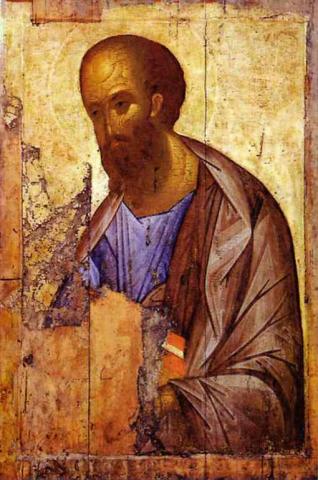
Modern scholarship attributes seven of Paul’s 13 canonical letters as unquestionably authentic:
- Romans,
- Galatians,
- I Corinthians,
- II Corinthians,
- I Thessalonians,
- Philippians, and
- Philemon
Three others are generally considered deutero or (pseudo) – Pauline and are Pauline in theology, with a couple of notable exceptions, but are different in style and much more mainline and conservative in tone than the undisputed letters. They were probably written in the generation after Paul’s death by people very familiar with his teaching. The deutero (or pseudo)-Pauline letters are:
- Colossians,
- Ephesians, and
- II Thessalonians
The last three, the “Pastoral Letters”, are largely considered pseudepigrapha (a bible scholar’s politically-correct term for “forgery”) and were probably written around the beginning of the 2nd century and exhibit patriarchal, sexist, and reactionary social attitudes one would expect of an entrenched Greco-Roman cultural institution (exactly what the early Church was becoming by that time).1,2 The pseudepigraphical letters are:
- I Timothy,
- II Timothy, and
- Titus
What follows are estimates of the percentages of biblical scholars who reject Paul’s authorship of the six books in question:
- 2 Thessalonians = 50 percent;
- Colossians = 60 percent;
- Ephesians = 70 percent;
- 2 Timothy = 80 percent;
- 1 Timothy and Titus = 90 percent.2
In addition to judgments about entire letters, scholars also question the authorship of certain passages in the undisputed letters. Post-Pauline texts are those alleged to have been inserted into a letter after its composition and are generally called scribal “interpolations”.
Among the passages that some scholars label as interpolations are:
- Romans 5:5-7, 13:1-7, 16:17-20, 16:25-27;
- 1 Corinthians 4:6b, 11:2-16, 14:33b-35 or 36;
- 2 Corinthians 6:14-7:1; and
- 1 Thessalonians 2:14-16.2,3
Given the above, one could argue that there are really three “Pauls” in the New Testament:
- The Radical Paul of the seven undisputed authentic letters
- The Conservative Paul of the three deutero-Pauline letters
- The Reactionary Paul of the three pseudepigraphical Pastoral Letters
___________________________________________________________
- The First Paul, Reclaiming the Radical Visionary Behind the Church’s Conservative Icon, By Marcus J. Borg and John Dominic Crossan , 2009 HarperCollins, NY, NY
- Apostle of the Crucified Lord, A Theological Introduction to Paul & His Letters, by Michael J. Gorman, 2004 Wm. B. Eerdmans, Grand Rapids, MI / Cambridge, UK
- The Authentic Letters of Paul, A New Reading of Paul’s Rhetoric and Meaning, by Arthur J. Dewey, Roy W. Hoover, Lane C. Mc Gaughy, and Daryl D. Schmidt, 2010 Polebridge Press, Salem, OR
St. Justin Martyr: Synthesizing Philosophy and Faith; the ‘Spermatikos Logos’
Posted by Dallas Wolf in Ekklesia and church, First Thoughts, Patristic Pearls, The Logos Doctrine (series), Theology on March 17, 2025
St. Justin Martyr (100 -166 A.D.), also known as Justin the Philosopher, was an early Christian philosopher and apologist (Defender of the Faith). He was a Samaritan, born in Flavia Neapolis, Palestine, located near Jacob’s well (cf., John 4). From an early age, he studied Stoic and Platonic philosophers. At the age of 32, he converted to Christianity in Asia Minor (modern-day Turkey), possibly in Ephesus. Around the age of 35, he became an iterant preacher, moving from city to city in the Roman Empire, in an effort to convert educated pagans to the faith. Eventually, he ended up in Rome and spent a considerable amount of time there, debating and defending the faith. Of all his writings, only three survive: First Apology, Second Apology, and Dialogue with Trypho. St. Justin Martyr was scourged and beheaded in Rome in AD 166, under the reign of Marcus Aurelius, along with six of his followers.

Unlike Tertullian (a 2nd century Roman Carthaginian Christian author), who was opposed to Greek philosophy and viewed it as a dangerous pagan influence on Christianity, Justin Martyr viewed Greek philosophy in a more positive and optimistic light. He believed that Christianity both corrected and perfected philosophy.
While Tertullian refused to build a bridge between faith and philosophy, Justin Martyr was, on the other hand, eager to build a bridge between the two – and the name of that bridge was Logos*.
Logos, a central concept in ancient Greek philosophy, represents the divine reason or rational principle that governs the universe. The concept of Logos predates philosophical Stoicism. However, the Stoics, beginning with Zeno of Citium in the 3rd century BC, developed it into a cornerstone of their philosophical system. This Greek term, often translated as “word,” “reason,” or “plan,” is fundamental to understanding Stoic philosophical cosmology and ethics. In Stoic thought, Logos is not just an abstract principle but an active, generative force that permeates all of reality. To the Stoics, Logos represented:
• Universal Reason: Logos as the rational structure of the cosmos
• Divine Providence: The idea that the universe is governed by a benevolent plan
• Natural Law: Logos as the source of moral and physical laws
• Human Rationality: The belief that human reason is a fragment of the universal Logos
After John the Gospel Writer declared Christ to be the Logos in the prologue to his Gospel (cf., John 1, “In the beginning was the Logos…”) in about AD 90, the idea of Christ as Logos reached full bloom in the second century A.D., thanks to Justin Martyr and other early like-minded Christian philosophers.
Justin embraced the term “Logos” because it was familiar to Christians and non-Christians alike. Justin, in discussing the Logos, uses the expression, ζωτικόν πνεύμα (zotikon pneuma), vital spirit, which imparted reason as well as life to the soul. Justin understood this ζωτικόν πνεύμα as the divine principle in man. For Justin, it is a participation in the very life of the Logos. Therefore, he calls it the σπερματικόσ λόγοσ (spermatikos logos), the ‘seed of the word’, or reason in man.
This was a powerful tool in the hands of apologists like Justin. For by “Christianizing” Greek philosophy and literature, and deeming it a forerunner to Christ, the Christian apologists could easily counter the claims of the pagans who maintained that the Greeks beat the Christians to the punch. After all, the pagans said, the truths that the Christians were proclaiming as new were being taught by Greek philosophers years (read: centuries) before.
Justin maintained that the whole of Logos resided in Christ, but that all people, regardless of time or religion, contained these “seeds” of logos. Justin states,
“We have been taught that Christ is the first-born of God, and we have declared above that He is the Word [Logos] of whom every race of men were partakers; and those who lived reasonably are Christians, even though they have been thought atheists; as, among the Greeks, Socrates and Heraclitus, and men like them;” (First Apology, Chapt. 46)
Justin declared that even the pre-Christian philosophers who thought, spoke, and acted rightly did so because of the presence of the spermatikos logos in their hearts. To Justin, there is only one Logos that sows the seeds of spiritual and moral illumination in the hearts of human beings. Justin applied the spermatikos logos to explain that Christ, as the Logos, was in the world before his Incarnation, from the beginning of time, sowing the seeds of the logos in the hearts of all people. In this way, Christ united faith and philosophy. To Justin, Christ is the ultimate source of all wisdom and knowledge, even among pagans. Justin writes:
“For each man spoke well in proportion to the share he had of the spermatic word [spermatikos logos], seeing what was related to it… Whatever things were rightly said among all men, are the property of us Christians… For all the writers were able to see realities darkly through the sowing of the implanted word that was in them.” (Second Apology, Chap. 13)
According to Justin, some virtuous pagans recognized the spermatikos logos within themselves and cultivated it to a large extent. These became the great thinkers such as Socrates, Plato, and Aristotle. Some, in the manner of Christ, like Socrates and Heraclitus, were even hated and persecuted for their beliefs and actions. Justin tells us the following:
“And those of the Stoic school — since, so far as their moral teaching went, they were admirable, as were also the poets in some particulars, on account of the seed of reason [the Logos] implanted in every race of men — were, we know, hated, and put to death — Heraclitus for instance, and, among those of our own time…others.” (Second Apology, Chap. 8)
People who came before the Incarnation of Jesus Christ all had the spermaticos logos, the “seed” of the Logos, implanted in them. Those Christians who came after the incarnation and resurrection of Jesus Christ had full access to all of Christ, the complete Logos. Those who came before saw through a glass darkly, but those who embrace Jesus Christ in the Christian era experience the fullness of revelation—faith and philosophy synthesized via Christ as Logos.
The Logos reveals all of God because He is God and we Christians had all the fullness of Logos because we had the revelation of Jesus Christ. The pagans did not have that. They had the spermatikos logos, but not the resurrected Christ.
Justin’s Logos was Jesus Christ himself portrayed against the backdrop of the Old Testament “Word of God” and Greek philosophy.
Contemporary Christians can easily agree with Justin Martyr that all people have within them the seeds of the Logos, the spermatikos logos. It is another way of saying that we all are created in the image of God and have an inherent knowledge of him and desire for Him.
Justin Martyr clearly represents an early, inclusive, universal Christianity encompassing all persons and religions; a time before the Church developed into an exclusive, parochial, competitive, religious institution.
Regardless of Tertullian’s fear that synthesizing faith with philosophy would “Hellenize” Christianity, Justin’s efforts ended up doing the precise opposite; faith ended up “Christianizing” Hellenism.
* “In Latin, such is the poverty of the language, there is no term at all equivalent to the Logos.” – John B. Heard. The same is true of English.
“Daily” Bread in the Lord’s Prayer? A Word Study
Posted by Dallas Wolf in First Thoughts, Patristic Pearls, Theology on January 9, 2025
Sources:
1. http://aramaicnt.org/articles/the-lords-prayer-in-galilean-aramaic/
2. Origen of Alexandria (c. 185 – c. 254): On Prayer (Περί Ευχής), Chapter XVII
The Lord’s Prayer is with little debate the most significant prayer in Christianity. Although many theological and ideological differences may divide Christians across the world, it is a prayer that unites the faith as a whole.
Within the New Testament tradition, the Prayer appears in two places. The first and more elaborate version is found in Matthew 6:9-13 where a simpler form is found in Luke 11:2-4, and the two of them share a significant amount of overlap.
The prayer’s absence from the Gospel of Mark, taken together with its presence in both Luke and Matthew, has brought some modern scholars to conclude that it is a tradition from the hypothetical “Q” source (from German: Quelle, meaning “source”) which both Luke and Matthew relied upon in many places throughout their individual writings. Given the similarities and unique character of the Matthaean and Lukan versions of the Lord’s Prayer may be evidence that what we attribute to the Greek of “Q” may ultimately trace back to an Aramaic source.
One of the trickiest problems of translating the Lord’s Prayer into Aramaic is finding out what επιούσιος (epiousios), usually translated as “daily”, originally intended. It is a unique word in Greek, only appearing twice in the all of Greek literature: Once in the Lord’s Prayer in Matthew, and the other time in the Lord’s Prayer in Luke.
This raises some curious questions that have baffled scholars. Why would Jesus have used a singular, entirely unique word? In more recent times, the bafflement has turned to a different possible solution. Jesus, someone known to have spoken Aramaic in a prayer that was originally recited in Aramaic, would not have used the Greek επιούσιος, at all. So, the question has evolved to “What Aramaic word was επιούσιος supposed to represent?” It would have to be something unique or difficult enough that whoever translated it into Greek needed to coin a word to express or preserve some meaning that they thought was important, or something that they couldn’t quite wrap the Greek language around.
The first question to answer is the meaning of the unique koine Greek word ἐπιούσιον (epiousion). To do this, we consult the writings of Origen of Alexandria. Origen was a third century native koine Greek speaker, head of the famed Catechetical School of Alexandria, the greatest theologian of the early church, and first to perform an exegesis of the Lord’s Prayer (ca. AD 240).
Origen begins: ”Let us now consider what the word epiousion, needful, means. First of all it should be known that the word epiousion is not found in any Greek writer whether in philosophy or in common usage, but seems to have been formed by the evangelists. At least Matthew and Luke, in having given it to the world, concur in using it in identical form.”
Origen concludes his in-depth discussion of epiousion, needful, by stating, “Needful, therefore, is the bread which corresponds most closely to our rational nature and is akin to our very essence, which invests the soul at once with well being and with strength, and, since the Word of God is immortal, imparts to its eater its own immortality.”
In Aramaic, the best fit for επιούσιος is probably the word çorak. It comes from the root çrk, which means to be poor, to need, or to be necessary. It is a very common word in Galilean Aramaic that is used in a number of senses to express both need and thresholds of necessity, such as “as much as is required” (without further prepositions) or with pronominal suffixes “all that [pron.] needs” (çorki = “All that I need”; çorkak = “All that you need”; etc.). Given this multi-faceted nature of the word, it’s hard to find a one-to-one Greek word that would do the job, and επιούσιος is a very snug fit in the context of the Prayer’s petition. This might even give us a hint that the Greek translator literally read into it a bit.
The Aramaic word yelip is another possible solution. It is interesting to note that it comes from the root yalap or “to learn.” Etymologically speaking, learning is a matter of repetition and routine, and this connection may play off the idea of regular physical bread, but actually mean “daily learning from God” (i.e. that which is necessary for living, as one cannot live off of bread alone).
Bottom line:
Origen’s understanding of epiousion in his context of needful certainly has no connection or relationship to a simplistic English translation of epiousion as “daily’. Nor is the translation of epiousion as “daily” supported by either hypothetical original Aramaic word çorkak or yelip.
In fact, a translation of epiousion as “daily” makes this petition in the Lord’s Prayer (Matt. 6:11) directly contradict Jesus’ lengthy admonition 14 verses later, starting at Matt 6:25:
25 “Therefore I say to you, do not worry about your life, what you will eat or what you will drink; nor about your body, what you will put on. Is not life more than food and the body more than clothing?
26 “Look at the birds of the air, for they neither sow nor reap nor gather into barns; yet your heavenly Father feeds them. Are you not of more value than they?
31 “Therefore do not worry, saying, ‘What shall we eat?’ or ‘What shall we drink?’ or ‘What shall we wear?’
32 “For after all these things the Gentiles seek. For your heavenly Father knows that you need all these things.
33 “But seek first the kingdom of God and His righteousness, and all these things shall be added to you.
The Gospel writers of Matthew and Luke both used the same totally unique Greek word solely in the context of the Lord’s Prayer. There were other frequently used koine Greek words available to express the simple idea of “daily”. Perhaps the unique use of epiousion was not accidental or coincidental, but needed to express the intent of the original Aramaic prayer. Origen may provide the best insight into the intended meaning of ἐπιούσιον as needful of the supra-essential Word of God.
Thomas Aquinas: “… all that I have written seems to me as so much straw”
Posted by Dallas Wolf in First Thoughts, Theology on December 10, 2024
Thomas Aquinas OP (c. 1225 – 7 March 1274) was an Italian Dominican friar and priest, the foremost Scholastic thinker, as well one of the most influential philosophers and theologians in the Western tradition. Thomas’s best-known work is the unfinished Summa Theologica, or Summa Theologiae (1265–1274). As a Doctor of the Church, Thomas Aquinas is considered one of the Roman Catholic Church’s greatest theologians and philosophers.
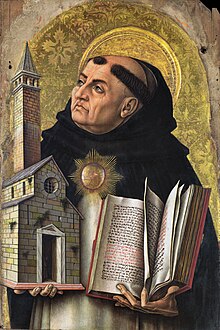
On December 6th, 1273, while Thomas Aquinas was celebrating Holy Communion during the Feast of Saint Nicholas, he received a revelation that so affected him he called his principal work, the Summa Theologica, nothing more than “straw” and left it unfinished.
Aquinas described his Divine Experience: “The most perfect union with God is the most perfect human happiness and the goal of the whole of the human life, a gift that must be given to us by God.”
When his friend and secretary tried to encourage Aquinas to write more, he replied:
“I can do no more. The end of my labors has come. Such things have been revealed to me that all that I have written seems to me as so much straw. Now I await the end of my life after that of my works.”
Aquinas would die just three short months later. The Great Doctor finally got it right, I think. Experience (theoria) trumps reason.
An Orthodox view on Heaven and Hell
Posted by Dallas Wolf in Heaven and Hell, Theology on November 2, 2024
From the The Orthodox Church in America (OCA)
The Kingdom of heaven is already in the midst of those who live the spiritual life. What the spiritual person knows in the Holy Spirit, in Christ and the Church, will come with power and glory for all men to behold at the end of the ages.
The final coming of Christ will be the judgment of all men. His very presence will be the judgment. Now men can live without the love of Christ in their lives. They can exist as if there were no God, no Christ, no Spirit, no Church, no spiritual life. At the end of the ages this will no longer be possible. All men will have to behold the Face of Him who “for us men and our salvation came down from heaven and was incarnate . . . who was crucified under Pontius Pilate, and suffered and was buried . . .” (Nicene Creed). All will have to look at Him whom they have crucified by their sins: Him “who was dead and is alive again” (Rev 1.17–18).
For those who love the Lord, His Presence will be infinite joy, paradise and eternal life. For those who hate the Lord, the same Presence will be infinite torture, hell and eternal death. The reality for both the saved and the damned will be exactly the same when Christ “comes in glory, and all angels with Him,” so that “God may be all in all” (1 Cor 15–28). Those who have God as their “all” within this life will finally have divine fulfillment and life. For those whose “all” is themselves and this world, the “all” of God will be their torture, their punishment and their death. And theirs will be “weeping and gnashing of teeth” (Mt 8.21, et al.).
The Son of Man will send His angels and they will gather out of His kingdom all causes of sin and all evil doers, and throw them into the furnace of fire; there men will weep and gnash their teeth. Then the righteous will shine like the sun in the Kingdom of their Father (Mt 13.41–43).
According to the saints, the “fire” that will consume sinners at the coming of the Kingdom of God is the same “fire” that will shine with splendor in the saints. It is the “fire” of God’s love; the “fire” of God Himself who is Love. “For our God is a consuming fire” (Heb 12.29) who “dwells in unapproachable light” (1 Tim 6.16). For those who love God and who love all creation in Him, the “consuming fire” of God will be radiant bliss and unspeakable delight. For those who do not love God, and who do not love at all, this same “consuming fire” will be the cause of their “weeping” and their “gnashing of teeth.”
Thus it is the Church’s spiritual teaching that God does not punish man by some material fire or physical torment. God simply reveals Himself in the risen Lord Jesus in such a glorious way that no man can fail to behold His glory. It is the presence of God’s splendid glory and love that is the scourge of those who reject its radiant power and light.
. . . those who find themselves in hell will be chastised by the scourge of love. How cruel and bitter this torment of love will be! For those who understand that they have sinned against love, undergo no greater suffering than those produced by the most fearful tortures. The sorrow which takes hold of the heart, which has sinned against love, is more piercing than any other pain. It is not right to say that the sinners in hell are deprived of the love of God . . . But love acts in two ways, as suffering of the reproved, and as joy in the blessed! (Saint Isaac of Syria, Mystic Treatises).
This teaching is found in many spiritual writers and saints: Saint Maximus the Confessor, the novelist Fyodor Dostoevsky. At the end of the ages God’s glorious love is revealed for all to behold in the face of Christ. Man’s eternal destiny—heaven or hell, salvation or damnation—depends solely on his response to this love.
Paradise and Hell
Posted by Dallas Wolf in First Thoughts, Heaven and Hell, Theology on October 8, 2024
The Beatitudes- Fresh Eyes on Ancient Language
Posted by Dallas Wolf in First Thoughts, New Nuggets, Theology on May 2, 2024
A new translation by David Bentley Hart
The Eight Beatitudes in the Gospel of Matthew (Chap. 5, verses 3-10)1
3 Μακάριοι οἱ πτωχοὶ τῷ πνεύματι, ὅτι αὐτῶν ἐστιν ἡ βασιλεία τῶν οὐρανῶν.
How blissful2 the destitute, abject3 in spirit, for theirs is the Kingdom of the heavens.
4 μακάριοι οἱ πενθοῦντες, ὅτι αὐτοὶ παρακληθήσονται.
How blissful those who mourn, for they shall be aided.
5 μακάριοι οἱ πραεῖς, ὅτι αὐτοὶ κληρονομήσουσι τὴν γῆν.
How blissful the gentle, for they shall inherit the earth.
6 μακάριοι οἱ πεινῶντες καὶ διψῶντες τὴν δικαιοσύνην, ὅτι αὐτοὶ χορτασθήσονται.
How blissful those who hunger and thirst for what is right, for they shall feast.
7 μακάριοι οἱ ἐλεήμονες, ὅτι αὐτοὶ ἐλεηθήσονται.
How blissful the merciful, for they shall receive mercy.
8 μακάριοι οἱ καθαροὶ τῇ καρδίᾳ, ὅτι αὐτοὶ τὸν θεὸν ὄψονται.
How blissful the pure in heart, for they shall see God.
9 μακάριοι οἱ εἰρηνοποιοί, ὅτι αὐτοὶ υἱοὶ θεοῦ κληθήσονται.
How blissful the peacemakers, for they shall be called sons of God.
10 μακάριοι οἱ δεδιωγμένοι ἕνεκεν δικαιοσύνης, ὅτι αὐτῶν ἐστιν ἡ βασιλεία τῶν οὐρανῶν.
How blissful those who have been persecuted for the sake of what is right, for theirs is the Kingdom of the heavens.
1 Translation by David Bentley Hart. The New Testament, 2nd Edition, Yale University Press, 2023.
2 μακάριος (makarios): “blessed”, “happy”, “fortunate”, “prosperous”, but originally with a connotation of divine or heavenly bliss.
3 A πτῶχος (ptōchos) is a poor man or beggar, but with the connotation of one who is abject: cowering or cringing.
St. Gregory of Nyssa: “Epektasis (ἐπέκτασις)- The soul’s eternal ‘straining toward’ God”.
Posted by Dallas Wolf in Ekklesia and church, First Thoughts, Monasticism, Patristic Pearls, The Cappadocians, Theology on April 20, 2023
“Brothers, I do not yet reckon myself to have seized hold, save of one thing: Both forgetting the things lying behind and also stretching out [ἐπεκτεινόμενος] to the things lying ahead,”
Philippians 3:13 from The New Testament- a translation by David Bentley Hart
_________________________________________________________________________
Background – A Brief Summary of Gregory of Nyssa’s Theology
In Gregory’s account of creation, the nature-energies distinction, developed to counter Eunomius, a defender of the 4th century Arian heresy, becomes extended into a general cosmological principle.
To Gregory, the essence of God is incomprehensible, transcendent, and cannot be defined by any set of human concepts. When speaking of God’s essence, or ousia, all that can be said is what that essence is not (Against Eunomius II, IV). In saying this, Gregory anticipates the via negativa (apophatic) theology of Pseudo-Dionysius (5th century) and much of subsequent Orthodox theological thought.

If God is simply some transcendent, unknowable entity, what possible relation to the world could God ever have? Gregory answers these questions by distinguishing between God’s “nature” (phusis) and God’s “energies” (energeiai). God’s energies are the projection of the divine nature into the world; initially creating it and ultimately guiding it to its appointed destination (Beatitudes VI). The idea of God’s energies in Gregory’s theology emphasizes God’s actual presence in those parts of creation which are perfected just because of that presence. Whereas God’s nature is totally transcendent and unknowable, God’s energies are immanent and knowable to mankind. With this revelation, Gregory anticipates the more famous substance-energies distinction of the 14th century Byzantine theologian Gregory Palamas.
Gregory’s view of human nature is dominated by his belief that humans were created in the image of God. This means that because God’s transcendent nature projects energies out into the world, we would expect the same structural relationship to exist in human beings between their minds and their bodies. In fact, that is precisely what Gregory argues concerning the human nous (a word that was traditionally translated as “mind”, but by the 4th century included the Christian idea of its nature also extending beyond and separate from the physical world).
The most important characteristic of the nature of the nous is that it provides for a unity of consciousness; where the myriad perceptions from various sense organs are all coordinated with each other. Using the metaphor of a city in which family members come in by various gates but all meet somewhere inside, Gregory’s assertion is that this can occur only if we presuppose a transcendent self to which all of one’s experiences are referred (Making of Man 10). But Gregory maintains that this unity of consciousness is entirely mysterious, much like the mysterious nature of the Godhead (Making of Man 11).
Yet the nous is also extended by its energies throughout the body, which includes our ordinary sensory and psychological experiences as well as our discursive, rational mind (dianoia) (Making of Man 15; Soul and Resurrection).
There are two further important characteristics of the human nous according to Gregory. First, because the human nous is created in the image of God, it possesses a certain “dignity of royalty” (to tes basileias axioma) that is lacking in the rest of creation. Second, the nous is free. Gregory derives the freedom of the nous from the freedom of God. For God, being dependent on nothing, governs the universe through the free exercise of will; and the nous is created in God’s image (Making of Man 4).
Epektasis – the eternal ‘stretching and straining’ of the soul toward God
This concept of epektasis features heavily throughout the writings of Gregory of Nyssa (most especially in his Life of Moses and Homilies on the Song of Songs). His work leans toward an ascetic, mystical approach to the faith. Gregory believed that man’s ultimate purpose was to grow in participation in the divine. Since God is transcendent and infinite and man is created and finite, he reasoned that man could never reach a point where he fully participated in God; hence the need for the concept of epektasis. Gregory rejected the more typical view that happiness and perfection are found in attaining a concrete spiritual goal. Rather, he suggested, since humanity is incapable of reaching the actual transcendent perfection of God, purpose and meaning are found in progress toward that relationship standard. Gregory’s views on spiritualty had an early and lasting impact on the Eastern Orthodox interpretation of theosis.
Epektasis is derived from a Greek word found in verses such as Philippians 3:13, where it is translated as “stretching out.” Epectasis, like askesis, is a term from athletics. It implies something that is becoming, developing, being strived for. It has alternately been understood as “evolving” or “growing.” As it pertains to Christian theology, epektasis implies that true joy in Christian living is found in the process of spiritual growth and development. That is, it is the internal change we experience that produces a sense of happiness, not the achievement of any particular goal. Specifically, epektasis emphasizes the need for continual “spiritual transformation” and suggests this process will continue forever in eternity. For Gregory, it is the journey that is important.
As Gregory puts it, “Deity is in everything, penetrating it, embracing it, and seated in it” (Great Catechism 25). So, we directly experience the divine energies in the only thing in the universe that we can view from within – ourselves. God’s energies are always a force for good. Thus, we encounter them in the experience of virtues such as purity, passionlessness (apatheia), sanctity, and simplicity in our own moral character. “if . . . these things be in you,” Gregory concludes, “God is indeed in you” (Beatitudes VI).
Gregory tells us epektasis also imposes certain obligations on us in relation to both others and ourselves. To others we owe mercy (Beatitudes V) and the Christian virtue of agape (Beatitudes VII). To ourselves we owe the effort to overcome (through askesis; athletic training) the deficiencies and shortcomings in our likeness to God; for we are unable to contemplate God directly, and morally our free will has been compromised by the passions (pathe). Thus, with respect to ourselves we must continuously stretch out our souls (epektasis; like a straining athlete), toward intellectual and moral perfection (Beatitudes III).
_________________________________________________________________________________
“Whereby he has given us his precious and majestic promises, so that through these you may become communicants in the divine nature, having escaped from the decay that is in the cosmos on account of desire.”
2 Peter 1:4 from The New Testament- a translation by David Bentley Hart
___________________________________________
Text references (by Gregory of Nyssa):
Against Eunomius
Homilies on the Beatitudes
On the Making of Man
On the Soul and the Resurrection
The Life of Moses
Homilies on the Song of Songs
The Great Catechism
St. Basil the Great: “On the Holy Spirit”
Posted by Dallas Wolf in Ekklesia and church, First Thoughts, Monasticism, Patristic Pearls, The Cappadocians, The Holy Trinity, Theology on April 6, 2023
St. Basil of Caesarea, also called Saint Basil the Great (330 – January 379), was a bishop of Caesarea Mazaca in Cappadocia (modern-day Turkey). He was an influential theologian who supported the Nicene Creed and opposed the heresies of the early Christian church. Together with Pachomius, he is remembered as a father of communal (coenobitic) monasticism in Eastern Christianity. Basil, together with his brother Gregory of Nyssa and his friend Gregory of Nazianzus, are collectively referred to as the Cappadocian Fathers.

“Just as when a sunbeam falls on bright and transparent bodies, they themselves become brilliant too, and shed forth a fresh brightness from themselves, so souls wherein the Spirit dwells, illuminated by the Spirit, themselves become spiritual, and send forth their grace to others. Hence comes foreknowledge of the future, understanding of mysteries, apprehension of what is hidden, distribution of good gifts, the heavenly citizenship, a place in the chorus of angels, joy without end, abiding in God, the being made like to God, and, highest of all, the being made God. Such, then, to instance a few out of many, are the conceptions concerning the Holy Spirit, which we have been taught to hold concerning His greatness, His dignity, and His operations, by the oracles of the Spirit themselves.”
~ from: On the Holy Spirit (De Spiritu Sancto), Chap. 9
St. Gregory of Nazianzus: “… the confession of the Father and the Son and the Holy Ghost.”
Posted by Dallas Wolf in Ekklesia and church, First Thoughts, Patristic Pearls, The Cappadocians, The Holy Trinity, Theology on April 6, 2023
St. Gregory of Nazianzus (c. 329 – 25 January 390), also known as Gregory the Theologian or Gregory Nazianzen, was a 4th-century Archbishop of Constantinople, theologian, and one of the Cappadocian Fathers (along with Basil the Great and Gregory of Nyssa). He is widely considered the most accomplished rhetorical stylist of the patristic age. Gregory made a significant impact on the shape of Trinitarian theology among both Greek and Latin-speaking theologians, and he is remembered as the “Trinitarian Theologian”.

“Besides all this and before all, keep I pray you the good deposit, by which I live and work, and which I desire to have as the companion of my departure; with which I endure all that is so distressful, and despise all delights; the confession of the Father and the Son and the Holy Ghost. This I commit unto you today; with this I will baptize you and make you grow. This I give you to share, and to defend all your life, the One Godhead and Power, found in the Three in Unity, and comprising the Three separately, not unequal, in substances or natures, neither increased nor diminished by superiorities or inferiorities; in every respect equal, in every respect the same; just as the beauty and the greatness of the heavens is one; the infinite conjunction of Three Infinite Ones, Each God when considered in Himself; as the Father so the Son, as the Son so the Holy Ghost; the Three One God when contemplated together; Each God because Consubstantial; One God because of the Monarchia. No sooner do I conceive of the One than I am illumined by the Splendour of the Three; no sooner do I distinguish Them than I am carried back to the One. When I think of any One of the Three I think of Him as the Whole, and my eyes are filled, and the greater part of what I am thinking of escapes me. I cannot grasp the greatness of That One so as to attribute a greater greatness to the Rest. When I contemplate the Three together, I see but one torch, and cannot divide or measure out the Undivided Light.”
~ from The Orations and Letters of Saint Gregory Nazianzus . Oration 40, XLI.
 First Thoughts