Archive for category Theology
hilastérion (ἱλαστήριον): Propitiation or Expiation?
Posted by Dallas Wolf in First Thoughts, Theology on August 5, 2016
The Greek word ἱλαστήριον, transliterated as hilastérion (hil-as-tay’-ree-on) is translated into English as both “propitiation” and “expiation”. Hilastérion and it variants are found in the New Testament rarely, but there are three citings that are particularly important to the topic of atonement: Rom 3:25; 1 Jn 2:2; 4:10:
(1) Rom 3:25: “…whom God displayed publicly as a/an _____________ in His blood through faith. This was to demonstrate His righteousness, because in the forbearance of God He passed over the sins previously committed”
(2) 1 John 2:2: “…and He Himself is the ______________ for our sins; and not for ours only, but also for those of the whole world.
(3) 1 Jn 4:10: “This is love: not that we loved God, but that he loved us and sent his Son as an ______________ for our sins.
So what’s the difference between “propitiation” or “expiation”, the English translations of the Greek word hilastérion? A short passage from “Reconciliation,” in Colin Brown, ed., New International Dictionary of New Testament Theology, Vol. III, p. 151 (hereafter referred to as DNTT) summarizes:
“In discussing reconciliation and atonement it has become customary to draw a distinction between propitiation and expiation. In propitiation the action is directed towards God, or some other offended person. The underlying purpose is to change God’s attitude from one of wrath to one of good will and favor. In the case of expiation, on the other hand, the action is directed towards that which has caused the breakdown in the relationship… In short, propitiation is directed towards the offended person, whereas expiation is concerned with nullifying the offensive act” (DNTT, Vol. III, p. 151).
Given the above, “propitiate,” would indicate that God is changed; whereas “expiate” would indicate that the repentant sinner is changed. But, this raises another serious theological question: Does God change? On this question, we will take the traditional classical Christian position that “God does not change”.
Having introduced the question of change, we can now return to the original question at hand: In the New Testament, is the meaning of hilastérion more closely approximated by “propitiation” or “expiation”?
Summarizing the first 1,000 years of Christian patristic theology, Orthodox theologian and Bishop Kallistos Ware insists that Christ did not become incarnate to heal God the Father: He became incarnate to heal us. According to the Orthodox, the cross, resurrection, and ascension of Christ represent the “mercy seat” (Gk. hilastérion/ Heb. kippur) upon which our sins are “wiped away”/”expiated” by God, restoring us to His covenant love. This “expiation”, or removal of sin as an obstacle between man and God, transforms repentant sinners into His divine likeness and nature (2 Cor 3:18; 2 Pet 1:4 etc.). So, it is we who change rather than God. Orthodoxy emphatically supports the divine attribute of constancy of God (Mal 3:6; Jas 1:17).
If we concede the classical Christian position that God never changes and remains ever constant, then we must conclude that divine “propitiation” – a change in attitude from one of wrath to one of good will and favor- cannot be attributed to God; for He is, by definition, changeless. God cannot have been “propitiated” ontologically by having “a change of attitude” unless God Himself changed ontologically.
There is one final point to be made from the perspective of New Testament exegesis. In the case of “expiation”, “the action is directed towards that which has caused the breakdown in the relationship… In short, “propitiation” is directed towards the offended person, whereas “expiation” is concerned with nullifying the offensive act” (DNTT III, 173).
So, to what do the three New Testament passages using hilastérion and variants, cited above, refer to? Do they refer to God (as in God’s wrath being “propitiated”) or to the sins of man being wiped away and removed as an obstacle to union with God (“expiation”)? Clearly, in all three of the passages in question, hilastérion is used directly in reference to humankind’s sins as an obstacle to our union with God. They do not refer to God as an object of “propitiation”. This is not a “propitiation” for the Father,” but rather “expiation” “for our sins.”
In referring to the patristic theology of the first Christian millennium we should emphasize this is not an exclusively patristic or Orthodox view. Some leading academic scholars and some major Protestant scholars have held hilastérion is best understood as “expiation” – a change in man, wiping away his sin; rather than “propitiation” – a change of God, changing His disposition from anger to affection. God is constant and changeless. God is the same yesterday, today, and forever. It is humankind who must be transfigured by the changeless grace and mercy of God.
The Latin Western tradition, by contrast, has insisted since the Middle Ages on defining hilastérion in the sense of “propitiation”, including the traditional Calvinist interpretation. Historically the emphasis upon a change in God’s attitude rather than man’s condition arose from St. Augustine in the 5th century, but reached its zenith in the 11th century with Anselm of Canterbury. According to Anselm, man had broken honor with his liege Lord (God). And because his honor was slighted, “satisfaction” had to be made; in this case, by the death of his own son, (Jesus Christ).
The Eastern Orthodox Christian tradition bypassed this particular Western interpretation entirely. They never adopted a soteriology of merit/satisfaction (ala Anselm). To the Orthodox, the atonement is purely grace/gifting from God rather than a merit/earning system imposed on humankind.
Met. Kallistos: “The ‘Heart’ in Christian Contemplative Prayer”
Posted by Dallas Wolf in Hesychasm - Jesus Prayer, New Nuggets, Theology on August 5, 2016
The following is an excerpt from Metropolitan Kallistos Ware (b. 1934) in his Introduction to On the Prayer of Jesus , by Ignatius Brianchaninov, Kallistos Ware, Father Lazarus.
 “Ignatius [Brianchaninov] distinguishes three main stages or levels on this journey inwards, which he describes as “oral”, “mental”, and “cordial”; that is to say, prayer of the lips, prayer of the mind, and prayer of the heart”.
“The third degree of prayer is attained when not only does the mind or intellect [nous] recite the Jesus Prayer with full attentiveness, but it also descends into the heart and is united with it. In this way our invocation [of Lord, Jesus, Christ, Son of God] becomes prayer of the heart, or more exactly prayer of the mind in the heart. When the hesychast tradition speaks of the “heart” in this context, the word is to be understood in its full Hebraic sense, as found in Scripture: it signifies, not merely the emotions and affections, but the moral and spiritual center of the total person, the ground and focal point of our created being, the deep self. Prayer of the heart, then, is no longer prayer of the faculty alone, but prayer of the entire person, spirit, soul, and body together. It is precisely at this stage that prayer becomes not just something that we do but something that we are – something, moreover, that we are not just from time to time but continually. In this way St. Paul’s injunction becomes a realized fact: “Pray without ceasing” (1 Thess. 5:17). Nor is this all. Since the heart is not only the center of our created personhood but also the place where Christ and the Holy Spirit dwell within us, prayer of the heart is not so much something that we do as something that God does; not so much my prayer as the prayer of Christ in me (Gal. 2:20).”
Image and Likeness of God in Genesis 1:26
Posted by Dallas Wolf in First Thoughts, Theology on August 4, 2016
Genesis 1:26: Then God said, “Let us make humankind in our image, according to our likeness; and let them have dominion over the fish of the sea, and over the birds of the air, and over the cattle, and over all the wild animals of the earth, and over every creeping thing that creeps upon the earth.”
Every human being is created in the image of God and it is the purpose of each of us to attain to His likeness, that we may be “partakers of the divine nature” (cf. 2 Peter 1:4).
Bishop Kallistos (Ware), in his classic book “The Orthodox Church”, tells us, “According to most of the Greek Fathers, the terms image and likeness do not mean exactly the same thing. ‘The expression according to the image,’ wrote John of Damascus, ‘indicates rationality and freedom, while the expression according to the likeness indicates assimilation to God through virtue’ (On the Orthodox Faith, 2, 12 (P.G. 94, 920B)). The image, or to use the Greek term the icon, of God signifies man’s free will, his reason, his sense of moral responsibility — everything, in short, which marks man out from the animal creation and makes him a person. But the image means more than that. It means that we are God’s ‘offspring’ (Acts 27:28), His kin; it means that between us and Him there is a point of contact, an essential similarity. The gulf between creature and Creator is not impassable, for because we are in God’s image we can know God and have communion with Him. And if a man makes proper use of this faculty for communion with God, then he will become ‘like’ God, he will acquire the divine likeness; in the words of John Damascene, he will be ‘assimilated to God through virtue.’”
This “optimistic anthropology” of the Eastern Orthodox with its “original blessing” in the creation of Adam and, by extension, of all humankind, differs markedly from the “pessimistic anthropology” of the Western church with its emphasis on “Original Sin” and its logical extensions. Bishop Kallistos observes, “This picture of Adam before the fall is somewhat different from that presented by Saint Augustine and generally accepted in the west since his time.”
It is not surprising, then, that many Western theologians consider the Hebrew words for image (tselem) and likeness (demuth) to be synonyms; and their use in Gen. 1:26 to be a simple example of Hebrew synonymous parallelism. Eastern Orthodox theologians disagree, citing a distinction in meaning between tselem and demuth.
To the Orthodox, the words, “image and likeness” are used to indicate two different aspects of the “image” of God.
- Image is the Hebrew word tselem, צֶ֫לֶם, and always indicates a “physical” or structural image of some kind.
- Likeness is the Hebrew word demuth, דְּמוּת, and usually refers to some kind of “functional” image, likeness or expression.
There seems to be a clear distinction between the two words tselem and demuth as used in the Hebrew Bible.
- tselem indicates a “physical” image or structure and would refer to the “structural” image of the Godhead
- demuth indicates a “functional” likeness, similitude – the idea of “acts like.”
What do the Greek translations of tselem and demuth in the Septuagint (LXX) translation of the Hebrew Bible (ca. 300 BC) tell us about image and likeness in the light of the use of these Greek words later in the New Testament?
In the Septuagint, at Genesis 1:26, the LXX translates tselem as εἰκόνα, eikona
In the 23 New Testament occurrences of eikōna and its derivatives, it appears that there is no clear distinction in what eikōna references regarding the two aspects of God’s image.
At Gen. 1:26, the LXX translates demuth as ὁμοίωσιν, homoiōsin.
Used one time in the New Testament at James 3:9, “men, who have been made in the likeness (homoiōsin) of God.” Indicates the present status of mankind. They were created originally and all men are presently “in” the image of God.
Since homoiōsis is only used one time, we should probably interpret James as focusing on the fact that men have all been created in the “functional” image of God, that is with the purpose of bringing glory to Him.
dikaiosúne (δικαιοσύνη): Human and Divine Justice and Righteousness
Posted by Dallas Wolf in First Thoughts, Theology on August 4, 2016
The English words “justice” and “righteousness” are translations of a single Greek word, δικαιοσύνη, transliterated as dikaiosúne (dik-ah-yos-oo’-nay). I always thought this strange, as the concept of legal justice and righteousness seemed so different to me than the idea of spiritual justice and righteousness. Well, guess what? They are!
It appears that the word dikaiosúne can convey both a sense of forensic human justice/righteousness (as a legal declaration) and divine justice/righteousness, depending on context.
The basis for understanding justice/righteousness from a legal, forensic standpoint rests on the concept of justice as understood in the pagan Greek culture of the time – dikaiosis. The ancient, pagan Greeks, Thucydides for one, adhered to a juridical understanding of this concept as punishment.
So, the translation of the Greek word dikaiosúne, as a word of the pagan, humanistic, Greek civilization, carried with it human notions of equal distribution. This is why Justice is represented by a balance scale. The good are rewarded and the bad are punished by human society in a fair way. But, this is human justice.
Does this human concept of justice/righteousness correlate to the divine justice/righteousness that God revealed to us in Holy Scripture? Do they have the same meaning in the Old and New Testaments?
Let’s look at the question from the context of both the Hebrew Bible and the New Testament.
Dr. Alexandre Kalomiros, in The River of Fire, proposes that the traditional Eastern Christian and patristic view of justification is more compatible with the nature of the Christian God in both the Old and New Testaments. He explains:
“The word dikaiosúne, ‘justice,’ is a translation [in the Greek Septuagint (LXX) translation of the Hebrew Bible, ca. 300 BC] of the Hebraic word tsedaka. This Hebrew word means ‘the divine energy which accomplishes man’s salvation.’ It is often translated as ‘charity’. It is parallel and almost synonymous to the other Hebraic word, hesed, which means ‘mercy,’ ‘compassion,’ ‘love,’ and to the word emeth which means ‘fidelity,’ ‘truth.’ This gives a completely different dimension to what we usually conceive as justice. This is how the [early] Church understood God’s justice. This is what the Fathers of the Church taught of it – God is not just, with the human meaning of this word, but we see that His justice means His goodness and love, which are given in an unjust manner, that is, God always gives without taking anything in return, and He gives to persons like us who are not worthy of receiving. “How can you call God just”, writes Saint Isaac the Syrian [7th century Bishop and Theologian], “when you read the passage on the wage given to the workers? ‘Friend, I do thee no wrong; I will give unto this last even as unto thee who worked for me from the first hour. Is thine eye evil, because I am good?'” “How can a man call God just”, continues Saint Isaac, “when he comes across the passage on the prodigal son, who wasted his wealth in riotous living, and yet only for the contrition which he showed, the father ran and fell upon his neck, and gave him authority over all his wealth? None other but His very Son said these things concerning Him lest we doubt it, and thus He bare witness concerning Him. Where, then, is God’s justice, for “whilst we were sinners, Christ died for us!”
The approach employed by many Western Roman Catholic/Protestant scholars (inherited from the likes of Augustine, Anselm, Aquinas, and Calvin) uses the human interpretation of dikaiosúne as justice in a form resembling Imperial Roman juridical “Iustitia”, or Roman Law. This is at odds with Eastern Christian interpretation of dikaiosúne as the divine justice of Old Testament tsedaka and as God’s justice exemplified in the New Testament parables of the Workers in the Vineyard and the Prodigal Son. The traditional Orthodox mind is immediately suspicious of biblical interpretations that have little or no root in the early life and theology of the Church; this is true in spades particularly of the Western Latin forensic notion of justice/righteousness, and of its consequent bifurcation of faith and works.
Rohr: “First-hand Experience”
Posted by Dallas Wolf in Hesychasm - Jesus Prayer, New Nuggets, Theology on March 1, 2016

“. . . All knowledge of God is first-hand experience.”
~ Fr. Richard Rohr, OFM, from his homily 28 Feb 2016
St. Nikolai Velimirovich: “Our religion is founded on spiritual experience…”
Posted by Dallas Wolf in Hesychasm - Jesus Prayer, New Nuggets, Theology on March 1, 2016
Saint Nikolai Velimirovich (1881-1956) – was a bishop in the Serbian Orthodox Church, an influential theological writer and a highly gifted orator.
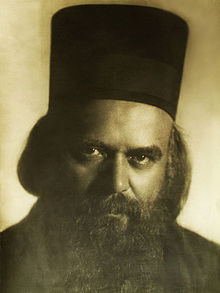
“Our religion is founded on spiritual experience, seen and heard as surely as any physical fact in this world. Not theory, not philosophy, not human emotions, but experience.”
~ St. Nikolai Velimirovic
Yanarras: “Repentance has nothing to do with self-regarding sorrow for legal transgressions.”
Posted by Dallas Wolf in Hesychasm - Jesus Prayer, New Nuggets, Theology on January 30, 2016
Christos Yannaras (1935 – ) was Professor of Philosophy at Pantion University of Social and Political Sciences, Athens. His books include Freedom of Morality and Person and Eros.
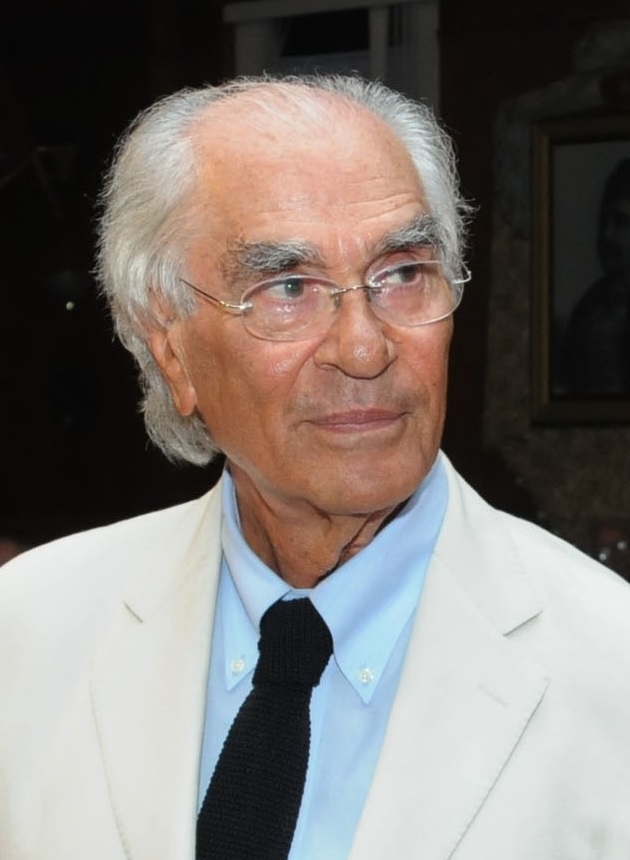
“To share out your soul freely, that is what metanoia (a change of mind, or repentance) really refers to: a mental product of love. A change of mind, or love for the undemonstrable. And you throw off every conceptual cloak of self-defense, you give up the fleshly resistance of your ego. Repentance has nothing to do with self-regarding sorrow for legal transgressions. It is an ecstatic erotic self-emptying. A change of mind about the mode of thinking and being.”
― Christos Yanarras, from “Variations on the Song of Songs”
Met. Hierotheos (Vlachos): The distinction between the “Person” and the “Individual”
Posted by Dallas Wolf in New Nuggets, Theology on December 30, 2015
Metropolitan Hierotheos (Vlachos) – (1945- ) is a Greek Orthodox metropolitan and theologian. He graduated from the Theological School of the University of Thessaloniki and is one of the finest Patristic scholars living.

“…today a distinction is made between the person and the individual. The term ‘person’ is used to mean the man who has freedom and love and is clearly distinguished from the mass, and the term ‘individual’ characterizes the man who remains a biological being and spends his whole life and activities on his material and biological needs, without having any other pursuit in his life.” ~ from “The person in the Orthodox Tradition”, p. 79
St. Gregory of Nyssa: “Making an idol of God”
Posted by Dallas Wolf in Hesychasm - Jesus Prayer, Patristic Pearls, Theology on December 25, 2015
St. Gregory of Nyssa (c. AD 335 – 395) – Along with his older brother, Basil of Caesarea, and friend, Gregory of Nazianzus, Nyssen was one the three great Cappadocian Fathers of the 4th century.
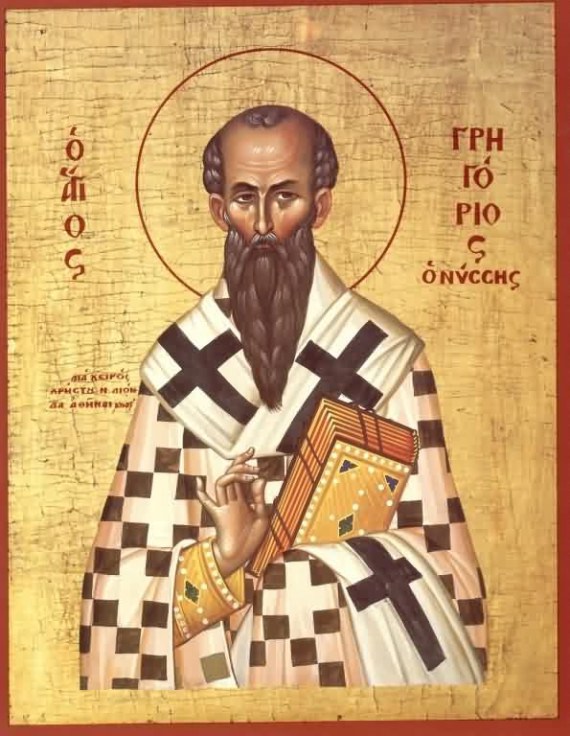
“…every concept formed by our understanding which attempts to attain and to hem in the divine nature serves only to make an idol of God, not to make God known”.
~ from: “The Life of Moses“.
Archimandrite George: “… a mystical union of God and man in the Holy Spirit”
Posted by Dallas Wolf in Hesychasm - Jesus Prayer, New Nuggets, Theology on August 22, 2015

“A Christian is not a Christian simply because he is able to talk about God. He is a Christian because he is able to have experience of God. And just as, when you really love someone and converse with him, you feel his presence, and you enjoy his presence, so it happens in man’s communion with God: there exists not a simply external relationship, but a mystical union of God and man in the Holy Spirit.” ~ Archimandrite George (Kapsanis), Abbott of the Holy Monastery of St. Gregorios on Mount Athos
 First Thoughts