Posts Tagged christian mysticism
Rohr: “Thou Art That”
Posted by Dallas Wolf in Ekklesia and church, New Nuggets on August 2, 2014

Fr. Richard Rohr, Franciscan Christian mystic and contemplative.
“Theologically it is not correct for Christians to simply call Jesus “God” or to simply call him ” a man”. He is manifesting a third something, not God, not human, but the combination of the two! And his existence says to all of us: THOU ART THAT! YOU also manifest the same eternal mystery, each in your own way! “Follow me!” We did ourselves and Jesus no favor by simply calling him “God”. We missed the very point that could have and could still transform the world. We made the Christ Mystery into a competitive religion instead of an icon of transformation for everybody. We made Jesus into an “exclusive” incarnation instead of an inclusive Savior. He came to take us along with him, not to just say “look at me”. The paradox was so big, so central, and so stunning that our ordinary dualistic minds could not comprehend it. Only the “non dual” saints and mystics could process it and experience it. But now YOU can too: Thou Art That!” ~ Fr. Richard Rohr, OFM
Atonement Theory 4
Posted by Dallas Wolf in Atonement Theory (series) on July 10, 2014
“The Penal Substitution Theory sees Christ’s suffering and death as the price for man’s sin.”
The Penal Substitution Theory sees Christ’s suffering and death as the price for man’s sin. In many ways, the model for Penal Substitutionary Atonement is a courtroom. Due to his sin, man needed to be made right with a perfect and just God. Therefore, Christ came to suffer and pay the price in our place, i.e., He substituted Himself for us. Now, in the courtroom of God, those who accept Christ as their Lord and Savior are judged innocent. They have a forensic righteousness imputed upon them.
Clearly, Eastern Orthodoxy and Western Latin Christianity have significantly different theories of atonement as part of their respective soteriologies (doctrines of salvation). The contemporary Orthodox Recapitulation Theory agrees with Western Satisfaction and Penal Substitution theories in so far as God needed to deal with man’s sin. Man was separated from God as a result of the fall and, left to his own devices, was incapable of returning to God. However, the Orthodox see God’s model of dealing with man’s sin as a hospital rather than a courtroom. This stands in sharp contrast to the forensic, legalistic models of Roman Catholic Satisfaction and Protestant Penal Substitution.
Instead of viewing the atonement as Christ paying the price for sin in order to satisfy a wrathful God, Recapitulation teaches that Christ became human to heal mankind by perfectly uniting the human nature to the Divine Nature in His person. Through the Incarnation, Christ took on human nature, becoming the Second Adam, and entered into every stage of humanity, from infancy to adulthood, uniting it to God. He then suffered death to enter Hades and destroy it. After three days, He resurrected and completed His task by destroying death.
By entering each of these stages and remaining perfectly obedient to the Father, Christ recapitulated every aspect of human nature. He said “Yes” where Adam said “No” and healed what Adam’s actions had damaged. This enables all of those who are willing to say yes to God to be perfectly united with the Holy Trinity through Christ’s person, the Logos, the Son. In addition, by destroying death, Christ reversed the consequence of the fall. Now, all can be resurrected. Those who choose to live their life in Christ can be perfectly united to the Holy Trinity, receiving the full love of God’s grace. However, those who reject Christ and choose to live their lives chasing after their passions will perceive the love of God as torment, as hell.
The Concept of “Person” 1
Posted by Dallas Wolf in Concept of "Person" (series) on July 9, 2014
“… “individual” and “person” do not mean the same thing…”
Contemporary Western culture, especially American culture, idolizes and idealizes the “individual”. In my generation, we admired the “rugged individual”; the “John Wayne” or “Clint Eastwood” image of toughness, self-sufficiency, and self-reliance. Unfortunate side-effects of our society’s fixation with “individualism” have also led us to become alarmingly self-centered, self-indulgent and narcissistic, with a growing sense of entitlement. It is the ethic of the “me” generation; it’s all about “me”, self-fulfillment, “do your own thing”, you can have it all, you deserve it all. Secular science, the economy, and politics all support and pander to the “cult of the individual” because they have no inherent moral compass of their own and, in order to survive themselves, they can only focus on what “pop culture” will support and pay for.
In contemporary Western society, “individual” and “person” are used as synonyms; to most people they mean the same thing. But, “individual” and “person” do not mean the same thing and the difference between them is crucial to a fundamental understanding of Christian theology and the work of salvation.
There are pockets within Western Latin Christianity which have recently “re-discovered” their long-lost contemplative Christian tradition. Whether it’s called the “perennial tradition”, centering prayer, or Christian mysticism, all of them recognize, to a lesser or greater extent, the distinction between the “individual” and the “person”, referring it them as the “False Self” and “True Self” or by some other descriptive labels.
Although I think these movements to re-capture our contemplative Christian prayer tradition are good and positive, I do not believe that we need to re-invent the wheel. The answer is staring us right in the face in our ancient Christian theology and tradition itself. It didn’t go anywhere, it just has been ignored by Western Latin (Roman Catholic/Protestant) Christianity over the past five centuries, give or take. This series is designed to re-acquaint Western Christians with the ancient Christian concept of the “person”.
The Concept of “Person” 2
Posted by Dallas Wolf in Concept of "Person" (series) on July 7, 2014
“… this idea of person comes to us from Christian theology.”
In discussing the concept of “person”, I will refer to the work of the church Fathers, especially the Cappadocian Fathers of the 4th century, through the collective wisdom and insights of four prominent contemporary theologians and mystics: Vladimir Lossky, Christos Yannaras, John Zizioulas, and Hierotheos Vlachos.
The great twentieth-century Orthodox theologian Vladimir Lossky (1903-1958), in his seminal work, The Mystical Theology of the Eastern Church, tells us that, “We commonly use the words ‘persons’ or ‘personal’ to mean individuals, or individual. We are in the habit of thinking of these two terms, person and individual, almost as though they were synonyms. We employ them indifferently to express the same thing. But, in a certain sense, individual and person mean opposite things, the word individual expressing a certain mixture of the person with elements which belong to the common nature, while person, on the other hand, means that which distinguishes it from nature”.
Lossky goes on to explain this distinction between “individual” and “person” in more detail: “The man who is governed by his nature and acts in the strength of his natural qualities, of his ‘character’, is the least personal. He sets himself up as an individual, proprietor of his own nature, which he pits against the natures of others and regards as his ‘me’, thereby confusing person and nature.” This is the condition of fallen man, best described in English as ‘egoism’.
Lossky continues to further contrast “individual” and “person”: “However, the idea of the person implies freedom vis-à-vis the nature. The person is free from nature, is not determined by it. The human hypostasis [person] can only realize itself by renunciation of its own will, of all that governs us, and makes us subject to natural necessity.”
Lossky goes on to tell us that the original idea of the “person” was conceived by, and can only be explained in terms of proper Christian theology: “…the theological notion of hypostasis in the thought of the eastern Fathers means not so much individual as person, in the modern sense of the word. Indeed, our ideas of human personality, of that personal quality which makes every human being unique, to be expressed only in terms of itself: this idea of person comes to us from Christian theology.”
Rohr: “But Christians made Christianity into a competition…”
Posted by Dallas Wolf in New Nuggets on July 6, 2014
Fr. Richard Rohr, OFM (1943- ) is a Franciscan writer, teacher, mystic, and priest. He is at the forefront of Western Latin Christian efforts to restore their lost contemplative prayer tradition. He is the founder of the Center for Action and Contemplation in Albuquerque, NM. and the Rohr Institute’s Living School for Action and Contemplation. The Living School provides a course of study grounded in the Western Christian mystical tradition of the “Alternative Orthodoxy” of St. Francis of Assisi, St. Bonaventure, and Duns Scotus.
Fr. Richard Rohr (1943- )
Simone Weil, French philosopher, sought a bridge between Judaism and Christianity. “Her great message was that the trouble with Christianity is that it had made itself into a separate religion instead of recognizing that the prophetic message of Jesus might just be necessary for the reform and authenticity of all religions. But Christians made Christianity into a competition, and once we were in …competition, we had to be largely verbal [as opposed to contemplative]; soon we were aggressive and, saddest of all, we became quite violent – all in the name of God,…” ~ Yes, And Daily Devotional
Concept of “Person” 3
Posted by Dallas Wolf in Concept of "Person" (series) on July 6, 2014
“To help explain the difference between “individual” and “person”, the model of the Holy Trinity is useful…”
To help explain the difference between “individual” and “person”, the model of the Holy Trinity is useful because it establishes a truth beyond the regular meaning of secular philosophical concepts. Two of the key terms in trinitarian theology are ousia and hypostasis; essence (nature) and subsistence (person). Just to confuse things, even in Greek, these two terms can be used as synonyms.
In terms of trinitarian doctrine, Vladimir Lossky explains to us in his book, In the Image and Likeness of God, that “… according to the doctrine of the Fathers, there is between ousia and hypostasis the same difference as between the common and the particular…”. Lossky continues his line of thinking with a complex thought, “The hypostasis is the same as ousia; it receives all the same attributes – or all the negations – which can be formulated on the subject of “superessence”; but it nonetheless remains irreducible to the ousia.”
Lossky tells us that the church Fathers of the fourth century worked diligently to develop and articulate a complete theology of the Holy Trinity. This was especially true of three men who became known as the Cappadocian Fathers (St. Basil the Great, St. Gregory of Nazianzus, and St. Gregory of Nyssa). They struggled mightily to articulate and differentiate between theological terms like hypostasis and ousia: “It was a great terminological discovery to introduce a distinction between the two synonyms, in order to express the irreducibility of the hypostasis to the ousia and of the person to the essence, without, however, opposing them as two different realities. This will enable St. Gregory of Nazianzus to say, ‘The Son is not the Father, because there is only one Father, but He is what the Father is; the Holy Spirit, although He proceeds from God, is not the Son, because there is only one Only Begotten Son, but He is what the Son is’ (Or. 31, 9)”
Meyendorff: “The fact that the Logos assumed human nature as such implied the universal validity of redemption…”
Posted by Dallas Wolf in New Nuggets, Universal Restoration (Apokatastasis) on July 5, 2014
Fr. John Meyendorff (1926 – 1992) – was a leading theologian of the Orthodox Church as well as a writer and teacher. He was a great student of 14th century Saint, Gregory Palamas. Meyendorff served as the Dean of St. Vladimir’s Orthodox Theological Seminary in New York until 1992. Here, Meyendorff explains that the Orthodox church does not reject the idea of universal salvation, or apokatastasis, because it conflicts with the notion of eternal damnation, but “because it presupposes an ultimate limitation of human freedom”.

Fr. John Meyendorff (1926-1992)
“The fact that the Logos assumed human nature as such implied the universal validity of redemption, but not the ‘apokatastasis’, or universal salvation, a doctrine which in 553 was formally condemned as Origenistic. Freedom must remain an inalienable element of every man, and no one is to be forced into the Kingdom of God against his own free choice; the ‘apokatastasis’ had to be rejected precisely because it presupposes an ultimate limitation of human freedom – the freedom to remain outside of God.” ~ Byzantine Theology, 163
Isaac of Nineveh: God’s Justice is not Rome’s Imperial ‘Iustitia’
Posted by Dallas Wolf in Monasticism, Patristic Pearls, Theology on July 4, 2014
Isaac of Nineveh – 7th century ascetic and mystic, born in modern-day Qatar, was made Bishop of Nineveh between 660-680. Here Isaac easily debunks the Western Latin notion that God’s righteousness, or “dikaiosyne theou“, is the same as secular Imperial Roman Justice, or “Iustitia“.

“How can you call God just when you read the parable of the laborers in the vineyard and their wages? ‘Friend, I am doing you no wrong… I choose to give to this last as I give to you… do you begrudge my generosity?’ Likewise how can you call God just when you read the parable of the prodigal son who squanders his father’s wealth in riotous living, and the moment he displays some nostalgia his father runs to him, throws his arms around his neck and gives him complete power over all his riches? It is not someone else who has told us this about God, so that we might have doubts. It is his own Son himself. He bore this witness to God. Where is God’s justice? Here, in the fact that we were sinners and Christ died for us…” ~ Ascetic Treatises, 60
Concept of “Person” 5
Posted by Dallas Wolf in Concept of "Person" (series) on July 4, 2014
“The demand of the person for “absolute freedom” involves a ‘new birth’, a birth ‘from on high’, a baptism.”
So, Yannaras adds to our concept of “person” the necessity of “personal immediacy” and “direct personal relationship”. At the zenith of this immediacy and relationship, of course, is love.
In his book, “Being as Communion”, Studies in Personhood and the Church”, Orthodox theologian Metropolitan John ( Zizioulas) of Pergamon (1931- ), maintains that the theology of the person would not have been possible without the mystery of the Church. Zizioulas maintains that humanity, being made in the image of God, has an inherent God-given drive for “absolute freedom”. However, existing as an “absolute freedom”, completely free and independent of its nature, is humanly impossible. He tells us that, “the being of each human person is given to him; consequently, the human person is not able to free himself absolutely from his “nature” or from his “substance”, from what biological laws dictate to him, without bringing about his annihilation.” To Zizioulas, deification and union with God involves escaping this “given” and sharing in the “absolute freedom” of divine existence; not after death, but beginning in this life.
Zizioulas tells us that escaping our “given” being, or nature, can only be accomplished through a “new birth”: “The demand of the person for “absolute freedom” involves a ‘new birth’, a birth ‘from on high’, a baptism. And it is precisely the ecclesial being which ‘hypostasizes’ the person according to God’s way of being. That is what makes the Church an image of the Triune God.” God’s way of being, Zizioulas notes, includes that “absolute freedom” which humans seek, and the Christian shares in this way of being even during his/her earthly pilgrimage.
This is the way in which a concrete, free “person” can emerge. Our “person” can emerge due to the fact that Christ deified our human nature through his incarnation. His perfect human nature deified humankind’s fallen nature.
Zizioulas: “a person cannot be imagined in himself but only within his relationships.”
Posted by Dallas Wolf in New Nuggets on July 3, 2014
Metropolitan John (Zizioulas) of Pergamon (1931- ). He is the Chairman of the Academy of Athens. He has degrees from the University of Thessaloniki, studied at Harvard Divinity School, and received his PhD from the University of Athens. He has taught at the Universities of Athens, Edinburgh, Glasgow, and King’s College in London.
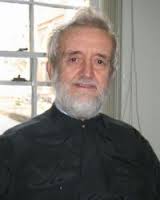
Met. John (Zizioulas)
“The significance of the person rests in the fact that he represents two things simultaneously which are at first sight in contradiction: particularity and communion. Being a person is fundamentally different from being an individual or a “personality,” for a person cannot be imagined in himself but only within his relationships.” ~ Being as Communion
 First Thoughts