Posts Tagged eastern orthodox tradition
Gregory of Nyssa: Our Sister Macrina
Posted by Dallas Wolf in Monasticism, Patristic Pearls, The Cappadocians, Women in Early Christianity on March 7, 2025
Excerpt from Gregory of Nyssa: The Letters, by Ann M. Silvas, Brill, 2007
Gregory of Nyssa – Letter 19 To a certain John
The letter was written from Sebasteia in the first half of AD 380. The brief but intense cameo of Gregory’s sister, 19.6–10, is a foreshadowing and a promise of the Life of Macrina. It is the earliest documentation we have of Macrina’s existence, her way of life and her funeral led by Gregory, written less than a year after her death. The witness of her lifestyle, her conversations with him which were so formative and strengthening of his religious spirit, and above all his providential participation in her dying hours had a profound affect on him. It only needed time to absorb and reflect on these events. Then, when the occasion offered, he set out to make his remarkable sister better known to the world.
Our Sister Macrina

We had a sister who was for us a teacher of how to live, a mother in place of our mother. Such was her freedom towards God that she was for us a strong tower (Ps 60.4) and a shield of favour (Ps 5.13) as the Scripture says, and a fortified city (Ps 30.22, 59.11) and a name of utter assurance, through her freedom towards God that came of her way of life.
She dwelt in a remote part of Pontus, having exiled herself from the life of human beings. Gathered around her was a great choir of virgins whom she had brought forth by her spiritual labour pains (cf. 1 Cor 4.15, Gal 4.19) and guided towards perfection through her consummate care, while she herself imitated the life of angels in a human body.
With her there was no distinction between night and day. Rather, the night showed itself active with the deeds of light (cf. Rom 12.12–13, Eph 5.8) and day imitated the tranquility of night through serenity of life. The psalmodies resounded in her house at all times night and day.
You would have seen a reality incredible even to the eyes: the flesh not seeking its own, the stomach, just as we expect in the Resurrection, having finished with its own impulses, streams of tears poured out (cf. Jer. 9.1, Ps 79.6) to the measure of a cup, the mouth meditating the law at all times (Ps 1.2, 118.70), the ear attentive to divine things, the hand ever active with the commandments (cf. Ps 118.48). How indeed could one bring before the eyes a reality that transcends description in words?
Well then, after I left your region, I had halted among the Cappadocians, when unexpectedly I received some disturbing news of her. There was a ten days’ journey between us, so I covered the whole distance as quickly as possible and at last reached Pontus where I saw her and she saw me.
But it was the same as a traveler at noon whose body is exhausted from the sun. He runs up to a spring, but alas, before he has touched the water, before he has cooled his tongue, all at once the stream dries up before his eyes and he finds the water turned to dust.
So it was with me. At the tenth year I saw her whom I so longed to see, who was for me in place of a mother and a teacher and every good, but before I could satisfy my longing, on the third day I buried her and returned on my way.
“Daily” Bread in the Lord’s Prayer? A Word Study
Posted by Dallas Wolf in First Thoughts, Patristic Pearls, Theology on January 9, 2025
Sources:
1. http://aramaicnt.org/articles/the-lords-prayer-in-galilean-aramaic/
2. Origen of Alexandria (c. 185 – c. 254): On Prayer (Περί Ευχής), Chapter XVII
The Lord’s Prayer is with little debate the most significant prayer in Christianity. Although many theological and ideological differences may divide Christians across the world, it is a prayer that unites the faith as a whole.
Within the New Testament tradition, the Prayer appears in two places. The first and more elaborate version is found in Matthew 6:9-13 where a simpler form is found in Luke 11:2-4, and the two of them share a significant amount of overlap.
The prayer’s absence from the Gospel of Mark, taken together with its presence in both Luke and Matthew, has brought some modern scholars to conclude that it is a tradition from the hypothetical “Q” source (from German: Quelle, meaning “source”) which both Luke and Matthew relied upon in many places throughout their individual writings. Given the similarities and unique character of the Matthaean and Lukan versions of the Lord’s Prayer may be evidence that what we attribute to the Greek of “Q” may ultimately trace back to an Aramaic source.
One of the trickiest problems of translating the Lord’s Prayer into Aramaic is finding out what επιούσιος (epiousios), usually translated as “daily”, originally intended. It is a unique word in Greek, only appearing twice in the all of Greek literature: Once in the Lord’s Prayer in Matthew, and the other time in the Lord’s Prayer in Luke.
This raises some curious questions that have baffled scholars. Why would Jesus have used a singular, entirely unique word? In more recent times, the bafflement has turned to a different possible solution. Jesus, someone known to have spoken Aramaic in a prayer that was originally recited in Aramaic, would not have used the Greek επιούσιος, at all. So, the question has evolved to “What Aramaic word was επιούσιος supposed to represent?” It would have to be something unique or difficult enough that whoever translated it into Greek needed to coin a word to express or preserve some meaning that they thought was important, or something that they couldn’t quite wrap the Greek language around.
The first question to answer is the meaning of the unique koine Greek word ἐπιούσιον (epiousion). To do this, we consult the writings of Origen of Alexandria. Origen was a third century native koine Greek speaker, head of the famed Catechetical School of Alexandria, the greatest theologian of the early church, and first to perform an exegesis of the Lord’s Prayer (ca. AD 240).
Origen begins: ”Let us now consider what the word epiousion, needful, means. First of all it should be known that the word epiousion is not found in any Greek writer whether in philosophy or in common usage, but seems to have been formed by the evangelists. At least Matthew and Luke, in having given it to the world, concur in using it in identical form.”
Origen concludes his in-depth discussion of epiousion, needful, by stating, “Needful, therefore, is the bread which corresponds most closely to our rational nature and is akin to our very essence, which invests the soul at once with well being and with strength, and, since the Word of God is immortal, imparts to its eater its own immortality.”
In Aramaic, the best fit for επιούσιος is probably the word çorak. It comes from the root çrk, which means to be poor, to need, or to be necessary. It is a very common word in Galilean Aramaic that is used in a number of senses to express both need and thresholds of necessity, such as “as much as is required” (without further prepositions) or with pronominal suffixes “all that [pron.] needs” (çorki = “All that I need”; çorkak = “All that you need”; etc.). Given this multi-faceted nature of the word, it’s hard to find a one-to-one Greek word that would do the job, and επιούσιος is a very snug fit in the context of the Prayer’s petition. This might even give us a hint that the Greek translator literally read into it a bit.
The Aramaic word yelip is another possible solution. It is interesting to note that it comes from the root yalap or “to learn.” Etymologically speaking, learning is a matter of repetition and routine, and this connection may play off the idea of regular physical bread, but actually mean “daily learning from God” (i.e. that which is necessary for living, as one cannot live off of bread alone).
Bottom line:
Origen’s understanding of epiousion in his context of needful certainly has no connection or relationship to a simplistic English translation of epiousion as “daily’. Nor is the translation of epiousion as “daily” supported by either hypothetical original Aramaic word çorkak or yelip.
In fact, a translation of epiousion as “daily” makes this petition in the Lord’s Prayer (Matt. 6:11) directly contradict Jesus’ lengthy admonition 14 verses later, starting at Matt 6:25:
25 “Therefore I say to you, do not worry about your life, what you will eat or what you will drink; nor about your body, what you will put on. Is not life more than food and the body more than clothing?
26 “Look at the birds of the air, for they neither sow nor reap nor gather into barns; yet your heavenly Father feeds them. Are you not of more value than they?
31 “Therefore do not worry, saying, ‘What shall we eat?’ or ‘What shall we drink?’ or ‘What shall we wear?’
32 “For after all these things the Gentiles seek. For your heavenly Father knows that you need all these things.
33 “But seek first the kingdom of God and His righteousness, and all these things shall be added to you.
The Gospel writers of Matthew and Luke both used the same totally unique Greek word solely in the context of the Lord’s Prayer. There were other frequently used koine Greek words available to express the simple idea of “daily”. Perhaps the unique use of epiousion was not accidental or coincidental, but needed to express the intent of the original Aramaic prayer. Origen may provide the best insight into the intended meaning of ἐπιούσιον as needful of the supra-essential Word of God.
“And we believe in one, holy, catholic, and apostolic Church.”
Posted by Dallas Wolf in Ekklesia and church, First Thoughts, Hesychasm - Jesus Prayer, Monasticism on December 28, 2024
In the original koine Greek of the Nicene-Constantinopolitan Creed of AD 381, the subject line reads: Εἰς μίαν, Ἁγίαν, Καθολικὴν καὶ Ἀποστολικὴν Ἐκκλησίαν.
I find it sadly ironic that The Nicene-Constantinopolitan Creed, as it is recited in most worship services today, uses the first person singular (“I believe…”/”Πιστεύω”) rather than the first person plural (“We believe…”/”Πιστεύομεν”) as it was enacted at the first and second ecumenical councils (Nicaea AD 325 and Constantinople AD 381) of the undivided Church. In this self-centered, affluent, secularized, and fragmented Western world, I guess the shift from a collective “we” to an individual “I” should come as no surprise.
Christianity became the State Religion of the Roman Empire in AD 380. Since becoming that key religious institution in the social and political infrastructure of worldly power, very little has changed to this day, regardless of the form or character of the Church’s earthbound imperial partners. Fr. Richard Rohr, OFM, calls it the Church’s 1,700 year addiction to Power, Prestige, and Possessions.
Let’s analyze our subject line from the Creed: “And we believe in one, holy, catholic, and apostolic Church.”
The institutional Christian Church was no longer “One” after 451 AD; increasingly less “Holy” after 313 AD; no longer “Catholic” after 1054 (worse after 1517); and “Apostolic” only in origin (and Rome’s claim to Peter and Constantinople’s claim to Andrew are tenuous, at best.). So, nothing in this line from the Creed has been objectively true in more than 1,000 years. Reciting this line from the Nicene-Constantinopolitan Creed now is not so much a proclamation of faith, as a largely an unsupportable exercise in wishful thinking. Don’t believe it? “Google” the dated Church events and read for yourself.
Until the issues raised in the preceding paragraphs are meaningfully addressed (read: confession and repentance) by the legacy institutional Church, I think it will continue to shrink in numbers, authority, influence, and credibility. I believe the Ecclesia (Ἐκκλησία) of scripture will endure and eventually prevail; the institutional imperial Church, not so much. And Ecclesia and Church are not the same thing, in spite of institutional protests to the contrary.
In the meantime, solitary Christian hermits patiently remain in silent prayer within their virtual deserts.
Prayer Ropes and Rosaries
Posted by Dallas Wolf in Ekklesia and church, Hesychasm - Jesus Prayer, Monasticism, New Nuggets, Patristic Pearls on December 21, 2024
Both the prayer rope and the rosary are revered traditional aids to Christian prayer, yet each has its own unique origin, symbolism, and devotional use.

The Prayer Rope, now largely associated with the Eastern Orthodox Church, is a loop of knots (each knot containing seven crosses), usually made of wool, that is used to focus and intensify prayer, particularly the Jesus Prayer. It acts as a physical guide for a repeated, meditative style of prayer, allowing practitioners to keep count while reflecting and meditating. The prayer rope has its beginnings in early fourth century Christian monasticism in the Egyptian Desert, where it was devised as a tool to aid in the ascetic practice of continuous prayer (1 Thes. 5:17).
Origins: The prayer rope is known as a ‘komboskini’ in Greek and ‘chotki’ in Russian. The prayer rope owes its origins to St. Pachomius the Great, a fourth century “Desert Father” in upper Egypt and founder of cenobitic monasticism (a monastic tradition that stresses community life, over the older, eremitic, or solitary tradition). St. Pachomius established the prayer rope as a practical solution for the monks under his supervision to count prayers and prostrations consistently. The prayer rope evolved as a useful instrument for monks to keep track of their prayers, particularly the Jesus Prayer, without distraction. It gradually took on a deeper spiritual value, with each knot symbolizing a request for mercy and humility.
Symbolic Significance: Wool knots, each knot containing seven crosses, are commonly used on traditional prayer ropes to represent Christ’s flock and the shepherd’s care. The number of knots in a prayer rope varies; typically 33 (Christ’s age at crucifixion), 50, or 100.
Traditional Use: In Orthodox Christian practice, the prayer rope is typically used for private prayer in reciting the Jesus Prayer, acting as a physical and spiritual guide to help the mind (nous) and heart concentrate on prayer.

The Rosary, strongly associated with the Roman Catholic Church, is a string of beads that ends with a crucifix and is used to guide Catholics through a sequence of prayers that reflect on the lives of Christ and the Virgin Mary. Each bead signifies a specific prayer, such as the Hail Mary, and each set of beads makes a ‘decade’ that corresponds to a mystery in Christ’s life. The rosary has a long history, dating back to the Middle Ages when it first arose as a popular form of laity devotion, eventually becoming a prominent practice in Catholic piety.
Origins: The rosary is typically identified with Saint Dominic in the early 13th century. The rosary began as a simple way for lay people to join in the monastic practice of reciting the Psalms, but has since evolved into a systematic form of prayer. The rosary prayers are split into decades, each with ten Hail Marys, an Our Father, and a Glory Be, and are frequently accompanied by meditations on the Mysteries of the Rosary.
Symbolic Significance: Each rosary bead represents a prayer as well as a step in the meditation journey through Jesus Christ’s and the Virgin Mary’s lives. The rosary culminates with a crucifix, which represents Christ’s sacrifice.
Traditional Use: Roman Catholics utilize the rosary for both personal meditation and social worship. It is frequently prayed privately for personal spiritual development or in groups for social objectives and celebrations.
Thomas Aquinas: “… all that I have written seems to me as so much straw”
Posted by Dallas Wolf in First Thoughts, Theology on December 10, 2024
Thomas Aquinas OP (c. 1225 – 7 March 1274) was an Italian Dominican friar and priest, the foremost Scholastic thinker, as well one of the most influential philosophers and theologians in the Western tradition. Thomas’s best-known work is the unfinished Summa Theologica, or Summa Theologiae (1265–1274). As a Doctor of the Church, Thomas Aquinas is considered one of the Roman Catholic Church’s greatest theologians and philosophers.
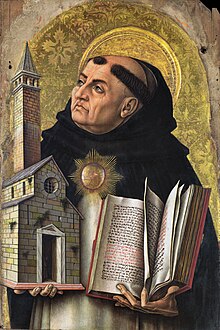
On December 6th, 1273, while Thomas Aquinas was celebrating Holy Communion during the Feast of Saint Nicholas, he received a revelation that so affected him he called his principal work, the Summa Theologica, nothing more than “straw” and left it unfinished.
Aquinas described his Divine Experience: “The most perfect union with God is the most perfect human happiness and the goal of the whole of the human life, a gift that must be given to us by God.”
When his friend and secretary tried to encourage Aquinas to write more, he replied:
“I can do no more. The end of my labors has come. Such things have been revealed to me that all that I have written seems to me as so much straw. Now I await the end of my life after that of my works.”
Aquinas would die just three short months later. The Great Doctor finally got it right, I think. Experience (theoria) trumps reason.
Macarius the Great: The Pagan Skull
Posted by Dallas Wolf in Heaven and Hell, Universal Restoration (Apokatastasis) on November 25, 2024
Macarius of Egypt (c. 300 – 391) was a Christian monk and Grazer hermit (Greek: βοσκοί, romanized: boskoí) who nourished themselves only with raw plants, often on all fours, and living in a wild manner, “among the beasts. He is also known as Macarius the Elder or Macarius the Great (not to be confused with Macarius of Alexandria).
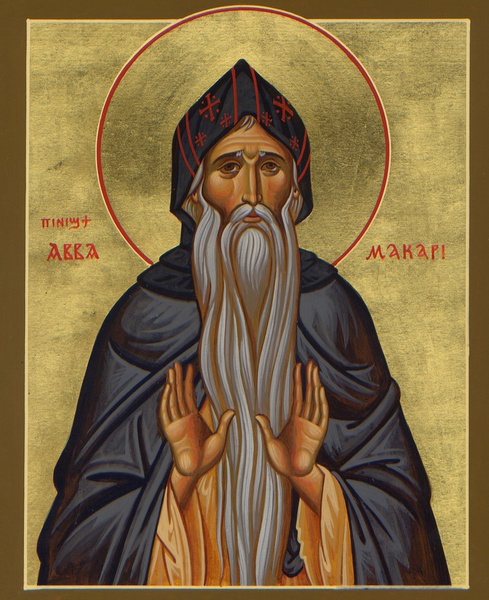
“Abba Macarius said, ‘Walking in the desert one day, I found the skull of a dead man, lying on the ground. As I was moving it with my stick, the skull spoke to me. I said to it, “Who are you?” The skull replied, “I was high priest of the idols and of the pagans who dwelt in this place; but you are Macarius, the Spirit-bearer. Whenever you take pity on those who are in torments, and pray for them, they feel a little respite.” The old man said to him, “What is this alleviation, and what is this torment?” He said to him, “As far as the sky is removed from the earth, so great is the fire beneath us; we are ourselves standing in the midst of the fire, from the feet up to the head. It is not possible to see anyone face to face, but the face of one is fixed to the back of another. Yet when you pray for us, each of us can see the other’s face a little. Such is our respite.” The old man in tears said, “Alas the day when that man was born!” He said to the skull, “Are there punishments which are more painful than this?” The skull said to him, “There is a more grievous punishment down below us.” The old man said, “Who are the people down there?” The skull said to him: “We have received a little mercy since we did not know God, but those who know God and denied Him are down below us.” Then, picking up the skull, the old man buried it.”
(The Sayings of the Desert Fathers, The Alphabetical Collection: Macarius the Great, 38.)
The “Icon Corner”
Posted by Dallas Wolf in Contemplative Prayer (series), Ekklesia and church, First Thoughts, Hesychasm - Jesus Prayer, Monasticism on November 21, 2024

The Book of Acts and the Epistles of the Apostle Paul record that in the early Church, Christians used to meet in the homes of the faithful. This tradition of the House church assembly continues to this day in Eastern Christianity. An Orthodox Christian is expected to pray constantly. Thus the house, just like the Temple (church building), is considered to be a consecrated place. The center of worship in the house is the icon corner (Greek: εικονοστάσι, iconostási).
An icon corner is normally oriented to face east. It is often located in a corner to eliminate worldly distractions and allow prayer to be more concentrated. Here is where the family’s icons were located and displayed. From the earliest days, Light has been an important part of Christian worship. It not only provides a beautiful and calming ambience; it takes on a theological significance with Christ as the Light of the World. Thus, oil lamps and candles frequently illuminate the icons in the icon corner.
In the theology of Orthodox iconography, the prayers and veneration directed to the icons are passed on to the prototype—the person depicted in the image. For, as St. John of Damascus wrote, “we do not worship paint or wood, we do not worship matter; we worship the God who created matter, who became matter (flesh) for our sake“.
The icons in the icon corner also remind us of the declaration in Hebrews 12:1, that “we are surrounded by so great a cloud of witnesses“; so we need never pray alone. We venerate these witnesses through their icons, petition them and join them in prayer and worship of our Triune God.
An Orthodox view on Heaven and Hell
Posted by Dallas Wolf in Heaven and Hell, Theology on November 2, 2024
From the The Orthodox Church in America (OCA)
The Kingdom of heaven is already in the midst of those who live the spiritual life. What the spiritual person knows in the Holy Spirit, in Christ and the Church, will come with power and glory for all men to behold at the end of the ages.
The final coming of Christ will be the judgment of all men. His very presence will be the judgment. Now men can live without the love of Christ in their lives. They can exist as if there were no God, no Christ, no Spirit, no Church, no spiritual life. At the end of the ages this will no longer be possible. All men will have to behold the Face of Him who “for us men and our salvation came down from heaven and was incarnate . . . who was crucified under Pontius Pilate, and suffered and was buried . . .” (Nicene Creed). All will have to look at Him whom they have crucified by their sins: Him “who was dead and is alive again” (Rev 1.17–18).
For those who love the Lord, His Presence will be infinite joy, paradise and eternal life. For those who hate the Lord, the same Presence will be infinite torture, hell and eternal death. The reality for both the saved and the damned will be exactly the same when Christ “comes in glory, and all angels with Him,” so that “God may be all in all” (1 Cor 15–28). Those who have God as their “all” within this life will finally have divine fulfillment and life. For those whose “all” is themselves and this world, the “all” of God will be their torture, their punishment and their death. And theirs will be “weeping and gnashing of teeth” (Mt 8.21, et al.).
The Son of Man will send His angels and they will gather out of His kingdom all causes of sin and all evil doers, and throw them into the furnace of fire; there men will weep and gnash their teeth. Then the righteous will shine like the sun in the Kingdom of their Father (Mt 13.41–43).
According to the saints, the “fire” that will consume sinners at the coming of the Kingdom of God is the same “fire” that will shine with splendor in the saints. It is the “fire” of God’s love; the “fire” of God Himself who is Love. “For our God is a consuming fire” (Heb 12.29) who “dwells in unapproachable light” (1 Tim 6.16). For those who love God and who love all creation in Him, the “consuming fire” of God will be radiant bliss and unspeakable delight. For those who do not love God, and who do not love at all, this same “consuming fire” will be the cause of their “weeping” and their “gnashing of teeth.”
Thus it is the Church’s spiritual teaching that God does not punish man by some material fire or physical torment. God simply reveals Himself in the risen Lord Jesus in such a glorious way that no man can fail to behold His glory. It is the presence of God’s splendid glory and love that is the scourge of those who reject its radiant power and light.
. . . those who find themselves in hell will be chastised by the scourge of love. How cruel and bitter this torment of love will be! For those who understand that they have sinned against love, undergo no greater suffering than those produced by the most fearful tortures. The sorrow which takes hold of the heart, which has sinned against love, is more piercing than any other pain. It is not right to say that the sinners in hell are deprived of the love of God . . . But love acts in two ways, as suffering of the reproved, and as joy in the blessed! (Saint Isaac of Syria, Mystic Treatises).
This teaching is found in many spiritual writers and saints: Saint Maximus the Confessor, the novelist Fyodor Dostoevsky. At the end of the ages God’s glorious love is revealed for all to behold in the face of Christ. Man’s eternal destiny—heaven or hell, salvation or damnation—depends solely on his response to this love.
Met. Kallistos Ware: On Hell
Posted by Dallas Wolf in First Thoughts, Heaven and Hell, Universal Restoration (Apokatastasis) on November 2, 2024
Metropolitan Kallistos (Ware) of Diokleia – (1934 – 2022) was a titular metropolitan of the Orthodox Ecumenical Patriarchate in Great Britain. From 1966-2001, he was Spalding Lecturer of Eastern Orthodox Studies at Oxford University, and has authored numerous books and articles pertaining to the Orthodox faith. The following excerpts are taken from Met. Kallistos’ book, The Orthodox Way (1986).

Hell is a point not in space but in the soul. It is the place where God is not. (And yet God is everywhere!) (p. 106)
The Last Judgement is best understood as the moment of truth when everything is brought to light, when all our acts of choice stand revealed to us in their full implications, when we realize with absolute clarity who we are and what has been the deep meaning and aim of our life. And so, following this final clarification, we shall enter – with soul and body reunited – into heaven or hell, into eternal life or eternal death.
Christ is the judge; and yet, from another point of view, it is we who pronounce judgement upon ourselves. If anyone is in hell, it is not because God has imprisoned him there, but because that is where he himself has chosen to be. The lost in hell are self-condemned, self-enslaved; it has been rightly said that the doors of hell are locked on the inside. (p. 181)
How can a God of love accept that even a single one of the creatures whom he has made should remain for ever in hell? There is a mystery here which, from our standpoint in this present life, we cannot hope to fathom. The best we can do is to hold in balance two truths, contrasting but not contradictory. First, God has given free will to man, and so to all eternity it lies within man’s power to reject God. Secondly, love signifies compassion, involvement; and so, if there are any who remain eternally in hell, in some sense God is also there with them. It is written in the Psalms, ‘If I go down to hell, thou art there also’ (139:7); and St. Isaac the Syrian says, ‘It is wrong to imagine that sinners in hell are cut off from the love of God.’ Divine love is everywhere, and rejects no one. But we on our side are free to reject divine love: we cannot, however, do so without inflicting pain upon ourselves, and the more final our rejection the more bitter our suffering. (p.182)
Meet St. Macrina the Younger; the “Fourth Cappadocian”
Posted by Dallas Wolf in Monasticism, Patristic Pearls, The Cappadocians, Women in Early Christianity on October 27, 2024
St. Macrina the Younger (AD 327-379) was a mystic consecrated virgin from a landed and committed Christian family. She was the elder sister of four Cappadocian Saints: St. Basil the Great, St. Gregory of Nyssa, St. Naucratius, and St. Peter of Sebasteia. She was also friends with fellow Cappadocian, St. Gregory of Nazianzus.
Brother Gregory of Nyssa records a powerful statement about Macrina, his older sister, in his 19th letter, “We had a sister who was for us a teacher of how to live, a mother in place of our mother.” It is well documented that big sister Macrina had significant influence in the spiritual development and careers of brothers Basil, Naucratius, Gregory, and Peter, all of whom became saints.
In addition to her role as teacher, guide, and exemplar to her younger siblings, Macrina transformed her family’s estate at Annisa, in Pontus [Uluköy, modern Turkey], into a cenobitic monastery, or domestic ascetic community, of virgin women. All of these women were treated as equals, regardless of their former social or economic status. Over time, Macrina added accommodations for ascetic celibate men and orphan children to her monastery.
But, there is more to Macrina’s story.
Brother Gregory records the story of the miraculous healing of Macrina of a disease which many hypothesize to have been breast cancer. Gregory writes, “she went into the sanctuary and remained there all night long prostrate before the God of healing, weeping a flood of tears to moisten the earth, and she used the mud from her tears as a salve to put on the effected place” (Gregory of Nyssa: “The Life of St. Macrina”, 48).
An example of Macrina as wonder worker is also recorded by Gregory, documenting the testimony of the garrison commander of the Pontus town of Sebastopolis. This distinguished military man reported that he, with his wife and daughter, had once visited Macrina’s monastery, “that powerhouse of virtue,” and when they left, their daughter’s severe eye disease was cured by Macrina’s prayers, “the true medicine with which she heals diseases.” (Life of Macrina, 52)
Macrina the Younger was a spiritual force of nature, according to the testimony of brother Gregory of Nyssa. Although her story may be embellished, her prophetic disposition and pastoral qualities, coupled with her direct divine experiences are both inspiring and edifying to modern ears.
Gregory finished his story of Macrina’s life by saying, “In order therefore that those who have too little faith, and who do not believe in the gifts of God, should come to no harm, for this reason I have declined to make a complete record here of the greater miracles, since I think that what I have already said is sufficient to complete Macrina’s story.” (The Life of Macrina, 54)
While Basil the Great, Gregory of Nyssa, and Gregory of Nazianzus have long been honored and revered as the three great “Cappadocian Fathers”, Macrina did not historically receive much serious attention from theologians or scholars. In more recent years Macrina has been hailed by the Orthodox theologian, Jaroslav Pelikan, and others as the “Fourth Cappadocian”.
Regardless of her title, Macrina has greatly influenced Christianity through her life as a consecrated virgin, prophet, monastic founder and leader, mother, father, sister, teacher, wonder worker, and philosopher of God.

 First Thoughts