Posts Tagged Universal Restoration (Apokatastasis)
Dostoyevsky: “… all-embracing love.”
Posted by Dallas Wolf in First Thoughts, Heaven and Hell, New Nuggets, Theology, Universal Restoration (Apokatastasis) on March 6, 2026
Fyodor Dostoyevsky (1821 – 1881) – Russian novelist, short story writer, essayist, journalist, and philosopher.
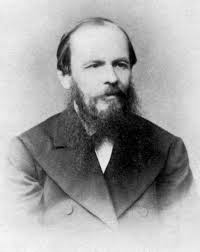
“Love [people] even in [their] sin, for that is the semblance of Divine Love and is the highest love on earth. Love all God’s creation, the whole and every grain of sand in it. Love every leaf, every ray of God’s light. Love the animals, love the plants, love everything. If you love everything, you will perceive the divine mystery in things. Once you have perceived it, you will begin to comprehend it better every day. And you will come at last to love the whole world with an all-embracing love.”
—Fyodor Dostoyevsky, from The Brothers Karamazov
Isaac of Nineveh: “In love did He bring the world into existence…”
Posted by Dallas Wolf in First Thoughts, Heaven and Hell, Monasticism, Patristic Pearls, Universal Restoration (Apokatastasis) on June 11, 2025
St. Isaac of Nineveh – 7th century ascetic and mystic, born in modern-day Qatar, was made Bishop of Nineveh between 660-680. Especially influential in the Syriac tradition, Isaac has had a great influence in Russian culture, impacting the works of writers like Dostoyevsky.
Isaac composed dozens of homilies that he collected into seven volumes on topics of spiritual life, divine mysteries, judgements, providence, and more. Today, these seven volumes have survived in five Parts, titled from the First Part to the Fifth Part. Only the First Part was widely known outside of Aramaic speaking communities until 1983.
Some scholars argue that Isaac’s views from the Second Part appear to confirm earlier claims that Isaac advocated for universal reconciliation, or apokatastasis.
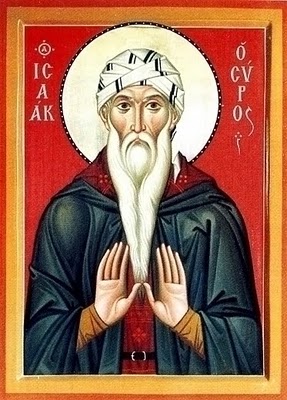
“What profundity of richness, what mind and exalted wisdom is God’s! What compassionate kindness and abundant goodness belongs to the Creator! …
In love did He bring the world into existence; in love does He guide it during this its temporal existence; in love is He going to bring it to that wondrous transformed state, and in love will the world be swallowed up in the great mystery of Him who has performed all these things; in love will the whole course of the governance of creation be finally comprised.” (II.38.1-2)
Isaac the Syrian, The Second Part, trans. Sebastian Brock (Peeters: Corpus Scriptorum Christianorum Orientalium, 1995).
Isaac of Nineveh: On Universal Restoration
Posted by Dallas Wolf in Heaven and Hell, Patristic Pearls, Universal Restoration (Apokatastasis) on March 9, 2025
St. Isaac of Nineveh – 7th century ascetic and mystic, born in modern-day Qatar, was made Bishop of Nineveh between 660-680. Especially influential in the Syriac tradition, Isaac has had a great influence in Russian culture, impacting the works of writers like Dostoyevsky.
Isaac composed dozens of homilies that he collected into seven volumes on topics of spiritual life, divine mysteries, judgements, providence, and more. Today, these seven volumes have survived in five Parts, titled from the First Part to the Fifth Part. Only the First Part was widely known outside of Aramaic speaking communities until 1983.
Some scholars argue that Isaac’s views from the Second Part appear to confirm earlier claims that Isaac advocated for universal reconciliation, or apokatastasis.
“God will not abandon anyone.” [First Part, Chap. 5]
“There was a time when sin did not exist, and there will be a time when it will not exist.” [First Part, Chap. 26]
“As a handful of sand thrown into the ocean, so are the sins of all flesh as compared with the mind of God; as a fountain that flows abundantly is not dammed by a handful of earth, so the compassion of the Creator is not overcome by the wickedness of the creatures… If He is compassionate here, we believe that there will be no change in Him; far be it from us that we should wickedly think that God could not possibly be compassionate; God’s properties are not liable to variations as those of mortals… What is hell as compared with the grace of resurrection? Come and let us wonder at the grace of our Creator.” [First Part, Chap. 50]
“It is not the way of the compassionate Maker to create rational beings in order to deliver them over mercilessly to unending affliction in punishment for things of which He knew even before they were fashioned, aware how they would turn out when He created them, and whom nonetheless He created.” [Second Part, Chap. 39]
“This is the mystery: that all creation by means of One, has been brought near to God in a mystery; then it is transmitted to all; thus all is united to Him…This action was performed for all of creation; there will, indeed, be a time when no part will fall short of the whole.” [Third Part, Chap. 5]
Olivier Clément: “For God will never reject anybody, his love is offered to all.”
Posted by Dallas Wolf in New Nuggets, Universal Restoration (Apokatastasis) on September 17, 2018
Olivier-Maurice Clément (1921 – 2009) – was an Orthodox Christian theologian, who taught at St. Sergius Orthodox Theological Institute in Paris, France. There he became one of the most highly regarded witnesses to early Christianity, as well as one of the most prolific.
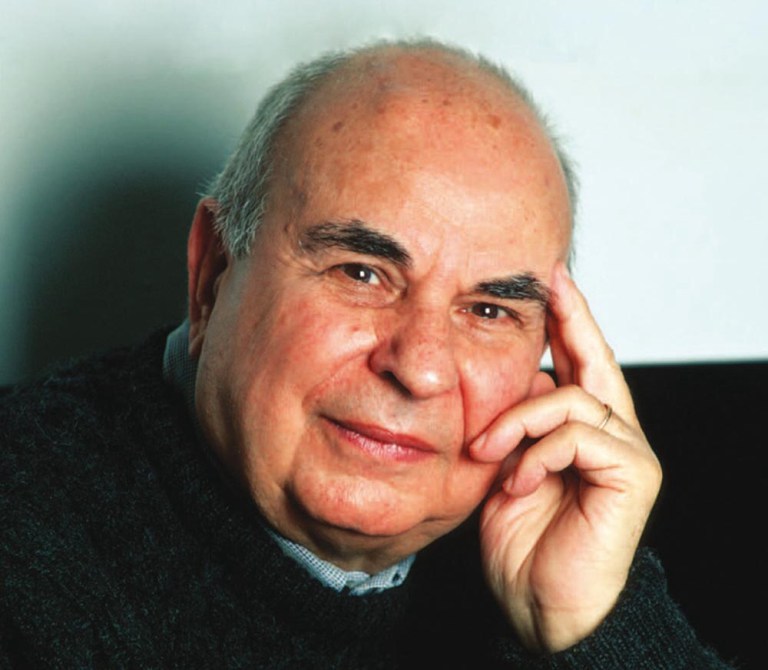 “Thus will come about the completion of all things, when the Spirit of life, through the communion of saints, will manifest the whole universe as the glorified Body of Christ. Then each person, in giving his face to the transfigured universe, will rediscover his flesh; flesh vibrant with all its natural sensitivity, our earthly flesh, but bathed in the life and fullness of God, who will be ‘all in all’, abolishing the separations of time and space, making possible among the risen a communion beyond anything we can now imagine…
Nevertheless, although the hell of our fallen state has been secretly abolished in Christ, and although God must be revealed at the Last Day as ‘all in all’, there remains the heartrending mystery of the ‘second death’ of the Revelation, the final death of the human being without love plunged into the divine love. For God will never reject anybody, his love is offered to all. But the fire of that love, as St Isaac the Syrian says, is eternal joy for those who welcome it and infernal torment for those who refuse it. Generic hell, as we might call it, may have been destroyed by Christ, but for each free individual there remains the terrible possibility of personal hell. But does this not amount to a fatal obstruction to the divine plan for that universal communion which is the only hope for the fulfilment of the person?” ~ Olivier Clément, On Human Being: A Spiritual Anthropology
David Bentley Hart: “Saint Origen”
Posted by Dallas Wolf in First Thoughts, New Nuggets, Universal Restoration (Apokatastasis) on February 28, 2018
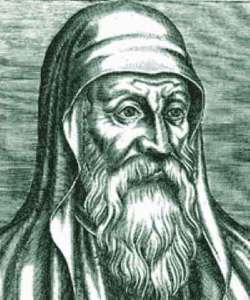
David Bentley Hart (born 1965) is an American Orthodox Christian philosophical theologian, cultural commentator and polemicist. Here, in one short essay published in First Things in 2015, Prof. Hart addresses three topics that institutional Orthodoxy would prefer to avoid: apokatastasis, Saint Origen, and the church’s chronic propensity to sleep with worldly empire (e.g., Byzantium and Russia)
Met. Kallistos: “Dare We Hope for the Salvation of All?”
Posted by Dallas Wolf in New Nuggets, Universal Restoration (Apokatastasis) on October 18, 2017
Metropolitan Kallistos (Ware) (born 1934) – is an English-born bishop and theologian of the Eastern Orthodox Church. From 1966 to 2001, Ware was Lecturer of Eastern Orthodox Studies at the University of Oxford. He has authored numerous books and articles pertaining to the Orthodox Christian faith.
 “If the strongest argument in favor of universal salvation is the appeal to divine love, and if the strongest argument on the opposite side is the appeal to human freedom, then we are brought back to the dilemma with which we started: how are we to bring into concord the two principles God is love and Human beings are free? For the time being we cannot do more than hold fast with equal firmness to both principles at once, while admitting that the manner of their ultimate harmonization remains a mystery beyond our present comprehension. What St Paul said about the reconciliation of Christianity and Judaism is applicable also to the final reconciliation of the total creation: “O the depth of the riches and wisdom and knowledge of God! How unsearchable are His judgments and how inscrutable His ways!” (Rom 11:33).
When I am waiting at Oxford Station for the train to London, sometimes I walk up to the northernmost stretch of the long platform until I reach a notice: “Passengers must not proceed beyond this point. Penalty: £50.” In discussion of the future hope, we need a similar notice: “Theologians must not proceed beyond this point”—Let my readers devise a suitable penalty. Doubtless, Origen’s mistake was that he tried to say too much. It is a fault that I admire rather than execrate, but it was a mistake nonetheless.
Our belief in human freedom means that we have no right to categorically affirm, “All must be saved.” But our faith in God’s love makes us dare to hope that all will be saved.
Is there anybody there? said the traveler,
Knocking on the moonlit door.
Hell exists as a possibility because free will exists. Yet, trusting in the inexhaustible attractiveness of God’s love, we venture to express the hope—it is no more than a hope—that in the end, like Walter de la Mare’s Traveller, we shall find that there is nobody there. Let us leave the last word, then, with St Silouan of Mount Athos: ‘Love could not bear that… We must pray for all’.”
~ From “Dare We Hope for the Salvation of All? Origen, St Gregory of Nyssa and St Isaac the Syrian”
Hart: “On Universal Salvation”
Posted by Dallas Wolf in New Nuggets, Universal Restoration (Apokatastasis) on October 18, 2017
David Bentley Hart (born 1965) is an American Orthodox Christian philosophical theologian, cultural commentator and polemicist.
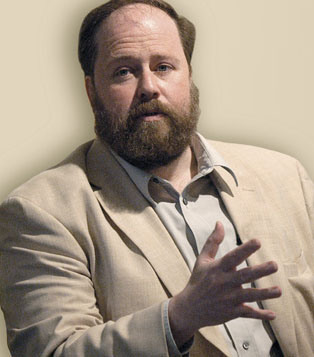 “If God is the good creator of all, he is the savior of all, without fail, who brings to himself all he has made, including all rational wills, and only thus returns to himself in all that goes forth from him. If he is not the savior of all, the Kingdom is only a dream, and creation something considerably worse than a nightmare. But, again, it is not so. God saw that it was good; and, in the ages, so shall we.” ~From the essay, “God, Creation, and Evil“, (pp. 16-17)
Louth: “On Universal Salvation”
Posted by Dallas Wolf in New Nuggets, Universal Restoration (Apokatastasis) on October 15, 2017
Fr. Andrew Louth is Professor of Patristic and Byzantine Studies, University of Durham, England. In the last chapter of his book, Introducing Eastern Orthodox Theology, Dr. Louth writes the following about “Universal Salvation” :
 “Origen hoped for the ‘restoration of all’, apokatastasis panton… His conviction did not simply rest on a philosophical belief that ‘the end is like the beginning’ a principle he affirmed several times in On First Principles… There is a deeper reason for Origen’s conviction of final restoration for all: for him it is inconceivable that Christ is to remain in sorrow for all eternity on account of the failure of any rational creature to respond to his love and benefit from his sacrifice.
Whereas in Western theology, such a conviction rapidly dies out, in Orthodox theology hope in universal salvation, based on a conviction of the boundlessness of God’s love, has never gone away. St. Gregory of Nyssa interprets the words of the apostle Paul’s teaching that God will be ‘all in all’ (1 Cor. 15.28) to mean the ‘complete annihilation of evil.’ St. Maximos the Confessor likewise holds out the hope of the salvation of all. The grounds for this are principally the long-suffering love of God for all creation, and also the conviction that evil is without substance, but is rather a corruption of distortion of what is good. These two motives find striking expression in St Maximos’ contemporary, St. Isaac the Syrian, who asserts that,
‘there exists within the Creator a single love and compassion which is spread out over all creation, a love which is without alteration, timeless and everlasting… No part belonging to any single one of all rational beings will be lost, as far as God is concerned, in the preparation of that supernatural kingdom’
and then adds, quoting Diodore of Tarsus, ‘not even the immense wickedness of the demons can overcome the measure of God’s goodness.’ The pain of hell is the result of love: ‘those who are punished in Gehenna are scourged by the scourge of love… For the sorrow caused in the heart by sin against love is more poignant than any torment.’ Evil and hell cannot be eternal: ‘Sin, Gehenna, and death do not exist at all with God, for they are effects, not substances. Sin is the fruit of free will. There was a time when sin did not exist, and there will be a time when it will not exist.’
This conviction that there is nothing outside God’s loving care finds expression in the prayers of the Orthodox Church. In the service of kneeling at Vespers on the evening of Pentecost, we pray ‘for those who are held fast in hell, granting us great hopes that there will be sent down from you to the departed repose and comfort from the pains which hold them’. This hope, amounting to a conviction, that there is nothing beyond the infinite love of God, that there is no limit to our hope in the power of his love, at least regards as a legitimate hope the universal salvation of all rational creatures, maybe even of the devil himself and his demons. Such a belief has found its defenders among modern Orthodox theologians, such as Olivier Clément, Metropolitan Kallistos Ware and Metropolitan Hilarion Alfeyev. It was also the conviction of one of the greatest Orthodox saints of recent times, St. Silouan of Athos, manifest in a conversation with another Athonite hermit, who declared ‘with evident satisfaction’,
‘God will punish all atheists. They will burn in hell in everlasting fire’.
Obviously upset, the Staretz said,
‘Tell me, supposing you went to paradise, and there looked down and saw somebody burning in hell-fire – would you feel happy?’
‘It can’t be helped. It would be their own fault’, said the hermit.
The Staretz answered with a sorrowful countenance:
‘Love could not bear that’, he said, ‘We must pray for all’.”
Andreas Andreopoulos: “On Apokatastasis”
Posted by Dallas Wolf in New Nuggets, Universal Restoration (Apokatastasis) on February 13, 2016
Dr. Andreas Andreopoulos (1966- ) – Orthodox priest, studied in Greece, Canada and the UK, obtaining his Ph.D. in Theology and Art at Durham University.
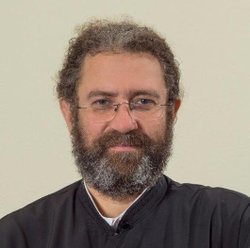 “Alexandrian theology in the second/third century starts a particularly Eastern theological strand of eschatology that leads all the way to Mark of Ephesus in the fifteenth, one which differs from most Western views if not necessarily and officially on the eternity of evil, at least on the question as to where this evil is to be found and therefore comes from – in doctrinal contrast to the views of Western theologians such as Abelard, who saw the torments of hell as a punishment very often more cruel than the sins that warranted it, in a place that had specifically been created by God for this purpose, as it was believed after Augustine. The ancient as well as the late Byzantine position, certainly before the Western influences on Greek and Russian theology after the Renaissance, was that nothing evil can come from God, not even punishment. The punishment and torments of hell are only inflicted from ourselves, both in this world and in the next one. Hell and its fire is not different, essentially, from the benevolent energy of God, when experienced by the sinners. The restoration of all, at best an interesting and possible speculation though not a doctrine, is an idea not too far from all this.”
~ Andreas Andreopoulos from “Eschatology and Final Restoration (Apokatastasis) in Origen, Gregory of Nyssa, and Maximos the Confessor”
D.B. Hart: “For my money, if Origen was not a saint and church father, then no one has any claim to those titles.”
Posted by Dallas Wolf in Ekklesia and church, New Nuggets on May 13, 2015
David Bentley Hart (born 1965) an Eastern Orthodox scholar of religion, is a philosopher, writer, and cultural commentator. His books include The Experience of God: Being, Consciousness, Bliss and That All Shall Be Saved: Heaven, Hell, Universal Salvation, and The New Testament – A Translation. He lives in South Bend, IN.

“East or West, all Christians are burdened with the absurdities of Christian imperial history. But any conception of orthodoxy that obliges one to grant the title of “saint” to a murderous thug like Justinian while denying it to a man as holy as Origen is obviously—indeed ludicrously—self-refuting. And one does not defend tradition well by making it appear not only atrociously unjust, but utterly ridiculous.”
D.B. Hart, from Saint Origen, First Things, October 2015.
“For my money, if Origen was not a saint and church father, then no one has any claim to those titles. And the contrary claims made by a brutish imbecile Emperor are of no consequence.”
D.B. Hart, from Eclectic Orthodoxy blog post, 11 May 2015.
 First Thoughts