Posts Tagged kenosis
Kenosis: “… but emptied himself [ἐκένωσεν (ekénōsen)], taking the form of a slave,…”
Posted by Dallas Wolf in First Thoughts, Patristic Pearls, The Holy Trinity, Theology on March 31, 2025
Philippians 2:6-11 is probably one of the earliest Christian hymns ever recorded. Within the hymn are the words, “who, though he was in the form of God, did not regard equality with God as something to be exploited, but emptied himself, taking the form of a slave, being born in human likeness.” (Phil 2:6,7). This part of the hymn describes how Christ humbled himself in his divinity in obedience to the will and desire of God in an act of selfless sacrifice, even to death on a Cross, for the salvation and redemption of mankind. It is a powerful image.
The term kenosis comes from the Greek κενόω (kenóō), meaning “to empty out”. When talking about how Christ “emptied himself” in Philippians 2:7, the Greek word used is ἐκένωσεν (ekénōsen). It is the only time the word appears in the New Testament.
The fact that Christ was willing and able to “empty himself” in order to do the will of God the Father is key to His success as both savior and redeemer. Without this “kenosis”, He could not have done, or been either.
Clément: “The Trinity as Taught by the Church Fathers”
Posted by Dallas Wolf in Hesychasm - Jesus Prayer, New Nuggets, The Holy Trinity, Theology on October 1, 2016
Olivier-Maurice Clément (1921 – 2009) – was an Orthodox Christian theologian, who taught at St. Sergius Orthodox Theological Institute in Paris, France. There he became one of the most highly regarded witnesses to early Christianity, as well as one of the most prolific.
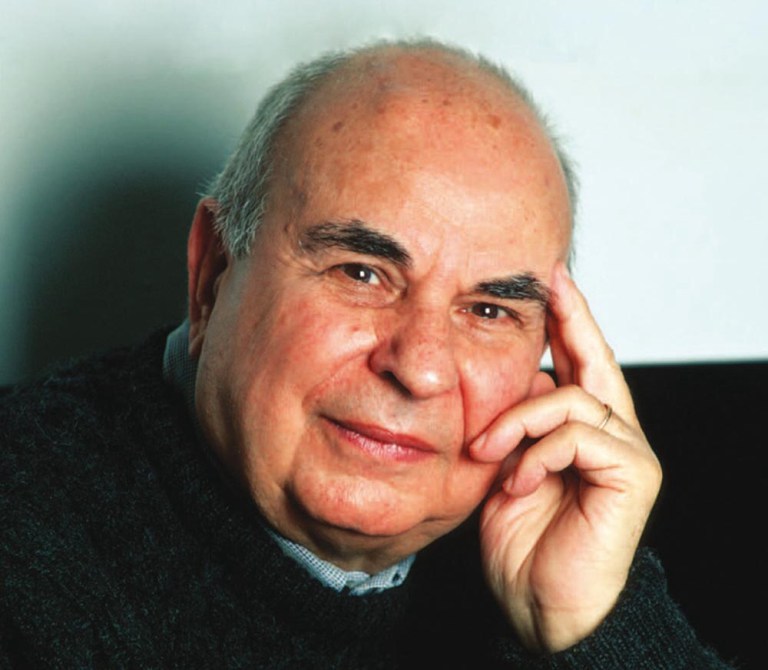
“We are made in the image of God. From all eternity there is present in God a unique mode of existence, which is at the same time Unity and the Person in communion; and we are all called to realize this unity in Christ, when we meet him, under the divided flames of the Spirit. Therefore we express the metaphysics of the person in the language of Trinitarian theology. What could be called the ‘Trinitarian person’ is not the isolated individual of Western society (whose implicit philosophy regards human beings as ‘similar’ but not ‘consubstantial’). Nor is it the absorbed and amalgamated human being of totalitarian society, or the systematized oriental mysticism, or of the sects. It is, and must be, a person in a relationship, in communion. The transition from divine communion to human communion is accomplished in Christ who is consubstantial with the Father and the Spirit in his divinity and consubstantial with us in his humanity. […]
In their expositions of the Trinity, St. Basil and St. Maximus the Confessor emphasize that the Three is not a number (St. Basil spoke in this respect of ‘meta-mathematics’). The divine Persons are not added to one another, they exist in one another: the Father is in the Son and the Son is in the Father, the Spirit is united to the Father together with the Son and ‘completes the blessed Trinity’ as if he were ensuring the circulation of love within it. This circulation of love was called by the Fathers perichoresis, another key word of their spirituality, along with the word we have already met, kenosis. Perichoresis, the exchange of being by which each Person exists only in virtue of his relationship with the others, might be defined as a ‘joyful kenosis’. The kenosis of the Son in history is the extension of the kenosis of the Trinity and allows us to share in it.”
 First Thoughts