Posts Tagged patristic fathers
Atonement Theory 4
Posted by Dallas Wolf in Atonement Theory (series) on July 10, 2014
“The Penal Substitution Theory sees Christ’s suffering and death as the price for man’s sin.”
The Penal Substitution Theory sees Christ’s suffering and death as the price for man’s sin. In many ways, the model for Penal Substitutionary Atonement is a courtroom. Due to his sin, man needed to be made right with a perfect and just God. Therefore, Christ came to suffer and pay the price in our place, i.e., He substituted Himself for us. Now, in the courtroom of God, those who accept Christ as their Lord and Savior are judged innocent. They have a forensic righteousness imputed upon them.
Clearly, Eastern Orthodoxy and Western Latin Christianity have significantly different theories of atonement as part of their respective soteriologies (doctrines of salvation). The contemporary Orthodox Recapitulation Theory agrees with Western Satisfaction and Penal Substitution theories in so far as God needed to deal with man’s sin. Man was separated from God as a result of the fall and, left to his own devices, was incapable of returning to God. However, the Orthodox see God’s model of dealing with man’s sin as a hospital rather than a courtroom. This stands in sharp contrast to the forensic, legalistic models of Roman Catholic Satisfaction and Protestant Penal Substitution.
Instead of viewing the atonement as Christ paying the price for sin in order to satisfy a wrathful God, Recapitulation teaches that Christ became human to heal mankind by perfectly uniting the human nature to the Divine Nature in His person. Through the Incarnation, Christ took on human nature, becoming the Second Adam, and entered into every stage of humanity, from infancy to adulthood, uniting it to God. He then suffered death to enter Hades and destroy it. After three days, He resurrected and completed His task by destroying death.
By entering each of these stages and remaining perfectly obedient to the Father, Christ recapitulated every aspect of human nature. He said “Yes” where Adam said “No” and healed what Adam’s actions had damaged. This enables all of those who are willing to say yes to God to be perfectly united with the Holy Trinity through Christ’s person, the Logos, the Son. In addition, by destroying death, Christ reversed the consequence of the fall. Now, all can be resurrected. Those who choose to live their life in Christ can be perfectly united to the Holy Trinity, receiving the full love of God’s grace. However, those who reject Christ and choose to live their lives chasing after their passions will perceive the love of God as torment, as hell.
Atonement Theory 5
Posted by Dallas Wolf in Atonement Theory (series) on July 9, 2014
“… the Recapitulation model places great importance on the teaching that Christ is both fully man and fully God.”
Because of its focus on unification between God and man in the person of Christ, the Recapitulation model places great importance on the teaching that Christ is both fully man and fully God. If Christ did not have both natures, He would have been incapable of uniting humanity to divinity, which was the entire purpose of the Incarnation. As Saint Gregory of Nazianzus said in the 4th century, “That which is not assumed is not healed, but that which is united to God is saved.” The doctrine of the dual nature of Christ was a major topic of the third Ecumenical Council at Chalcedon in AD 431. During this council, the Church answered the Nestorian heresy and affirmed Christ’s humanity and divinity and upheld the title of Theotokos (Mother of God) for Mary. By giving Mary this title, the Church reinforced the teaching of the dual nature of Christ. If Mary is the Mother of God, then, by necessity, Christ truly is God. Additionally, since Mary is both human and Christ’s mother, Christ is also fully human.
The Greek word “hilasmos” is translated as both propitiation and expiation. In contrast to other forms of Christianity, the Orthodox tend to use the word “expiation” when describing what was accomplished in Christ’s sacrificial act. According to the Greek-English Lexicon (BDAG) “The unique feature relative to Gr-Rom. usage [of hilasterion] is the initiative taken by God to effect removal of impediments to a relationship with God’s self.” This gives “hilasmos” the meaning of “God’s initiative to remove all barriers and impediments between man and God”.
Thus, in the Orthodox understanding of “hilasmos”, Christ did not die to appease an angry and vindictive Father, or to avert the wrath of God, which is the sense in which the word “propitiation” is commonly used in Western Latin theology. Rather, the Orthodox use the word “expiation”, in order to convey the sense that Christ died to change people and remove impediments and barriers to God so that they might become divine, that is to say, that they may become “partakers of the divine nature” of God in his energies or operations. (cf. 2 Pet. 1:4)
Origen: “For as man consists of body, and soul, and spirit, so in the same way does Scripture”
Posted by Dallas Wolf in Patristic Pearls, Theology on July 6, 2014
Origen of Alexandria, (c. 184 – c. 254) was Head of the famed Catechetical School in Alexandria at age 18 and arguably the most brilliant theologian of the early Christian church. He was probably the most able and successful defender of the faith against the heresy of Gnosticism in the third century. Saint and Church Father without question. In this quote he tells us that Scripture ought to be interpreted at three levels: starting with the lowest level, the body or literal interpretation; followed by the more advanced at the soul level, or moral interpretation; and culminating with the highest level of interpretation, the spiritual, or allegorical interpretation. 1,800 years ago, Origen very clearly articulated what contemporary Christian fundamentalists still haven’t figured out.

Origen of Alexandria (c. 184 – c. 254)
“The individual ought, then to portray the ideas of holy Scripture in a threefold manner upon his own soul; in order that the simple man may be edified by the “flesh”, as it were, of the Scripture, for so we name the obvious sense; while he who has ascended a certain way (may be edified) by the “soul”, as it were. The perfect man, again… (may receive edification) from the “spiritual” law, which has a shadow of good things to come. For as man consists of body, and soul, and spirit, so in the same way does Scripture, which has been arranged to be given by God for the salvation of men.” ~ Peri Archon; First Principles, Book IV, Chapter 1
Concept of “Person” 3
Posted by Dallas Wolf in Concept of "Person" (series) on July 6, 2014
“To help explain the difference between “individual” and “person”, the model of the Holy Trinity is useful…”
To help explain the difference between “individual” and “person”, the model of the Holy Trinity is useful because it establishes a truth beyond the regular meaning of secular philosophical concepts. Two of the key terms in trinitarian theology are ousia and hypostasis; essence (nature) and subsistence (person). Just to confuse things, even in Greek, these two terms can be used as synonyms.
In terms of trinitarian doctrine, Vladimir Lossky explains to us in his book, In the Image and Likeness of God, that “… according to the doctrine of the Fathers, there is between ousia and hypostasis the same difference as between the common and the particular…”. Lossky continues his line of thinking with a complex thought, “The hypostasis is the same as ousia; it receives all the same attributes – or all the negations – which can be formulated on the subject of “superessence”; but it nonetheless remains irreducible to the ousia.”
Lossky tells us that the church Fathers of the fourth century worked diligently to develop and articulate a complete theology of the Holy Trinity. This was especially true of three men who became known as the Cappadocian Fathers (St. Basil the Great, St. Gregory of Nazianzus, and St. Gregory of Nyssa). They struggled mightily to articulate and differentiate between theological terms like hypostasis and ousia: “It was a great terminological discovery to introduce a distinction between the two synonyms, in order to express the irreducibility of the hypostasis to the ousia and of the person to the essence, without, however, opposing them as two different realities. This will enable St. Gregory of Nazianzus to say, ‘The Son is not the Father, because there is only one Father, but He is what the Father is; the Holy Spirit, although He proceeds from God, is not the Son, because there is only one Only Begotten Son, but He is what the Son is’ (Or. 31, 9)”
Concept of “Person” 4
Posted by Dallas Wolf in Concept of "Person" (series) on July 5, 2014
“…’person’ signifies the irreducibility of man to his nature…”
While Lossky warns us that we cannot make a complete and direct analogy between “hypostasis” or “person” as it applies to the Holy Trinity to the idea of “person” in humankind, some useful conclusions can be drawn. He tells us that, “Under these conditions, it will be impossible for us to form a concept of the human person, and we will have to content ourselves with saying: “person” signifies the irreducibility of man to his nature— “irreducibility” and not “something irreducible” or “something which makes man irreducible to his nature” precisely because it cannot be a question here of “something” distinct from “another nature” but of someone who is distinct from his own nature, of someone who goes beyond his nature while still containing it, who makes it exist as human nature by this overstepping and yet does not exist in himself beyond the nature which he “enhypostasizes” and which he constantly exceeds.”
O.K., so Vladimir Lossky can be a little deep and dense at times. Let’s get some help from some other very gifted contemporary theologians who can help explain and round out the concept of the “person” for us.
We’ll start with contemporary Orthodox theologian Christos Yannaras (1935 – ) to further explain and expand on Lossky’s thinking:
“In everyday speech, we tend to distort the meaning of the word ‘person’. What we call ‘person’ or ‘personal’ designates rather more the individual. We have grown accustomed to regarding the terms “person” and “individual” as virtually synonymous, and we use the two indifferently to express the same thing. From one point of view, however, ‘person’ and ‘individual’ are opposite in meaning (see V. Lossky, The Mystical Theology of the Eastern Church (London, 1957), p. 121f.) The individual is the denial or neglect of the distinctiveness of the person, the attempt to define human existence using the objective properties of man’s common nature, and quantitative comparisons and analogies.”
Isaac of Nineveh: God’s Justice is not Rome’s Imperial ‘Iustitia’
Posted by Dallas Wolf in Monasticism, Patristic Pearls, Theology on July 4, 2014
Isaac of Nineveh – 7th century ascetic and mystic, born in modern-day Qatar, was made Bishop of Nineveh between 660-680. Here Isaac easily debunks the Western Latin notion that God’s righteousness, or “dikaiosyne theou“, is the same as secular Imperial Roman Justice, or “Iustitia“.

“How can you call God just when you read the parable of the laborers in the vineyard and their wages? ‘Friend, I am doing you no wrong… I choose to give to this last as I give to you… do you begrudge my generosity?’ Likewise how can you call God just when you read the parable of the prodigal son who squanders his father’s wealth in riotous living, and the moment he displays some nostalgia his father runs to him, throws his arms around his neck and gives him complete power over all his riches? It is not someone else who has told us this about God, so that we might have doubts. It is his own Son himself. He bore this witness to God. Where is God’s justice? Here, in the fact that we were sinners and Christ died for us…” ~ Ascetic Treatises, 60
Zizioulas: “a person cannot be imagined in himself but only within his relationships.”
Posted by Dallas Wolf in New Nuggets on July 3, 2014
Metropolitan John (Zizioulas) of Pergamon (1931- ). He is the Chairman of the Academy of Athens. He has degrees from the University of Thessaloniki, studied at Harvard Divinity School, and received his PhD from the University of Athens. He has taught at the Universities of Athens, Edinburgh, Glasgow, and King’s College in London.
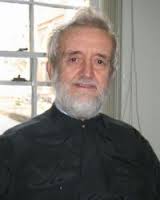
Met. John (Zizioulas)
“The significance of the person rests in the fact that he represents two things simultaneously which are at first sight in contradiction: particularity and communion. Being a person is fundamentally different from being an individual or a “personality,” for a person cannot be imagined in himself but only within his relationships.” ~ Being as Communion
The Concept of “Person” 7
Posted by Dallas Wolf in Concept of "Person" (series) on July 2, 2014
“… a person is one who has passed from the image to the likeness [of God].”
Theologian Metropolitan Hierotheos (Vlachos) of Nafpaktos (1945- ) in his aptly titled, “The Person in the Orthodox Tradition”, brings us back full circle with his exposition and analysis of the thinking of the church Fathers on the concept of “person”. He summarizes his thoughts by concluding:
“All of this shows that the holy Fathers used the term ‘Person’ to point to the particular Hypostases of the Father, Son and Holy Spirit. But they more often use the term ‘anthropos’, man, for people. Yet there are some indications that the term ‘person’ is sometimes also applied to a man. But this must be done with special care, for it is possible to give a philosophical and abstract character to the term ‘person’. Properly a man and a person is one who has passed from the image to the likeness. In the teaching of the holy Fathers, to be in the image is potentially to be in the likeness, and being in the likeness is actually the image. In the same way the man created by God and recreated by the Church through Holy Baptism, is potentially a person. But when, through his personal struggle, and especially by the grace of God, he attains the likeness, then he is actually a person.”
This means that the idea of the emergence and perfection of our “person” is integrally connected to the spiritual process of purification (katharsis), illumination (theoria), leading to union with God (theosis); or deification.
In summary, clearly there is a massive difference between an “individual” and a “person”.
The great Cappadocians first distinguished between “essence or nature” (ousia) and “person” (hypostasis) for us.
Vladimir Lossky then explained the idea of a “person” in terms of the “irreducibility of man to his nature” and its ability to transcend its nature while still including it.
Christos Yannaras introduced us to the idea that a “person” is necessarily relational; in “direct personal relationship and communion”, participating “in the principle of personal immediacy, or of the loving and creative force which distinguishes the person from the common nature”.
John Zizioulas then explained that it is only within the context of baptism, or new birth, that fallen humanity can achieve the “absolute freedom” to love and unite itself and creation with God. It is this “ecclesial being which ‘hypostasizes’ the person according to God’s way of being”, becoming “a movement of free love with a universal character”, “able to carry with [it] the whole of creation to its transcendence.”
Lossky: “The man who is governed by his nature… is the least personal.”
Posted by Dallas Wolf in New Nuggets on June 30, 2014
Vladimir Lossky – (1903 – 1958) was one of the most influential Orthodox Christian theologians of the 20th century. He emphasized theosis as the main principle of Orthodox Christianity.

Vladimir Lossky (1903-1958)
“The man who is governed by his nature and acts in the strength of his natural qualities, of his ‘character’, is the least personal. He sets himself up as an individual, proprietor of his own nature, which he pits against the natures of others and regards as his ‘me’, thereby confusing person and nature.” ~ The Mystical Theology of the Eastern Church
The Logos Doctrine 1
Posted by Dallas Wolf in The Logos Doctrine (series) on June 29, 2014
“In the beginning was the Logos…”
Christianity is unique among the world’s great religions in that it is the only one with the revelation of God emptying himself of his divine prerogatives to incarnate as a person in order to save all humankind from a fallen imperfect state and lead them to ultimately attain to the likeness of God. The Logos Doctrine is essential to an understanding of that revelation.
Our discussion begins with the words of St. John in the prologue to his Gospel: “In the beginning was the Logos (Word)…”.
The New Testament was originally composed in Greek. The Greek word which is translated “Word” in most English Bibles is “Logos”. Many English speaking Christians are aware of this fact, but very few are aware of the ancient Christian Logos Doctrine to which it refers. The Logos Doctrine is so foundational to Christian theology that Protestant theologian Paul Tillich stated emphatically that, “He who sacrifices the Logos principle sacrifices the idea of a living God, and he who rejects the application of this principle to Jesus as the Christ rejects his character as Christ.” (Systematic Theology, Vol. 3, p. 288). With that crystal clear message from one of the greatest theologians of the 20th century, let’s move on!
So, what is this Logos Doctrine?
Five hundred years before the birth of Jesus, a Greek philosopher named Heraclitus used the word Logos to describe what he envisioned as a universal force of reason which governed the universe. He felt that “all things happen according to this Logos”. Later, the philosophical school known as the Stoics expanded and popularized this idea in the ancient world.
Early Christians, including the Gospel writer John, adapted the Logos principle as a means to explain Jesus Christ in terms that the dominant Greco-Roman culture could understand and respect. In Greek Stoic philosophy, the concept of the Logos describes a universal principle. But, in the Christian context, in addition to that transcendent idea, the Logos also assumes a very personal character by being associated with the Son, the second Person of the Holy Trinity. So, in the following discussion of the pre-incarnational Christian Logos Doctrine, every time we see “Logos” or Word, we need to mentally add to it the “Son”, the second Person of the Trinitarian Godhead.
 First Thoughts