Posts Tagged Theology
Louth: “The Relationship Between Mystical and Dogmatic Theology”
Posted by Dallas Wolf in Hesychasm - Jesus Prayer, New Nuggets, Theology on October 1, 2016
Andrew Louth (1944 – ) – is a Christian theologian, Eastern Orthodox priest, and Professor of Patristic and Byzantine Studies at the University of Durham, England. He has taught at Durham since 1996, and previously taught at Oxford and the University of London. Louth is an expert in the history and theology of Eastern Christianity.
 “This formative period [1st through 5th centuries] for mystical theology was, of course, the formative period for dogmatic theology, and that the same period was determinative for both mystical and dogmatic theology is no accident since these two aspects of theology are fundamentally bound up with one another. The basic doctrines of the Trinity and Incarnation, worked out in these centuries, are mystical doctrines formulated dogmatically. That is to say, mystical theology provides the context for direct apprehensions of the God who has revealed himself in Christ and dwells within us through the Holy Spirit; while dogmatic theology attempts to incarnate those apprehensions in objectively precise terms which then, in their turn, inspire a mystical understanding of the God who has thus revealed himself which is specifically Christian.
Put like that it is difficult to see how dogmatic and mystical theology could ever have become separated; and yet there is little doubt that, in the West at least, they have so become and that ‘dogmatic and mystical theology, or theology and ‘‘spirituality’’ [have] been set apart in mutually exclusive categories, as if mysticism were for saintly women and theological study were for practical but, alas, unsaintly men’.” From: The Origins of the Christian Mystical Tradition, p. x
Met. Kallistos (Ware) – “The true aim of theology…”
Posted by Dallas Wolf in Hesychasm - Jesus Prayer, New Nuggets, Theology on August 24, 2016
Metropolitan Kallistos (Ware) of Diokleia – (1934 – 2022) is a titular metropolitan of the Orthodox Ecumenical Patriarchate in Great Britain. From 1966-2001, he was Spalding Lecturer of Eastern Orthodox Studies at Oxford University, and has authored numerous books and articles pertaining to the Orthodox faith.
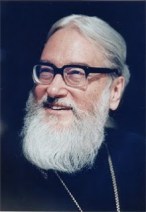
“The true aim of theology is not rational certainty through abstract arguments, but personal communion with God through prayer.”
– Met. Kallistos Ware
Met. Hierotheos (Vlachos): “Man has two cognitive centers.”
Posted by Dallas Wolf in Hesychasm - Jesus Prayer, New Nuggets, Theology on August 22, 2016
Metropolitan Hierotheos (Vlachos) – (1945- ) is a Greek Orthodox metropolitan and theologian. He graduated from the Theological School of the University of Thessaloniki and is one of the finest Patristic scholars living.
 “Man has two cognitive centers. One is the nous, the organ suited for receiving God’s revelation which is then formulated by our reason, while the other is reason, which knows the tangible world around us. With our nous we acquire knowledge of God, while with our reason we acquire knowledge of the world and the learning offered by the science of sensory things.”
From The Person in the Orthodox Tradition, p. 28
hilastérion (ἱλαστήριον): Propitiation or Expiation?
Posted by Dallas Wolf in First Thoughts, Theology on August 5, 2016
The Greek word ἱλαστήριον, transliterated as hilastérion (hil-as-tay’-ree-on) is translated into English as both “propitiation” and “expiation”. Hilastérion and it variants are found in the New Testament rarely, but there are three citings that are particularly important to the topic of atonement: Rom 3:25; 1 Jn 2:2; 4:10:
(1) Rom 3:25: “…whom God displayed publicly as a/an _____________ in His blood through faith. This was to demonstrate His righteousness, because in the forbearance of God He passed over the sins previously committed”
(2) 1 John 2:2: “…and He Himself is the ______________ for our sins; and not for ours only, but also for those of the whole world.
(3) 1 Jn 4:10: “This is love: not that we loved God, but that he loved us and sent his Son as an ______________ for our sins.
So what’s the difference between “propitiation” or “expiation”, the English translations of the Greek word hilastérion? A short passage from “Reconciliation,” in Colin Brown, ed., New International Dictionary of New Testament Theology, Vol. III, p. 151 (hereafter referred to as DNTT) summarizes:
“In discussing reconciliation and atonement it has become customary to draw a distinction between propitiation and expiation. In propitiation the action is directed towards God, or some other offended person. The underlying purpose is to change God’s attitude from one of wrath to one of good will and favor. In the case of expiation, on the other hand, the action is directed towards that which has caused the breakdown in the relationship… In short, propitiation is directed towards the offended person, whereas expiation is concerned with nullifying the offensive act” (DNTT, Vol. III, p. 151).
Given the above, “propitiate,” would indicate that God is changed; whereas “expiate” would indicate that the repentant sinner is changed. But, this raises another serious theological question: Does God change? On this question, we will take the traditional classical Christian position that “God does not change”.
Having introduced the question of change, we can now return to the original question at hand: In the New Testament, is the meaning of hilastérion more closely approximated by “propitiation” or “expiation”?
Summarizing the first 1,000 years of Christian patristic theology, Orthodox theologian and Bishop Kallistos Ware insists that Christ did not become incarnate to heal God the Father: He became incarnate to heal us. According to the Orthodox, the cross, resurrection, and ascension of Christ represent the “mercy seat” (Gk. hilastérion/ Heb. kippur) upon which our sins are “wiped away”/”expiated” by God, restoring us to His covenant love. This “expiation”, or removal of sin as an obstacle between man and God, transforms repentant sinners into His divine likeness and nature (2 Cor 3:18; 2 Pet 1:4 etc.). So, it is we who change rather than God. Orthodoxy emphatically supports the divine attribute of constancy of God (Mal 3:6; Jas 1:17).
If we concede the classical Christian position that God never changes and remains ever constant, then we must conclude that divine “propitiation” – a change in attitude from one of wrath to one of good will and favor- cannot be attributed to God; for He is, by definition, changeless. God cannot have been “propitiated” ontologically by having “a change of attitude” unless God Himself changed ontologically.
There is one final point to be made from the perspective of New Testament exegesis. In the case of “expiation”, “the action is directed towards that which has caused the breakdown in the relationship… In short, “propitiation” is directed towards the offended person, whereas “expiation” is concerned with nullifying the offensive act” (DNTT III, 173).
So, to what do the three New Testament passages using hilastérion and variants, cited above, refer to? Do they refer to God (as in God’s wrath being “propitiated”) or to the sins of man being wiped away and removed as an obstacle to union with God (“expiation”)? Clearly, in all three of the passages in question, hilastérion is used directly in reference to humankind’s sins as an obstacle to our union with God. They do not refer to God as an object of “propitiation”. This is not a “propitiation” for the Father,” but rather “expiation” “for our sins.”
In referring to the patristic theology of the first Christian millennium we should emphasize this is not an exclusively patristic or Orthodox view. Some leading academic scholars and some major Protestant scholars have held hilastérion is best understood as “expiation” – a change in man, wiping away his sin; rather than “propitiation” – a change of God, changing His disposition from anger to affection. God is constant and changeless. God is the same yesterday, today, and forever. It is humankind who must be transfigured by the changeless grace and mercy of God.
The Latin Western tradition, by contrast, has insisted since the Middle Ages on defining hilastérion in the sense of “propitiation”, including the traditional Calvinist interpretation. Historically the emphasis upon a change in God’s attitude rather than man’s condition arose from St. Augustine in the 5th century, but reached its zenith in the 11th century with Anselm of Canterbury. According to Anselm, man had broken honor with his liege Lord (God). And because his honor was slighted, “satisfaction” had to be made; in this case, by the death of his own son, (Jesus Christ).
The Eastern Orthodox Christian tradition bypassed this particular Western interpretation entirely. They never adopted a soteriology of merit/satisfaction (ala Anselm). To the Orthodox, the atonement is purely grace/gifting from God rather than a merit/earning system imposed on humankind.
Image and Likeness of God in Genesis 1:26
Posted by Dallas Wolf in First Thoughts, Theology on August 4, 2016
Genesis 1:26: Then God said, “Let us make humankind in our image, according to our likeness; and let them have dominion over the fish of the sea, and over the birds of the air, and over the cattle, and over all the wild animals of the earth, and over every creeping thing that creeps upon the earth.”
Every human being is created in the image of God and it is the purpose of each of us to attain to His likeness, that we may be “partakers of the divine nature” (cf. 2 Peter 1:4).
Bishop Kallistos (Ware), in his classic book “The Orthodox Church”, tells us, “According to most of the Greek Fathers, the terms image and likeness do not mean exactly the same thing. ‘The expression according to the image,’ wrote John of Damascus, ‘indicates rationality and freedom, while the expression according to the likeness indicates assimilation to God through virtue’ (On the Orthodox Faith, 2, 12 (P.G. 94, 920B)). The image, or to use the Greek term the icon, of God signifies man’s free will, his reason, his sense of moral responsibility — everything, in short, which marks man out from the animal creation and makes him a person. But the image means more than that. It means that we are God’s ‘offspring’ (Acts 27:28), His kin; it means that between us and Him there is a point of contact, an essential similarity. The gulf between creature and Creator is not impassable, for because we are in God’s image we can know God and have communion with Him. And if a man makes proper use of this faculty for communion with God, then he will become ‘like’ God, he will acquire the divine likeness; in the words of John Damascene, he will be ‘assimilated to God through virtue.’”
This “optimistic anthropology” of the Eastern Orthodox with its “original blessing” in the creation of Adam and, by extension, of all humankind, differs markedly from the “pessimistic anthropology” of the Western church with its emphasis on “Original Sin” and its logical extensions. Bishop Kallistos observes, “This picture of Adam before the fall is somewhat different from that presented by Saint Augustine and generally accepted in the west since his time.”
It is not surprising, then, that many Western theologians consider the Hebrew words for image (tselem) and likeness (demuth) to be synonyms; and their use in Gen. 1:26 to be a simple example of Hebrew synonymous parallelism. Eastern Orthodox theologians disagree, citing a distinction in meaning between tselem and demuth.
To the Orthodox, the words, “image and likeness” are used to indicate two different aspects of the “image” of God.
- Image is the Hebrew word tselem, צֶ֫לֶם, and always indicates a “physical” or structural image of some kind.
- Likeness is the Hebrew word demuth, דְּמוּת, and usually refers to some kind of “functional” image, likeness or expression.
There seems to be a clear distinction between the two words tselem and demuth as used in the Hebrew Bible.
- tselem indicates a “physical” image or structure and would refer to the “structural” image of the Godhead
- demuth indicates a “functional” likeness, similitude – the idea of “acts like.”
What do the Greek translations of tselem and demuth in the Septuagint (LXX) translation of the Hebrew Bible (ca. 300 BC) tell us about image and likeness in the light of the use of these Greek words later in the New Testament?
In the Septuagint, at Genesis 1:26, the LXX translates tselem as εἰκόνα, eikona
In the 23 New Testament occurrences of eikōna and its derivatives, it appears that there is no clear distinction in what eikōna references regarding the two aspects of God’s image.
At Gen. 1:26, the LXX translates demuth as ὁμοίωσιν, homoiōsin.
Used one time in the New Testament at James 3:9, “men, who have been made in the likeness (homoiōsin) of God.” Indicates the present status of mankind. They were created originally and all men are presently “in” the image of God.
Since homoiōsis is only used one time, we should probably interpret James as focusing on the fact that men have all been created in the “functional” image of God, that is with the purpose of bringing glory to Him.
Arch. Ireini : “…encountering Christ but in a way we can’t understand…”
Posted by Dallas Wolf in New Nuggets on March 6, 2016
Archimandrite Ireini (Steenberg) – was born in the United States in 1978 . He was head of Theology & Tutor for Graduates, University of Oxford. In 2011 he became Founder and Dean of the Sts Cyril & Athanasius Institute for Orthodox Studies, San Francisco.

“… being general in a Christian way—[mysticism is] encountering Christ but in a way that we can’t understand or can’t articulate.” ~ Hieromonk Ireini (Steenberg) from a lecture on “Orthodoxy and Mysticism”, 2010.
St. Gregory of Nyssa – “… only wonder grasps anything”
Posted by Dallas Wolf in Hesychasm - Jesus Prayer, Monasticism, Patristic Pearls on August 5, 2014
St. Gregory of Nyssa (c. AD 335 – 395) – Along with his older brother, Basil of Caesarea, and their friend, Gregory of Nazianzus, Nyssen was one the three great Cappadocian Fathers of the 4th century. He was also younger brother of St. Macrina the Younger; virgin, mystic, monasatic, wonder worker, and philosopher of God.

“Concepts create idols; only wonder grasps anything; People kill one another over idols. Wonder makes us fall to our knees.”
~ from: The Life of Moses
Atonement Theory 1
Posted by Dallas Wolf in Atonement Theory (series) on July 13, 2014
“We know that the Atonement works; but how it works is not as clear.”
Jesus Christ died on the cross for our sins (cf., 1 Cor. 15:3). In this way he fulfilled the old covenant sacrificial system, reconciled us to God, and changed our lives forever.
That is the doctrine of the Atonement. Its reality is not in dispute. However, many Christians struggle to understand this doctrine. We know that the Atonement works; but how it works is not as clear. Over the centuries many different theories have been suggested to explain how the Atonement works.
Many contemporary Western Latin Christians (Roman Catholics and Protestants) are unaware that there are other theories of the nature of Jesus Christ’s atonement. Most are only familiar with their own Roman Catholic Satisfaction Theory of atonement or the related Protestant Penal Substitution Theory. My guess is that few Catholics or Protestants are aware that both of their respective atonement theories are relatively new innovations theologically and neither reflects the theology of the ancient Christian church. Consequently, even fewer Western Christians are likely familiar with the predominant atonement view held by those in the Eastern Orthodox Church, which is commonly called The Recapitulation Theory, which does reflect ancient Christian tradition dating back to the late 2nd century.
First, a very general chronological overview of the four major Christian atonement theories
- Moral Influence Theory (2nd century)
- “Christus Victor”/Ransom/Recapitulation Theory (late 2nd century)
- These are different, but generally considered together as the “Patristic” or “Classical” understandings of the early Church Fathers
- Satisfaction Theory (11th century)
- Developed by Anselm of Canterbury (1033-1109).
- Penal Substitution Theory (16th century)
- A variation of Anselm’s satisfaction theory developed by the Protestant Reformers, especially John Calvin (1509-1564), and is often treated together with the satisfaction theory
Atonement Theory 2
Posted by Dallas Wolf in Atonement Theory (series) on July 12, 2014
“…the classical or patristic view, … can be variously interpreted as the Ransom or Recapitulation view, under the general heading of ‘Christus Victor’.”
Throughout the centuries, Christians have used different metaphors and given differing explanations of Christ’s atonement to express how the atonement might work. The four most well-known theories are briefly described below:
The earliest explanation for how the atonement works is often called by contemporary scholarship the Moral Influence Theory. According to this view the core of Christianity is positive moral change, and the purpose of everything Jesus did was to lead humans toward that moral change. He is understood to have accomplished this through a combination of his teachings, personal example, his founding of the ekklesia (Church), and the inspiring power of his crucifixion and resurrection. This view was taught by the Church Fathers in the 2nd and 3rd centuries AD along with what is called the classical or patristic view, which can be variously interpreted as the Ransom or Recapitulation view, under the general heading of “Christus Victor”. Peter Abelard (1079-1142) re-popularized The Moral Influence Theory in the Medieval period partially in reaction against Anselm’s Satisfaction theory (below). It remains the most popular view of atonement among theologically liberal Protestant Christians.
Chronologically, the second theory, the “Christus Victor”/Ransom/RecapitulationTheory, was first clearly articulated by Irenaeus (early 2nd century – c. AD 202), Bishop of modern-day Lyon, France. Gustav Aulén, in his 1931 book Christus Victor: An Historical Study of the Three Main Types of the Idea of Atonement, gives us a description of “Christus Victor” as, “the work of Christ is first and foremost a victory over the powers which hold mankind in bondage: sin, death, and the devil.”
“Christus Victor” and “Ransom” differ slightly from each other: in the Ransom metaphor Jesus liberates mankind from slavery to sin and Satan and thus death by giving his own life as a ransom sacrifice (cf., Matthew 20:28). Victory over Satan consists of exchanging the life of the perfect man (Jesus), for the lives of the imperfect (mankind). The “Christus Victor” theory, on the other hand, does not see Jesus as a ransom, but rather as defeating Satan in a spiritual battle and thus freeing enslaved mankind by defeating the captor (Satan).
Atonement Theory 3
Posted by Dallas Wolf in Atonement Theory (series) on July 11, 2014
“Anselm used the analogy of Medieval Feudal society to illustrate his theory.”
The Recapitulation Theory is another variation of the “Christus Victor” model and also dates to the very early Church. In the recapitulation view of the atonement, Christ is seen as the new Adam who succeeds where the first Adam failed. Christ undoes the wrong that Adam did and, because of his union with humanity, leads humankind on to union with God and eternal life. This theory is found throughout the writings of the early Church Fathers. Athanasius of Alexandria (c. 296–373), the hero of the Council of Nicaea in AD 325, wrote the classic treatise On The Incarnation of the Logos in AD 318 which explains the overall Recapitulation view very well.
The “Christus Victor” Theory and its variants dominated Christian theology for a thousand years until Anselm of Canterbury moved the Latin West toward the “Satisfaction” theory in the 11th century.
The third atonement theory, the Satisfaction Theory, was developed by the 11th century theologian Anselm of Canterbury (1033-1109). According to this theory, mankind owes a debt not to Satan, but to the sovereign God himself. Anselm used the analogy of Medieval Feudal society to illustrate his theory. A sovereign may well be able to forgive an insult or an injury in his private capacity, but because he is a sovereign, he cannot if the state has been dishonored. Anselm argued that the insult given to God is so great that only a perfect sacrifice could satisfy, and that Jesus, being both God and man, was this perfect sacrifice. Therefore, the doctrine would be that Jesus gave himself as a “ransom for many”, to God the Father himself.
The next atonement theory, which was a development by the Reformers (including Luther, Calvin, Zwingli, and Melanchthon) is based on Anselm’s Satisfaction Theory. It is the widely held Protestant Penal Substitution Theory which, instead of considering sin as an affront to God’s honor, sees sin as the breaking of God’s moral law. Placing a particular emphasis on Romans 6:23 (‘the wages of sin is death’), Penal Substitution sees sinful man as being subject to God’s wrath with the essence of Jesus’ saving work being his substitution in the sinner’s place, bearing the curse in the place of man (cf., Galatians 3:13).

