Posts Tagged Theology
Tillich: “He who sacrifices the Logos principle sacrifices the idea of a living God…”
Posted by Dallas Wolf in New Nuggets, Theology on June 26, 2014
Paul Tillich (1886 – 1965) – German American Christian philosopher and theologian who is widely regarded as one of the most influential theologians of the twentieth century. He maintained that the Logos Doctrine was absolutely essential to Christian theology.
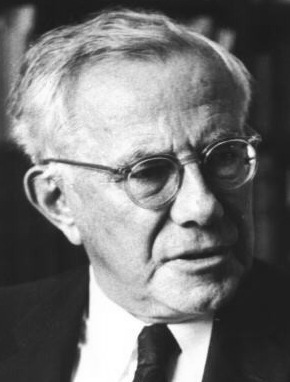
“He who sacrifices the Logos principle sacrifices the idea of a living God, and he who rejects the application of this principle to Jesus as the Christ rejects his character as Christ.”
~ Systematic Theology, Vol. 3.
Nous (νοῦς) – “…the highest faculty in man” 4
Posted by Dallas Wolf in The "Nous" (series) on June 17, 2014
” As a consequence of the “Fall”, the “nous” became dissipated and diseased…”
The “nous” in all of humankind was severely injured, diseased, and damaged in the “Adamic Fall” (The “Fall” in the Garden of Eden). The “Fall” is seen as the misuse of free will; of focusing on oneself rather than on God for guidance, wisdom and worship. Free will gave man the right to choose. And choose he did. In the “Fall”, humans shifted their focus from God to themselves (and any number of other idols). As a consequence of the “Fall”, the “nous” became dissipated and diseased, overwhelmed with increasing concerns for individual survival and the needs and desires of the body in the physical, material world. The “nous” became estranged from God’s grace and humankind’s whole nature became sick. This sickness was handed on to later descendants as the inheritance of ancestral sin.
The Orthodox do not understand the “Fall” in legal terms, as Western Christianity does, but rather in medical terms. When Paul says in Romans 5:19, “as by one man’s disobedience many were made sinners,” it is understood in a medical sense, not a legal one. In other words, as a result of one man’s sin, human nature became sick.
The Incarnation and ministry of Jesus Christ is seen as a therapeutic (Greek therapeuo) mission of love from God to humankind in order to heal and restore our fallen sick souls. The key to this is the healing and restoration of the “nous”, the “eye of the heart”. Jesus possessed a complete human nature, not only on the lower side (body) but also on the higher spiritual side, the “nous”. His perfect human nature broke the grip of sin on fallen human nature, opening the possibility of restoring the diseased “nous” of every human being to its spiritual pre-Fall state.
In his book, Orthodox Psychotherapy: the Science of the Fathers, Archimandrite Hierotheos Vlachos (now Metropolitan Hierotheos) quotes Saint Maximus the Confessor (7th century) as saying “The nous functions in accordance with nature when it keeps the passions under control, contemplates the inner essences of created beings, and abides with God.” The “nous” is changed by every conceptual image that it accepts. When the “nous” is in a fallen state, confusion is created in the whole of the spiritual organism of man. In this “fallen” state, the “nous” needs therapy/purification.
Contemplative Primitive Christian Prayer 1
Posted by Dallas Wolf in Contemplative Prayer (series) on June 13, 2014
“after the fire a still small voice”. ~ 1 Kings 19:12
1 Kings 19 talks about Elijah running from a very evil queen Jezebel. God wants to talk with Elijah and Elijah experiences a great wind, an earthquake, and a fire, yet he does not hear the voice of God. He hears it in a “still small voice” or as the Greek Septuagint has it, “φωνὴ αὔρας λεπτῆς”, “a sound minute and poor”.
We can only hear “a sound minute and poor” when we ourselves are quiet, still, and attentive. We need to be calm in spirit, ignoring the endless blather of our own mind, and open to the moment without expectation or judgment. That is contemplation. It is how Jesus spent most of his time “praying”. It is what the early church meant by prayer.
Western Latin Christianity (Roman Catholicism) completely lost their contemplative prayer tradition by the rational argumentation of the Reformation of the 16th century and the rational intellectual revolution of the Enlightenment of 17th century. Protestantism never had a contemplative prayer tradition.
The bad news is that we in the West have no idea how to pray as Jesus prayed. The good news is that the tradition of contemplative prayer is being re-discovered in the West and has always been available in the Eastern Orthodox tradition of “hesychasm” to anyone motivated to quiet themselves and seek it.
Contemplative Primitive Christian Prayer 2
Posted by Dallas Wolf in Contemplative Prayer (series) on June 12, 2014
“Very early in the morning, while it was still dark, Jesus got up, left the house and went off to a solitary place, where he prayed.” ~ Mark 1:35
In my last post, I pointed out that Western Christianity lost its mystic tradition of contemplative prayer about 500 years ago. Contemplation was the prevailing type of Christian prayer for nearly 1,600 years in the Latin West and it still remains the principal prayer tradition of the Orthodox East. Today, I want to follow up on that thought and discuss the fact that contemplative prayer was established as the principal type of prayer of Christianity in the very beginning, by Jesus himself.
In the very first Chapter (v. 35) of our oldest Gospel, Mark tells how Jesus habitually prayed; alone in a solitary place without distraction. In fact, just before teaching the disciples the “Lord’s Prayer” in Matthew 6, Jesus tells them, “whenever you pray, go into your room and shut the door and pray to your Father who is in secret; and your Father who sees in secret will reward you.”(v.6). In these passages, Jesus also tells his disciple how not to pray: “And whenever you pray, do not be like the hypocrites; for they love to stand and pray in the synagogues and at the street corners, so that they may be seen by others” (v.5); and “When you are praying, do not heap up empty phrases as the Gentiles do; for they think that they will be heard because of their many words” (v. 7). These are not isolated incidents and remarks, but characteristic of Jesus’s prayer life throughout the Gospel accounts of his ministry. As Luke tells us, “So He Himself often withdrew into the wilderness and prayed.” (v. 5:16).
Clearly, Jesus set Contemplative Prayer as the standard for Christians, what I will call “Primitive Christian Prayer”. I use the word “primitive” not in the sense of the word that denotes “crude”, “unfinished”, or “simplistic”, but in the sense of being “primary, original, and pristine”. Primitive Christian Prayer is the way Jesus prayed. It was the principal prayer tradition of the early Church.
You have never heard that message preached from a Protestant pulpit (or Catholic, for that matter), have you?
Contemplative Primitive Christian Prayer 8
Posted by Dallas Wolf in Contemplative Prayer (series) on June 6, 2014
“Always breathe Christ” ~ Anthony the Great, 4th century
In the ancient Eastern Orthodox contemplative tradition of “hesychasm” (silence, stillness, quietude), invoking the name of Jesus Christ has been used as a means of focusing the mind on God and eliminating outside thoughts, images, and other distractions from pure presence. Invoking the name of Jesus also acknowledges that God is personal; He only manifests as Persons in Trinity, in an endless “circle dance” (perichoresis) of co-inherent divine love (agape). This invocation of Christ has been combined with breathing as a “psycho-somatic” (involving both “psuche” (soul) and “soma” (body)) aid in centering the spirit (nous) in the heart for its ascent to God.
Athanasius of Alexandria (295 – 356), besides being the hero of the first Ecumenical Council of the Church at Nicaea in AD 325, also wrote “The Life of Anthony”, about the greatest and most celebrated of the first monks. In it, Athanasius quotes Anthony (whom he personally knew) as follows:
“[Anthony] called his two companions… and said to them, ‘Always breathe Christ’.”
Pseudo-Macarius echoes the same idea in about AD 400 with this elegant sentiment from his “Coptic Cycle of Sayings”:
“The Holy Spirit, the Breath of God, is linked to the Word from all eternity. Therefore when a person’s intellect and breathing utter the name of the Incarnate Word – Jesus – they are united with the Holy Spirit, and the person breathes and thinks in the Spirit.
The intellect [nous], strengthened by the invocation, finds its connection with the heart again, and this, or rather the presence in it, becomes conscious. Intellect and heart together form that heart-spirit in which a person collects, opens, unifies, harmonizes, and enlarges himself infinitely. It properly constitutes the ‘place of God’.”
Anthony and Macarius were joined in this same sentiment more than 200 years later by 7th century mystic master John Climacus. John wrote the “The Ladder of Divine Ascent”; 30 short tracts, or steps, of spiritual instruction for his monks. In Step 27 of “The Ladder” he wrote:
“Let your calling to mind of Jesus be continually combined with your breathing and you will know the meaning of silence.”
Contemplative Primitive Christian Prayer 10
Posted by Dallas Wolf in Contemplative Prayer (series) on June 4, 2014
“pray without ceasing” ~ Paul, ca. AD 55
In what is probably the earliest authentic letter we have from the Apostle Paul, he urges his nascent Christ community in Thessalonica to “pray without ceasing”. The Primitive Christian ekklesia took that charge very seriously. Contemplative prayer became ingrained in the lives of many of the early saints, providing a constant subtle presence or leitmotif; a divine music infused throughout their entire being, creating the themes, rhythm, tempo, melody, tone, and mood of a sanctified life.
The institutional church, especially after becoming part of the Imperial infrastructure of the Roman Empire beginning in AD 313, naturally began to become more concerned with that which concerns empire; power, prestige, and possessions. As a result, the concept of prayer began to get “dumbed down” to a level that the institutional church could define and control. Hence, we have the five basic kinds of prayer we are familiar with today; Blessing and Adoration, Petition, Intercession, Thanksgiving, and Praise. Don’t get me wrong, there is nothing wrong with these types of prayer; Jesus and Paul used all of them. These prayers are good, powerful, and edify the body of Christ. My point is that they constitute a very small subset of the much larger contemplative Primitive Christian Prayer tradition. As evidence, I again cite John Cassian (ca. AD 400) who tells us, “The various kinds of prayer [petition, promise, intercession, pure praise] are followed by a higher state still… it is the contemplation of God alone, an immeasurable fire of love.” It is to this “higher state” of prayer that all Christians are called to aspire.
Many serious God-seekers, repulsed by the questionable antics and priorities of the early institutional Imperial Church, started fleeing to the isolation of deserts of Syria, Palestine and Egypt in the AD 300’s. There they were free to continue to practice and develop their contemplative Primitive Christian prayer tradition; praying in the tradition of Jesus and Paul. These were the famed Desert Fathers and Mothers. This was the beginning of monasticism. Contemplative prayer pretty much remained isolated to the monks and nuns of the sketes and monasteries from that point on; somewhat removed from the institutional “church” structure, or, as I refer to it in its current incarnation, “Jesus, Inc.”.
Reclaiming our Prophetic Voice and Authority
Posted by Dallas Wolf in First Thoughts on July 6, 2013
“In the Biblical tradition, the power on the Right and the power on the Left are symbolized by the kings and the prophets, respectively.” Fr. Richard Rohr, OFM
Fr. Rohr brings up a thought-provoking truth. The Jewish prophets were mainly engaged in acting as agents of God to communicate with his people. This communication came in the forms of prediction of future events, criticism and indictment of native and foreign domination systems, and energizing and encouraging the people to faith and hope. The prophets didn’t just know about God, they knew God in a direct and experiential way. This gave them great authority, passion and confidence. They cared about what God cared about. In the words of theologian Marcus Borg, “the strongest passion of the God of the Bible is the transformation of the humanly-created world into a more just, compassionate, peaceful kind of world.” The prophetic voice echoed that passion.
Because Christianity has been in league with the secular “kings” of this world (discussed yesterday in the post “Christendom: 1,700 years of sleeping with the enemy”), the institutional Christian Church silenced its prophets and lost its prophetic voice and authority early in its history. In fact, so thorough was this purging, the ministries of Apostle and Prophet virtually disappeared from the institutional church (cf., Eph. 4:11). All this in the face of the advice and direction of St. Paul to the individual members of the body of Christ to “strive for the greater gifts”; specifically, “first apostles, second prophets, third teachers”, in that order (cf., 1 Cor 12:27-31). Oh well, “Christendom” did indeed require the institutional church to compromise some core values, didn’t it?
The point is, that when the institutional church suppressed and abandoned its prophetic tradition, the only prophetic voice left on the field was that of secular liberals. The obvious problem with that situation was that these secular prophetic voices often had little or no grounding or authority past the limitations of their own human intellect and passion. That can be a very dangerous thing indeed, as history has amply demonstrated.
The fall of Christendom, starting after WW I in Europe and a little later (post-WW II) in the U.S., marks the breakdown of the unholy alliance between institutional church and State. The universal Church (read: Ekklesia, Body of Christ) now has the opportunity, for the first time in 1,700 years, to reclaim its traditional Prophetic voice and authority. We have the clear advantage over secular prophets in that we know God experientially (some still do, praise God!) and thus can again speak with the authority, passion, and confidence of a loving God who calls us to restore ourselves and the world to union with him.
This is truly an exciting time for the Ekklesia, Body of Christ. Just think, we might even grow some Apostles…
Christendom: 1,700 years of “sleeping with the enemy”
Posted by Dallas Wolf in Ekklesia and church, First Thoughts on July 5, 2013
I was recently reading a piece by Fr. Richard Rohr, OFM, on history’s habit of fluctuating between extremes of the “Left” and the “Right”, between Liberalism and Conservatism. Rohr made the interesting observation that, “It is interesting that these two different powers took the words “Right” and “Left” from the Estates-General in France”. What he said next really caught my attention, “On the right sat the nobility and the clergy (what were the clergy doing over there?) and on the left sat the peasants and 90 percent of the population”.
It struck me that the image of the clergy sitting with the nobility is a good working definition of “Christendom”. The term “Christendom” applies to Protestants as well as to Roman Catholics and the Eastern Orthodox starting in AD 313, when Roman Emperor Constantine I ended the persecution of Christians and made Christianity the preferred religion of the Empire with the Edict of Milan.
The institutional “Church” does not acknowledge the fact that although the “Clergy” has been sleeping with enemy (i.e., the “Nobility”) for a solid 1,700 years, both Jesus and Paul have been sitting on the opposite side of the isle with “the peasants and 90 percent of the population” for that entire period.
I have often said that the demise of “Christendom” in the late 20th/early 21st century offered a great opportunity for the universal “Church” (the Ekklesia) to become more closely aligned with Jesus, Paul, and the peasants and away from Nobility and Empire. Although this would appear to be a short-term disaster for the contemporary institutional “Church” as it exists today, it would provide an opportunity for the institutional church to repent and “change its mind” (cf. Rom. 12:2). The alternative would be to continue to fade into irrelevance. I believe that the institutional “church” must do corporately what it continually calls its laity to do individually: confess and repent. Were this metanoia to happen, a whole lot of existing “tradition” would instantly disappear, “Poof!”, and the local church might start doing a better job of leading the saints to union with God (theosis) than it did under Christendom.
Unfortunately, I think that the contemporary institutional “Church” is far too proud and far too arrogant to admit that it has been this wrong for this long. I anticipate that it will continue to fume and bluster in denial of its own sin and carnality. At least for now.
Like any worldly institution, the “Church” will ultimately do whatever it has to do in order to survive, even if that means violating its own existing core values; like it did 1,700 years ago.
Secular “psychology” can only help you cope: only God can deliver and cure.
Posted by Dallas Wolf in First Thoughts on June 5, 2013
The word “psychology” literally means, “study of the soul” (it is made up of two Greek words: ψυχή, psukhē, meaning “soul”; and -λογος – logos, meaning “study of”).
The fact that we are tri-partite (three-part) beings, consisting of “spirit”, “soul”, and “body” is well attested to in the New Testament (cf. 1 Thess. 5:23; Heb. 4:12) and in the writings of the early Fathers (e.g., Irenaeus, Clement of Alexandria, Origen, Gregory of Nyssa, and Basil of Cesaraea).
Jesus identified many psychological issues in his teachings that we now might term “denial”, “defense mechanisms”, “projections”, and “inner healing”. The Apostle Paul was certainly deeply involved in the transformation of the fallen human “soul” and “body” through the power and influence of the “Spirit” of God. There are many additional New Testament examples of psychological teachings, both in the Gospels and the Epistles.
The actual term “psychology” was first used in writing during the Enlightenment of the 16th century. The modern science of psychology is brand new, emerging in Europe in the 1870’s, with its super-hero, Sigmund Freud, starting his work in the 1890’s. I know that seems odd, given that “psychology” is such a familiar and popular part of our secular culture of the late 20th and early 21st centuries. But, as a science, it really is brand new, relatively speaking.
The problem with contemporary secular psychology is that, at most, it only deals with two parts of a human being; the body and, perhaps, parts of the soul. With few exceptions, the secular study of psychology virtually ignores the spiritual aspect of humanity. It suffers the modern bias for what can be observed and measured through the five senses, relegating all else (such as spirit), to the intellectual dumpster of superstition and/or imagination.
And that is why I maintain that modern psychology can only help you “cope” with problems, it cannot “deliver” us from them or “cure” them. Secular psychology only deals with two of the three variables of the equation; our fallen “body” and “soul”. It arrogantly ignores the most important element of our being, the “spirit”. Therein lies the healing cure for these problems; the power of the “Spirit” to transform both the soul and the body to align and conform our entire being to the perfect will of God. Only God can truly heal, cure, and deliver us from psychological afflictions.
This is not “new” news, folks. This is ancient Christian teaching that is largely being ignored or shouted down by contemporary secular “science”.
Jesus is Lord, Caesar is Not
Posted by Dallas Wolf in First Thoughts on March 23, 2013
The beginning of the first century AD saw the rapid rise of the Roman Imperial Cult. This religious cult was based upon the proclaimed divinity of Augustus Caesar (c.62 BC – 14 AD / Reigned 31 BC – 14 AD) and subsequent Roman Emperors. This Imperial Cult was a unifying political and religious factor across the whole Roman Empire in the first century. The emergence of the Imperial Cult preceded, but also developed with, the Gospel of Jesus Christ.
The earliest written Christian records we have are the Letters of St. Paul from the mid-first century. A good summary of the theme of his gospel message is contained in the Letter to the Romans Chapter 1, Verses 3 &4: “…concerning His Son Jesus Christ our Lord, who was born of the seed of David according to the flesh, and declared to be the Son of God with power according to the Spirit of holiness, by the resurrection from the dead…”.
In the opinion of British theologian N.T. Wright, “Despite the way Protestantism has used the phrase (making it denote, as it never does in Paul, the doctrine of justification by faith), for Paul “the gospel” is the announcement that the crucified and risen Jesus of Nazareth is Israel’s Messiah and the world’s Lord.”
Wright goes on to explain that Paul’s euangelion, his gospel (Good News) message, was every bit as much a confrontational and subversive political proclamation as it was a religious one: “Paul was announcing that Jesus was the true King of Israel and hence the true Lord of the world, at exactly the time in history, and over exactly the geographical spread, where the Roman emperor was being proclaimed, in what styled itself a “gospel”, in very similar terms.”
Later, Wright applies Paul’s gospel message to his [Paul’s] vision for the ekklesia, the church. His basis for this comes from Chapter 3 of Paul’s Letter to the Philippians. Wright tells us: “We may begin with 3.20. “Our citizenship is in heaven, and from it we await the Saviour, the Lord Jesus, the Messiah”. These are Caesar-titles. The whole verse says: Jesus is Lord, and Caesar isn’t. Caesar’s empire, of which Philippi is a colonial outpost, is the parody; Jesus’ empire, of which the Philippian church is a colonial outpost, is the reality.”
Wright goes on to discuss the implications of Paul’s vision of this empire of Jesus: “if Paul’s answer to Caesar’s empire is the empire of Jesus, what does that say about this new empire, living under the rule of its new lord? It implies a high and strong ecclesiology, in which the scattered and often muddled cells of women, men and children loyal to Jesus as Lord form colonial outposts of the empire that is to be: subversive little groups when seen from Caesar’s point of view, but when seen Jewishly an advance foretaste of the time when the earth shall be filled with the glory of the God of Abraham and the nations will join Israel in singing God’s praises.”
Paul’s vision for this ekklesia, as subversive colonial outposts of the coming empire of Jesus, could not be realized after a series of events in the fourth century. In AD 313 Constantine the Great issued the Edict of Milan, a proclamation of religious tolerance that officially ended the persecution of Christians. The Christian Church greatly increased in power and influence in the fourth century under Imperial patronage. The Church quickly became fully integrated into the political and cultural fabric of the Roman Empire, culminating with The Edict of Thessalonica, also known as Cunctos populos, issued on 27 Feb 380, by Roman Emperor Theodosius I. This edict ordered all subjects of the Roman Empire to profess the faith of the bishops of Rome and Alexandria. The edict officially made Nicene Christianity the state religion of the Roman Empire.
And the Church has been “sleeping with the enemy”, the world’s domination systems and institutions, for the entire 1,700 years since. This is Christendom. This is not the vision of the ekklesia of the Apostle Paul.

