Archive for category Theology
Origen: “For as man consists of body, and soul, and spirit, so in the same way does Scripture”
Posted by Dallas Wolf in Patristic Pearls, Theology on July 6, 2014
Origen of Alexandria, (c. 184 – c. 254) was Head of the famed Catechetical School in Alexandria at age 18 and arguably the most brilliant theologian of the early Christian church. He was probably the most able and successful defender of the faith against the heresy of Gnosticism in the third century. Saint and Church Father without question. In this quote he tells us that Scripture ought to be interpreted at three levels: starting with the lowest level, the body or literal interpretation; followed by the more advanced at the soul level, or moral interpretation; and culminating with the highest level of interpretation, the spiritual, or allegorical interpretation. 1,800 years ago, Origen very clearly articulated what contemporary Christian fundamentalists still haven’t figured out.

Origen of Alexandria (c. 184 – c. 254)
“The individual ought, then to portray the ideas of holy Scripture in a threefold manner upon his own soul; in order that the simple man may be edified by the “flesh”, as it were, of the Scripture, for so we name the obvious sense; while he who has ascended a certain way (may be edified) by the “soul”, as it were. The perfect man, again… (may receive edification) from the “spiritual” law, which has a shadow of good things to come. For as man consists of body, and soul, and spirit, so in the same way does Scripture, which has been arranged to be given by God for the salvation of men.” ~ Peri Archon; First Principles, Book IV, Chapter 1
Isaac of Nineveh: God’s Justice is not Rome’s Imperial ‘Iustitia’
Posted by Dallas Wolf in Monasticism, Patristic Pearls, Theology on July 4, 2014
Isaac of Nineveh – 7th century ascetic and mystic, born in modern-day Qatar, was made Bishop of Nineveh between 660-680. Here Isaac easily debunks the Western Latin notion that God’s righteousness, or “dikaiosyne theou“, is the same as secular Imperial Roman Justice, or “Iustitia“.

“How can you call God just when you read the parable of the laborers in the vineyard and their wages? ‘Friend, I am doing you no wrong… I choose to give to this last as I give to you… do you begrudge my generosity?’ Likewise how can you call God just when you read the parable of the prodigal son who squanders his father’s wealth in riotous living, and the moment he displays some nostalgia his father runs to him, throws his arms around his neck and gives him complete power over all his riches? It is not someone else who has told us this about God, so that we might have doubts. It is his own Son himself. He bore this witness to God. Where is God’s justice? Here, in the fact that we were sinners and Christ died for us…” ~ Ascetic Treatises, 60
Maximus: “The scriptural Word knows of two kinds of knowledge of divine things.”
Posted by Dallas Wolf in Hesychasm - Jesus Prayer, Patristic Pearls, Theology on July 3, 2014
Maximus the Confessor (c. 580 – 662) was a 7th century Christian monk, theologian, and scholar who many contemporary scholars consider to be the greatest theologian of the Patristic era. Two of his most famous works are “Ambigua” – An exploration of difficult passages in the work of Pseudo-Dionysius and Gregory of Nazianzus, focusing on Christological issues, and “Questions to Thalassius” or “Ad Thalassium” – a lengthy exposition on various Scriptural texts. This quote is from the latter work. It affirms the primacy of experience in an authentic spiritual life.
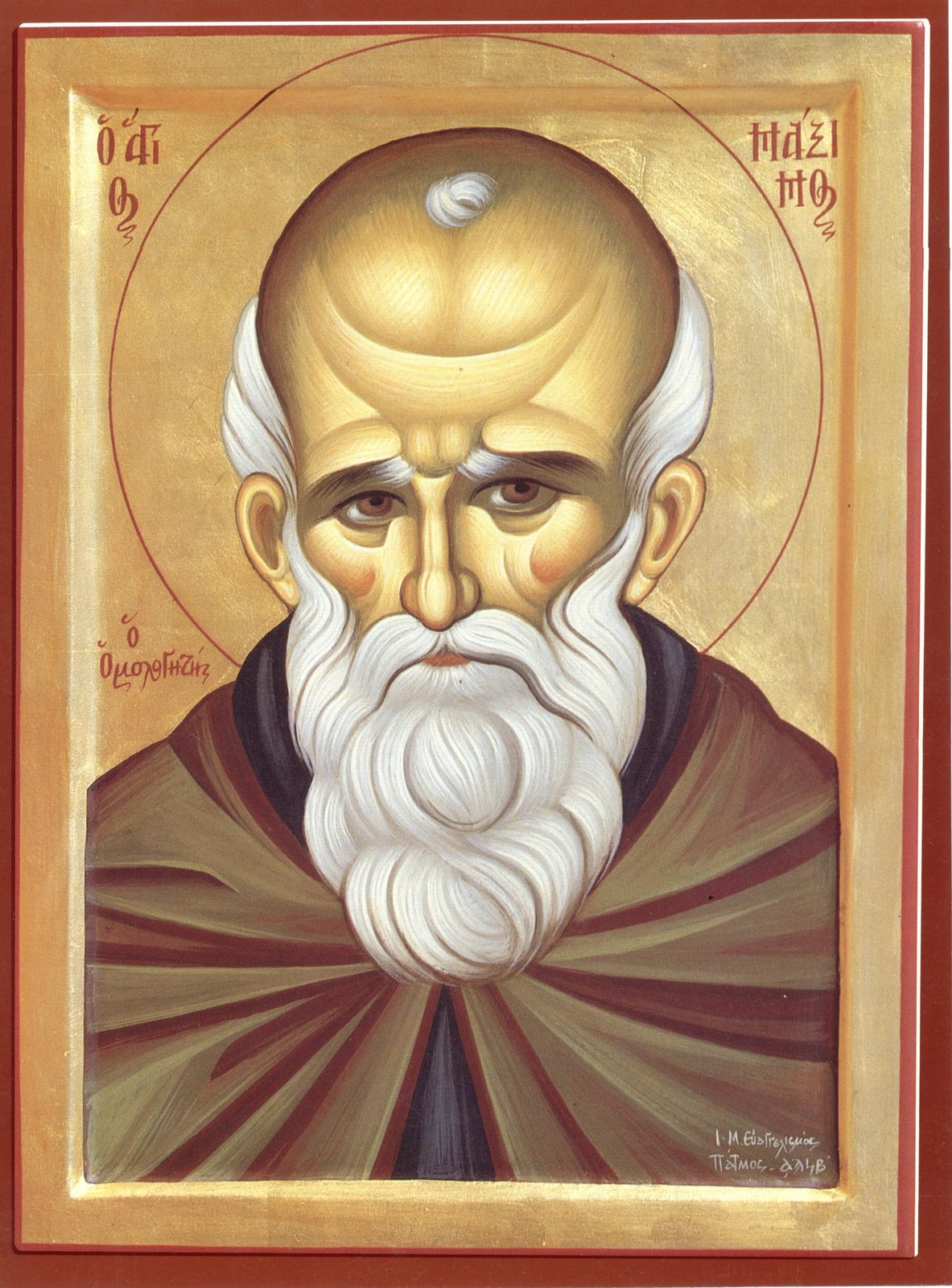
Maximus the Confessor (c. 580 – 662)
“The scriptural Word knows of two kinds of knowledge of divine things. On the one hand, there is relative knowledge, rooted only in reason and ideas, and lacking in the kind of experiential perception of what one knows through active engagement; such relative knowledge is what we use to order our affairs in our present life. On the other hand, there is that truly authentic knowledge, gained only by actual experience, apart from reason and ideas, which provides a total perception of the known object through a participation by grace. By this latter knowledge, we attain, in the future state, the supernatural deification that remains unceasingly in effect.” ~ Ad Thalassium 60
Tillich: “He who sacrifices the Logos principle sacrifices the idea of a living God…”
Posted by Dallas Wolf in New Nuggets, Theology on June 26, 2014
Paul Tillich (1886 – 1965) – German American Christian philosopher and theologian who is widely regarded as one of the most influential theologians of the twentieth century. He maintained that the Logos Doctrine was absolutely essential to Christian theology.
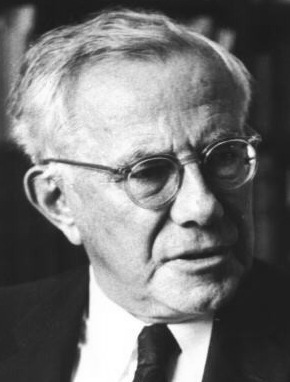
“He who sacrifices the Logos principle sacrifices the idea of a living God, and he who rejects the application of this principle to Jesus as the Christ rejects his character as Christ.”
~ Systematic Theology, Vol. 3.
St. Symeon the New Theologian: “We bear witness that ‘God is light’…”
Posted by Dallas Wolf in Hesychasm - Jesus Prayer, Monasticism, Patristic Pearls, Theology on June 16, 2014
St. Symeon the New Theologian (949-1022) was a 10th century mystic monk. His many direct experiences of God (theoría) convinced him that all Christians must have an actual baptism of the Holy Spirit in addition to the ritualized water baptism and chrismation of the church. His mystical experiences also taught him that God is always received in the form of divine light. Symeon wrote about that light and its power to transform:
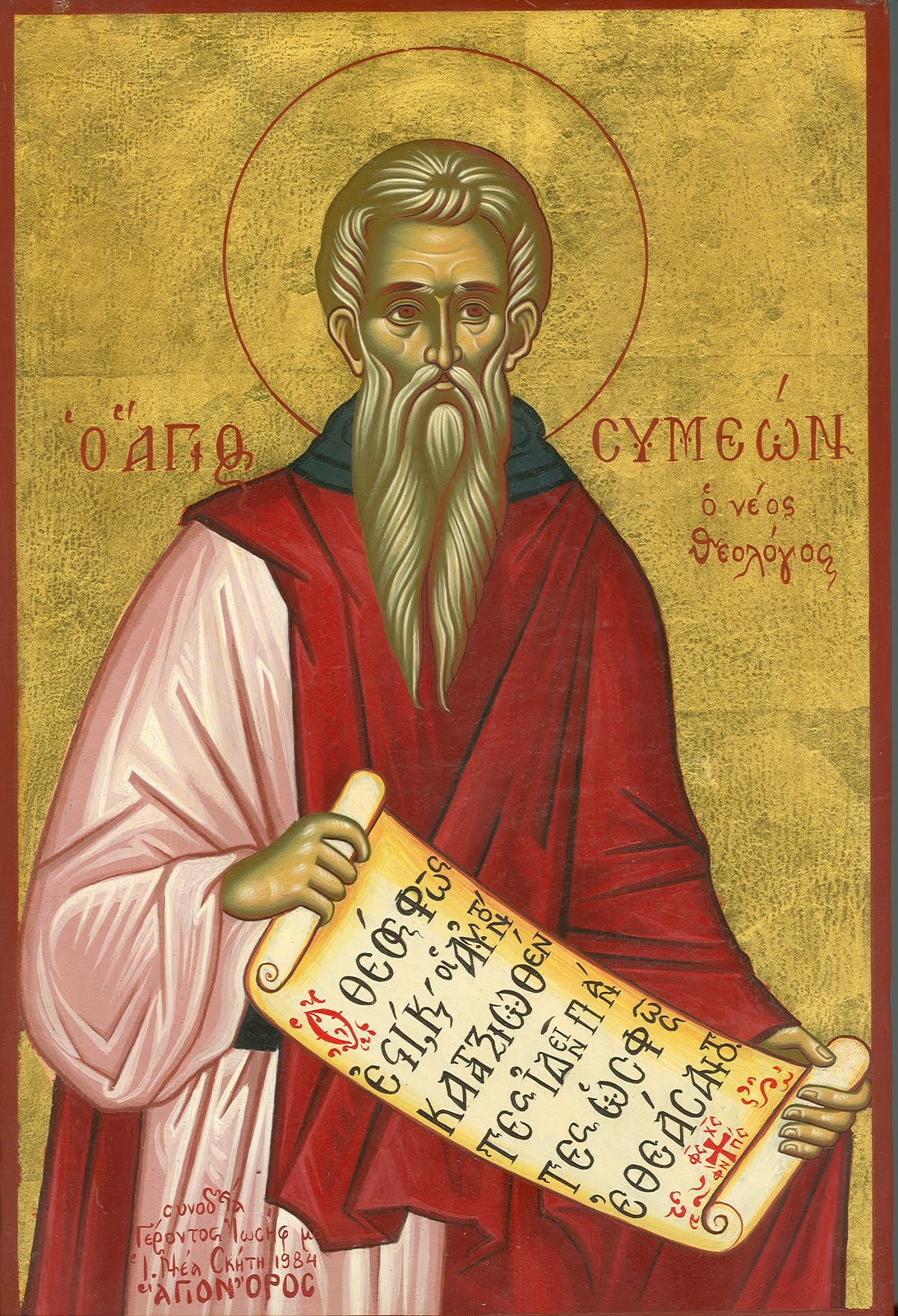
“It shines on us without evening, without change, without alteration, without form. It speaks, works, lives, gives life, and changes into light those whom it illuminates. We bear witness that “God is light,” and those to whom it has been granted to see Him have all beheld Him as light. Those who have seen Him have received Him as light, because the light of His glory goes before Him, and it is impossible for Him to appear without light. Those who have not seen His light have not seen Him, for He is the light, and those who have not received the light have not yet received grace. Those who have received grace have received the light of God and have received God, even as Christ Himself, who is the Light, has said, “I will live in them and move among them.” (2 Cor. 6:16)
~ from: Discourses, No. XXVIII
Why is Theology Important?
Posted by Dallas Wolf in First Thoughts, Theology on March 3, 2013
What is our theology? Is it based on a world-view that God is good and the universe is good? Is God ambivalent, aloof and un-involved in a neutral, Newtonian physics-driven universe? Is God angry and vengeful over our sin, waiting to throw us into the pit of hell in a threatening, violent universe?
Does our theology promote a search for spiritual understanding? Or does our theology seek security and certainty in dualistic yes/no, either/or, right/wrong answers to spiritual questions?
Is our theology based on a big God who is broad, expansive, and inclusive in dealing with man? Or is God small, exclusive, and tribal, belonging to this group (e.g., Jews) or that (e.g., Baptists), with everybody else on the outside looking in?
Is our theology built from a viewpoint of God’s relationship with man (as experienced and recorded in Scripture and Tradition)? Or is it based on man’s rational concepts of God based on Scripture and philosophical speculation?
These are the types of questions theology asks and this is why theology is important. It is the foundation of how we experience and relate to God and the universe. It is the reason that God gave each human being a fully functioning nous (mind, intuitive conscience, spiritual intellect) to discover and use.
Theology is important because it ain’t necessarily so just because grandpa or somebody behind a pulpit said it’s so.
Greek Experience vs. Latin Concept in Theology
Posted by Dallas Wolf in Ekklesia and church, First Thoughts, New Nuggets, Patristic Pearls, Theology on February 4, 2013
I support the notion that Christianity is about experiencing an intimate personal relationship with God. Proper theology is about how we experience that relationship from God to us. Classically, Greek Eastern (Orthodox) theology has been largely based on the experience of God’ relationship to man. The theology of the Latin West (Roman Catholic and Protestant), at least since the days of St. Augustine, has been largely based on philosophical speculation of man’s relationship to God.
For example, let’s contrast these two different approaches as they apply to Trinitarian doctrine. According to Orthodox theologian Fr. John Meyendorff, in the Eastern Greek tradition, “the incarnate Logos and the Holy Spirit are met and experienced first as divine agents of salvation, and only then are they discovered to be essentially one God.” In contrast, 19th century Jesuit theologian Fr. Theodore de Regnon stated, “Latin philosophy considers the nature in itself first and proceeds to the agent; Greek philosophy considers the agent first and passes through it to find the nature. The Latins think of personality as a mode of nature; the Greeks think of nature as the content of the person”.
The Latin approach is based on philosophical concept from man’s view of God. The Greek approach is based on how we experience God’s Biblical relationship to man.
Proper Christian Theology is always Top-down and Relational
Posted by Dallas Wolf in First Thoughts, Theology on December 30, 2012
Everything in proper Christianity is experiential; it is based on relationship. Take some examples: The immanent presence of spermatikos logos, the Son, within us, giving our minds the reason and order to recognize the existence of God and his moral will; the Incarnation of the Logos, God becoming flesh and dwelling among us in the person of Jesus was so that we would have a concrete living person that we could relate to and love as the human exemplar of God; the indwelling presence of the Holy Spirit at Pentecost was so that each of us could have a direct personal relationship with God in the Church Age, after Jesus’ resurrection.
Proper theology is always, always top-down; about God’s relationship to man. That is so our theology is always based on how man, the creation, experiences relationship with his loving Creator, God. When theology is done backwards, bottom-up, based on man’s ideas of God, you end up with a God that is an extrapolation of man, an anthropomorphized super-human God; and that is the error of Western Latin theology.
Union with God, theosis, is the goal of all proper theology and religion. In Eastern Orthodox theology, deification (theosis) is both a transformative process as well as the goal of that process; the attainment of likeness to or union with a loving God. Likeness and union are terms that inherently imply close personal realtionship. Any dogma or doctrine that does not reflect this experience of man’s love relationship with God is most likely in error and bad theology; an afterthought of man.
God as a Remote Roman Magistrate Dispensing ‘Iustitia’ to Mankind
Posted by Dallas Wolf in First Thoughts, Theology on September 7, 2012
|
The real defect in Anselm’s doctrine of atonement is that he built upon the action or the fears of a diseased and guilty conscience in its sense of alienation from God, instead of the pure and free consciousness of Him who is the type of the normal man… Alexander V.G. Allen, 1884 |
By building their theology backwards, with man in relation to God, the Western church also developed, not surprisingly, an anthropomorphized concept of God (i.e., attributed human characteristics to God). God becomes a distant (read “transcendent”) Imperial Roman Magistrate administering iustitia, the secular Roman idea of jurisprudence, on his subjects (man). Tertullian (c. 160 – c. 220 AD) was, among other things, a Carthaginian lawyer. He set in motion this hierarchical, magisterial, forensic, Roman view of religion. This concept was further refined later by his fellow Carthaginians Cyprian, and St. Augustine, whom we just met. Ultimately, St. Anselm of Canterbury (1033-1109) pushed this idea to its absurd limits in the Middle Ages. Anselm’s vision of God resembled a kind of remote, magisterial medieval lord (God) whose offended dignity could only be satisfied by the substitutionary death of his own son (Jesus) in atonement for his subjects’ (man’s) disobedience. This doctrine even has a Latin church name: satisfactio activa vicaria.[1]
Given the above discussion, it is clear that many of our Western Christian doctrines such as “election” and “exclusivism” (‘extra ecclesiam nulla salus’)[2] are Afterthoughts of man and neither inspired nor helpful theology.
Excerpt from the book “First Thoughts“.
Augustine’s Mistake: Backward Theology
Posted by Dallas Wolf in First Thoughts, Theology on September 4, 2012
|
“Jewish thinkers concur with Pelagius’s position that no human being is tainted by the sins of Adam—but only by his own sinful deeds.” Rabbi Michael Leo Samuel |
Either God is all-goodness, but not all-mighty, or He is all-mighty, but not all-goodness.
Starting with Man and working backward in relation to God is exactly what happened in Western theology in the 3rd to 5th centuries. In his defensive apologetic zeal to discredit the optimistic British monk Pelagius for claiming that man maintained moral free will after the Fall and for rejection of the doctrine of Original Sin, St. Augustine walked right down the misguided path described in the preceding post. And the Western church, which includes Roman Catholics and Evangelical and Reformed Protestants, has been flailing around with this unsolvable problem, in italics above, for over 1,500 years and are no closer to an answer today than they were when they first made the mistake. Rather than re-think their theology, the Western church hardened its position into dogma and so it continues to struggle with the problem to this day. To discuss these Afterthoughts of man with some related additions including sin, heaven and hell, purgatory, faith and sacraments, would be to survey the history of Augustinianism through its various historical phases.
Excerpt from the book “First Thoughts“.
 First Thoughts