Posts Tagged Theology
Arch. Ireini : “…encountering Christ but in a way we can’t understand…”
Posted by Dallas Wolf in New Nuggets on March 6, 2016
Archimandrite Ireini (Steenberg) – was born in the United States in 1978 . He was head of Theology & Tutor for Graduates, University of Oxford. In 2011 he became Founder and Dean of the Sts Cyril & Athanasius Institute for Orthodox Studies, San Francisco.

“… being general in a Christian way—[mysticism is] encountering Christ but in a way that we can’t understand or can’t articulate.” ~ Hieromonk Ireini (Steenberg) from a lecture on “Orthodoxy and Mysticism”, 2010.
St. Gregory of Nyssa – “… only wonder grasps anything”
Posted by Dallas Wolf in Hesychasm - Jesus Prayer, Monasticism, Patristic Pearls on August 5, 2014
St. Gregory of Nyssa (c. AD 335 – 395) – Along with his older brother, Basil of Caesarea, and their friend, Gregory of Nazianzus, Nyssen was one the three great Cappadocian Fathers of the 4th century. He was also younger brother of St. Macrina the Younger; virgin, mystic, monasatic, wonder worker, and philosopher of God.

“Concepts create idols; only wonder grasps anything; People kill one another over idols. Wonder makes us fall to our knees.”
~ from: The Life of Moses
Atonement Theory 1
Posted by Dallas Wolf in Atonement Theory (series) on July 13, 2014
“We know that the Atonement works; but how it works is not as clear.”
Jesus Christ died on the cross for our sins (cf., 1 Cor. 15:3). In this way he fulfilled the old covenant sacrificial system, reconciled us to God, and changed our lives forever.
That is the doctrine of the Atonement. Its reality is not in dispute. However, many Christians struggle to understand this doctrine. We know that the Atonement works; but how it works is not as clear. Over the centuries many different theories have been suggested to explain how the Atonement works.
Many contemporary Western Latin Christians (Roman Catholics and Protestants) are unaware that there are other theories of the nature of Jesus Christ’s atonement. Most are only familiar with their own Roman Catholic Satisfaction Theory of atonement or the related Protestant Penal Substitution Theory. My guess is that few Catholics or Protestants are aware that both of their respective atonement theories are relatively new innovations theologically and neither reflects the theology of the ancient Christian church. Consequently, even fewer Western Christians are likely familiar with the predominant atonement view held by those in the Eastern Orthodox Church, which is commonly called The Recapitulation Theory, which does reflect ancient Christian tradition dating back to the late 2nd century.
First, a very general chronological overview of the four major Christian atonement theories
- Moral Influence Theory (2nd century)
- “Christus Victor”/Ransom/Recapitulation Theory (late 2nd century)
- These are different, but generally considered together as the “Patristic” or “Classical” understandings of the early Church Fathers
- Satisfaction Theory (11th century)
- Developed by Anselm of Canterbury (1033-1109).
- Penal Substitution Theory (16th century)
- A variation of Anselm’s satisfaction theory developed by the Protestant Reformers, especially John Calvin (1509-1564), and is often treated together with the satisfaction theory
Atonement Theory 2
Posted by Dallas Wolf in Atonement Theory (series) on July 12, 2014
“…the classical or patristic view, … can be variously interpreted as the Ransom or Recapitulation view, under the general heading of ‘Christus Victor’.”
Throughout the centuries, Christians have used different metaphors and given differing explanations of Christ’s atonement to express how the atonement might work. The four most well-known theories are briefly described below:
The earliest explanation for how the atonement works is often called by contemporary scholarship the Moral Influence Theory. According to this view the core of Christianity is positive moral change, and the purpose of everything Jesus did was to lead humans toward that moral change. He is understood to have accomplished this through a combination of his teachings, personal example, his founding of the ekklesia (Church), and the inspiring power of his crucifixion and resurrection. This view was taught by the Church Fathers in the 2nd and 3rd centuries AD along with what is called the classical or patristic view, which can be variously interpreted as the Ransom or Recapitulation view, under the general heading of “Christus Victor”. Peter Abelard (1079-1142) re-popularized The Moral Influence Theory in the Medieval period partially in reaction against Anselm’s Satisfaction theory (below). It remains the most popular view of atonement among theologically liberal Protestant Christians.
Chronologically, the second theory, the “Christus Victor”/Ransom/RecapitulationTheory, was first clearly articulated by Irenaeus (early 2nd century – c. AD 202), Bishop of modern-day Lyon, France. Gustav Aulén, in his 1931 book Christus Victor: An Historical Study of the Three Main Types of the Idea of Atonement, gives us a description of “Christus Victor” as, “the work of Christ is first and foremost a victory over the powers which hold mankind in bondage: sin, death, and the devil.”
“Christus Victor” and “Ransom” differ slightly from each other: in the Ransom metaphor Jesus liberates mankind from slavery to sin and Satan and thus death by giving his own life as a ransom sacrifice (cf., Matthew 20:28). Victory over Satan consists of exchanging the life of the perfect man (Jesus), for the lives of the imperfect (mankind). The “Christus Victor” theory, on the other hand, does not see Jesus as a ransom, but rather as defeating Satan in a spiritual battle and thus freeing enslaved mankind by defeating the captor (Satan).
Atonement Theory 3
Posted by Dallas Wolf in Atonement Theory (series) on July 11, 2014
“Anselm used the analogy of Medieval Feudal society to illustrate his theory.”
The Recapitulation Theory is another variation of the “Christus Victor” model and also dates to the very early Church. In the recapitulation view of the atonement, Christ is seen as the new Adam who succeeds where the first Adam failed. Christ undoes the wrong that Adam did and, because of his union with humanity, leads humankind on to union with God and eternal life. This theory is found throughout the writings of the early Church Fathers. Athanasius of Alexandria (c. 296–373), the hero of the Council of Nicaea in AD 325, wrote the classic treatise On The Incarnation of the Logos in AD 318 which explains the overall Recapitulation view very well.
The “Christus Victor” Theory and its variants dominated Christian theology for a thousand years until Anselm of Canterbury moved the Latin West toward the “Satisfaction” theory in the 11th century.
The third atonement theory, the Satisfaction Theory, was developed by the 11th century theologian Anselm of Canterbury (1033-1109). According to this theory, mankind owes a debt not to Satan, but to the sovereign God himself. Anselm used the analogy of Medieval Feudal society to illustrate his theory. A sovereign may well be able to forgive an insult or an injury in his private capacity, but because he is a sovereign, he cannot if the state has been dishonored. Anselm argued that the insult given to God is so great that only a perfect sacrifice could satisfy, and that Jesus, being both God and man, was this perfect sacrifice. Therefore, the doctrine would be that Jesus gave himself as a “ransom for many”, to God the Father himself.
The next atonement theory, which was a development by the Reformers (including Luther, Calvin, Zwingli, and Melanchthon) is based on Anselm’s Satisfaction Theory. It is the widely held Protestant Penal Substitution Theory which, instead of considering sin as an affront to God’s honor, sees sin as the breaking of God’s moral law. Placing a particular emphasis on Romans 6:23 (‘the wages of sin is death’), Penal Substitution sees sinful man as being subject to God’s wrath with the essence of Jesus’ saving work being his substitution in the sinner’s place, bearing the curse in the place of man (cf., Galatians 3:13).
Tillich: “He who sacrifices the Logos principle sacrifices the idea of a living God…”
Posted by Dallas Wolf in New Nuggets, Theology on June 26, 2014
Paul Tillich (1886 – 1965) – German American Christian philosopher and theologian who is widely regarded as one of the most influential theologians of the twentieth century. He maintained that the Logos Doctrine was absolutely essential to Christian theology.
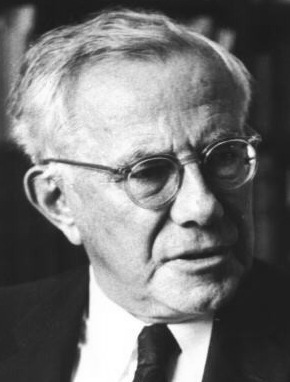
“He who sacrifices the Logos principle sacrifices the idea of a living God, and he who rejects the application of this principle to Jesus as the Christ rejects his character as Christ.”
~ Systematic Theology, Vol. 3.
Nous (νοῦς) – “…the highest faculty in man” 4
Posted by Dallas Wolf in The "Nous" (series) on June 17, 2014
” As a consequence of the “Fall”, the “nous” became dissipated and diseased…”
The “nous” in all of humankind was severely injured, diseased, and damaged in the “Adamic Fall” (The “Fall” in the Garden of Eden). The “Fall” is seen as the misuse of free will; of focusing on oneself rather than on God for guidance, wisdom and worship. Free will gave man the right to choose. And choose he did. In the “Fall”, humans shifted their focus from God to themselves (and any number of other idols). As a consequence of the “Fall”, the “nous” became dissipated and diseased, overwhelmed with increasing concerns for individual survival and the needs and desires of the body in the physical, material world. The “nous” became estranged from God’s grace and humankind’s whole nature became sick. This sickness was handed on to later descendants as the inheritance of ancestral sin.
The Orthodox do not understand the “Fall” in legal terms, as Western Christianity does, but rather in medical terms. When Paul says in Romans 5:19, “as by one man’s disobedience many were made sinners,” it is understood in a medical sense, not a legal one. In other words, as a result of one man’s sin, human nature became sick.
The Incarnation and ministry of Jesus Christ is seen as a therapeutic (Greek therapeuo) mission of love from God to humankind in order to heal and restore our fallen sick souls. The key to this is the healing and restoration of the “nous”, the “eye of the heart”. Jesus possessed a complete human nature, not only on the lower side (body) but also on the higher spiritual side, the “nous”. His perfect human nature broke the grip of sin on fallen human nature, opening the possibility of restoring the diseased “nous” of every human being to its spiritual pre-Fall state.
In his book, Orthodox Psychotherapy: the Science of the Fathers, Archimandrite Hierotheos Vlachos (now Metropolitan Hierotheos) quotes Saint Maximus the Confessor (7th century) as saying “The nous functions in accordance with nature when it keeps the passions under control, contemplates the inner essences of created beings, and abides with God.” The “nous” is changed by every conceptual image that it accepts. When the “nous” is in a fallen state, confusion is created in the whole of the spiritual organism of man. In this “fallen” state, the “nous” needs therapy/purification.
Contemplative Primitive Christian Prayer 1
Posted by Dallas Wolf in Contemplative Prayer (series) on June 13, 2014
“after the fire a still small voice”. ~ 1 Kings 19:12
1 Kings 19 talks about Elijah running from a very evil queen Jezebel. God wants to talk with Elijah and Elijah experiences a great wind, an earthquake, and a fire, yet he does not hear the voice of God. He hears it in a “still small voice” or as the Greek Septuagint has it, “φωνὴ αὔρας λεπτῆς”, “a sound minute and poor”.
We can only hear “a sound minute and poor” when we ourselves are quiet, still, and attentive. We need to be calm in spirit, ignoring the endless blather of our own mind, and open to the moment without expectation or judgment. That is contemplation. It is how Jesus spent most of his time “praying”. It is what the early church meant by prayer.
Western Latin Christianity (Roman Catholicism) completely lost their contemplative prayer tradition by the rational argumentation of the Reformation of the 16th century and the rational intellectual revolution of the Enlightenment of 17th century. Protestantism never had a contemplative prayer tradition.
The bad news is that we in the West have no idea how to pray as Jesus prayed. The good news is that the tradition of contemplative prayer is being re-discovered in the West and has always been available in the Eastern Orthodox tradition of “hesychasm” to anyone motivated to quiet themselves and seek it.
Contemplative Primitive Christian Prayer 2
Posted by Dallas Wolf in Contemplative Prayer (series) on June 12, 2014
“Very early in the morning, while it was still dark, Jesus got up, left the house and went off to a solitary place, where he prayed.” ~ Mark 1:35
In my last post, I pointed out that Western Christianity lost its mystic tradition of contemplative prayer about 500 years ago. Contemplation was the prevailing type of Christian prayer for nearly 1,600 years in the Latin West and it still remains the principal prayer tradition of the Orthodox East. Today, I want to follow up on that thought and discuss the fact that contemplative prayer was established as the principal type of prayer of Christianity in the very beginning, by Jesus himself.
In the very first Chapter (v. 35) of our oldest Gospel, Mark tells how Jesus habitually prayed; alone in a solitary place without distraction. In fact, just before teaching the disciples the “Lord’s Prayer” in Matthew 6, Jesus tells them, “whenever you pray, go into your room and shut the door and pray to your Father who is in secret; and your Father who sees in secret will reward you.”(v.6). In these passages, Jesus also tells his disciple how not to pray: “And whenever you pray, do not be like the hypocrites; for they love to stand and pray in the synagogues and at the street corners, so that they may be seen by others” (v.5); and “When you are praying, do not heap up empty phrases as the Gentiles do; for they think that they will be heard because of their many words” (v. 7). These are not isolated incidents and remarks, but characteristic of Jesus’s prayer life throughout the Gospel accounts of his ministry. As Luke tells us, “So He Himself often withdrew into the wilderness and prayed.” (v. 5:16).
Clearly, Jesus set Contemplative Prayer as the standard for Christians, what I will call “Primitive Christian Prayer”. I use the word “primitive” not in the sense of the word that denotes “crude”, “unfinished”, or “simplistic”, but in the sense of being “primary, original, and pristine”. Primitive Christian Prayer is the way Jesus prayed. It was the principal prayer tradition of the early Church.
You have never heard that message preached from a Protestant pulpit (or Catholic, for that matter), have you?
Contemplative Primitive Christian Prayer 8
Posted by Dallas Wolf in Contemplative Prayer (series) on June 6, 2014
“Always breathe Christ” ~ Anthony the Great, 4th century
In the ancient Eastern Orthodox contemplative tradition of “hesychasm” (silence, stillness, quietude), invoking the name of Jesus Christ has been used as a means of focusing the mind on God and eliminating outside thoughts, images, and other distractions from pure presence. Invoking the name of Jesus also acknowledges that God is personal; He only manifests as Persons in Trinity, in an endless “circle dance” (perichoresis) of co-inherent divine love (agape). This invocation of Christ has been combined with breathing as a “psycho-somatic” (involving both “psuche” (soul) and “soma” (body)) aid in centering the spirit (nous) in the heart for its ascent to God.
Athanasius of Alexandria (295 – 356), besides being the hero of the first Ecumenical Council of the Church at Nicaea in AD 325, also wrote “The Life of Anthony”, about the greatest and most celebrated of the first monks. In it, Athanasius quotes Anthony (whom he personally knew) as follows:
“[Anthony] called his two companions… and said to them, ‘Always breathe Christ’.”
Pseudo-Macarius echoes the same idea in about AD 400 with this elegant sentiment from his “Coptic Cycle of Sayings”:
“The Holy Spirit, the Breath of God, is linked to the Word from all eternity. Therefore when a person’s intellect and breathing utter the name of the Incarnate Word – Jesus – they are united with the Holy Spirit, and the person breathes and thinks in the Spirit.
The intellect [nous], strengthened by the invocation, finds its connection with the heart again, and this, or rather the presence in it, becomes conscious. Intellect and heart together form that heart-spirit in which a person collects, opens, unifies, harmonizes, and enlarges himself infinitely. It properly constitutes the ‘place of God’.”
Anthony and Macarius were joined in this same sentiment more than 200 years later by 7th century mystic master John Climacus. John wrote the “The Ladder of Divine Ascent”; 30 short tracts, or steps, of spiritual instruction for his monks. In Step 27 of “The Ladder” he wrote:
“Let your calling to mind of Jesus be continually combined with your breathing and you will know the meaning of silence.”
 First Thoughts